dailynewsnblog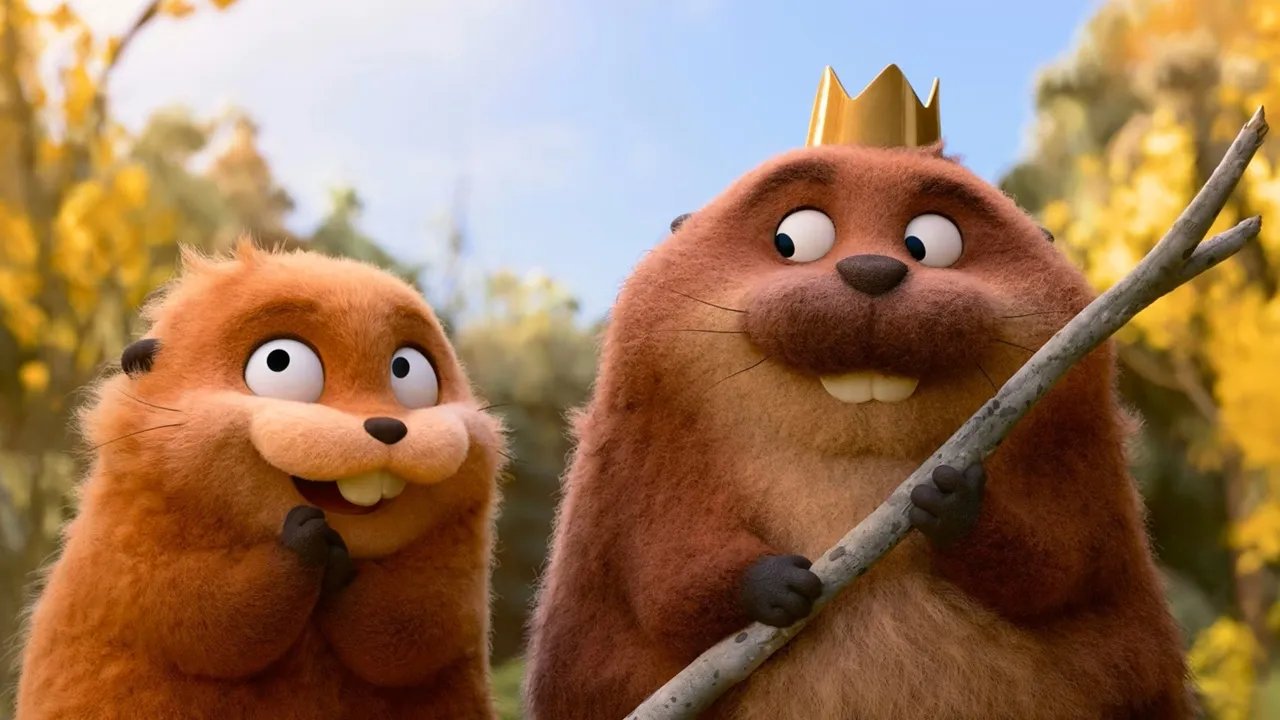

Hoppers is in theaters now.
It’s not exactly a new observation to say that Pixar’s once golden reputation is not what it used to be. The 3D animation studio has never disappeared from the cultural conversation, but after revolutionizing the industry in the 1990s and delivering a string of unqualified masterpieces in the 2000s, Pixar has only occasionally reached the level of greatness that was once synonymous with their name. Part of that is because of their overreliance on sequels, but even their newer originals don’t always match the pedigree of all-time greats like Finding Nemo, The Incredibles, or Wall-E. Their latest film, the sci-fi animal comedy Hoppers, is not on that level of inspiration, but it still comes out the other side as an entertaining and admirable effort.
Hoppers is about Mabel (Piper Curda), a failing college student and animal lover from the city of Beaverton who is trying to protect a beloved glade from being demolished by a highway construction project. She’s opposed in this effort by Beaverton mayor Jerry Generazzo (Jon Hamm), who insists he’s received the construction permits because the glade’s animals have already vacated the premises. No points for guessing that the animals didn’t leave purely of their own accord, but Mabel’s investigation into why leads her through a circuitous series of events that result in her mind being placed inside the body of a robotic beaver created by one of her professors. Mabel uses the “hopping” (as in, brain hopping) technology to communicate with the animals and figure out how to get them to move back.
There’s actually a lot more to the plot than this basic premise, with director Daniel Chong and writer Jesse Andrews’ story possessing a certain madcap energy as it moves through numerous big ideas and fresh complications. The frenzied pace ensures it never loses the audience’s attention, but it does feel like Hoppers would succeed better at its emotional moments if it were willing to let the story sit and breathe more often. But what keeps the film anchored is the throughline of Mabel’s desire to make “just one thing” work out at a time when she feels like everything has fallen apart, and why her overeager efforts sometimes make things worse despite her intentions. She’s assisted in this journey by King George (Bobby Moynihan), the friendly monarch of the local mammal kingdom, who tries to see the best in everyone even to a fault.
I really have nothing but good things to say about King George; while Hoppers isn’t one of Pixar’s best movies, King George does deserve a spot among their best characters. He’s a hard character to make work because his main trait is his inherent goodness and basic empathy for literally everyone and everything, which would make for a boring figure in the wrong hands. But Moynihan’s performance and Andrews’ script ensure his somewhat naive worldview makes sense because he wholeheartedly believes it, willing the best out of others by seeing it before they do. The relationship between him and Mabel may hit one or two predictable dramatic beats, but their chemistry still wins out by the film’s final act.
That said, the way King George runs his kingdom and how it relates to the film’s world-building is one of Hoppers’ biggest drawbacks. King George’s forest abides by “pond rules,” which can be basically summed up as “we’re all in this together” (literally said out loud in dialogue). This is a nice sentiment, but it doesn’t square logically when you think it through. Similarly to 2024’s The Wild Robot, Hoppers gets a bit cutesy with its talking animal community, showing predator and prey all being friendly with each other, although Hoppers introduces the caveat that it’s okay for the predators to eat “when they’re hungry,” hand-waving the conflict with deaths treated as gags. Sure, it’s amusing when an animal explaining pond rules is inexplicably eaten mid-speech, but it doesn’t change that it’s a band-aid for an irreconcilable problem with the setting’s believability.
Hoppers’ lack of verisimilitude is what keeps it from matching Pixar’s top tier efforts. Pixar films such as Monsters Inc. or The Incredibles created worlds that were entirely separate from our own, which allowed their bizarre rules to still come off as internally consistent. But when Finding Nemo was clearly set in our world (beyond the “animals can talk” conceit), it didn’t move into the fantastical, basically playing fair with our understanding of how animals behave even with their anthropomorphized personalities. Hoppers feels akin to Finding Nemo in terms of what it’s trying to narratively accomplish with its world, but takes on too many extra incongruous elements. That ability to buy into the logic of a film’s setting is what lets the audience also buy into the emotional stakes of the characters, and this is where Hoppers starts to fall apart.
Between a surprise villain whose plan is established and thwarted far too quickly to leave real impact, the confusing detail that Mabel has to be the one to explain to the animal monarchs that humans are encroaching on their territory so they’re pushed into action (wouldn’t they know that already?), and a well-meaning but ultimately disingenuous end to the conflict between Mabel and Jerry, Hoppers has a few too many rough edges to get full marks. But the film still features plenty of humor and sharply directed sequences (of particular note is how it finds a hilarious way for a shark to participate in a car chase). It also goes out on a high note, delivering a sweet conclusion for Mabel and King George that doesn’t undo what was sacrificed in order to get there.