dailynewsnblog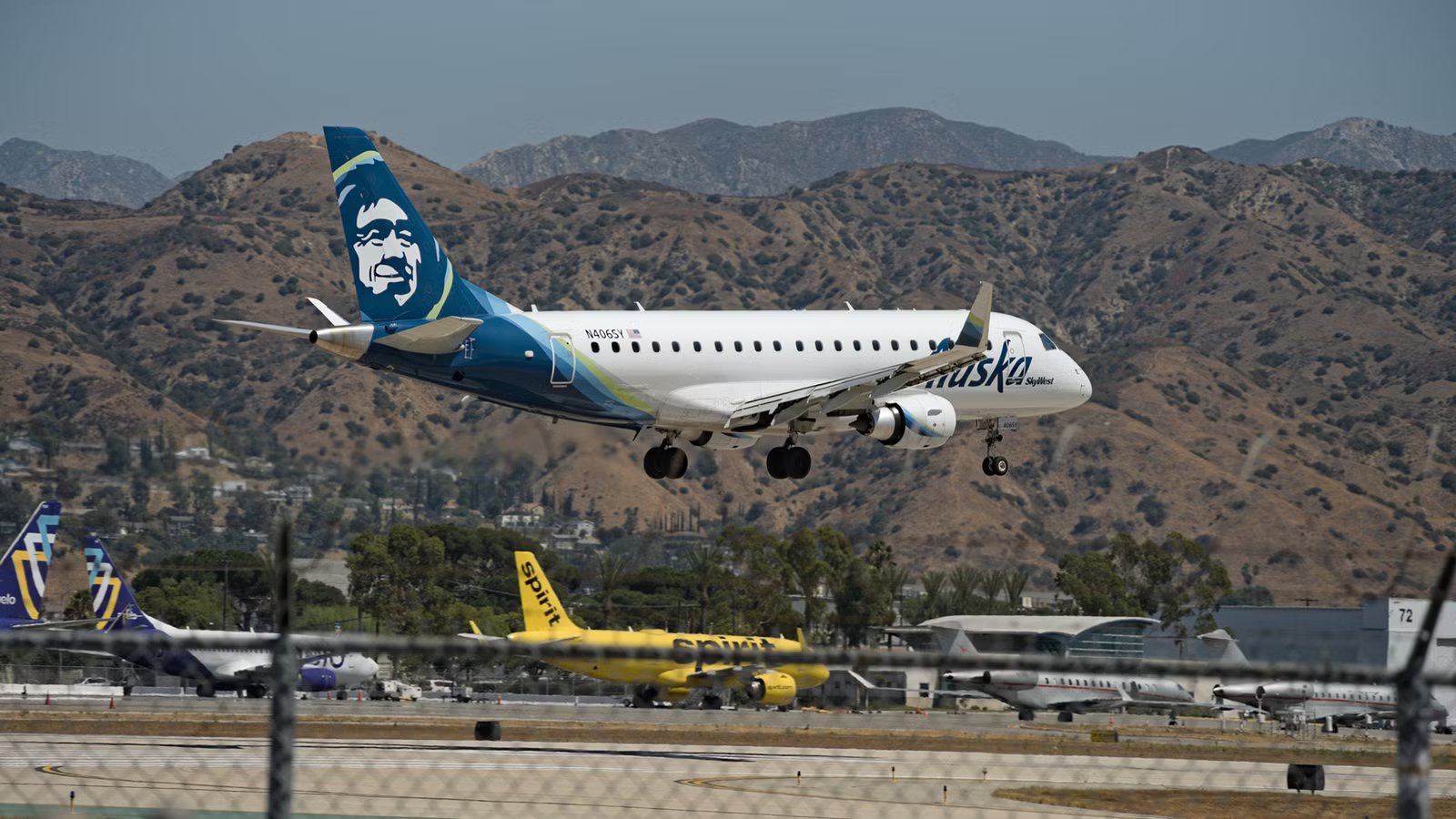
Hollywood Burbank Airport (BUR) has played down concerns over the safety of its airspace after National Transportation Safety Board (NTSB) Chair Jennifer Homendy suggested it could be the location of the next midair collision. The airport has seen six near-miss collisions since 2021, and airlines have been voicing their concerns over its safety.
As a busy Class C airport with shorter runways and restrained airspace, BUR’s complicated operational environment has made it one of the country’s “hotspots” for potential collisions, with overlapping traffic from nearby Van Nuys Airport (VNY) and other airspace activity creating a high workload for air traffic controllers.
Hollywood Burbank Airport Refutes Safety Concerns

As reported by ABC7, BUR officials have declared that safety is a “top priority” after the airport was singled out by the NTSB over prior safety lapses. Speaking during a hearing on the American Airlines Flight 5342 tragedy one year ago, NTSB Chair Homendy said that airlines have approached her over concerns that “the next midair collision is going to be at Burbank,” in reference to the airport’s difficult operating environment and history of concerning near-misses.
Along with a high amount of overlapping general aviation traffic from Van Nuys, which is situated less than ten miles away, there are busy helicopter routes in the area, as well as tighter vertical separation procedures in place. While acknowledging that safety was its highest priority, the airport noted that flight safety falls under the Federal Aviation Administration’s (FAA) jurisdiction once an aircraft has left the gate. In a statement, BUR said,
“Once our passengers are in planes that are taxiing and in flight, safety is top priority for the Federal Aviation Administration. Safety issues related to passengers, crews and aircraft while they occupy airspace are under the jurisdiction of the FAA.”
Midair Collision Risk

The focus on the threat of midair collisions has intensified since the American Flight 5342 tragedy exactly one year ago. The accident killed 67 people after a US Army helicopter collided with an American Eagle CRJ700 on approach to Reagan National Airport (DCA), another highly congested urban airport where commercial aircraft operate in proximity to frequent helicopter movements.
Unlike larger commercial airports with more space to play with, BUR relies on narrower arrival and departure corridors, which leaves little room for error if any aircraft deviates from procedure. The mixed-use nature of the airspace also further complicates safety, with air traffic controllers required to manage multiple aircraft types flying at different speeds and altitudes.
Concerns over Burbank’s airspace are in the public eye following the NTSB’s latest update on January 2025’s midair crash over the Potomac River. The safety board cited “systemic failures” in airspace design, safety oversight, and risk management by both the FAA and the US Army.

“Avoidable Tragedy”: US Government Admits To Failures That Caused Deadly Midair Collision
The liability admission was submitted in response to lawsuits brought by the families of the victims.
FAA “Not Paying Attention”

During a scathing attack on the FAA’s inadequate safety culture, NTSB Chair Homendy said that, despite repeatedly expressing warnings about hotspot airports like Burbank, “nobody at FAA is paying attention to us.” Data from the Aviation Safety Reporting System shows six potentially critical near-miss incidents have been logged at BUR since January 2021. One of these occurred last summer, when a Southwest Boeing 737 was forced into evasive action to avoid hitting a private jet.
In response, the FAA says it has been dedicating resources to improving safety at BUR and Van Nuys. The agency says this has led to a reduction in TCAS alerts at Burbank, while Van Nuys’ traffic pattern has been permanently lowered by 200 feet to minimize the risk of collisions.
During the federal government shutdown last year, Burbank’s operations were hit badly by ATC shortages. In fact, on rare occasions and already grappling with a nationwide shortage in ATC staff, the airport had zero controllers on duty due to absences and call-outs.