dailynewsnblog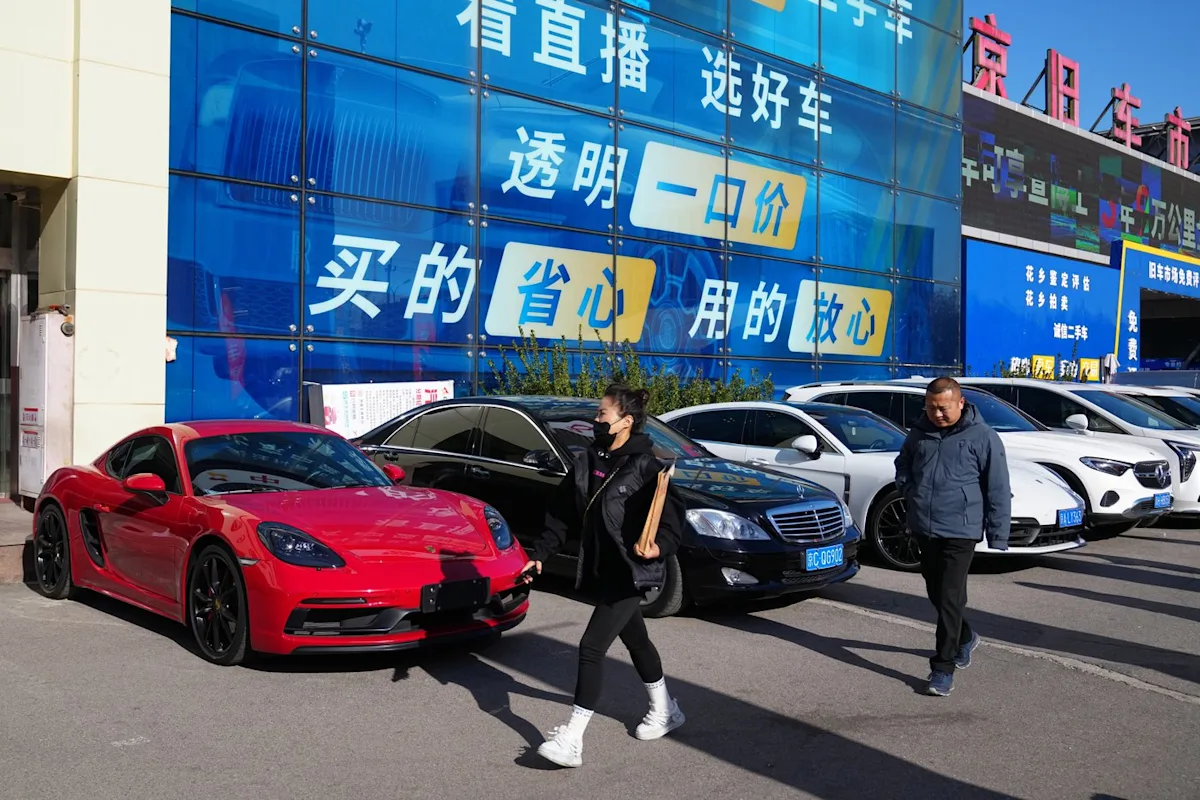
HONG KONG (AP) — Chinese demand for foreign luxury cars is waning as customers opt for more affordable Chinese brand models, often sold at big discounts, catering to their taste for fancy electronics and comfort.
That is bad news for European carmakers like Porsche, Aston Martin, Mercedes-Benz and BMW that have long dominated the upper reaches of the world’s largest auto market.
A slowing economy hits the luxury market
A prolonged property downturn in China has left many consumers with little appetite for big purchases. Meanwhile, the well-to-do are becoming increasingly shy about publicly displaying their wealth, said Paul Gong, UBS head of China Automotive Industry Research.
Many car buyers have been swayed by a 20,000 yuan ($2,830) trade-in subsidy offered by the Chinese government for purchasing electric and plug-in hybrid vehicles. People tended to purchase cheaper, entry-level cars where the discount will count more and those cars are mostly Chinese made, Gong said.
“Slowing economic growth is one key driver behind weaker demand for premium cars,” said Claire Yuan, director of corporate ratings for China autos at S&P Global Ratings, referring to a segment that typically counts car brands such as Mercedes-Benz and BMW.
The market share of premium car sales in China, usually priced above 300,000 yuan ($42,400), more than doubled between 2017 and 2023 to about 15% of total sales, S&P said.
That trend is now reversing. The share of premium cars sales fell to 14% in 2024 and to 13% in the first nine months of 2025, S&P said.
Chinese automakers take a bigger bite
While luxury auto sales have slowed, Chinese manufacturers, including electric vehicle maker BYD, have become more aggressive than many Western brands in technological innovation, frequently rolling out new electric vehicles and hybrids at cheaper prices, including premium vehicles, analysts said.
“Their (Chinese carmakers’) products are more competitive and more affordable even in the premium segment,” Yuan said. “That’s why these foreign brands are gradually losing momentum.”
The Chinese brands’ share of passenger car sales climbed to almost 70% in the first 11 months of this year, according to China Association of Automobile Manufacturers. It reported Thursday that German brands held a 12% share, Japanese brands around 10% and U.S. brands nearly 6%.
BYD already has overtaken Volkswagen as the biggest car seller in China in recent years. BYD is so far the best selling car brand this year in China for “new energy vehicles,” which include electric vehicles and hybrids, according to the China Passenger Car Association. BYD had cut prices of its electric and plug-in hybrid models by up to 34%, putting pressure on major rivals like Geely and Leapmotor.



![Air Canada’s New Very High-Capacity 440-Seat Boeing 777s [Full Route List & Map]](https://dailynewsnblog.com/wp-content/uploads/2026/03/air-canada-boeing-777-300er-about-to-touchdown-1.jpg)