dailynewsnblog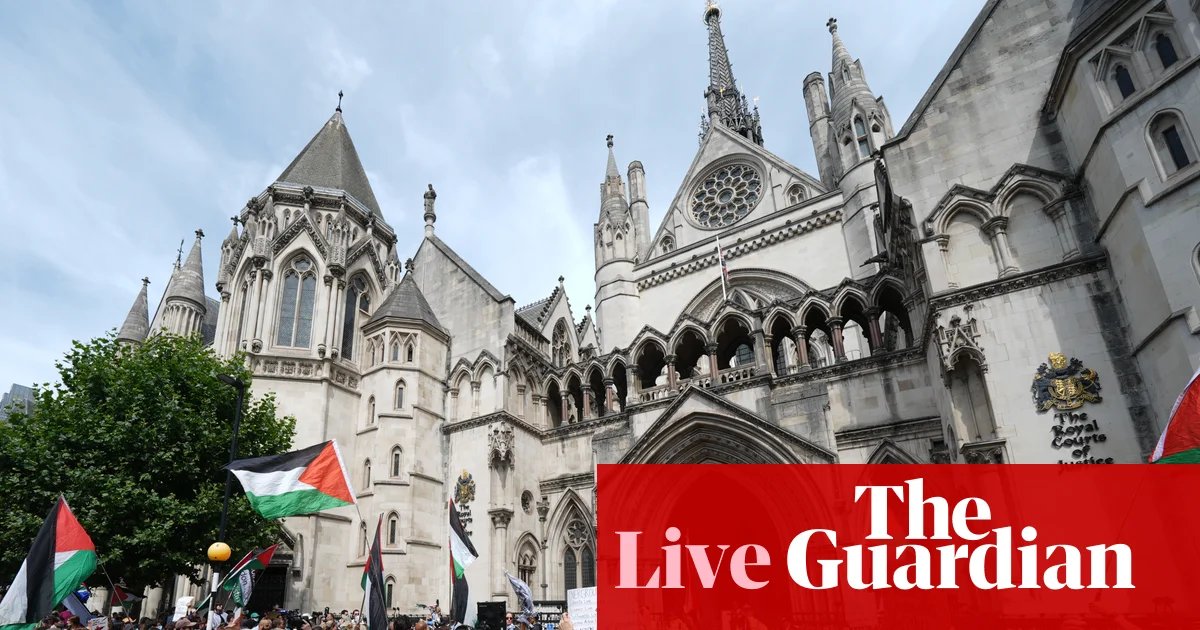
UK ban on Palestine Action unlawful, high court judges rule
Palestine Action’s co-founder Huda Ammori has won a legal challenge against the decision to proscribe the group under anti-terrorism laws.
Key events
The co-founder of Palestine Action has won a legal challenge to the home secretary’s decision to ban the group under anti-terrorism laws.
The proscription of Palestine Action, which categorised it alongside the likes of Islamic State, was the first of a direct action protest group and attracted widespread condemnation as well as a civil disobedience campaign defying the ban, during which more than 2,000 people have been arrested.
On Friday, three judges, led by the president of the king’s bench division, Dame Victoria Sharp, ruled that the decision to proscribe the group was unlawful.
Read the full report by our legal affairs correspondent Haroon Siddique here:
UK ban on Palestine Action unlawful, high court judges rule
Palestine Action’s co-founder Huda Ammori has won a legal challenge against the decision to proscribe the group under anti-terrorism laws.
Here are some images from outside the high court coming through the newswires this morning:
The ruling, expected to begin at 10am, comes after a group of six Palestine Action activists were cleared of aggravated burglary last week over a break-in at an Israeli defence firm’s UK site.
The youngest of the group, Fatema Rajwani, 21, said the verdicts were a vindication of their cause.
After 18 months in jail, she was released on bail last Wednesday, having also been acquitted by a jury at Woolwich crown court of violent disorder in relation to the raid on the Elbit Systems factory in Filton, near Bristol, on 6 August 2024.
Rajwani told the Guardian: “The verdicts are a reflection of the reality that the first chance that the public had to decide what happened to us, they vindicated us. It is plain to see that the British public do not want their citizens to be scapegoated for this Labour government’s political aims, they do not want to be criminalised for supporting a people’s inalienable right to freedom, to dignity, and to self-determination.”
Read the full report by our legal affairs correspondent Haroon Siddique here:
Opening summary
The high court is set to rule on whether the Home Office’s decision to proscribe Palestine Action as a terrorist group was lawful.
Huda Ammori, the co-founder of Palestine Action, took legal action against the government to challenge the decision by then-home secretary Yvette Cooper to ban the group under the Terrorism Act 2000.
The ban, which took effect on 5 July 2025, made membership of, or support for, the direct action group a criminal offence punishable by up to 14 years in prison.
During a hearing in November, a lawyer for Ammori told the court in London that the ban was unlawful and should be quashed, saying the group had engaged in an “honourable tradition” of direct action and civil disobedience prior to proscription.
The court heard that there had been more than 2,000 arrests after Palestine Action’s proscription, including “priests, teachers, pensioners, retired British Army officers” and an “81-year-old former magistrate”.
Lawyers representing the Home Office said the proscription had had the intended effect of “disrupting PA’s [Palestine Action] pattern of escalatory conduct” and had “not prevented people from protesting in favour of the Palestinian people or against Israel’s actions in Gaza”.
Follow our blog to get the latest updates from the ruling.