dailynewsnblog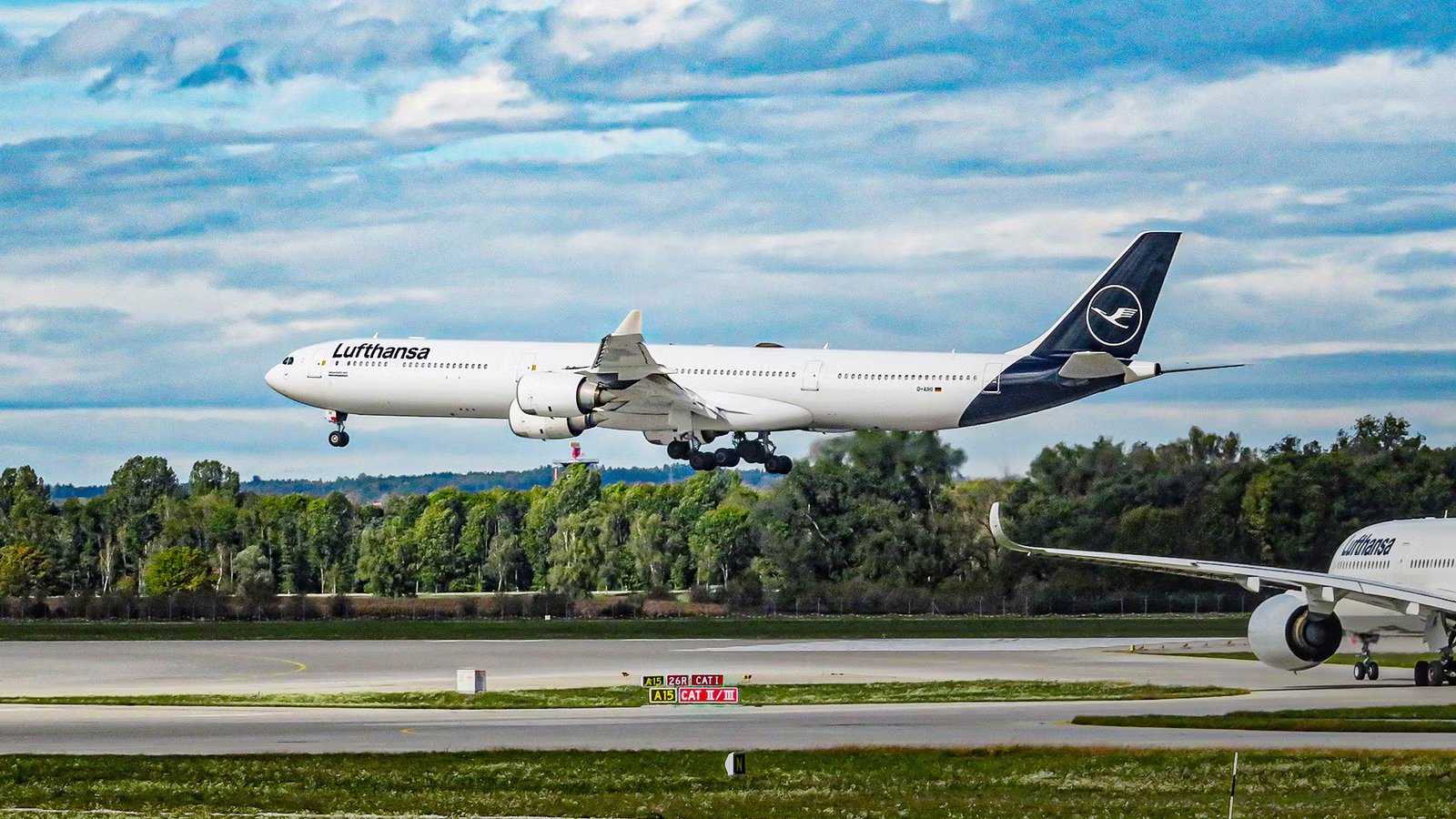
Most travelers are now accustomed to cramped lavatories tucked into the corners of the main cabin, but the Airbus A340-600 offers a striking architectural departure from other aircraft. This guide explains the unique lower-deck lavatory configuration found on this ultra-long quad-jet, detailing why it exists and how it changes the passenger experience. In addition, this article will dive into the engineering logic behind moving essential facilities into the cargo hold and how it impacts cabin layout efficiency.
To understand this design, one must look at the specific requirements of long-haul aviation in the early 2000s. As airlines pushed for higher seat counts without sacrificing comfort, Airbus engineers looked beneath the floorboards for a solution: the lower deck facilities option, a feature that remains a source of fascination for aviation enthusiasts and a practical relief for passengers on 12-hour flights.
Unique Layout Not Seen Often

The A340-600 is one of the longest commercial aircraft ever built, stretching over 75 meters. Its primary objective was to transport large numbers of passengers across oceans, which created a constant struggle for interior space. By relocating the restrooms, Airbusunlocked several rows of additional seating that would otherwise be lost to traditional lavatory blocks.
Traditional wide-body designs often cluster bathrooms near exit doors or in the center of the cabin, creating dead zones that break up the seating flow. On the A340-600, most notably within  Lufthansa’s fleet, the decision to install a staircase leading to the cargo area allowed the airline to maintain a clean, uninterrupted cabin aesthetic. This optimization means more revenue-generating seats on the main deck while providing a spacious, dedicated area for personal hygiene below.
The engineering behind this move involved reinforcing the floor structure and integrating complex plumbing systems into the lower lobe. This was a strategic use of the aircraft’s massive volume and gave the A340-600 somewhat of a design advantage that other aircraft could not achieve. While most airliners use the lower deck almost exclusively for bags and pallets, the A340-600 treats it as an extension of the living space, a design choice rarely seen outside the massive Airbus A380 or Boeing 747today, or the iconic Lockheed L-1011 TriStar or McDonnell Douglas DC-10 of the past.
Prioritizing Passenger Space

Upon reaching the center of the Economy cabin, travelers are often startled to find a narrow, carpeted staircase descending into the belly of the fuselage. This architectural quirk transforms a routine trip to the restroom into a brief excursion to a lower level of the aircraft that can rarely be experienced on a passenger aircraft. For many, the sight of stairs on a single-deck plane, unlike the dual-deck A380, feels like discovering a hidden basement in a high-rise apartment.
The engineering reality is that these facilities are housed in a specialized, pressurized module known as the lower deck facilities. This self-contained unit occupies the space normally reserved for five standard LD3 cargo containers, fitting snugly within the aircraft’s lower lobe. By modularizing the lavatories, Airbus made it possible for airlines to swap cargo capacity for passenger comfort, a trade-off that is particularly effective on routes where the passenger load is heavy but the belly freight is light.
Beyond the novelty, this downstairs lobby serves as a crucial decompression zone for passengers on long-haul flights. Instead of hovering in the aisle and bumping into seated travelers or galley carts, passengers can wait for a vacant stall in a dedicated standing area. This relocation significantly quietens the main cabin, as the sounds of flushing vacuums and slamming doors are muffled by the thick floorboards, creating a more serene environment for those trying to sleep above.

This Is How Powerful The Airbus A340 Is
Over 377 A340s were developed throughout the type’s lifespan, and they were a reliable choice for transoceanic operations.
What Must Be Considered?

Relocating restrooms beneath the main floor requires a sophisticated approach to environmental control and waste management. These units sit lower in the fuselage than standard lavatories, meaning the vacuum system must pull waste with high precision to reach the central holding tanks. Additionally, the entire module must be integrated into the aircraft’s main electrical and ventilation grids, ensuring that the air quality in the basement remains consistent with the rest of the pressurized cabin.
Every design choice in aviation is a balance between utility and cost, and the lower deck is no exception. While it typically frees up enough space for 5 to 10 additional passengers on the main deck, it adds significant structural weight due to the reinforced staircase and the specialized shell of the module. Furthermore, airlines must forfeit valuable cargo revenue, as the space used for these restrooms could otherwise hold several tons of high-priority freight, a trade-off that only makes sense on routes with high passenger demand and low belly-cargo requirements.
|
Operational Metric |
Main Deck (Standard) |
Lower Deck (A340-600) |
|
Seat Impact |
Reduces capacity by ~6-10 seats |
Maximizes seating capacity |
|
Cargo Impact |
Zero impact on belly space |
Occupies ~5 LD3 positions |
|
Maintenance |
Accessible via cabin floor panels |
Requires access through cargo bay |
|
Passenger Flow |
Causes aisle congestion |
Creates a dedicated waiting zone |
Historically, Lufthansa was the primary champion of this configuration, outfitting its fleet to distinguish its long-haul economy service. For travelers, the stairs provide a unique clubhouse feel, but they present a hurdle for those with limited mobility. To mitigate this, the A340-600 typically retains at least 1 wheelchair-accessible lavatory on the main deck, ensuring that the downstairs excursion remains an architectural option rather than a mandatory barrier for every passenger.
Much Needed Benefits For Passengers

Shifting the washrooms to the lower floor serves a purpose beyond just adding seats; it fundamentally alters the acoustic landscape of the cabin. For passengers on grueling 10 to 14-hour flights, the constant cycle of flushing and door slamming can be a significant sleep disruptor. By isolating these high-traffic zones, Airbus created a more tranquil environment for those seated on the main level, ensuring that the utility areas do not interfere with the rest area.
In a conventional jet, the row next to the bathroom is usually the least desirable spot due to the persistent noise and light pollution. The A340-600 eliminates this issue by placing a physical barrier, the cabin floor, between the noise source and the passengers. This setup effectively acts as a sound-dampening layer, meaning the mechanical whirr of the vacuum-flush system is barely audible to anyone on the main deck. It also keeps the cabin aisles clear of waiting travelers, who often inadvertently lean on passenger seats while in line.
|
Feature |
Standard Wide-Body |
A340-600 |
|
Aisle Congestion |
High near restroom blocks |
Nearly zero |
|
Noise Pollution |
Loud flush audible in 5 rows |
Muffled by floor structure |
|
Light Disturbance |
Occupied lights visible to many |
Contained downstairs |
|
Wait Area |
Standing in narrow aisles |
Dedicated lower-deck lobby |
Furthermore, the lower-deck lobby provides a rare opportunity for movement, which is vital for health on ultra-long routes. Travelers often use the descent and the extra space below to perform light stretches or simply stand for a few minutes away from their seats without obstructing the crew’s galley work. This social and physical breathing room transforms the restroom trip from an annoyance into a small, refreshing break from the confines of an economy-class seat.

Is The Airbus A350 Bigger Than The A340?
Airbus A350 vs A340: Which one is truly bigger? Discover how range, capacity & efficiency redefine “size” beyond fuselage length.
Safety Scrutiny

While the downstairs restroom offers a clever use of volume, it introduces significant logistical barriers for certain travelers. The inclusion of a steep, narrow staircase makes the lower-deck facility essentially inaccessible to passengers with mobility challenges or those traveling with small children. Consequently, Airbus designers had to ensure the aircraft remained compliant with international accessibility laws by retaining standard, accessible facilities on the main deck floor for those who cannot navigate the steps.
Safety regulations, as per EASA, also dictate rigorous standards for any passenger-occupied space located in the cargo hold area. These lower-deck modules are equipped with dedicated smoke detection and automatic fire suppression systems separate from the main cargo bay to protect occupants in an emergency. Furthermore, the stairs are designed with specific high-grip textures and sturdy handrails to prevent slips, while crew members must conduct regular sweeps of the area to ensure it is vacated during takeoff, landing, and periods of severe turbulence.
Managing a basement at 35,000 feet also presents unique challenges for the flight attendants during routine operations. The crew is tasked with monitoring the occupancy of the lower level to ensure no one is trapped below during an emergency or rapid cabin pressure loss. This additional layer of oversight is one reason many airlines opted for traditional cabin layouts, as the complexity of managing a split-level passenger environment can complicate crew workflows and safety checks during critical phases of flight.
Rare Piece Of Aviation Innovation

The lower-deck lavatory remains a hallmark of the A340-600, yet it serves as a reminder of an era when quad-jets were the undisputed kings of long-distance travel. As airlines shifted their focus toward ultra-efficient twin-engine jets like the Airbus A350and Boeing 787, the basement restroom became a relic of a bygone philosophy. Modern carriers now prioritize the maximum flexibility of their cargo holds, viewing under-floor space as far too valuable to surrender to plumbing and staircases in an era where belly-freight revenue is critical to profit margins.
For travelers, encountering this setup today is an increasingly rare experience, as the A340-600 fleet is gradually being phased out in favor of more economical aircraft. If on a Lufthansa flight operated by the aircraft, take a moment to appreciate the unique engineering that went into this split-level design. It represents a brief moment in aviation history when designers were willing to experiment with the verticality of the fuselage to solve the persistent problem of cabin overcrowding and passenger comfort.
Looking ahead, the concept of lower-deck facilities isn’t entirely dead, though its application is shifting from utility to luxury. Future designs, such as those proposed for the A330neo and A350, have explored modular cargo holds that can be converted into sleeping berths, business lounges, or even fitness zones. However, until the industry finds a way to offset the loss of cargo revenue more effectively, the downstairs trip will likely remain a unique anecdote for those lucky enough to have flown on the stretched variant of the Airbus A340.