dailynewsnblog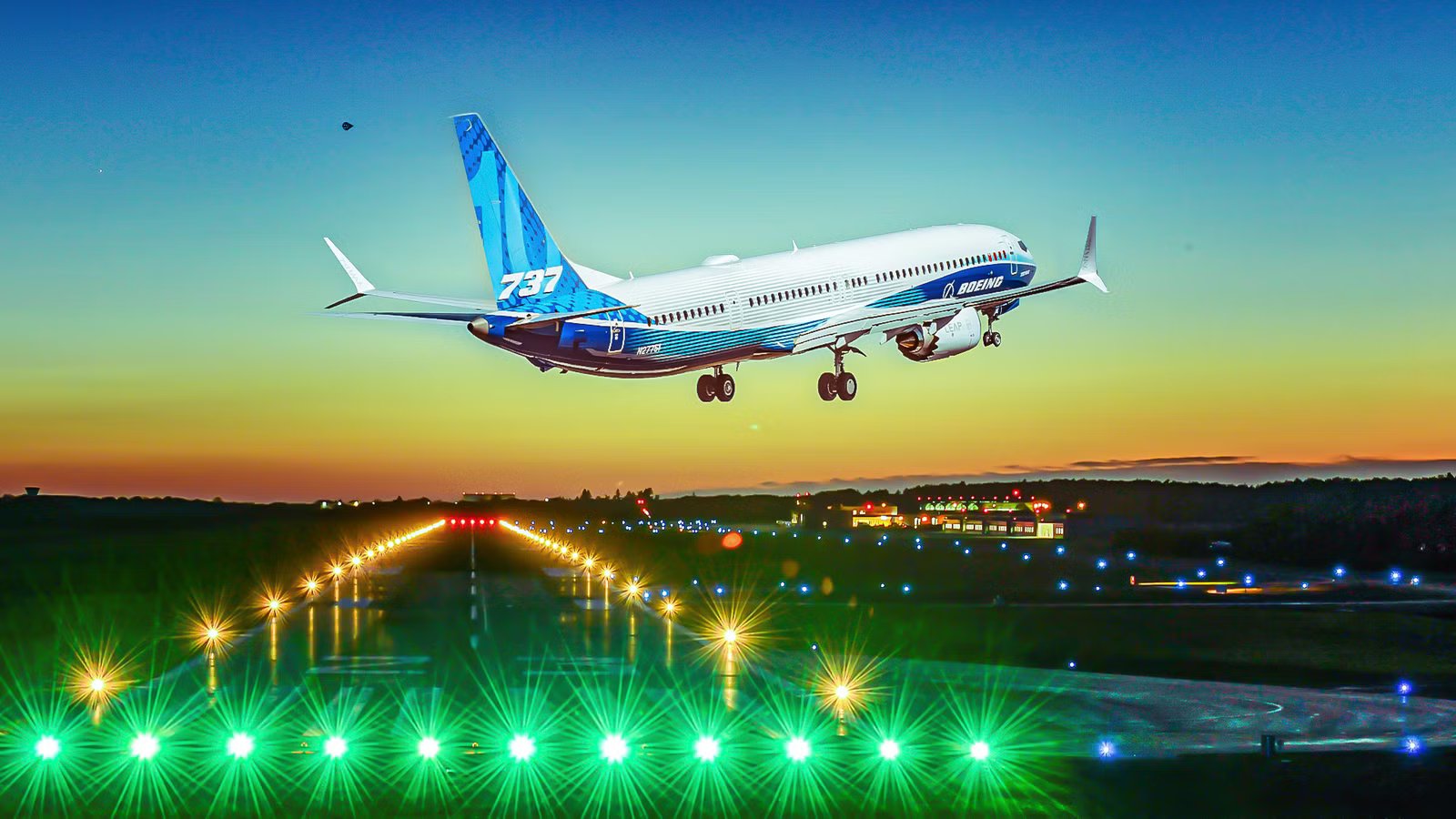
Boeing’s beleaguered 737 MAX program is hoping to have its final two variants certified in 2026. The shortened-cabin 737 MAX 7 that is expected to become a mainstay of Southwest Airlines ‘ flights is entering the final stages with the Federal Aviation Administration. Meanwhile, the longest version of the 737 MAX, the MAX 10, is also slated to be certified for production this year.
As a stretched model of the flagship narrowbody aircraft produced by Boeing, the 737 MAX is going to be a heavier aircraft than its counterparts. The higher seat and cargo capacity will increase its maximum takeoff weight (MTOW) relative to not only the other 737 variants but also most other single-aisle twin jets in production today. Simply put, that capacity means the plane is going to have a pretty long takeoff roll to get in the air.
Trading Performance For Capacity

The 737 MAX 10 will be equipped with the LEAP-1B engine, like the other 737 MAX variants. Unlike those other smaller aircraft, the MTOW of the MAX 10 will be just under 200,000 lbs. This results in a lower thrust-to-weight ratio compared to competitors like the Airbus A321neo, which uses more powerful engines (up to 33,110 pounds of thrust) for a similar weight.
The 737 wing was originally designed for much lighter models. On the heavy MAX 10, this results in high wing loading, which increases the speed required for lift-off. At maximum weight, the MAX 10 may require roughly 8,858 feet (2,700 meters) of runway, which can exceed 9,800 feet in “hot and high” conditions. This makes it less suitable for smaller regional airports than its competitors.
The MAX 10’s fuselage is stretched by 66 inches compared to the MAX 9, making it the longest 737 ever built. To avoid striking the tail on the runway during takeoff, pilots must rotate (pitch up) more cautiously and at higher speeds. To manage the tail strike risk, Boeing developed a unique levered/telescoping landing gear that extends 9.5 inches during the takeoff roll. While this allows for a slightly better rotation angle, the aircraft still requires a “flat” and cautious takeoff profile compared to shorter or more powerful jets.
Constrained By The Weight Of Legacy

The Boeing 737 MAX 10 is powered exclusively by the CFM LEAP-1B engine. While highly advanced, its performance is restricted by the legacy design of the 737 airframe, particularly its low ground clearance. The primary competitor for the MAX 10 is the Airbus A321neo, which has a significant advantage in engine sizing and thrust.
The smaller fan and core of the LEAP-1B result in a maximum thrust of 28,000 lbs, whereas the A321neo’s engines can produce up to 35,000 lbs. This ~20% thrust difference is a major reason why the MAX 10 requires more runway to accelerate its heavy 197,900-lb frame. The MAX 10 also has the shortest range in the MAX family at approximately 3,100 nautical miles (5,740 km).
|
Feature |
737 MAX 10 (LEAP-1B) |
Airbus A321neo (LEAP-1A / PW1100G) |
|---|---|---|
|
MAX Thrust |
28,000 lbs |
33,000–35,000 lbs |
|
Fan Diameter |
69.4 inches |
78 inches |
|
Bypass Ratio |
9:1 |
11:1 |
|
MTOW |
197,900 lbs |
Up to 213,800 lbs (A321XLR) |
Because the 737 sits much lower to the ground than the A320 series, Boeing had to limit the fan diameter to roughly 69 inches to maintain safe clearance. Airbus, with taller landing gear, uses a 78-inch fan. To fit the larger LEAP-1B engines, Boeing had to move them further forward and higher on the wing compared to previous 737 models. This changed the aircraft’s center of gravity and handling, necessitating the controversial MCAS software to mimic the handling of older 737s.
There is a silver lining to the unique engine design despite its performance disadvantages. The LEAP-1B has avoided the massive hardware recalls affecting the Pratt & Whitney GTF engines on the A320neo family. However, it has faced its own durability challenges in harsh environments, with new, more durable turbine blades expected to receive final certification in early 2026.
Sticking To Its Niche

Despite its performance constraints, the Boeing 737 MAX 10 has secured over 1,200 orders since it is not trying to be a direct “long-haul” rival. Instead, it dominates a unique and very lucrative operating niche. Its effectiveness versus the A321LR, A321XLR, and 757 is due to a number of strategic considerations.
The MAX 10 is the primary successor for thousands of aging 737-900ER and 757-200 aircraft used in domestic hub-to-hub flying. While it cannot match the 757’s range, it provides a 20% reduction in fuel burn and CO2 emissions, making it far more profitable for the routes it can fly. For massive 737 operators like United, Delta, and Ryanair, switching to the Airbus A321neo family would require billions in new training and infrastructure. The MAX 10 allows these airlines to “up-gauge” to 230 seats while keeping their existing 737 pilot pool and equipment.
The A321XLR is much heavier and more costly to purchase, despite its exceptional range (up to 4,700 nautical miles). The majority of airline schedules consist of medium-haul, high-density flights (up to 3,300 nautical miles), which the MAX 10 is built to handle.
The MAX 10 has the lowest cost-per-seat in the class on shorter routes thanks to its lighter weight and cheaper acquisition cost. For lengthy, narrow transatlantic or transcontinental routes, the A321XLR is categorized as a specialized, “niche” aircraft. Many airlines view the XLR as “too much plane for the mission,” with needless structural weight, and do not need the additional range for domestic operations.

Why Can’t The Boeing 737 MAX Be Powered By Any Other Engine Type?
Why the 737 MAX uses only the LEAP-1B: Boeing’s design limits, certification rules, and engine geometry make any other powerplant impossible.
The Catch-22

The MAX 10 may be restricted in smaller regional airports with shorter runways due to its very lengthy takeoff roll, which can surpass 8,800 feet when fully loaded. It is mostly confined to operations at big hubs with longer primary runways, given safety margins in the event of exceeding the predicted landing or takeoff roll distances.
At airports with high elevations or temperatures that affect engine performance and lift, the MAX 10 will have substantial payload or fuel weight constraints. To safely take off from certain places, airlines may have to leave seats vacant or cut fuel, reducing the aircraft’s effective range on particular itineraries.
The MAX 10 is almost exclusively limited to high-density, medium-haul “hub-to-hub” missions where its low cost-per-seat can be fully utilized without being hampered by its range and takeoff limitations, in contrast to the A321neo, which can be used for both short-haul and thin long-haul transatlantic routes.

All The Airlines Waiting For Boeing To Certify The 737 MAX 10
With regulatory obstacles pending and airlines awaiting final approval, all eyes are on Boeing’s largest single-aisle aircraft, the 737 MAX 10.
Made For The Mission

The Boeing 737 MAX 10 continues to be popular despite certification delays because it provides a particular economic “sweet spot” for high-demand, medium-haul routes. The MAX 10 can accommodate up to 230 passengers and is built for maximum passenger density. On routes where it can be fully occupied, it offers the lowest operating cost per seat of any single-aisle aircraft by distributing fixed costs like fuel and crew over more seats.
Major 737 operators such as United, Delta, and Ryanair may add the MAX 10 with minimum investment in new infrastructure. It has the same pilot type rating, maintenance programs, and spare parts as smaller MAX models, allowing airlines to up-gauge capacity without incurring the high costs of training pilots for a separate aircraft type (like the A321neo).
Airbus is now the final player in the ultra-long-haul single-aisle market due to the 737 MAX 10’s inability to match the extreme range of the current Airbus A321LR and A321XLR or the vintage Boeing 757. In cases where this condition has not been met, it has offered a contemporary, fuel-efficient aircraft for high-density domestic and transcontinental hub-to-hub flights, which carriers are keen to implement.

Why The Boeing 737 MAX 10 Has Such A Long Fuselage
Boeing’s longest 737 yet: will it revolutionize air travel or struggle to take off?
The Final Stretch

The Federal Aviation Administration (FAA) must type-certify the Boeing 737 MAX 10 before it can go into production and be shipped to airlines. The engine anti-ice system’s technical problems, the evaluation of its cockpit alerting system, and the general increased regulatory scrutiny of Boeing’s manufacturing procedures are the main obstacles that still need to be overcome.
The major technical challenge is an issue with the engine’s anti-ice system. Regulators are worried that, under rare circumstances, extended usage may cause the engine nacelle to overheat, resulting in engine damage or failure. Boeing has been working on design and software upgrades that must be completely evaluated and authorized by the FAA before certification can be completed.
Following the two MAX crashes, safety regulations demanded stricter criteria for cockpit warning systems. The FAA is presently assessing the MAX 10’s improved flight-crew alerting system to ensure that it fulfills modern safety standards. This assessment is part of a larger, more stringent regulatory environment following the two deadly MAX 8 crashes.
The FAA is closely monitoring every aspect of Boeing’s operations, particularly in the wake of the Alaska Airlines door plug blowout incident in January 2024. The agency has set production limits and stated that all approvals will be cautious and gradual, contingent on Boeing’s safety and quality control systems continuing to improve.