dailynewsnblog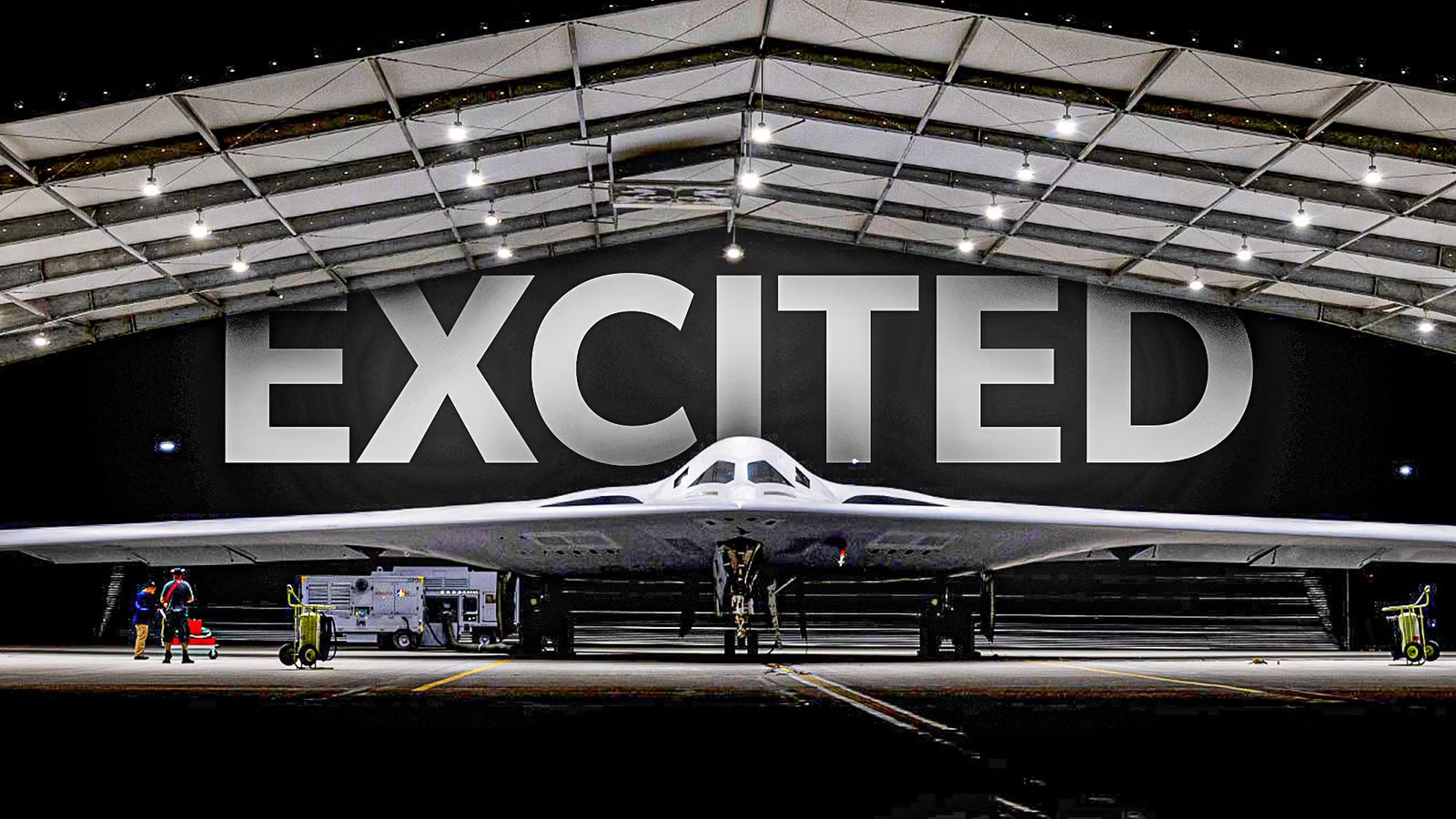
The first two pre-serial production B-21 Raiders are already test flying for the United States Air Force, with more examples in various stages of construction. The program is on schedule to enter service in 2027, after which the remaining tired and worn-out B-1B Lancer bombers will start to retire. Once the B-21 enters service in enough numbers, the Air Force will phase out its expensive and aging B-2 Spirits.
The Air Force is excited about the B-21 for a host of reasons. The aircraft is comparatively affordable, while the B-1B and B-2 are increasingly expensive and difficult to maintain, with the former’s airframes now suffering from the fatigue of years of low-level flying. The B-21 is to restore the technological overmatch that the Air Force has enjoyed for decades and essentially allow it to bomb anywhere, anytime. That said, stealth is not an invisibility cloak, and all aircraft are visible and can be shot down. Here is why the USAF is excited about the B-21.
Preserving A Penetrator Bomber For USAF

The Northrop Grumman B-21 Raider is poised to be the first new strategic bomber to enter US Air Force service since the B-2 Spirit entered service in 1997, or around 30 years ago. When the B-2 entered service, it enjoyed near impunity in penetrating enemy air defense and carrying out its missions. However, the development of more advanced ground radars, fighter jets like the Chinese J-20, and other advancements have eroded much of its former advantages.
Today, the B-21 remains the only strategic bomber in the world able to penetrate contested airspace, but the aircraft’s vulnerability is rising. The world’s other strategic bombers, including the B-1B Lancer, the B-52 Stratofortress, the Xi’an H-6, the Tu-22M3 Backfire, the Tu-95MS Bear, and the Tu-160 Blackjack, are all considered too vulnerable to operate in contested airspace. This is why the Russian bombers have been using missile trucks and have not carried out any B-2-style bunker-busting bombing raids over Ukraine.
The US is also using the B-1B and B-52 as standoff missile trucks, although it also uses them as true bombers once it is convinced that enemy air defense has been thoroughly degraded. Stand-off missiles are useful, but there is also a need to carry heavy, bunker-busting bombs like the 2,000-lb BLU-109 and the 30,000-lb GBU-57 Massive Ordnance Penetrator.
First B-21 Raiders Already Flying For Air Force

In August 2025, The War Zone reported that the USAF had a single pre-production Raider in flight testing. The following month, a second test example was handed over to the Air Force. At the time, The War Zone wrote, “At least four other B-21s are in various stages of production, and a number of non-flying airframes are being used to support ongoing test work.”
The first B-21 was delivered on schedule in 2025, and the type remains on track for in-service aircraft on the ramp at Ellsworth Air Force Base in 2027. Some reporting suggests that in the event of an emergency, the Air Force could rush the B-21 into service in 2026. The full range of the B-21’s capabilities is not yet known, and it will likely be some time before they fully mature. However, it is reasonable to assume it will not be a bomber in the classic sense; it will have more in common with multi-role combat aircraft.
The Air Force says, “Currently executing flight test, the long-range, penetrating strike aircraft is designed to operate in the most contested environments and hold any target at risk. The B-21 integrates advanced stealth, resilient networking, and a modern, data-driven command and control architecture — ensuring the Joint Force retains a decisive advantage in an increasingly complex battlespace.”

How Many B-2 Spirit Bombers Are Left?
The US’ B-2 stealth bomber is an awesome warplane, but how many are there?
Finally, A Successful Program

Most complicated new programs end up going well over budget and getting delayed. However, for a breath of fresh air, it seems the B-21 Raider program is largely on time and on budget. While the bombers will be expensive, they are expected to only cost the Air Force a fraction of what it paid for the B-2 Spirits, especially after inflation is taken into account. The B-2 Spirit was exceptionally expensive for a range of reasons, including being a pioneer and being procured in only small numbers.
Meanwhile, Northrop Grumman is able to design the B-21 based on an already proven platform, and this time, the Air Force is expected to purchase at least 100 of them. The Air Force had expected to purchase 132 B-2s, but only purchased 21 of them (with 19 remaining). Now the US plans to purchase 100 B-21s, but is also advocating for a fleet of 145 of them.
|
B-21 Raider in numbers (per USAF, others) |
|
|---|---|
|
First delivered to USAF |
2025 |
|
In-service date |
2027 (planned) |
|
Number planned |
100+ (145 increasingly advocated) |
|
Payload |
30,000 lbs (official) |
|
Range |
6,500 nautical miles (estimated) |
|
Cost per unit |
$750 million (estimated 2024 dollars) |
The US Air Force says the average unit procurement cost for the B-21 is around $550 million in base year 2010 dollars. This is now reported to be around $750 million per unit in 2024 dollars, making them less than half the price the US Air Force paid for the B-2. Sustainment costs are also expected to fall significantly from around $41 million a year to around $25 million, while its flight-hour costs should be around half. Its radar-absorbent coatings are more durable and easier to maintain. Overall, it’s expected that the B-21 will have a mission-capable rate of over 80% compared with the B-2’s 60% rate.
Ramping Up Production

In February 2026, the US Air Force announced: “The Department of the Air Force and Northrop Grumman Corp. have reached an agreement to expand production capacity for the B-21 Raider, accelerating delivery of the Air Force’s next-generation stealth bomber fleet.” The agreement injects $4.5 billion in funding already authorized and appropriated under the fiscal year 2025 reconciliation legislation (“One Big Beautiful Bill”).
The agreement allows Northrop Grumman to increase annual production capacity by 25%, “compressing delivery timelines while preserving cost and performance discipline.” It appears the USAF has placed the first large-scale order for the B-21s, or it is in advanced stages of finalizing the order. In late 2025, President Trump told reporters, “We just ordered about 20 brand-new B-2 bombers.”
On another occasion, The Jerusalem Post reported Trump as saying, “In fact, we just ordered 28 more of them. A little updated version. We ordered a whole pile of them.” The B-2 Spirit is not in production, nor is it going to return to production. It is certain that Trump was referring to the B-21 Raider as “brand-new B-2 bombers” and “updated B-2s.”

This Is How Powerful The B-2 Spirit Bomber Is
The B-2 is famous for its stealth, but how much punch does it pack? Let’s find out.
A Generational Leap Over The B-2

The B-2 Spirit may be the world’s most advanced in-service bomber, but it is a 1980s design built to sneak through Soviet radar and drop nuclear bombs. The B-21 may look similar, but it is a generational redesign drawing on 30–40 years of lessons, advances in digital engineering, and network-centric warfare. It is a 2020s design built to survive dense sensor networks, IR sensors, satellites, cyber warfare, and even AI-enabled air defenses.
While many enthusiasts like to focus on the radar cross-section aspect of stealth, the concept is much broader. Whereas the B-2 comes with a reduced radar cross-section, radar-absorbent materials, and some infrared signature control, the B-21 brings all-aspect stealth. Its air intakes are deeply buried, hiding the compressor blades, and it has a better shielded exhaust, dramatically reducing its infrared signature. The aircraft has a smoother blended geometry, while also having reduced electronic emissions.
The B-2 is difficult to upgrade, and the hardware is tightly integrated with its software. The B-21 is being designed from the ground up for rapid upgrades with open mission systems architecture, modular hardware and software, and plug-and-play upgrades. It will be able to progressively receive new weapons, sensors, electronic warfare packages, and more without having to redesign the aircraft.
Smaller But Far More Versatile Than B-2

The B-21 is built to function inside multi-domain battle networks as a battlefield node; by contrast, the B-2 is more of a self-contained bomber. The B-21 also uses half the number of engines as the B-2. It is powered by two engines that are believed to be derived from the F-35’s F135 high-bypass turbofans, while the B-2 is powered by four F118s. This should cut maintenance by half while also improving the aircraft’s thermal management.
Another benefit is that the aircraft will boast a longer range with less fuel. The improved range is also aided by improved aerodynamics. The B-21 is coming with electronic warfare similar to the F-35’s powerful electronically scanned radars, GPS-denied navigation, and data fusion. Not only will it be able to bomb, but it will also be able to be a command center and node for drones, ISR, and battle management.
The B-21 is noticeably smaller, with the wingspan reduced by 20–25% compared with the B-2, and its official payload reduced from 40,000 lbs to 30,000 lbs. It’s not intended to be just an updated B-2; it is designed as a future-proof platform optimized for mass production, rapid evolution, and deep integration with other systems.