dailynewsnblog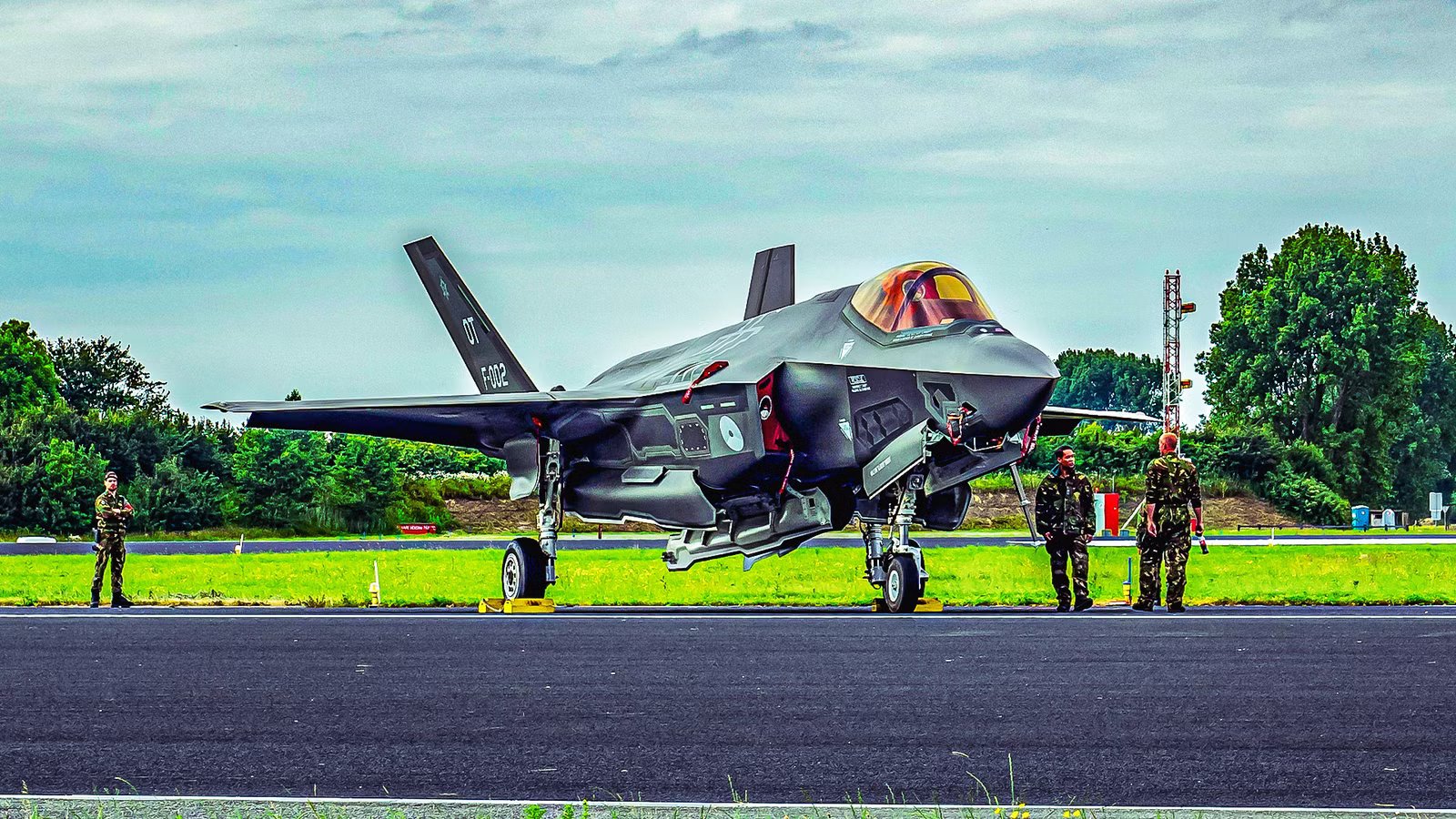
Germany’s decision to hit pause on buying additional F-35 models is, at first glance, the kind of headline that should rattle Lockheed Martin and its investors, as the F-35 is undeniably a flagship program. Reports suggested that the German government was exploring a follow-on purchase that could have doubled Germany’s 2022 order, only for German officials to wave it off publicly. This sparked a relatively quick spike and dive in Lockheed’s share prices as markets tried to re-price expectations. However, the more important story here is not the whiplash but why the company has been able to quickly and efficiently shrug off pretty much all of this noise.
For starters, Germany is not walking away from the F-35 program. It is still committed to the 35 aircraft it had already ordered to replace earlier Panavia Tornado jets and to NATO nuclear-sharing modernization. Meanwhile, Europe’s own next-generation fighter effort (FCAS) remains mired in political and industrial friction, ultimately keeping the F-35 firmly in the reliable near-term option lane for many air forces. As for Lockheed, the order of a few more F-35s is not all that important when the jet’s backlog is strong, and the broader F-35 ecosystem only continues to expand, and production has only continued to scale. Adjacent businesses also continue to generate more orders and generate wins.
Where Does The Lockheed Martin F-35 Program Stand In 2026?

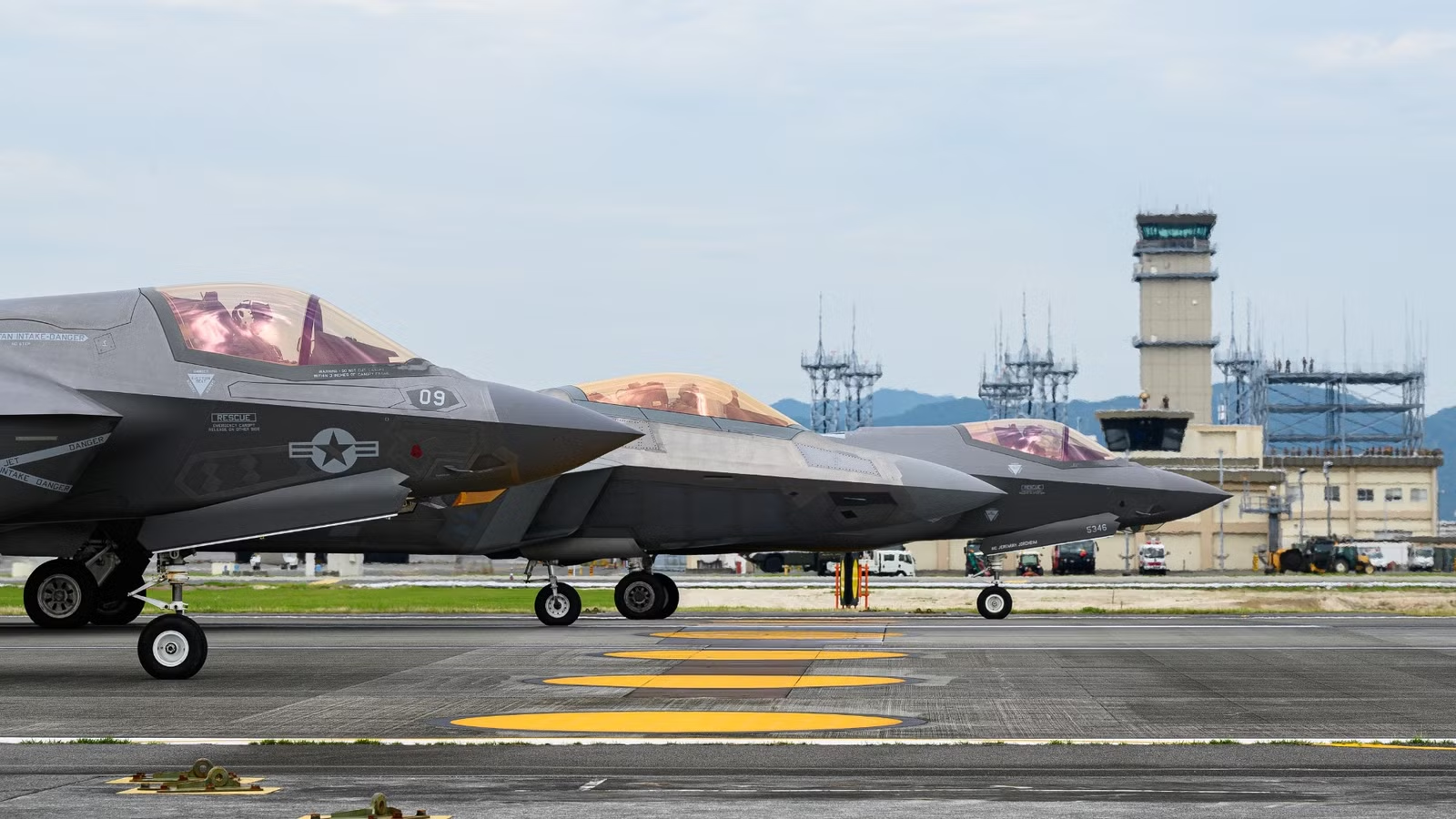
By the time 2026 came around, the F-35 program had slowly moved from a new fighter to a mature production fighter. Lockheed Martin says it is currently sustaining around 1,300 aircraft, has passed 1 million flight hours, and set a delivery record in 2025 by handing over 191 jets. Twelve nations operate the jet, and new European users are taking first deliveries as they replace legacy aircraft fleets. While the aircraft’s engineering capabilities and dynamic combat prowess are not up for debate, the manufacturer has questions to answer about how quickly and efficiently it will be able to ramp up the aircraft’s production rates over time.
The near-term story here, thus, is about execution and upgrades. A year-long US acceptance pause tied to the Technology Refresh 3 (TR-3) package ended in July 2024, letting stored jets flow through to customers and driving the  Boeing 2025 delivery surge. However, this transition is not done at a high level, as the Joint Program Office has limited TR-3 jets to training, as software continues to mature, and the United States has withheld portions of payment on some aircraft pending TR-3 progress.
The TR-3 also matters because it is the backbone for Block 4, a modernization effort that GAO says has slipped into the 2030s for full completion. The only other big 2026 reality for the program is going to be sustainment. Watchdogs and budget analysts highlight readiness shortfalls, as US F-35s were available about half the time in 2024, below the anticipated 67% required under contracts. Enormous lifetime operating costs have also troubled the program, pushing the Pentagon and Lockheed to improve parts, maintenance, and fleet availability as the aircraft continues to age.
Germany’s Longstanding Association With The F-35

It is important to begin by analyzing Germany’s longstanding association with the Lockheed Martin F-35. As a member of the NATO family, it is not surprising that Germany would be interested in acquiring this advanced air transportation solution. The F-35 is best understood as a mission-driven acquisition, not a broad industrial partnership. Lockheed Martin is simply a provider of a product that Germany is interested in acquiring. In March 2022, Berlin chose the F-35A to replace its aging Panavia Tornado fleet in the NATO nuclear-sharing role, ultimately meaning that German aircraft and crews must be able to deliver US B61 gravity bombs stored in Europe if it were ever required.
That requirement sharply narrowed Germany’s practical options, and the F-35A offered a near-term, NATO-aligned path to maintain mission credibility while modernizing the Luftwaffe. Germany subsequently finalized an agreement with the United States to purchase 35 F-35A models through a government sale package. This positions the jet as a cornerstone capability alongside parallel German participation in Europe’s future fighter effort.
Therefore, it is pretty clear that Germany’s F-35 investment is meant to be a bridge that replaces the Tornado until the European next-generation fighter program matures. Germany’s program is built around standing up a new F-35 enterprise. Pilot and maintenance engineer training in the United States will take place in 2026, with infrastructure work set to take place at Buchel Air Base. The first aircraft is planned to arrive in Germany in 2027, with deliveries continuing into the late 2020s.

Disaster? Why The F-35 Program Is Under Fire Again
A storm of controversy surrounds the F-35 program, but what’s really behind the criticism?
Germany Has Already Extensively Committed To The Program

The German purchase of the Lockheed Martin F-35 has been viewed as an all-in package, not a simple per-aircraft price. In July 2022, the United States government notified Congress of a potential Foreign Military Sale (FMS) to Germany valued at $8.5 billion. This is an impressive figure that bundles aircraft, munitions, spare parts, training, and support.
This aircraft purchase package was anchored by a set of 35 F-35A fighters, but a meaningful amount also sat in enablers, including 37 Pratt & Whitney F135 engines with spare components and substantial weapons stocks, including AIM-120C-8 air-to-air missiles and AGM-158B JASSM-ER stand-off missiles. Simulators, logistics, and technical services are also key components of this story.
By December 2022, Germany’s budget committee cleared the deal, and the government quickly signed the appropriate contracts. The budget notably exceeded the originally allocated $10 billion. The gap between the US budgetary estimate and German budgetary figures ultimately reflected post-signing complications, including deals for additional secure facilities, nuclear mission-sharing, and local infrastructure constraints, all of which were key problems.
Why Did Germany Decide Not To Purchase The Type?

Starting in mid-February 2026, reporting from Germany suggested that the government may have been in the process of considering the purchase of a larger batch of F-35 jets, potentially more than 35 additional aircraft, on top of the 35 that it ordered back in 2022. The logic behind the rumored follow-on purchase was straightforward. Germany’s next-generation European fighter effort, FCAS, has been plagued by industrial and political friction, while an expanded F-35 fleet, would give the Luftwaffe a credible, near-term path to replace more of its aging Tornado force while keeping NATO commitments intact.
The story turned around quickly. Within hours of these reports hitting the media, the German government and defense ministry publicly pushed back, saying that there were no current plans and no political decision had been considered to purchase F-35 jets beyond the existing order, according to reports from The National Interest.
That effectively reframed the episode from Germany doubling down to Germany merely discussing its options. This cooled the idea of a near-term contract expansion. It also cooled off the idea that a near-term contract expansion was imminent. The clarification also mattered politically. Another large US fighter purchase would be read in Europe as a vote of no-confidence in FCAS. This would also be a potential irritant in the extensive defense cooperation between France and Germany. Thus, Berlin has strong incentives to keep any deliberations tightly controlled until they become formal policy.

How Many F-35s Are In Service With The US Air Force?
The US Air Force has over 400 and perhaps closer to 500 F-35s in inventory, while Lockheed has delivered over 1,000 F-35s in total.
What Fighter Jets Does Germany Operate?

In 2026, Germany’s Luftwaffe operates two different kinds of frontline fighters, including the Eurofighter Typhoon and the PA-200 Tornado. The Eurofighter is the backbone of Germany’s air-combat fleet, and it is used for quick-reaction alert air policing, air-to-air defense, and an expanding air-to-ground role, with the Bundeswehr citing a fleet of 138 aircraft. The Tornado is the older twin-seat strike platform that still carries several high-end missions and can perform conventional attack, reconnaissance, and suppression of enemy air defenses.
Germany also uses the Tornado for NATO nuclear-sharing tasks. The Bundeswehr describes 85 Tornados in the operational and training force, from a larger overall inventory. Critically, Germany’s fighter future is already decided on paper, even if it is not flying yet. Berlin has ordered 35 F-35A jets to take over the Tornado’s nuclear-sharing role, with first deliveries expected to begin in 2026.
The Tornado planned to retire around 2030 as capabilities transition to the Eurofighter and the F-35 Lightning. In parallel, Germany is procuring additional Eurofighter jets to modernize and replace older jets over time, ultimately keeping the Typhoon as a long-lived pillar of Germany’s air defense.
What Is The Bottom Line?

At the end of the day, the German defense forces are well aware of their needs, especially as global geopolitical tensions remain elevated in both the Middle East and Eastern Europe. This means that, while the media may speculate about these kinds of orders, the Bundeswehr is well aware of what it is interested in.
Lockheed Martin, however, has long been a leader in the world of military technology. They have a massive backlog for the F-35, which is undoubtedly one of their flagship programs, and are, as a result, completely unconcerned about what the Bundeswehr may or may not decide to do with a likely marginal increase in orders.
Investors, however, speculate on anything that could have a major impact on a company’s bottom line. As a result, the manufacturer, which is one of the world’s largest defense contractors, will be quick to set the bottom line straight, ultimately being less interested in short-term stock price movements than in the business as a whole.