dailynewsnblog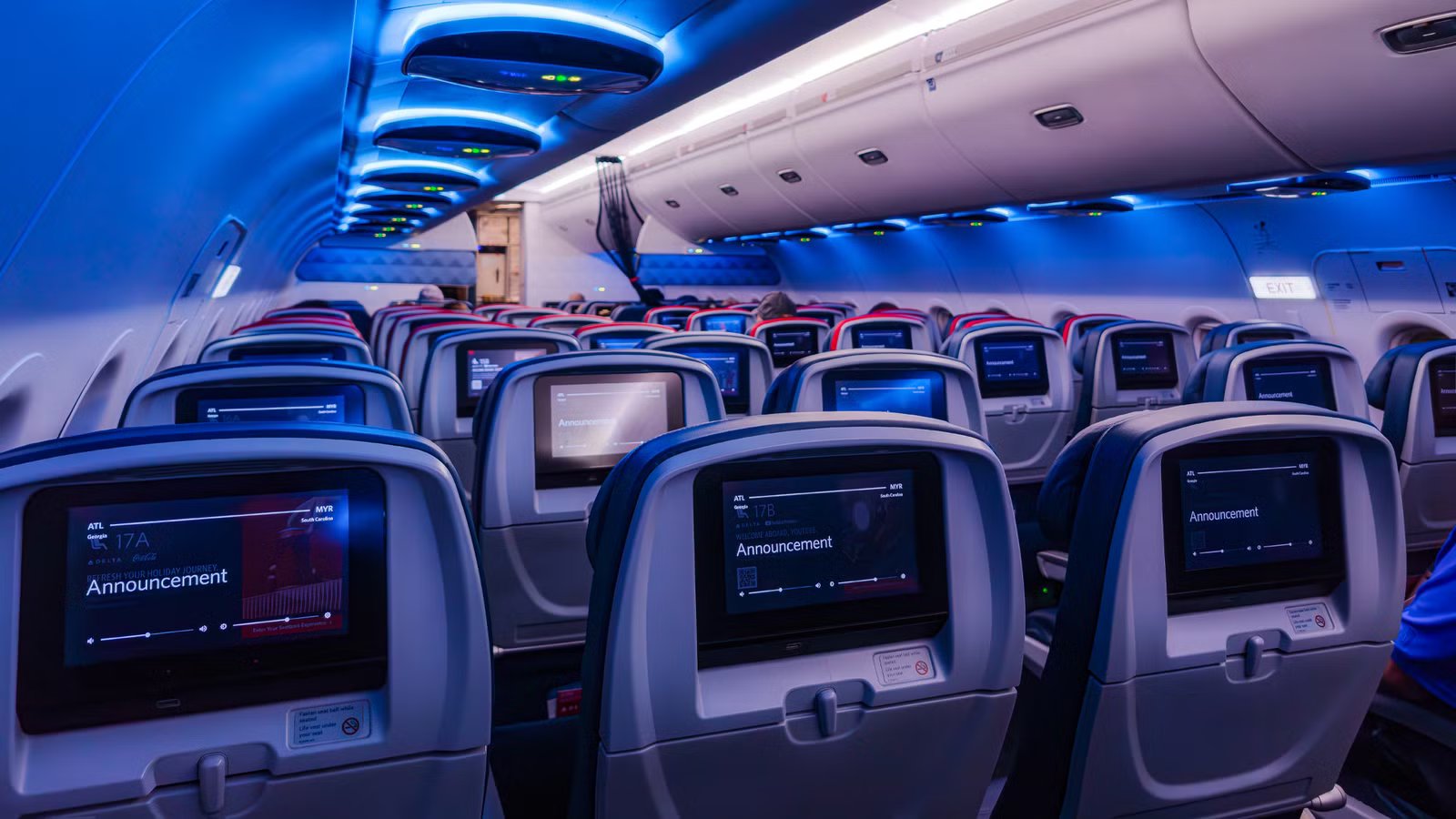
For decades, economy class has been the backbone of US airline travel, but the experience has steadily evolved, and, in many cases, contracted. Seat pitch, the distance between a point on one seat and the same point on the seat in front, remains one of the most important metrics for passenger comfort, and while it does not tell the whole story, it is still the clearest indicator of how much legroom travelers can expect when flying in economy class.
In 2026, the differences between airlines are more pronounced than ever, with some carriers continuing to prioritize comfort as a key differentiator, and others leaning heavily into high-density seating to maximize revenue. The result is a wide spread in seat pitch across US airlines, with a gap of more than four inches separating the most generous and most cramped operators. Let’s take a closer look…
JetBlue Sets The Benchmark For Economy Comfort

Wikimedia Commons | Simple Flying
Among US airlines, JetBlue Airways continues to stand out as the clear leader in economy seat pitch, offering an average of 32.3 inches, putting it firmly at the top of the rankings. This figure is particularly notable given JetBlue’s positioning as a Low-Cost Carrier. While many airlines in this category focus on maximizing seat density, JetBlue has long marketed itself as a hybrid airline, combining competitive fares with a more comfortable onboard experience. Its fleet, consisting largely of Airbus A320 family aircraft and the newer A220, is configured to provide slightly more legroom than competitors.
The difference of even one or two inches may sound minor, but in practice, it can significantly impact passenger comfort, especially on longer domestic routes. JetBlue’s approach reflects a strategic choice: rather than competing solely on price, it uses additional space as a selling point. This is reinforced by the airline’s Even More Space seats, which offer substantially higher pitch for an additional fee.
JetBlue’s lead also highlights an important trend in the industry, showcasing that airlines that invest in passenger comfort can carve out a niche even in highly competitive markets. In a landscape where many carriers are reducing space, maintaining a 32-inch-plus pitch has become a differentiator rather than the norm.

The Airlines With The World’s Longest Legroom In Economy In 2026
Who has the most room to stretch in coach?
Southwest Airlines Remains A Strong Second

Following closely behind is  Southwest Airlines, with an average seat pitch of 31.8 inches. This places it just half an inch behind JetBlue, making it one of the more comfortable options among US carriers. Southwest’s relatively generous legroom is tied to its unique operating model.
The carrier operates an all-Boeing 737 fleet, which allows for consistency in cabin configuration, and historically, this has translated into more uniform seat pitch across aircraft compared to legacy carriers, where multiple aircraft types can result in varying layouts. Another factor is Southwest Airlines’ long-standing emphasis on customer experience. While the airline is undergoing significant changes, including the introduction of assigned seating and new fare structures, its commitment to maintaining competitive legroom has remained largely intact.
However, even Southwest Airlines is not immune to broader industry pressures. As carriers increasingly prioritize premium seating and ancillary revenue streams, maintaining a nearly 32-inch pitch may become more challenging over time. Recent shifts toward segmented cabins and paid upgrades suggest that even historically customer-friendly carriers are exploring ways to balance comfort with profitability.
Alaska Airlines & Delta Air Lines Share The Middle Ground

 Alaska Airlines and
  Delta Air Lines are tied, each offering an average economy seat pitch of 31 inches. This positions them squarely in the middle of the pack, providing a balance between comfort and efficiency.
For both airlines, this figure reflects a broader strategy of segmentation. Rather than maximizing space in standard economy, they focus on offering multiple tiers of seating. Passengers willing to pay more can access extra-legroom sections, such as Delta Comfort+, while those opting for basic economy receive a more standard experience. This approach allows airlines to cater to a wide range of travelers without significantly reducing overall seat density. It also aligns with a growing industry trend toward unbundling, where passengers pay for specific features rather than receiving a uniform product.
Delta Air Lines, in particular, has emphasized premium growth in recent years, expanding its premium economy and business-class offerings. This shift has implications for economy cabins, as more space is allocated to higher-yield seats. Meanwhile, Alaska Airlines has maintained a reputation for customer service and reliability, but its seat pitch reflects the same balancing act between comfort and capacity. Ultimately, a 31-inch pitch represents a compromise. It is generally acceptable for shorter flights but can feel restrictive on longer journeys, especially for taller passengers.

The Most Spacious Premium Economy Seats In The US Today
All three major airlines in the US offer competitive premium economy products.
American Airlines & United Airlines Fall Slightly Below Average

 American Airlines and
  United Airlines occupy the next tier, with average seat pitches of 30.2 inches and 30.1 inches, respectively. While the difference compared to Alaska Airlines and Delta Air Lines may seem small, it can be noticeable in practice.
These two carriers are among the largest in the world, and their approach to cabin configuration reflects the complexities of operating extensive global networks. With a wide variety of aircraft types and configurations, consistency can be difficult to achieve, and some aircraft offer more generous spacing, while others are more tightly packed.
Both airlines have also leaned heavily into premium offerings in recent years. Expanding business class, premium economy, and extra-legroom sections has become a key revenue driver, and as a result, standard economy cabins often bear the brunt of density increases.
Industry-wide data suggests that the average seat pitch for US carriers typically falls between 30 and 33 inches, placing American Airlines and United Airlines at the lower end of this range. For passengers, this means that while the experience is still within the industry norm, it may feel less comfortable compared to airlines offering even slightly more space. This trend underscores a broader shift in airline economics. As carriers focus on maximizing revenue per square foot of cabin space, standard economy seating is increasingly optimized for efficiency rather than comfort.
Hawaiian Airlines, Frontier Airlines & Spirit Airlines

Hawaiian Airlines | Simple Flying
Hawaiian Airlines presents an interesting case, with an average seat pitch of 29 inches, placing it below the major mainland carriers, despite operating many long-haul routes. At first glance, this may seem counterintuitive, as longer flights typically demand greater comfort, and one might expect more generous seating as a result. However, Hawaiian Airlines’ configuration reflects a different set of priorities, including route economics and aircraft utilization.
Flights to and from Hawaii are highly competitive, with multiple airlines serving similar routes, and so to remain competitive on price, Hawaiian Airlines must carefully manage costs, and increasing seat density is one way to achieve this. Additionally, the airline offers premium cabins and extra-legroom options, allowing passengers to pay for additional comfort if desired.
Despite the tighter pitch, Hawaiian Airlines maintains a strong reputation for its onboard service and overall experience. For many passengers, factors such as hospitality, entertainment, and destination appeal can offset the limitations of seat pitch. Nevertheless, at 29 inches, the difference compared to carriers like JetBlue becomes more pronounced, and over a five- or six-hour flight, even a few inches can significantly affect comfort levels.
At the lower end of the spectrum are ultra-low-cost carriers Frontier Airlines and Spirit Airlines, both averaging just 28 inches of seat pitch. This is the tightest configuration among major US airlines in 2026. For these carriers, the rationale is straightforward, as their business model is built on offering the lowest possible base fares, with additional fees for nearly every aspect of the travel experience. Maximizing seat density allows them to spread costs across more passengers, enabling lower ticket prices.
While this approach can make air travel more accessible, it comes with clear trade-offs, as a 28-inch seat pitch is widely regarded as cramped, particularly for taller passengers or flights longer than a couple of hours. However, many passengers are willing to accept reduced comfort in exchange for lower fares. Both Frontier Airlines and Spirit Airlines also offer upsell options, such as seats with extra legroom, which can bring the experience closer to that of higher-ranked airlines. This tiered model mirrors broader industry trends, where the base product is intentionally minimal to encourage additional spending.
The gap between these carriers and the top performers highlights the diversity of the US airline market. From 32.3 inches at JetBlue to 28 inches at Frontier Airlines and Spirit Airlines, passengers face a wide range of choices depending on their priorities.

Why US Carriers Are Doubling Down On Premium Cabins
Airline luxury is going mainstream.
Why Seat Pitch Still Matters In 2026

Delta Air Lines | Simple Flying
Despite changes in aircraft design and seat technology, seat pitch remains one of the most important factors influencing passenger comfort. While thinner seatbacks and improved ergonomics can partially offset reduced space, they cannot fully compensate for tighter configurations. At the same time, seat pitch alone does not tell the whole story. Factors such as seat width, padding, recline, and in-flight entertainment all play a role in the overall experience, while variations within an airline’s fleet also mean that the actual experience can differ from one flight to another.
What is clear, however, is that the trend toward denser cabins is unlikely to reverse. Airlines continue to prioritize revenue growth, and economy class is increasingly designed as a baseline product with optional upgrades, and recent industry developments show a growing emphasis on premium seating, further reinforcing this shift. For passengers, this means that understanding seat pitch, and how it varies between airlines, remains essential when choosing a flight. In 2026, those extra inches can make a meaningful difference, especially on longer journeys where comfort becomes increasingly important.