dailynewsnblog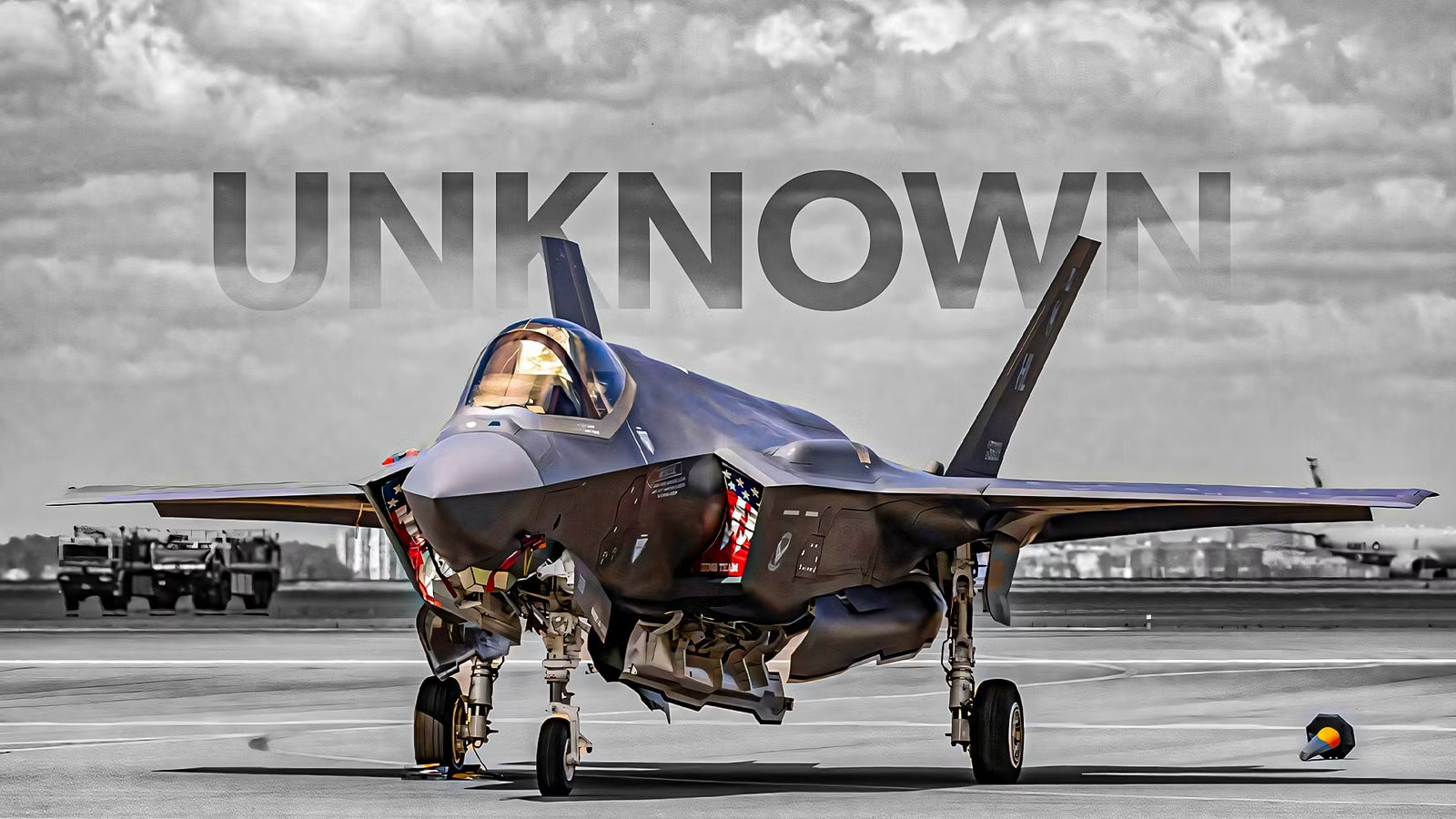
Air combat has entered an era where information moves faster than aircraft. In that environment, the ability to identify an unknown contact in seconds shapes every decision that follows. The Lockheed Martin F-35 Lightning II now sits at the center of that shift, blending sensor fusion with artificial intelligence to accelerate how pilots understand what they see.
Recent testing by Lockheed Martin has highlighted how AI tools integrated into the F-35 can help classify unknown contacts rapidly, drawing from radar data, infrared signatures, electronic emissions, and networked inputs. This article examines how that process works in practical terms, why it represents a structural shift in air combat decision-making, and how the F-35 converts raw sensor data into operational clarity at unprecedented speed.
From Detection To Understanding: How The F-35 Sees Battlespace

Modern airspace is crowded, contested, and complex. Military aircraft share corridors with civilian traffic, unmanned systems, and increasingly capable adversaries. In such an environment, rapid identification supports safety, survivability, and mission success. The F-35’s evolving AI capability plays directly into that reality, enhancing what pilots already describe as one of the most advanced sensor fusion systems ever fielded. At its core, the F-35 functions as a flying data processor. Its AN/APG-81 active electronically scanned array (AESA) radar scans the sky continuously, building tracks of airborne and surface contacts.
Alongside it, the AN/AAQ-37 Distributed Aperture System (DAS) provides spherical infrared coverage, while the Electro-Optical Targeting System delivers precision tracking and targeting capability. The inputs from every sensor are fed into a centralized mission systems core. What makes the F-35 distinctive is how it blends those inputs. Instead of presenting pilots with separate radar scopes and infrared screens, the aircraft fuses information into a single tactical picture. Symbols appear on the helmet-mounted display, representing aircraft, missiles, or surface threats with intuitive clarity.
That foundation laid the groundwork for AI integration. Lockheed Martin announced that, in the framework of Project Overwatch, the F-35 has been tested with a new artificial intelligence-enhanced Combat Identification capability at Nellis Air Force Base to help pilots quickly identify unknown emitters detected by its sensors. The choice of the place doesn’t come as a coincidence, since Nellis AFB is equipped with a vast network of simulated and real air defenses, the ideal environment to test such equipment.
With artificial intelligence layered onto this fusion engine, the aircraft can now compare live sensor data against extensive libraries and behavioral models. Speed profiles, climb rates, radar cross-section patterns, engine heat signatures, and emission characteristics feed into machine learning algorithms trained to recognize patterns. Within moments, the system can suggest whether a track resembles a known fighter type, a transport aircraft, a drone, or something unfamiliar.
Project Overwatch: Applying AI To Combat Identification

Lockheed Martin describes Project Overwatch as its initiative to apply artificial intelligence to combat identification within the Lockheed Martin F-35 Lightning II. In company communications, the effort is framed around helping USAF pilots “make faster, more informed decisions” when time and clarity matter most. The emphasis rests on accelerating analysis inside the cockpit while keeping pilots firmly in control of engagement choices. Rather than automating judgment, Project Overwatch strengthens the information available before that judgment is made.
The initiative builds directly on the F-35’s fused sensor architecture. The aircraft already correlates inputs from the AN/APG-81 AESA radar, the Distributed Aperture System, the Electro-Optical Targeting System, and its electronic warfare suite into a unified track file. Project Overwatch adds an AI-driven analytical layer that evaluates relationships across those inputs at machine speed. Kinematic behavior, infrared plume characteristics, radar emission patterns, and maneuver profiles are assessed together with extensive reference libraries.
In dense or ambiguous airspace, that cross-domain comparison reduces uncertainty during the critical early seconds of an intercept. Instead of presenting a simple “friendly” or “hostile” label, the AI generates confidence-weighted classifications based on sensor agreement and track history. A contact might appear as “75% likelihood: fourth-generation fighter” or “High confidence: civilian airliner.” That nuanced output empowers the pilot to incorporate machine insights into tactical judgment, which ultimately remains the decisive factor in combat.
|
Sensor / System |
Data Type Contributed |
Role In AI-Enhanced Combat Identification |
|---|---|---|
|
AN/APG-81 AESA Radar |
Kinematic data (range, velocity, track history) |
Provides foundational motion parameters for pattern comparison and classification confidence |
|
AN/AAQ-37 Distributed Aperture System (DAS) |
360° infrared coverage |
Supplies passive thermal signatures for cross-domain correlation |
|
AN/AAQ-40 Electro-Optical Targeting System (EOTS) |
Focused IR/visual tracking |
Refines target characterization and supports signature differentiation |
|
Electronic Warfare Suite (EW) |
Radar emissions, RF characteristics |
Enables emitter-type recognition and supports ambiguity resolution |
|
Mission Systems Core Processors |
Fused multi-sensor dataset |
Executes AI-based inference and confidence scoring within the integrated architecture |
The underlying datasets, emitter libraries, and exact machine-learning models remain protected, but the principle is well understood: the aircraft compares live sensor inputs against extensive signature libraries and behavioral models. The architecture also supports continuous refinement. Software updates allow these libraries to evolve, enabling the F-35 to refine identification accuracy as new aircraft and radar systems appear on the global stage. Over time, the AI grows more capable at recognizing subtle variations in flight behavior and emissions. This evolutionary capacity ensures the F-35 remains aligned with the pace of global aerospace development.

Is The Eurofighter Typhoon Faster Than The F-35?
A riveting race between two titans of the sky: does the Eurofighter Typhoon outrun the F-35?
The AI Layer: Turning Patterns Into Probabilities

Once a track is established inside the Lockheed Martin F-35 Lightning II’s fused picture, the analytical process shifts into a deeper phase. The AN/APG-81 radar supplies precise kinematic data, including velocity vectors, acceleration profiles, and heading stability. At the same time, infrared inputs from the DAS and EOTS characterize plume geometry and thermal intensity, while the electronic warfare suite captures radar pulse behavior and emission signatures. Each of these parameters tells part of a story; together, they begin to define an identity.
Patterns emerge when those variables align. A high-thrust twin-engine fighter typically produces a different infrared signature than turbofan-powered transport. An advanced AESA radar transmits with characteristics that differ measurably from a legacy mechanically scanned array. Sustained climb rates, turn performance, and throttle transitions further narrow the possibilities. Machine-learning models evaluate these attributes in parallel, comparing live data against curated signature libraries and behavioral baselines developed over time. The analysis unfolds continuously, updating as new sensor inputs arrive.
The display of the track file as a probability-weighted classification converts detection into decisional capability with greater speed and coherence. In crowded or contested airspace, this machine-speed synthesis reduces ambiguity and supports more assured decision-making while preserving the pilot’s central role in interpreting the situation.
Comparing The F-35 With Legacy Fighters In Real-World Scenarios

Fourth-generation fighters such as the F-16 and F/A-18 field powerful AESA radars, advanced electronic warfare suites, and mature Link 16 connectivity. In a real intercept, however, the pilot typically operates these systems step by step: refining radar scan volumes, checking IFF responses, interpreting radar warning receiver cues, and correlating datalink tracks from supporting assets. Airborne early warning platforms like the E-3 Sentry AWACS often provide the broader operational picture, cueing fighters toward unknown contacts and assisting with track identification. The pilot synthesizes radar data, off-board inputs, and visual or infrared confirmation into a coherent assessment under time pressure.
The F-35 approaches the same scenario with a different architectural philosophy. The aircraft systems feed into a centralized fusion engine before the information reaches the cockpit. AI-driven algorithms evaluate kinematics, radar cross-section behavior, emission signatures, and infrared patterns in parallel, generating a probability-based classification embedded within the track file itself. Instead of manually correlating separate sensor pages, the pilot views a single, fused tactical picture where identification confidence evolves dynamically as more data enters the system.
In practice, this changes the pace of operations alongside AWACS rather than replacing it. An F-16 may depend heavily on AWACS controllers to maintain situational context beyond its radar horizon, while the F-35 both receives that picture and contributes high-fidelity sensor data back into the network through secure links such as MADL and Link 16. The result is a tighter identification loop: AWACS detects and cues, the F-35 refines and classifies using onboard fusion and AI, and the combined data strengthens confidence across the formation. In high-tempo or congested airspace, that integrated flow transforms identification from a sequential process into a near-simultaneous, networked collaboration.

The World’s Largest Air Forces By Number Of F-35s
The leading F-35 armadas around the world.
Human Oversight

Artificial intelligence within the Lockheed Martin F-35 Lightning II operates as a decision-support layer, not an autonomous authority. Each classification is accompanied by a confidence score generated from sensor agreement, track stability, and data completeness. When radar kinematics, infrared signatures from the Distributed Aperture System, and electronic emission patterns converge, confidence increases. When inputs diverge or data remains limited, the system reflects that uncertainty rather than masking it. This structured transparency helps pilots understand not only what the system is suggesting, but the reason behind the suggestion.
The pilot remains fully responsible for engagement decisions. AI outputs inform situational awareness, yet rules of engagement, operational context, and mission objectives guide final action. In complex environments, this balance becomes especially valuable: automation reduces cognitive load, while human judgment integrates broader factors such as identification authority, coalition coordination, and escalation control. The relationship is collaborative rather than substitutive, aligning advanced computation with experienced tactical decision-making.
Reports have indicated that F-35 pilots have previously encountered situations involving ambiguities among electronic emitters, where onboard systems required refinement after operational experience. Coverage in 2023 described lessons learned from United States Air Force F-35 patrols along NATO’s eastern flank following Russia’s full-scale invasion of Ukraine, highlighting that real-world deployments can inform updates to electronic warfare libraries and system performance.
In that context, officials explained that intelligence assessments and onboard identification data did not always align, particularly when adversary systems appeared to operate in modified or less familiar modes. The iterative development discussed earlier strengthens confidence calibration, improving how the aircraft distinguishes between similar signatures, tracks evolving threat profiles, and adapts to emerging technologies. The result is a continuously improving framework that evolves alongside the airspace it monitors.
The Broader Implications For Air Dominance And Future Warfare

Rapid identification influences every stage of air operations. In deterrence missions, the ability to classify approaching aircraft quickly shapes posture and communication. During high-intensity conflict, speed of understanding often determines who acts first.
The F-35’s AI-enabled identification capability positions it as a central node in future air combat concepts. As unmanned systems join formations and collaborative combat aircraft enter service, shared sensor data will expand dramatically.
The F-35’s mission systems architecture already supports this kind of distributed integration. Continuous software updates promise further refinement in the future. Enhanced algorithms may draw from even larger datasets, incorporating real-world operational experience. As computing power grows, processing speed and classification accuracy will likely advance in parallel, giving a significant tactical advantage to each F-35 user.
The F-35 combines stealth, networking, and artificial intelligence into a cohesive system designed to accelerate understanding. In modern air warfare, the aircraft that identifies first gains a decisive edge. Through AI-enhanced sensor fusion, the F-35 moves closer to that goal with every iteration of its evolving software system.