dailynewsnblog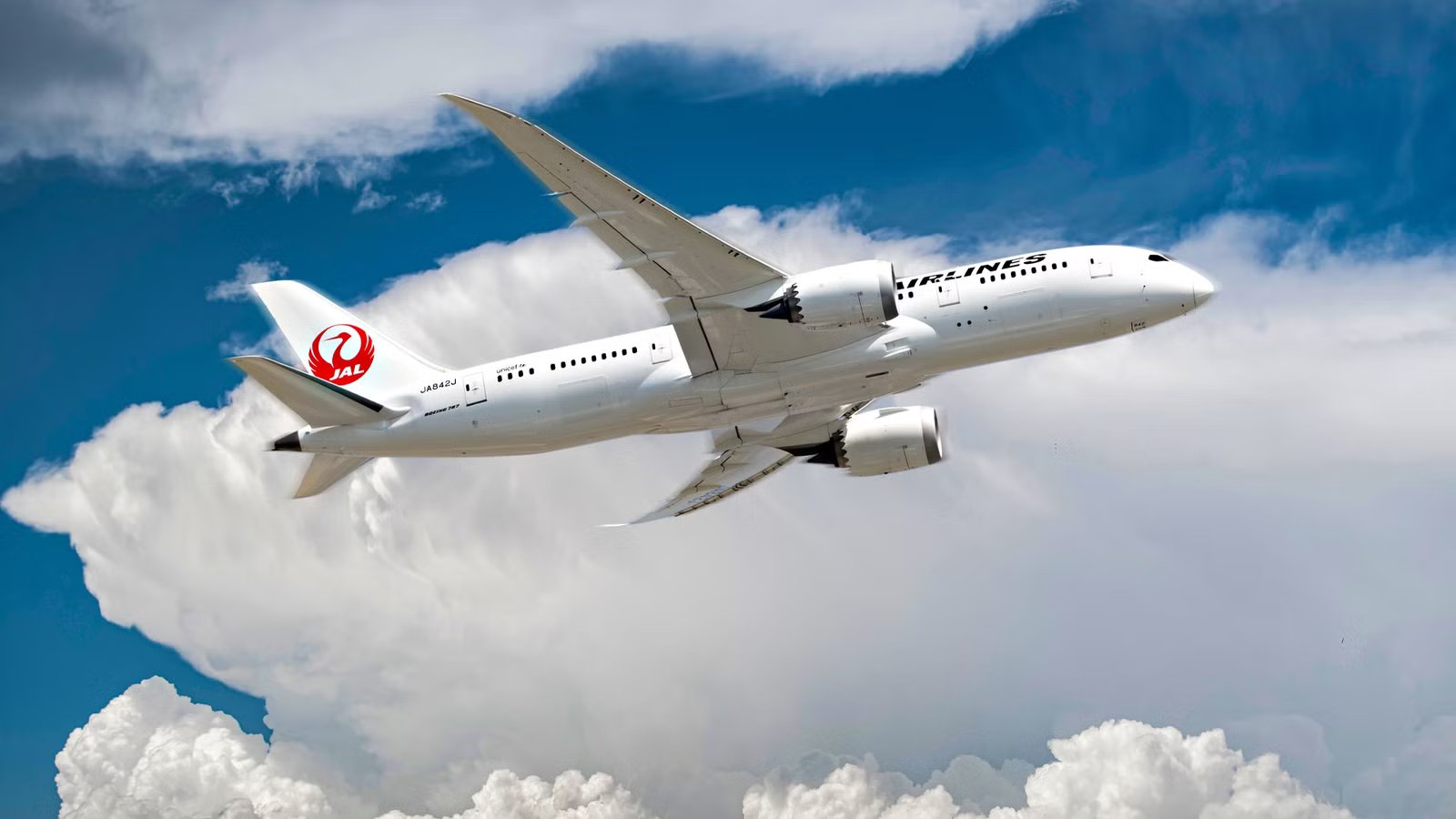
Turbulence in aviation is actually a relatively complex paradox. Most modern airliners are built to both handle and withstand turbulence, but even a single, sharp bump can spill drinks, injure people, and rattle even the most frequent flyers. The  Boeing 787 Dreamliner was built with a clear passenger-experience goal to make long flights feel calmer. A key piece of this goal was, unsurprisingly, developing a unique way for the jet to sense rough air early and respond before the cabin takes a full hit. This does not require some kind of crystal ball but rather a stack of sensors and software working at two time scales. Looking forward, the Boeing 787’s weather radar can paint storm structure, flag wind-shear hazards, and highlight turbulence that often clusters near convective weather, giving crews time to deviate, slow down, or get everyone seated.
Then, in real time, the Dreamliner’s vertical gust suppression systems monitor air data and acceleration cues, especially when it comes to small pressure and airflow changes around the aircraft. The manufacturer insists that the jet commands rapid, coordinated elevator and flaperon movements that can dampen turbulence and trim vertical acceleration before it is felt in the cabin. The manufacturer has said that this can damp vertical motion by 60-70%. In some cases, however, it will not be able to fully eliminate turbulence. We aim to analyze the accuracy of this claim, separating marketing from mechanics and understanding how the Boeing 787 really handles turbulence that comes its way.
A Look At The Boeing 787 And Its Design Priorities

The Boeing 787 Dreamliner was designed around the core idea of making long-haul flying more efficient for airlines while making it noticeably more comfortable for passengers on board. On the airline side, the Boeing 787 pairs a lightweight composite airframe with highly efficient engines and aerodynamics, including a high-aspect-ratio wing with raked wingtips in order to reduce fuel burn and extend overall aircraft range. Boeing also pursued a more-electric architecture, with the carrier most notably eliminating traditional engine bleed air for cabin systems.
Key functions like environmental control and de-icing now rely mostly on electrical power. This shift improves efficiency, enables tighter system control, and simplifies certain maintenance tradeoffs. On the passenger side, the Boeing 787’s design priorities show up in the cabin. The jet is engineered for a lower effective cabin altitude and better humidity management than old widebodies, which can help travelers feel less fatigued on long flights.
Larger windows with electronic dimming, improved airflow management, and extensive acoustic insulation encourage a calmer, quieter experience. Fly-by-wire controls and advanced avionics add precision and stability, supporting smoother operations and more flexible overall route planning. Collectively, the Boeing 787 is essentially a long-range platform built to deliver economics first without treating comfort as an afterthought.
How Do Airlines See Turbulence Today?

Turbulence is the irregular and chaotic motion of air in the atmosphere that disrupts smooth airflow over a plane, producing rapid changes in lift and vertical acceleration. It comes from convective upwards and downward movements in and around thunderstorms, wind shear along weather fronts, and mountain waves on the lee side of terrain. Jet-stream dynamics can also cause turbulence. In everyday terms, that pretty much means that you can never really know when turbulence will pop up.
Even in situations where turbulence appears somewhat absent (based on radar readings), it can still appear out of nowhere. Clear-air turbulence is especially tricky to handle because it can occur with no visible clouds on the horizon. As a result, it may surprise crews and passengers. While modern airliners are built to tolerate strong loads, turbulence can still be uncomfortable and, if people are not secured to their seats by seat belts, it can also become incredibly dangerous. In the 2020s, turbulence hits airlines mainly through safety, reliability, and cost increases. Rough air forces rerouting and altitude changes that increase overall fuel burn, complicate traffic management, and create cascading delays in tightly scheduled networks.
It can also cause interruptions to cabin service, raise the risk of passenger and crew injuries, and it can also prompt precautionary maintenance inspections after severe events occur, according to the manufacturer. It also shapes the overall customer experience, with frequent fliers often noticing smoothness, as viral videos can amplify fear. Airlines respond with stricter seatbelt policies, better forecasting, and dispatch tools. Improved reporting from aircraft and pilots helps crews avoid the worst patches, leading airlines to treat it as a necessary network risk.

Why Do Pilots Fear Turbulence Less Than Passengers Do?
Discover why the cockpit stays cool even when the cabin is rocking.
How Was Turbulence Taken Into The Boeing 787’s Design?

US-based aerospace manufacturer Boeing baked turbulence into the 787’s design in multiple major ways. Structurally, the Dreamliner had to be built to meet certification rules for gust and turbulence loads, both of which require the airframe to be analyzed and sized for dynamic gust encounters across a flight envelope, not just while the plane is maneuvering through smooth air. This drove the strength and stiffness targets for the plane’s wing, fuselage, and tail. The plane’s advanced capabilities certainly are not up for negotiation, as were demonstrated in full-scale static tests and both exit-limit load and ultimate loads (those which exceed the highest expected service loads.)
During this advanced testing, the Boeing 787’s wings proved their incredible flexibility. They could flex upward by around 25 feet (7.6 m). On the ride-quality side, Boeing leverages fly-by-wire technology to actively manage how the airplane reacts to turbulence. Boeing has described an advanced system that suppresses vertical movement as the key piece of its anti-turbulence strategy, a system that primarily relies on flaperons and elevators to counter light-to-moderate turbulence.
Boeing also lists related functions such as gust load alleviation and lateral gust suppression. Flight-test reporting notes that lateral gust suppression can reduce pilot workload on approach without moving the control yoke or rudder pedals. This is because these behaviors depend on computerized control laws rather than purely mechanical linkages. As a result, the Boeing 787 has received extensive special certifications covering how electronic flight controls directly interact with the airframe itself.
Turbulence During The Boeing 787’s Operational History

In terms of overall day-to-day operations, the Boeing 787’s turbulence-focused design has largely delivered what Boeing intended for it to with some important limitations. Pilots and operators generally describe the Dreamliner as smoother in light to moderate turbulence, likely because its fly-by-wire controls include gust-suppression functions that make small, fast control-surface corrections without moving the yoke or pedals.
This improves the in-cabin experience for passengers looking for a smooth ride. It also significantly reduces the overall pilot workload. What the design has, however, not done is solve the overall challenge of turbulence. Sudden, short-duration severe jolts can still hit, especially in clear-air turbulence. They can occur with little warning and still injure unbelted passengers or crew. For example, a United Airlines Boeing 787 turbulence encounter over the Philippines in March 2025 injured people on board.
Investigators also noted that cockpit radar showed no returns ahead. Similar real-world episodes, including a serious turbulence event that occurred onboard a Japan Airlines Boeing 787-9 in late 2025, underline that forecasting avoidance and cabin procedures remain critical, regardless of the individual airframe’s sophistication. It is also worth noting that not every viral turbulence moment is atmospheric, with a 2025 incident on board a LATAM flight directly tied to a cockpit-seat issue.

Why The Boeing 787 Dreamliner Has Such Unparalleled Fuel Efficiency & Range Flexibility
Discover how Boeing’s 787 Dreamliner achieves its fuel efficiency and range flexibility through advanced materials, aerodynamics, and smart design
How Will Airlines Manage Turbulence In The Future?

Future turbulence management will be significantly less about toughing it out and more about sensing, sharing, and actively smoothing out the ride. Pre-encounter prediction should improve by fusing satellite convection signals, higher-resolution weather models, and onboard measurements. Aircraft will be equipped with even more advanced Doppler radars that can take advantage of wind, pressure, and acceleration cues that hint at shear and mountain-wave zones.
Airlines will continue to lean on real-time crowdsourced turbulence maps. Aircraft automatically upload eddy-dissipation rate and vertical acceleration metrics, ultimately letting dispatchers and light decks route around rough air the way they already route around thunderstorms. Onboard, smarter autopilots will optimize altitude and speed for comfort.
Active ride control systems will make faster, smaller control-surface corrections to damp bumps. In the longer run, load-alleviation on flexible wings could reduce peak gust stresses and extend airframe life. Cabin systems may also trigger earlier seatbelt alerts and pause service automatically when risk rises. ATC integration will enable smoother, earlier altitude swaps through data-linked route requests.
What Is Our Bottom Line?

At the end of the day, the Boeing 787 is one of the most modern aircraft to ever take to the skies. From its advanced control systems to careful engineering that optimizes for efficiency on long-range sectors, the jet is designed to be a plane of the future.
A few things about turbulence make it difficult to avoid. For starters, it can strike without warning, and not even the most advanced systems can fully track some of the most stealthy kinds of turbulence that exist in the atmosphere. When engineers are trying to figure out how to handle turbulence, the tradeoffs are less about preventing it than they are about mitigating its effects.
This is a common thread that will likely carry forward as cockpit technologies continue to advance. Legacy carriers and low-cost airlines alike will need to continue limiting their exposure to rough turbulence, which can have a serious impact on operations.