dailynewsnblog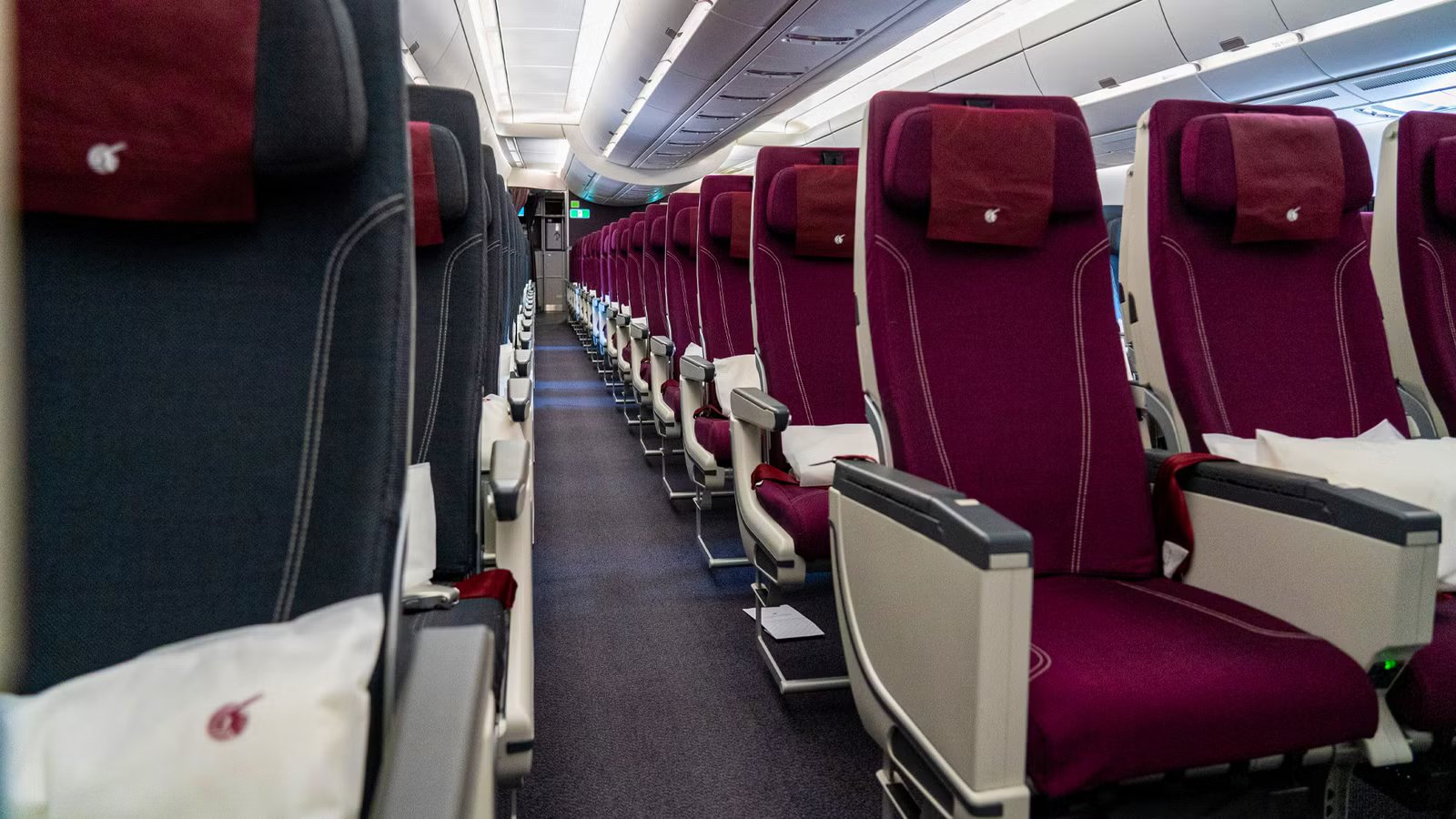
The cabin of the Airbus A350 measures approximately 19.6 feet (5.61 meters) in width, compared to about 19.5 feet (5.49 meters) on the Boeing 787 Dreamliner. That difference of roughly five inches (12 centimeters) may seem modest, but it has a direct and measurable impact on seat width, aisle space, and overall passenger comfort, especially in dense long-haul configurations. According to Airbus technical documentation, airline cabin layouts, and comparative aviation analyses, we will break down exactly how those extra inches translate into real-world experience.
Cabin width has become one of the most important competitive factors in modern widebody aircraft, particularly as airlines seek to maximize revenue without sacrificing passenger experience. We will examine the following factors to understand where the A350 beats the 787: raw dimensions, cabin layouts, passenger comfort, design philosophy, operational implications, and future trends, to explain why even a slightly wider fuselage makes a difference.
The Numbers Behind The Width Difference

At its core, the difference between the A350 and the 787 comes down to a small detail: fuselage diameter. The A350 was engineered with a slightly wider cross-section from the outset than the 787’s cabin. While the gap is just five inches, in aviation engineering terms, this is a meaningful margin that influences everything from structural design to passenger ergonomics.
Airbus has consistently emphasized that the A350’s fuselage was designed with passenger comfort in mind. According to Airbus, one of the most significant advantages of the A350 cabin is the additional usable space along the cylindrical section of the fuselage, allowing for more generous seating arrangements and improved aisle clearance. This extra width is built into the aircraft’s structural framework and affects how airlines configure their cabins.
Boeing, on the other hand, approached the 787 with a different set of priorities. The Dreamliner was designed to maximize fuel efficiency through extensive use of composite materials and aerodynamic optimization. While the cabin is still wider than older aircraft like the Boeing 767, it does not match the A350’s internal width. As a result, airlines operating the 787 must make more deliberate trade-offs when configuring seating layouts.
What makes this comparison particularly interesting is that both aircraft typically use a nine-abreast configuration in economy class. This means that the five-inch difference is divided across nine seats and two aisles, amplifying its impact. Even small variations in width can influence how cramped or comfortable a cabin feels over long periods of time. As highlighted in comparative analyses by One Mile At A Time, this seemingly minor dimensional difference is one of the most frequently cited distinctions between the two aircraft families.

The way airlines choose to use cabin width ultimately determines how passengers experience the aircraft. While both the A350 and 787 are commonly configured in a 3-3-3 layout in economy class, the A350’s additional width gives airlines more flexibility in balancing seat size and aisle space.
On the A350, most airlines install economy seats that are approximately 18 inches (45.5 cm) wide. This allows for a relatively comfortable seating arrangement while still maintaining practical aisle width for service and passenger movement. In contrast, the 787’s narrower cabin often results in seat widths closer to 17 inches (43 cm) when configured with nine seats per row. Although the difference may be less than an inch per passenger, it becomes noticeable during long-haul flights, particularly when passengers are seated shoulder-to-shoulder.
Cabin Comparison Table
|
Feature |
Airbus A350 |
Boeing 787 Dreamliner |
|
Cabin Width |
19.6 feet / 5.61 m |
19.5 feet / 5.49 m |
|
Typical Layout |
3-3-3 |
3-3-3 |
|
Seat Width in Economy Class (avg) |
16.9–18 inches |
16.2 to 17.5 inches |
|
Aisle Width |
More generous |
Slightly tighter |
Some airlines, like Japan Airlines, have experimented with eight-abreast configurations on the 787, which significantly increase seat width. However, these layouts are rare because they reduce total passenger capacity and, consequently, revenue potential. As a result, most carriers opt for the denser nine-abreast layout, even if it compromises comfort.
The A350, by comparison, offers airlines greater flexibility. Carriers can choose to maintain comfortable seat widths or slightly increase density without making the cabin feel excessively cramped. This is particularly important in premium economy and business class, where additional space can be used to enhance seat design and privacy.
Finally, the A350’s wider cabin allows airlines to strike a better balance between comfort and profitability. While both aircraft can accommodate similar numbers of passengers, the A350 offers more options for how that space is distributed.

Airbus A350-900 Vs A350-1000: Features Compared
Comparing and contrasting the modern widebody variants.
Passenger Experience: What Travelers Actually Notice

While technical specifications provide a useful baseline, passenger perception is where the A350’s wider cabin truly distinguishes itself. Frequent flyers often describe the A350 as feeling more spacious, even when the seating configuration is identical to the 787’s.
One of the most often cited differences is shoulder room. In a nine-abreast layout, passengers on the A350 generally face less crowding, especially when seated next to strangers. This can make a big difference on long flights, where comfort becomes more important over time. Even a small increase in personal space can reduce fatigue and enhance the overall travel experience.
Online discussions among aviation enthusiasts reinforce this perception. In a widely shared Reddit thread, many users note that the A350 feels less cramped in economy class, with some specifically mentioning the benefit of wider seats. These insights align with broader industry observations about the importance of cabin width in passenger satisfaction.
That said, the 787 is not without its advantages. The Dreamliner is well known for its larger windows, brighter cabin, and higher cabin humidity, all of which contribute to passenger comfort in different ways. Some travelers even prefer the 787 for these reasons, despite its slightly narrower cabin. However, when it comes to physical space, particularly in economy class, the A350’s wider cabin often gives it the edge. This is especially noticeable on ultra-long-haul routes, where passengers spend 10 hours or more in their seats. Over such durations, even small differences in seat width and spacing can have a cumulative effect.
Design Philosophy: Airbus vs Boeing

The difference in cabin width between the A350 and the 787 reflects fundamentally different design philosophies between Airbus and  Boeing. Each manufacturer prioritized different aspects of performance and passenger experience when developing these aircraft.
Airbus created the A350 after Boeing made the 787, so the company could learn from its rival’s experience. Airbus approached the A350 with a focus on maximizing cabin comfort while maintaining competitive efficiency. The wider fuselage was a deliberate choice, enabling more spacious seating arrangements and greater flexibility for airlines, while competing with both the 787 and 777. This aligns with Airbus’ broader strategy of emphasizing passenger experience as a key selling point.
Boeing, by contrast, prioritized technological innovation and operational efficiency with the 787. The Dreamliner was the first commercial aircraft to make extensive use of composite materials, reducing weight and improving fuel efficiency. These innovations allowed airlines to operate long-haul routes more economically, but they also influenced the aircraft’s overall design and had some influence on Airbus, too.
Despite these differences, both aircraft achieve similar levels of efficiency and range, making them competitors in the long-haul market. The choice between them often comes down to airline preference and operational strategy rather than pure performance metrics.
Interestingly, the A350’s wider cabin does not come at a significant efficiency penalty. Advances in aerodynamics and materials have allowed Airbus to maintain competitive fuel burn while offering additional interior space. This demonstrates how modern aircraft design involves complex trade-offs between comfort, efficiency, and cost.

Boeing 777X Vs. Airbus A350-1000: Who Will Win The Battle For Tomorrow’s Flagship?
The 777X is nearly ready for service, how will it fare against Airbus’s A350?
Why Five Inches Matter More Than You Think

For many travelers, the idea that five inches of extra cabin width could make a meaningful difference may seem surprising. However, when that space is distributed across an entire row of seats, its impact becomes much more apparent.
In a typical nine-abreast configuration, the extra width can be allocated to seat size, aisle width, or a combination of both. On the A350, airlines often use this space to provide slightly wider seats, improving passenger comfort. On the 787, the narrower cabin means that airlines must make more constrained decisions, often resulting in tighter seating arrangements.
Over the course of a long-haul flight, these differences can become increasingly significant. Wider seats reduce pressure points and allow for more natural movement, while wider aisles make it easier for passengers and crew to move through the cabin. These factors contribute to a more comfortable and less stressful travel experience.
From an airline perspective, the ability to offer slightly more space can also be a competitive advantage. As passenger expectations continue to evolve, comfort is becoming an increasingly important factor in airline choice. The A350’s wider cabin provides airlines with an opportunity to differentiate themselves.
The Future Of Widebody Cabin Design

In the near future, the importance of cabin width is unlikely to diminish as airlines continue to refine their interiors and compete for passenger loyalty. Both Airbus and Boeing are investing heavily in new cabin concepts, but the underlying dimensions of their aircraft will continue to play a crucial role.
Airbus has already introduced its “Airspace” cabin for the A350, which emphasizes spaciousness, improved lighting, and enhanced passenger comfort. These features build on the aircraft’s inherent width advantage, further reinforcing its appeal to airlines and travelers alike.
Boeing, meanwhile, continues to enhance the 787 experience through innovations in lighting, air quality, and passenger amenities. While the cabin may be slightly narrower, the Dreamliner remains one of the most advanced and popular long-haul aircraft in service today.
As the aviation industry evolves, airlines will continue to balance capacity and comfort in their cabin designs. In this context, the A350’s wider fuselage provides a foundation for more flexible and passenger-friendly configurations. While both aircraft families will remain central to global long-haul travel for decades to come, those extra five inches ensure that the A350 maintains a distinct advantage in one of the most tangible aspects of flying: personal space.