dailynewsnblog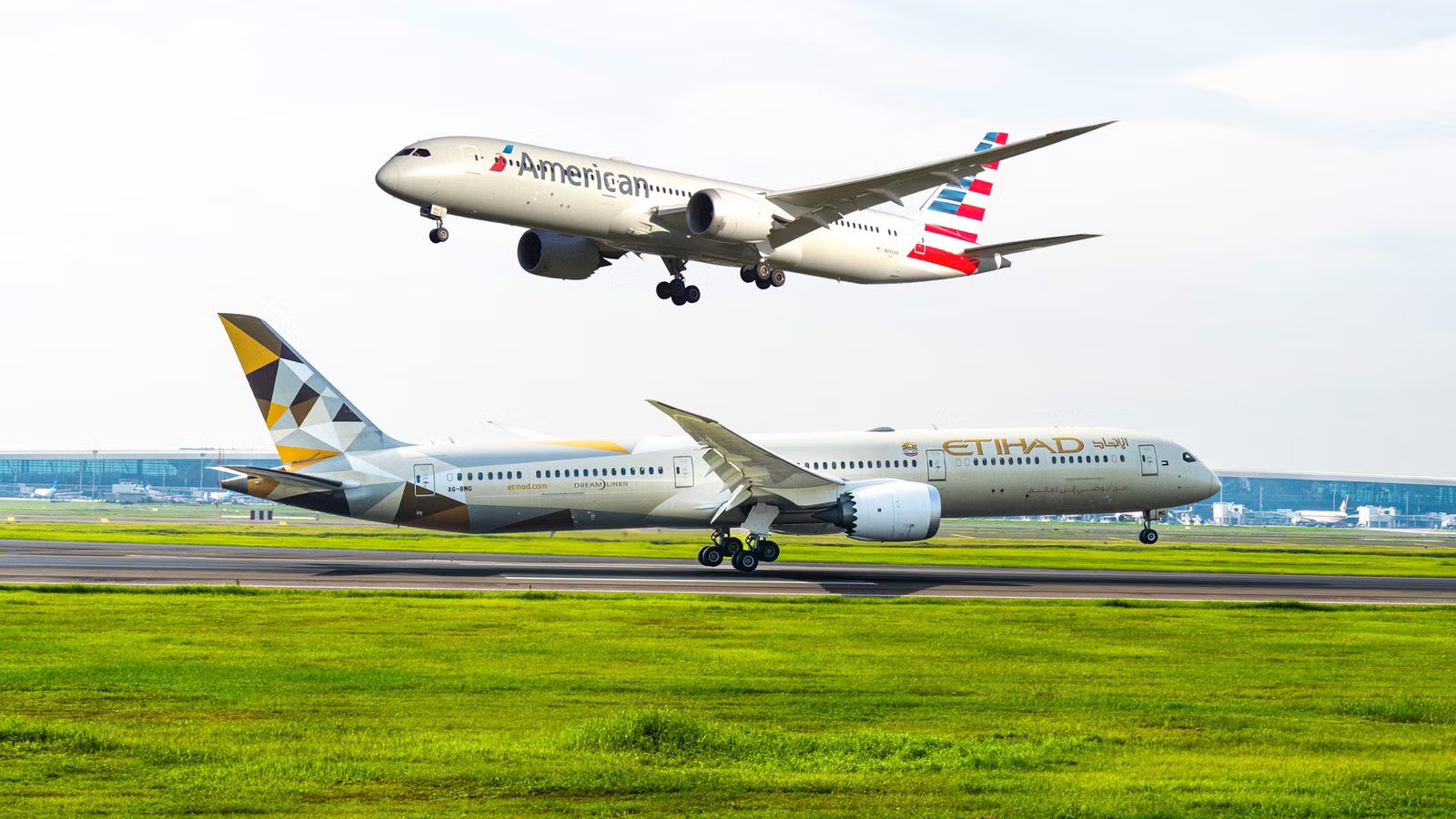
When  Boeing developed the 787 Dreamliner family, the goal was not simply to build one long-haul aircraft, but to create a flexible platform capable of serving multiple missions across global airline networks. The result was a trio of variants that share common technology and design philosophy while targeting very different operational needs. Among them, the 787-9 and 787-10 often invite direct comparison, as both sit at the larger end of the Dreamliner lineup and frequently operate similar long-haul routes. At first glance, the two aircraft appear nearly identical. They share the same advanced composite construction, similar wings, and next-generation engines designed to reduce fuel burn and improve passenger comfort. However, beneath those similarities lies a critical difference that shapes how airlines deploy each variant: range. While the 787-10 is the longer aircraft and can carry more passengers, it does not fly as far as the 787-9.
In fact, the 787-9 offers approximately 1,200 nautical miles (2,220 km) more range than the 787-10, a difference that can determine whether certain intercontinental routes are viable without restrictions. Understanding why that gap exists requires looking beyond simple size comparisons and examining how weight, fuel capacity, aerodynamics, and airline strategy all interact. The distinction ultimately reveals how Boeing optimized each variant for a specific role within the long-haul market rather than designing a single aircraft to do everything.
Overview Of The 787 Dreamliner Family

The Boeing 787 marked a major turning point in commercial aircraft development when it entered service, introducing widespread composite construction, improved cabin pressurization, and dramatically lower fuel burn compared to previous widebody generations. Boeing designed the aircraft from the outset as a family platform capable of serving multiple long-haul missions while maintaining strong commonality between variants. Airlines could therefore operate aircraft of different sizes without requiring entirely separate pilot training programs or maintenance ecosystems.
The Dreamliner lineup consists of three primary variants: the 787-8, 787-9, and 787-10. While the -8 launched the program and remains popular on thinner long-haul routes, the 787-9 quickly became the most versatile and widely adopted version. Sitting between the smaller -8 and stretched -10, the aircraft provides airlines with a balance of seating capacity, cargo capability, and intercontinental range that allows it to operate everything from transatlantic services to ultra long-haul Pacific crossings.
The 787-10 represents Boeing’s effort to push the platform toward higher capacity markets. By stretching the fuselage further, Boeing allowed airlines to add dozens of additional passengers compared to the -9 while maintaining similar cockpit design and overall operational characteristics. However, this increase in size required compromises elsewhere. Because the aircraft retained much of the same wing and fuel architecture as the shorter variants, the additional passenger capacity came at the expense of reduced range.
Rather than replacing the -9, the -10 was designed to complement it. Boeing recognized that airlines increasingly wanted aircraft optimized for different missions within the same fleet. Some routes demanded extreme range and flexibility, while others prioritized efficiency and passenger volume. The result is two aircraft that may appear similar externally but serve very different operational purposes once airlines begin planning real-world route networks.
Official Range Comparison: 787-9 vs 787-10

On paper, the range difference between the Boeing 787-9 and 787-10 is substantial. The 787-9 is rated for approximately 7,565 nautical miles of range, while the larger 787-10 is certified for around 6,345 nautical miles. That roughly 1,200 nautical mile difference translates into several additional hours of flight time and dramatically expands the number of city pairs the -9 can realistically operate without restrictions.
In operational terms, range does not simply determine how far an aircraft can travel in ideal conditions. Airlines must account for headwinds, alternate airport requirements, payload weight, and seasonal weather patterns. A route that appears possible on paper may require weight restrictions during certain times of year if the aircraft lacks sufficient performance margin. The additional range available on the 787-9 provides airlines flexibility to maintain full passenger and cargo loads even under less favorable operating conditions.
Passenger capacity further highlights the tradeoff Boeing engineered between the variants. Typical airline configurations place the 787-9 between roughly 280 and 300 passengers in mixed-class layouts, while the longer 787-10 can accommodate closer to 320 to 340 passengers depending on configuration. That additional seating capacity can significantly increase revenue potential on high-demand routes, particularly where premium cabins sell strongly.
Ultimately, the published range figures reveal Boeing’s strategy clearly. The 787-9 targets airlines seeking network flexibility and long-haul reach, while the 787-10 sacrifices that additional distance capability to maximize per-seat efficiency on routes where extreme range simply is not required.

Where Can You Fly Domestically On American Airlines’ Boeing 787 Dreamliners?
Whether flying across the country or between key airline hubs, the Dreamliner provides an upgraded travel experience.
Why The 787-9 Flies Farther

The reason the 787-9 can fly significantly farther than the 787-10 comes down to a combination of aerodynamics, structural weight, and fuel capacity limitations. Although the -10 is longer, it does not carry proportionally more fuel. Boeing retained essentially the same wing design and fuel tank system developed for earlier Dreamliner variants, meaning the stretched aircraft must share similar fuel volume despite carrying more passengers and structural mass.
Aircraft range depends heavily on fuel fraction, which is the relationship between available fuel and total aircraft weight. As fuselage length increases, structural reinforcement becomes necessary to maintain strength and rigidity. Additional seating, galleys, lavatories, and cargo also add weight. Even though the engines remain highly efficient, the heavier aircraft consumes more fuel to maintain cruise performance, reducing overall range compared to a lighter configuration.
Landing gear geometry and runway performance considerations also influenced the design. The longer fuselage of the 787-10 required adjustments to maintain safe rotation angles during takeoff and landing. These constraints ultimately limited how far Boeing could increase maximum takeoff weight compared to what might have been required for true ultra long-range capability. Simply adding fuel without structural changes was not feasible without redesigning major portions of the aircraft.
Rather than redesign the wing or significantly alter the aircraft’s structure, Boeing chose optimization over expansion. The company recognized that airlines increasingly wanted aircraft capable of moving large numbers of passengers efficiently between major hubs rather than only pursuing record-setting range figures. The 787-10 therefore became a high-efficiency long-haul aircraft rather than a long-range specialist.
Capacity vs Range Tradeoff

Stretching an aircraft almost always introduces a fundamental engineering compromise between capacity and range. In the case of the 787-10, Boeing intentionally prioritized passenger volume and operating economics. By increasing seating capacity without dramatically increasing operating complexity, airlines could achieve lower fuel burn per passenger compared to smaller widebody aircraft.
This advantage becomes especially important on routes with consistent demand. Flights between major financial centers, popular leisure destinations, or high-volume connecting hubs benefit from additional seating because airlines can generate more revenue from each departure slot. Airports with limited runway capacity or congestion constraints particularly reward aircraft capable of carrying more passengers per movement.
However, the reduced range means airlines must deploy the aircraft carefully. Ultra-long-haul routes across the Pacific or deep into Southern Hemisphere markets often require the flexibility offered by the 787-9 instead. Even when technically capable of operating a route, the 787-10 may require payload restrictions during strong headwinds or high temperatures, which can reduce cargo revenue or passenger availability.
The result is a complementary fleet strategy for many airlines. The 787-9 often operates thinner or longer routes connecting secondary cities, opening markets that previously required larger aircraft. Meanwhile, the 787-10 excels on dense long-haul sectors where airlines can maximize seat count while still benefiting from Dreamliner fuel efficiency and passenger comfort improvements.

787-8 Vs 787-9 Vs 787-10: How The Dreamliner Variants Differ
The three 787 variants are tailored to different market segments to fill niches and offer a placement for different previous-generation aircraft.
How The 787 Compares To Airbus A350 Variants

When comparing the Dreamliner family to the Airbus A350 lineup, differences in manufacturer philosophy become increasingly clear. Airbus positioned the A350 as a higher-range widebody platform from the outset, targeting airlines seeking ultra long-haul performance alongside large passenger capacity.
|
Range of A350 Variants |
||
|---|---|---|
|
Variant |
Range (NM) |
Max Flight Duration |
|
-900 |
8,500 (15,742 km) |
Not published |
|
-900ULR |
9,700 (17,964 km) |
20 hours |
|
-1000 |
9,000 (16,668 km) |
Not published |
|
-1000ULR |
9,700 (17,964 km) |
22 hours |
Even the standard A350-900 exceeds the range capability of both the 787-9 and 787-10. Ultra long-range versions extend that advantage significantly further, allowing airlines to operate some of the longest nonstop flights ever attempted in commercial aviation. Routes exceeding 18 or even 20 hours become possible with these specialized configurations.
Airbus achieved this performance through a larger wing, greater fuel volume, and higher maximum takeoff weight margins compared to the Dreamliner platform. These characteristics allow the aircraft to carry substantial payloads across extreme distances while maintaining strong efficiency relative to older widebody designs.
That said, the comparison is not purely about range supremacy. The 787 family often offers lower trip costs and operational flexibility on medium to long-haul missions where ultra-long-range capability is unnecessary. Airlines choosing between the two aircraft families must therefore balance mission profile, passenger demand, and fleet strategy rather than simply selecting the aircraft capable of flying the farthest distance.