dailynewsnblog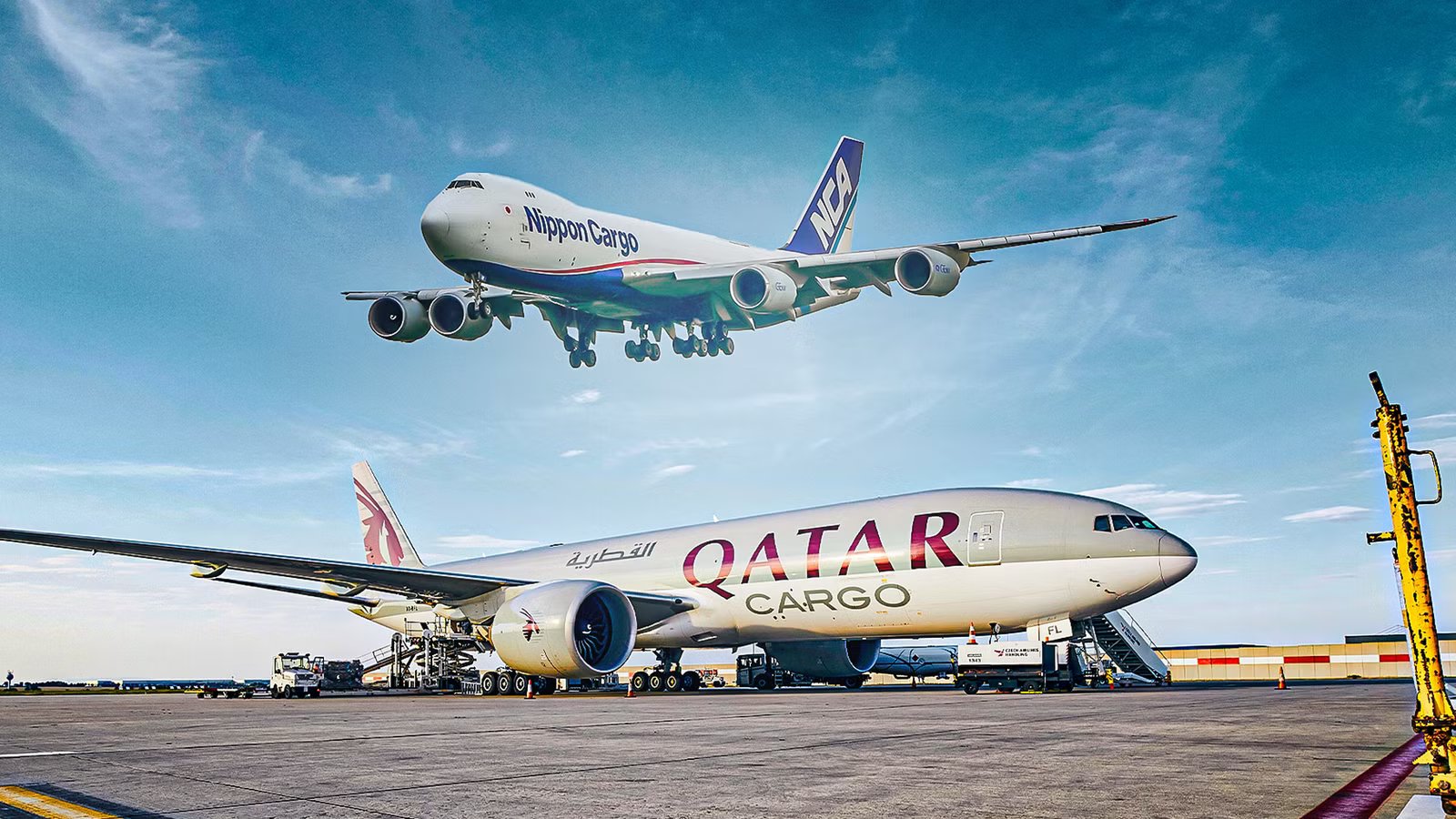
The global logistics industry is currently navigating a period of profound structural change as the era of four-engine heavy freighters begins to see its end. The Boeing 747 has spent half a century as the undisputed Queen of the Skies, but the rise of the twin-engine Boeing 777F has now challenged the necessity of four engines for long-haul cargo operations. This guide provides a detailed technical comparison of these two titans, exploring why the Boeing 747-8F remains the popular large cargo choice and why the 777F has become the scalpel of choice for high-frequency efficiency.
For operators, the choice between these two dictates whether they can handle a high-priority shipment of industrial turbines or if they are better suited for the high-volume, lower-density world of modern e-commerce. As we look at the specifications that define these machines, we see a clear picture of how  Boeing has managed to dominate the freighter market by offering two very different solutions for the world’s complex supply chains.
Weight Or Volume?

The Boeing 747-8F and the 777F exist at the very top of the commercial freight hierarchy, yet they handle the physics of heavy lifting in very different ways. The 747-8F is the clear heavy lifter of the pair, capable of carrying a maximum revenue payload of approximately 137 tons (274,000 lbs). This massive capacity is enabled by four General Electric GEnx engines, providing the raw thrust necessary to lift nearly 302,000 pounds of revenue cargo. In comparison, the 777F is optimized for a different kind of operation, offering a maximum payload of around 102 ton (224,900 lbs).
The difference in total cargo volume is equally significant when planning complex logistics chains. The 747-8F offers a staggering 853 cubic meters of total revenue volume, providing approximately 16% more space than the older 747-400F. This volume allows for the carriage of 34 standard pallets on the main deck alone, making it the primary choice for volume-heavy industries like automotive manufacturing or high-fashion logistics. The 777F, while smaller, still manages to offer 653 cubic meters of volume, accommodating 27 standard pallets on its main deck. For many airlines, the 777F represents a sweet spot in the market, as it can carry almost the same payload as a 747-400F but with 30% less fuel consumption.
The 747-8F is often used to reach its maximum weight limit before its physical space is filled, which is common when transporting heavy machinery. Conversely, the 777F is frequently seen filling volume on e-commerce routes, where the volume of lightweight parcels fills the hold before the weight limit is ever reached. This distinction is why major global integrators often maintain a mixed fleet, using the 777F for the consistent, high-volume flow of small packages and reserving the 747-8F for heavy, dense industrial loads.
A Key Differentiator

The Boeing 747-8F possesses a unique architectural feature that the 777F cannot replicate, which is a nose that swings upward to reveal a massive front-loading aperture. This allows for the straight-in loading of exceptionally long items, such as oil and gas pipes, aerospace components, or industrial turbines. Without this nose door, items of this length would be impossible to maneuver through a standard side-loading door, regardless of how much weight the aircraft could technically lift.
The 777F, by contrast, relies entirely on a large main deck side cargo door located behind the wing. While this door is wide enough to accommodate most standard pallets and even some large jet engines, it requires all cargo to be turned 90 degrees once it enters the aircraft. This geometric constraint means that the 777F is more suited to standardized logistics, physically incapable of carrying the massive cargo that has become the 747’s specialty. Overall, the 747-8F remains the only high-capacity commercial western freighter capable of front-loading, a niche that has kept the 747 relevant even as twin-engine jets dominate the passenger market.
|
Feature |
Boeing 747-8F |
Boeing 777F |
|
Loading Points |
Nose Door / Side Door |
Side Door Only |
|
Max Cargo Length |
Up to 144 feet (44 meters) |
Approx. 65-82 feet (20–25 meters) |
|
Nose Opening Height |
8 feet (2.44 meters) |
N/A |
|
Main Deck Side Door |
10.23 x 11.15 feet (3.12 x 3.40 meters) |
10.33 x 12.20 feet (3.15 x 3.72 meters) |
|
Lower Hold Doors |
2 Doors |
2 Doors |
This loading versatility is a primary reason why specialized carriers like Silk Way West or Atlas Air continue to operate the 747-8F alongside their 777 fleets. Having the ability to offer a straight-in loading solution allows these airlines to bid on contracts that involve heavy machinery or military hardware that simply won’t fit through a side door. Despite this, managing the balance and center of gravity on a 747-8F during a nose-loading operation is a precision task, as the weight distribution changes rapidly as the load moves toward the rear of the aircraft.

Why In The World Did Boeing Build The 747 Freighter With A Nose Door?
Discover the surprising reason behind the 747 Freighter’s iconic nose door design.
Maximizing The Available Space

The logistical efficiency of a freighter is often measured by its pallet positions, which determine how much revenue-generating space is available on the main deck. The Boeing 747-8F is a titan in this regard, offering 34 pallet positions on its primary level. This is a significant increase over the 27 positions found on the 777F, allowing the 747-8F to carry roughly 25% more palletized goods per flight. Those seven extra pallets can represent the difference between a break-even flight and a highly profitable one, especially when transporting high-density industrial components.
On the 747-8F, the main deck is over 223 feet (68 meters) long, allowing for two rows of side-by-side pallets for the majority of the fuselage. This width is consistent enough that even the hump of the upper deck does not significantly impede the height of the cargo stored directly beneath it. In contrast, the 777F main deck is approximately 137 feet (42 meters) long. While it is slightly wider in certain sections due to its more modern circular fuselage cross-section, it cannot match the sheer longitudinal space of the 747-8F.
Managing the weight and balance of these pallets is a critical technical task for the loadmaster and the flight crew. Because the 747-8F is so long, a heavy pallet placed at the very rear of the aircraft has a much larger moment or leverage effect on the center of gravity than a pallet placed in the center. The 777F, while shorter, requires similar precision, but its twin-engine configuration makes it slightly more sensitive to lateral imbalances.
Two Is Better Than Four?

The 747-8F is the true leader in raw lifting capacity, but that weight comes at a cost to its maximum range. When carrying a full structural payload of 137 ton, the 747-8F has a range of approximately 4,265 nautical miles. This makes it a formidable tool for transpacific hops or routes between major European and Asian hubs, but it requires careful fuel planning if the aircraft is loaded to its absolute limit.
In contrast, the 777F was engineered to be a long-range specialist, combining the efficiency of only two engines to stay in the air longer with a full load. When carrying its maximum structural payload of 107 ton, the 777F can fly approximately 4,970 nautical miles. This extra 700 nautical miles of reach is a critical advantage for airlines that need to bypass traditional stopover points, such as Anchorage or Dubai, to provide faster point-to-point delivery services. What this means is that the 777F offers a more flexible range-to-payload curve, often allowing for direct flights that would require a refueling stop for a fully loaded 747-8F.
|
Metric |
Boeing 747-8F |
Boeing 777F |
|
Range at Max Payload |
4,265 nmi |
4,970 nmi |
|
Engines |
4 x GEnx-2B |
2 x GE90-110B1 |
|
Fuel Burn (Estimate) |
~7,307 gallons/hour |
~4,760 gallons/hour |
This performance gap highlights the shifting priorities of the global cargo market. The 747-8F is irreplaceable for heavy sectors where the payload is so dense it justifies the higher fuel burn, and the 777F has become the preferred choice for long-distance express flying. By burning significantly less fuel per hour, roughly 30–40% lower fuel burn per flight, the 777F allows airlines to maintain higher profit margins on competitive international routes. As environmental regulations become stricter, the superior fuel efficiency of the twin-engine platform is becoming an even more decisive factor for carriers looking to modernize their long-haul operations.

The Aircraft Replacing The Boeing 747 Freighter
When the Boeing 747 freighter era ends, discover how Boeing’s 777s and Airbus’ A350F will redefine the future of global air cargo.
Not Rivals, But A Team

The logistical landscape of the Middle East demonstrates the success and coexistence of the 747-8F and the 777F. Major carriers have built their entire global networks around the hub and spoke model, using the central geographical position of cities like  Dubai and Doha to move goods between Europe, Asia, and Africa. In this high-heat, high-demand environment, the 777F has become the regional operations choice due to its ability to maintain high payload performance even in the thin air of a desert summer. The 777F’s massive GE90 engines provide the necessary thrust to climb quickly out of congested airspace, a critical factor for maintaining the tight schedules required by modern supply chains.
While the 777F handles the bulk of the high-frequency e-commerce and perishable goods, the 747-8F is reserved for the heavy industrial sectors that power the region’s infrastructure projects. Transporting oversized oil field equipment, luxury vehicles, or massive electrical transformers requires the unique nose-loading capability of the 747-8F. Many of these industrial hubs are located in remote areas with limited ground handling equipment, and so the 747-8F’s ability to self-load long items through the nose makes it an essential tool for project cargo.
The economic reality of the Middle Eastern market is that these two aircraft are rarely in direct competition and instead, they function as a coordinated team. The 777F provides the range and fuel efficiency balance, but the 747-8F provides the brute force necessary for the heavy-lift contracts that define the region’s energy sector. With these combined together, cargo operators have the flexibility to carry virtually anything that is possible within the limits of commercial cargo operations to anywhere.
Twin Only Reality

The retirement of the final Boeing 747-8F from the production line in early 2023 marked the beginning of the end for the four-engine freighter era. These aircraft will remain in service for decades to come due to their specialized nose-loading capability, but the industry is already looking toward the Boeing 777-8F as the spiritual successor to both the 747 and the current 777F. This next-generation twin-engine jet aims to close the payload gap even further, offering a structural payload of 118 ton (260,524 pounds) while maintaining the incredible fuel efficiency of the 777X wing design. For many carriers, the 777-8F represents the ultimate evolution of the freighter, providing the volume of a jumbo with the operating costs of a twin.
As the 747-8F fleet ages, the cost of maintaining four GEnx engines and the complex nose-door hydraulics will naturally increase, likely pushing the aircraft into a niche role for project cargo only. In contrast, the 777F and its upcoming 777-8F successor will handle the vast majority of general freight, e-commerce, and temperature-controlled pharmaceutical shipments. The transition to these newer models involves a shift toward even greater cockpit automation and digital load monitoring, ensuring that every cubic meter of the aircraft is utilized to its maximum economic potential.
The future of air cargo, like the passenger sector, is clearly moving toward a twin-engine only reality, but the shadow of the 747-8F will loom large for a long time. There is currently no other Western-built aircraft in development that features a nose-loading door, meaning that for outsized cargo, the 747-8F remains an irreplaceable asset. For now, at least, the industry will continue to rely on the Queen of the Skies for those unique missions that require brute force and front-end access, even as the 777 family takes over the high-frequency global trade routes that keep the world’s economy moving.