dailynewsnblog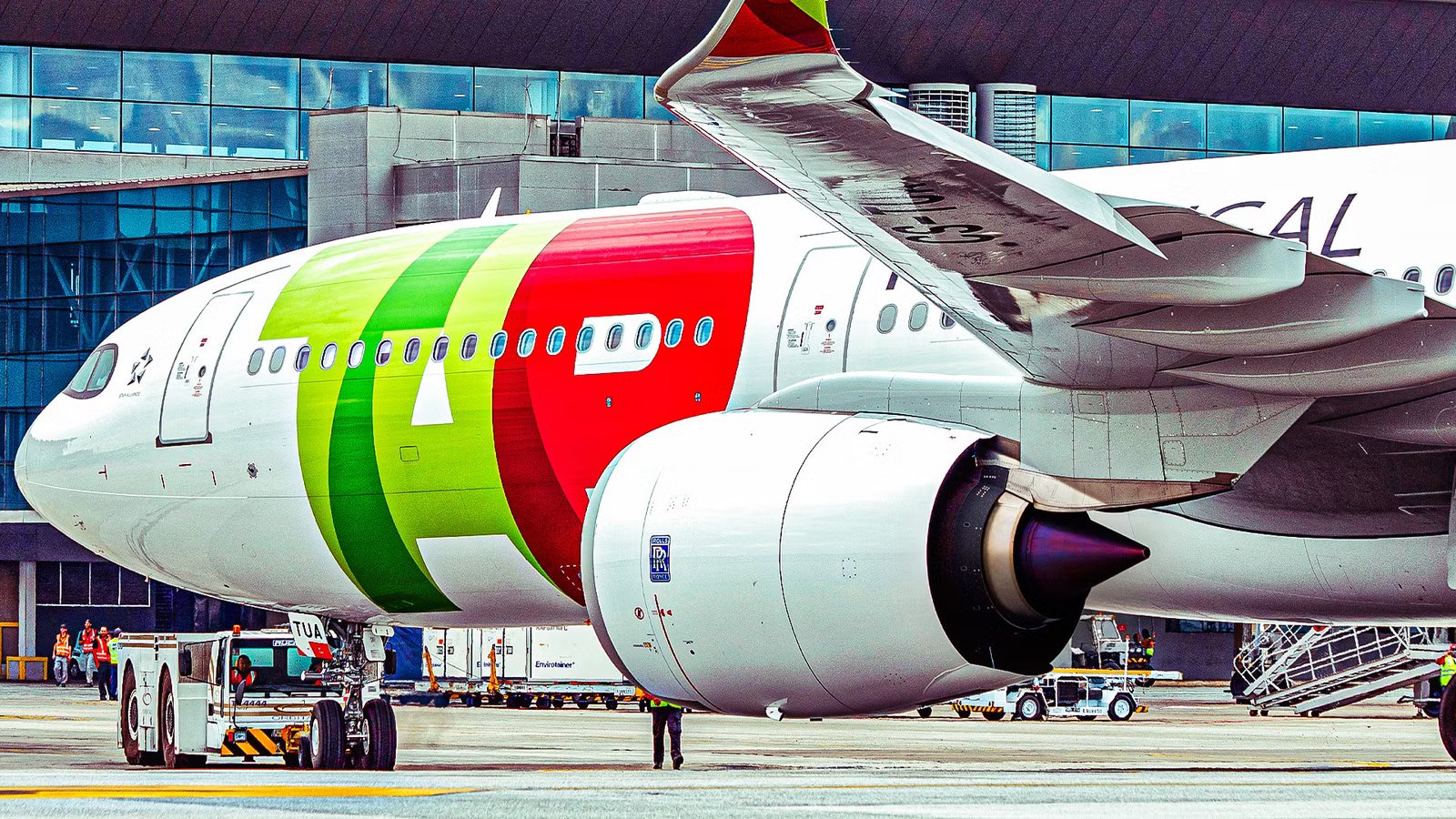
The Airbus A330 program emerged from a unique double launch strategy in the late 1980s, evolving through decades of incremental improvements into the modern A330neo. In June 1987, Airbus launched the A330 twinjet and A340 quadjet simultaneously as a twin program. In 2014, Airbus announced a modernized version of its mainline twin-aisle jet to compete with the new Boeing 787 Dreamliner.
Extending the wingspan of the A330neo was a central engineering element of the aerodynamic overhaul given to the modernized variant of the classic Airbus widebody. The new jet’s wing is nearly 4 meters wider than its predecessor. Officially designated the A330-800 and -900, the total wingspan of the new jet is 64 meters (209 feet 11 inches). Not only is it a bigger wing, but it is also brand new in every other technical aspect, thanks to the use of composite material in its construction.
Nose To Tail Updates

The A330neo is a direct evolution of the A330ceo, retaining 95% airframe commonality, which allows airlines to swap fleets with minimal training and infrastructure costs. To compete with the Boeing 787, Airbus strategically re-engineered specific high-impact areas rather than building a cleansheet aircraft. The most visible engineering change is the new wing, which leverages 3D Computational Fluid Dynamics (CFD) to outperform legacy designs.
The A330neo wing has the highest aspect ratio of any commercial aircraft in production, surpassing both the Boeing 787 and the upcoming 777X to significantly reduce the induced drag on the big jet. It also has a different wing twist, which optimizes its camber and lower fairings for better aerodynamics. The outer wing is extended with Carbon Fiber-Reinforced Plastic (CFRP) sharklets, increasing the span to 64 meters. Airbus leveraged A350 technology to create new pylons and composite nacelles for the much larger engines slung under its new wings as well.
NEO is a designation used by Airbus, meaning new engine option, which is applied to all of the successor generation airframes built upon legacy designs, and despite its literal wording, the evolution of these aircraft goes far beyond simply the power plants. It is, of course, true that the A330neo introduced an exclusive engine made by Rolls-Royce, the Trent 7000, which did significantly reduce both its fuel consumption and its noise footprint.
The Heart Of The Jet

Rolls-Royce worked in collaboration with Airbus to develop the Trent 7000 engines and then an exceptionally high 10 to 1 bypass ratio. This is double the previous engine bypass ratio found in the Trent 700, which directly contributes to a 12% to 14% fuel burn improvement per trip. Adding to that performance enhancement, much less maintenance is required thanks to refined engineering and improved components, but also a smarter preventative maintenance program.
Thanks to the integration of the latest flight deck technology, the A330neo is much ‘smarter’ than its predecessor, which extends beyond the glass cockpit and includes real-time health monitoring with data-connected aircraft systems, including the engines. The estimated lifetime savings for operating the A330neo are as much as 28% cheaper compared to the legacy A330 airframe.
The cockpit also includes the latest flight ops systems, dual Head-Up Displays (HUD), and the Runway Overrun Protection System (ROPS). Much of the technology was borrowed from the A350 program, inspired by the Boeing 787 Dreamliner. The A330neo was not a clean sheet design and therefore could not incorporate as many innovative new technologies; however, the minimal training and infrastructure changes required to adopt the A330neo by carriers of the A330ceo significantly reduce upfront investment for operators to upgrade.

The A330neo program was born as a direct strategic response to the market pressure created by the Boeing 787 Dreamliner. While the 787 represented a cleansheet revolution, the A330neo was designed as a high-value evolution to protect Airbus’ share of the widebody market. Specifically, the 787-8 and 787-9 directly compete in the same industry segment as the A330ceo. Thus, the A330neo was born to protect Airbus’ market share.
When Boeing launched the 787 in 2004, Airbus’ initial response was a basic A330 upgrade. The European plane maker found that few airlines had any appetite for such a modest improvement. In order to meet the demand of airlines, Airbus invested heavily in its A350 XWB program, which targeted the larger variants of the 787 as well as customers considering the next-generation 777X widebody.
Instead of another multibillion-dollar cleansheet design, Airbus launched the A330neo in 2014 to offer similar economics to the composite Boeing twin aisle without the burden of the 787’s high acquisition costs. Airbus developed the A330neo for approximately $2 billion, whereas the 787’s development cost exceeded $15 billion. The lower investment required by Airbus to create this updated variant also allowed the maker to sell it at a lower price tag.

Airbus Vs. Boeing: Who Finished 2025 With More Orders?
Boeing won the race this year. Here’s how much further ahead the company is compared to Airbus, and the changing trends in the market.
The Right Size For The Job

The A330neo was strategically designed to match or slightly exceed the passenger capacity of the Boeing 787-8 and 787-9 while offering lower acquisition costs and painless fleet commonality. Notably, the A330neo offers a higher seating capacity than its Boeing competitor when compared head to head. This also extends to the A350, which competes with the largest Dreamliner, the 787-10. A one-to-one comparison of each reveals that the Airbus is larger every time.
The Airbus A330-800 is the smaller variant of the A330neo family. It typically seats 257 passengers in a three-class configuration, offering superior fuel efficiency and range, at 8,150 nautical miles, compared to the A330ceo. This makes the aircraft a direct competitor to the 787-8, which is the smallest of the Dreamliners, but the A330-800 is still larger than the Boeing.
Meanwhile, the A330-900 typically seats between 260 and 300 passengers in a three-class layout, and its maximum range is around 7,200 nautical miles. The A330-900 goes head to head with the 787-9, with both being the primary workhorse airframe of each respective model family from their maker. Once again, the Airbus is typically configured with a higher seat capacity than its Dreamliner competition.

7 Ways Airbus Made The A330neo Different From The Original A330
The A330neo represents progress in seven key areas compared to the older A330ceo.
Adapting To Customer Demand

The A330neo was specifically engineered to beat the 787 in niches where the Dreamliner’s advanced technology was overkill. Although the A330neo and the A350, for that matter, have not seen the sales success that the 787 has, operators that fly on the short end of the long haul have proven to be good customers. These types of routes do not benefit operators financially in the way that longer flight plans do.
The 787 and the A350 both have better fuel efficiency than the A330neo, and both also have more technology on board that improves the flying experience for long-haul travelers, reducing fatigue and jet lag. Itineraries around the 3,000 nautical miles, or even as long as 5,000 nautical miles, do not benefit from the per-seat fuel burn advantage as much as more distant flights do.
Similarly, travelers on these flights that are several hours long do not feel the benefits of the advanced fatigue reduction systems on the more advanced wide bodies that flyers on journeys over the 10 or 12-hour mark do. Airbus specifically markets its A330neo to operators that need to upgrade aircraft on such routes because the lower upfront purchase price and minimal retraining for pilots and ground crew are more appealing benefits.

Boeing: Commercial Deliveries Up 15%, 787 Deliveries Nearly Double Q1 To Q2
Boeing saw its best second quarter since 2018.
The Best Selling Widebody In History

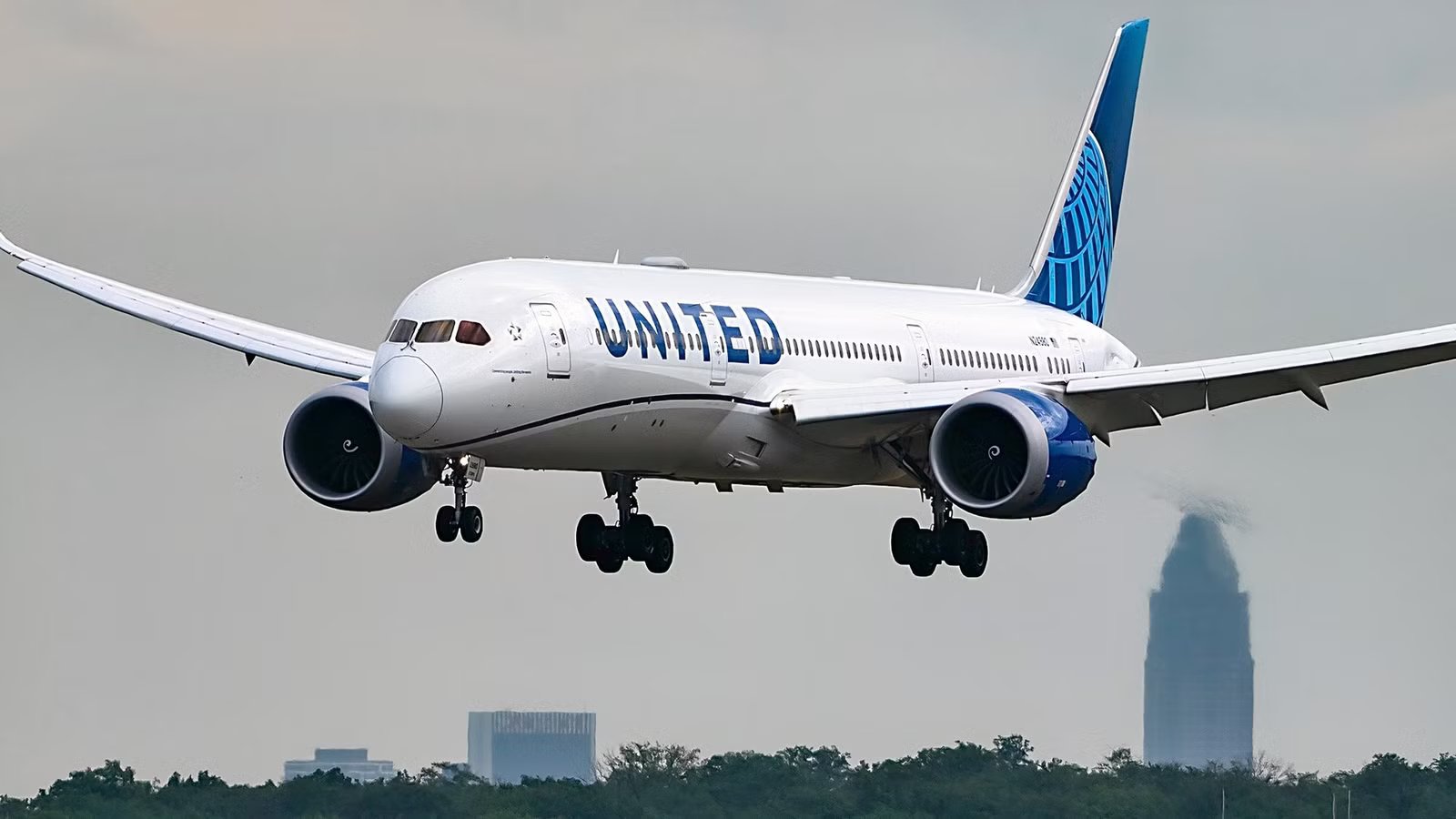
The Boeing 787 Dreamliner has established itself as the world’s best-selling widebody aircraft in history, surpassing 2,000 orders in a record-breaking 12 years after launch. As of early 2026, it serves as Boeing’s primary widebody pillar, commanding a 59% share of the twin-aisle backlog compared to Airbus’ 41%. Its success has not only challenged Airbus’ dominance but also provided critical financial stability while Boeing navigated crises with the 737 MAX and significant delays in the 777X program.
The Dreamliner’s dominance in the mid-size widebody segment has kept Airbus on the defensive in that market category. During the 737 MAX’s most difficult periods, the 787 provided a high-value widebody alternative for airlines. In 2025 alone, Boeing booked 363 new 787 orders, its strongest sales period in the program’s history. The steady production and sales of the 787 has also helped mitigate losses from the 777X program, which is now slated to be seven years behind schedule and has caused Boeing millions in penalties.
Airbus launched the A330neo specifically to bridge the gap between the older A330ceo and the new A350, primarily as a lower-cost competitor to the 787. However, the A330neo has struggled to match the 787’s sales volume, with only 445 total orders compared to over 2,300 for the 787. Airbus’ total widebody backlog stands at approximately 1,056 aircraft, while Boeing’s widebody backlog is significantly larger at roughly 1,747 aircraft, driven heavily by the 1,048 unfilled 787 orders, according to Forecast International.
Despite its success, the 787 program has faced its own hurdles, including significant compensation payments to airlines for delivery delays and approximately $32 billion in total development costs. Airbus and the European Union also launched a lawsuit against the United States and Boeing for unfair business practices, dragging on in the courts for years before finally being resolved. Boeing currently estimates it needs between 1,300 and 2,000 total sales to fully break even on the program.