dailynewsnblog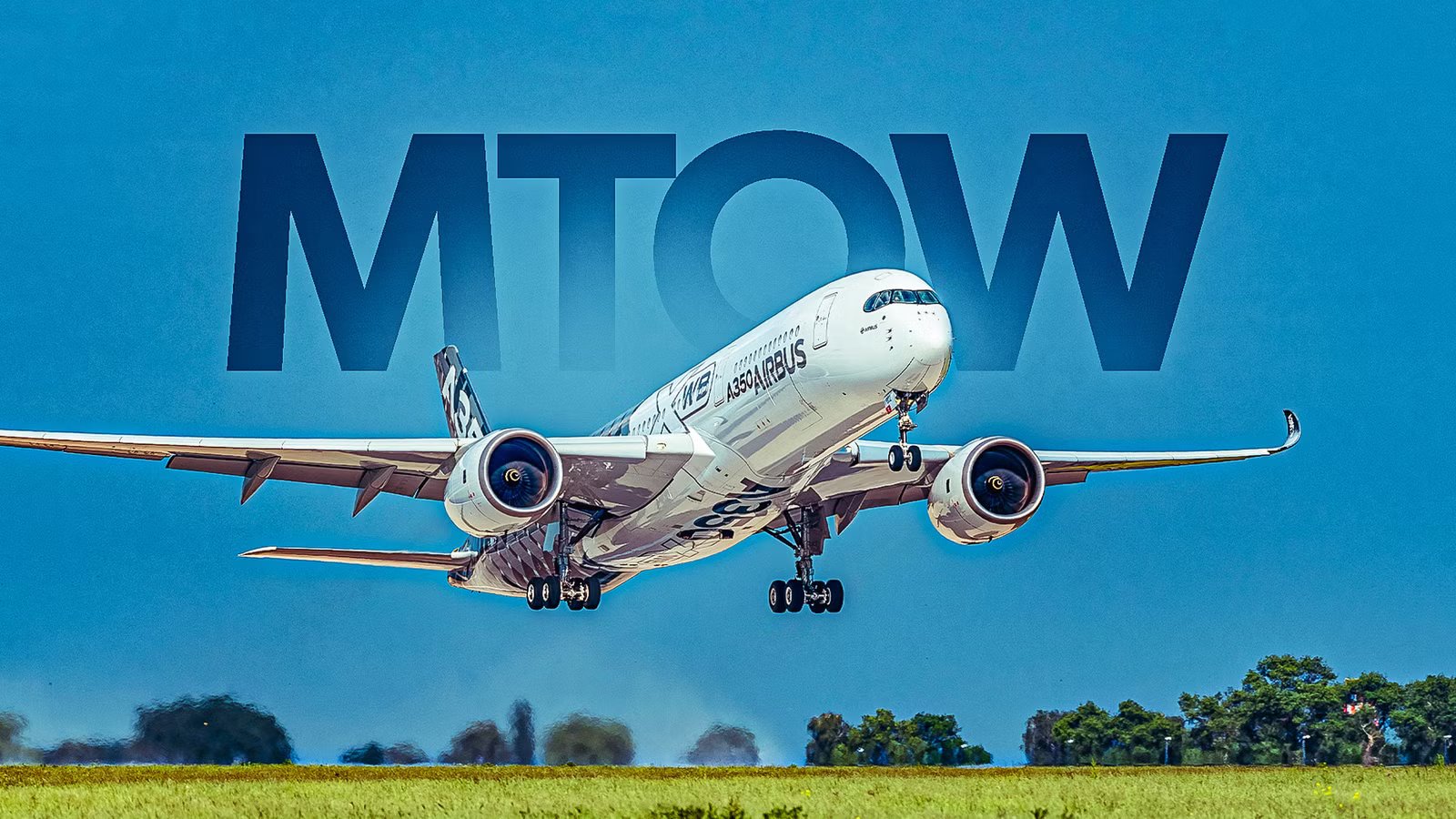
Upon first glance, the Airbus A350-900 and the A350-1000 both look like the same aircraft scaled up or down. From the same aircraft family, with the same wing philosophy, the same cockpit, and broadly the same mission, it is not surprising that these jets look functionally the same. The jet’s long-haul efficiency is unparalleled, and the jet features modern composites. One specification, however, does effectively capture the difference between these two jets, as they each offer different maximum takeoff weights (MTOW). It is not just a larger number on a data sheet, but rather a certified limit that shapes everything from payload-range capability to runway performance. It also defines engine thrust requirements and even what an airline will pay in airport and overall navigation fees.
In this piece, we will also break down how much heavier the Airbus A350-1000 can be at takeoff speed when compared with the A350-900, and, more importantly, why this gap exists. The A350-1000 is not simply a stretched version of the -900, as it carries more passengers, requires more thrust, and relies on a beefier structure and landing gear to handle the additional loads. We will also examine what the differences between these types reveal about real-world route planning, cargo uplift, and the trade-offs that airlines are forced to accept when they transition from the A350-900 to the -1000.
An Overview Of The Airbus A350 Development Program

If you have heard about Airbus’ impressive commercial success over the past decade, a good chunk of that can be directly attributed to the sales of one particular aircraft model. That jet is a widebody, which has been a game-changer for long-haul airlines all across the globe. The Airbus A350 is the manufacturer’s modern long-haul workhorse, a widebody jet that was built to fly far, carry a meaningful payload, and do it with lower fuel burn and better cabin comfort than the plane that it replaces. In airline terms, it is a reset button for fleets that used to rely on older-generation long-range jets, namely the Airbus A330, A340, and Boeing 777, all while giving carriers flexibility to open new nonstop routes that would not work with a bigger, thirstier widebody jet.
A huge part of the Airbus A350’s mission is overall efficiency. The jet uses advanced aerodynamics, a high proportion of composite materials, and new-generation Rolls-Royce Trent XWB engines in order to cut operating costs on a per-seat-mile basis. This matters not just for profits, but also for overall range planning. Carriers are capable of pushing farther with more cargo, keeping performance margins strong on hot-and-high days, and running longer routes with better economics.
This made the aircraft especially useful during periods where demand is seasonal or uncertain across the board. The Airbus A350 also exists to make long flights feel less punishing in nature, with higher humidity and lower overall cabin altitude. These jets also feature a wider cabin cross-section than many older types, quieter interiors, and modern lighting, all of which make it a favorite for carriers positioning for a premium long-haul experience.
A Look At The Airbus A350-900

The Airbus A350-900 is the baseline and the volume seller of the family, with a sweet spot that fits a ton of real-world missions. Most airlines use the jet as a flexible long-haul platform that can do anything, ranging from high-demand trunk routes to thinner long-range city pairs where daily frequency matters more than raw overall size. In a typical three-class layout, the jet lands in the low-300-seat neighborhood. However, the bigger story with this jet is the balance that it offers for operators.
The jet comes along with a strong range, solid cargo capabilities, and excellent economics without forcing airlines into the heavier, higher-capacity category. From an operational perspective, the A350-900 is often a replacement for jets like the A330-300, the Boeing 777-200ER, and the A340. It can also carry a meaningful premium cabin while still leaving room for belly cargo.
This proves important on routes where freight revenue is a major part of the business case. Airlines also like the fleet-planning simplicity, with common cockpit philosophies, modern systems, and strong dispatch reliability expectations for a core long-haul type. There is also a specialized twist, with some carriers operating higher-range versions of the type, and these are models that trade payload margins for the ability to fly ultra-long routes, making the A350-900 the family’s ultimate endurance play. This kind of jet allows new kinds of routes to be unlocked, ones which could not be profitably served by other carriers.

Airbus A350-900 Vs A350-1000: Features Compared
Comparing and contrasting the modern widebody variants.
The A350-1000: Airbus’ Top-Of-The-Line Capacity Workhorse?

If the A350-900 is a balanced all-around high-capacity jet, the A350-1000 is the family’s heavy-hitter, with more seats available, more takeoff thrust, and improved big-route capabilities, all of which are offered alongside the same fuel efficiency as the smaller model. The design aims to compete in the upper end of the widebody market, often on routes where airlines want flagship capacity but still care deeply about fuel burn and range. In a typical three-class layout, it is more common for the jet to be configured in the mid-to-high 300-seat range.
This flexibility lets carriers add meaningful capacity without stepping up to even larger aircraft categories. The A350-1000’s stretch is not just about adding more rows. Rather, Airbus reinforced the airframe and paired it with the higher-thrust Trent XWB-97. The manufacturer also uses a more robust main landing gear setup in order to handle additional loads that come along with higher weights and increased capacity. The result is thus a jet that can carry more people and cargo with performance margins that airlines need for long-haul operations.
This is especially true on routes with payload constraints, hot-weather departures, or runway limitations. In practice, the A350-1000 often plays the role of a  Boeing 777-300ER successor, serving flagship routes, premium-heavy configurations, and markets where airlines want to concentrate demand into fewer, higher-capacity departures without giving up modern efficiency.
What Are The Comparative MTOWs Of These Two Jets?

An aircraft’s maximum takeoff weight (MTOW) is the certified ceiling for how heavy a plane can be at departure. This includes the airframe, passengers, cargo, and (very importantly) the amount of fuel carried. It is also a simple number with big consequences, including higher MTOW, which can mean more range, improved payload, or better performance margins.
At the same time, it also demands stronger structure, higher-thrust engines, and tougher landing gear. Airbus notes that the A350-900 tops out at an MTOW of around 623,000 lbs (283,000 kg). The larger A350-1000 is cleared to around 709,900 lbs (322,000 kg). This puts the jet roughly 39 tons higher than its smaller brother, and this is even before we begin to talk about the extra passenger capacity.
In practical terms, this extra MTOW is what lets the A350-1000 combine a longer fuselage (with more seats) with the fuel and payload needed to keep its long-range mission intact. This is all the case without sacrificing reserves or contingency fuel, especially on hot days, short runways, or other kinds of cargo-heavy flights.

Why The Airbus A350-1000 Has Such An Insane Fuel Burn Advantage
The Airbus A350-1000 cuts fuel burn by 25% thanks to ultralight design, Trent XWB engines and smooth aerodynamics — a real game-changer for long-haul.
What About Other Specifications?

The Airbus A350-1000 is essentially just a longer, stretched version of the -900. The jet sits at roughly 242 feet long (73.78 m), with the shorter variant being just 219 feet long (66.80 m), which highlights a good chunk of extra cabin space to work with. This means that the aircraft can comfortably offer more cabin space.
In a typical 3-class layout, Airbus lists around 332–352 seats for the -900, significantly fewer than the 375-400 that one can reasonably expect for the -1000, according to technical documents from the manufacturer. This means, unsurprisingly, that the -1000 is built to carry a noticeably larger passenger load without feeling like a member of a different aircraft family.
The Airbus A350-1000’s extra space is not just for people. The jet offers considerably more cargo volume, adding enough more space to make a meaningful difference in terms of overall cargo payload capacity.
What Is Our Bottom Line When It Comes To This?

At the end of the day, the Airbus A350-1000 is the manufacturer’s highest-capacity, top-of-the-market product. The jet offers impressive payloads and capacity, and, although it does not fully replace the incredibly large Airbus A380, it does offer a meaningfully strong platform for airlines looking to perform high-capacity premium operations. At the same time, the aircraft offers best-in-class fuel efficiency.
This differs from the Airbus A350-900 in a few key ways. For starters, it is smaller, making it less suited for trunk routes than the A350-1000, which has primarily been designed for these high-demand services. Second, its cargo capabilities make it less suited for trunk routes and more suited for long-range routes, where payloads in the hold matter significantly less.
The final thing to note is that the Airbus A350’s success has mostly come from its impressive design. However, it is important to keep in mind that the aircraft does have a lack of direct competition. The Boeing 777X is slowly coming to the market, albeit with extensive delays, and it will be a legitimate competitor to the A350.