dailynewsnblog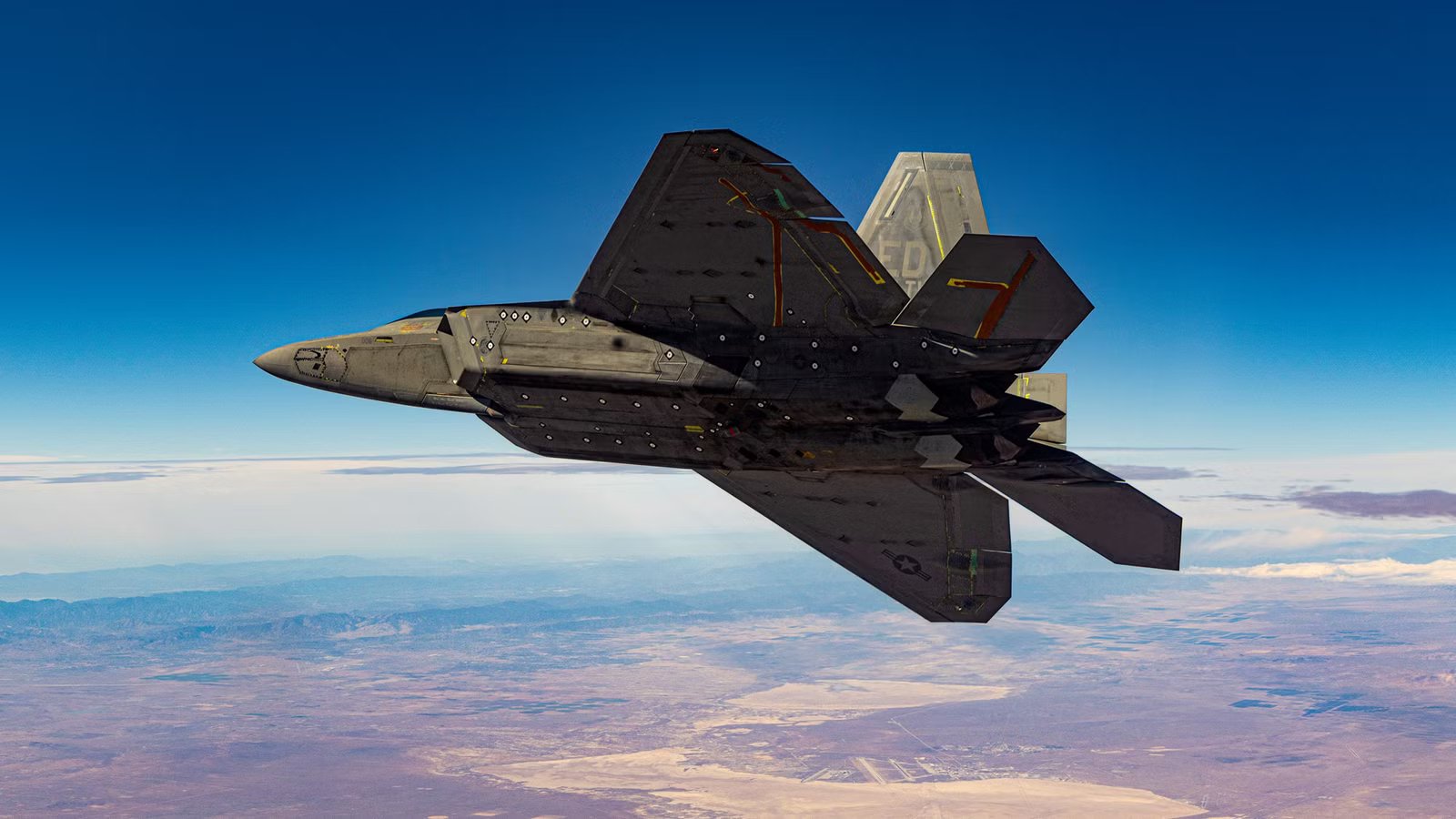
The Lockheed Martin F-22 Raptor may be older than the newer F-35 Lightning II, but it is actually still superior in terms of pure performance. Not only can the Raptor fly significantly faster with its top speed over Mach 2, compared to Mach 1.6 for the F-35, but it can also out-climb the newer jet and cruise at supersonic speeds, which an F-35 can’t achieve in most situations.
These differences stem from their roles. The F-22 Raptor was built for air superiority with dogfighting and intercepting in mind, thus requiring exceptional speed and maneuverability. The F-22 can ascend at roughly 62,000 feet per minute, nearly 38% faster than the F-35’s 45,000 feet per minute. The F-35 is a multirole strike fighter optimized for sensor fusion and stealthy ground attacks rather than breakaway speed.
The Heart Of A Fighter: Pratt & Whitney

Notably, the Joint Strike Fighter, or F-35, actually has a more powerful engine, but the Raptor has two engines that are nearly as powerful each. The combined thrust level of the F-22’s two power plants makes it dramatically more powerful. The F-22’s dual Pratt & Whitney F119 engines allow it to reach Mach 2.25, while the F-35’s single F135 engine is limited to Mach 1.6.
The dual-engine F-22 setup is optimized for ‘energy management’—the ability to gain and maintain speed and altitude during a dogfight. Its engines are narrower to allow the aircraft to reach Mach 2+ without the compressor blades ‘choking’ on incoming air. The F-22 also uses 2D thrust vectoring nozzles that can pitch up or down by 20 degrees, allowing it to perform extreme maneuvers even at high altitudes where thin air makes traditional control surfaces less effective.
The F-35’s single engine is a ‘powerplant’ in the literal sense; it is designed to generate massive amounts of electrical energy and cooling required for its advanced Active Electronically Scanned Array (AESA) radar and sensor fusion systems. It also has a higher bypass ratio to make it more fuel efficient at subsonic speeds.
5th-Gen Fighters Head-To-Head: By The Numbers

In a head-to-head comparison, the F-22 Raptor dominates in raw flight performance and air superiority, while the F-35 Lightning II leads in sensor technology, multirole versatility, and cost-efficiency. The technological gap between these two jets isn’t just about speed, it’s a shift in philosophy from kinetic dominance to information dominance.
The F-22’s technology is focused on physics. The F-22’s engines allow the pilot to perform ‘post-stall’ maneuvers—flipping or turning the jet in ways that defy traditional aerodynamics. Because it can supercruise, the F-22 gives its missiles a ‘running start.’ A missile launched at Mach 1.8 travels much further and is harder to dodge than one launched at subsonic speeds.
The F-35 features a more advanced Distributed Aperture System (DAS) and helmet-mounted display, allowing pilots to ‘see through’ the floor of the aircraft. In contrast, the F-22 relies on more traditional cockpit displays but carries a larger, more powerful AN/APG-77 AESA radar for long-range air-to-air detection.
|
Specification |
F-22 Raptor |
F-35A Lightning II |
|---|---|---|
|
Maximum Speed |
Mach 2.25 (1,500 Miles per Hour / 2,414 Kilometers per Hour) |
Mach 1.6 (1,200 Miles per Hour / 1,931 Kilometers per Hour) |
|
Supercruise Capability |
Yes (Mach 1.5–1.82) |
No / Limited |
|
Rate of Climb |
62,000 Feet per Minute (18,898 Meters per Minute) |
45,000 Feet per Minute (13,716 Meters per Minute) |
|
Service Ceiling |
65,000 Feet (19,812 Meters) |
50,000 Feet (15,240 Meters) |
|
Engine Configuration |
2 × Pratt & Whitney F119-PW-100 |
1 × Pratt & Whitney F135-PW-100 |
|
Total Thrust (Afterburner) |
70,000 Pounds-force (311 Kilonewtons) |
43,000 Pounds-force (191 Kilonewtons) |
|
Combat Radius |
460 Miles (740 Kilometers) |
670 Miles (1,078 Kilometers) |
The F-35’s ‘brain’ takes data from its radar, electronic warfare suite, and cameras, merging them into a single, easy-to-read picture. While an F-22 pilot has to manage multiple screens and ‘build’ the battle in their head, the F-35 does that work for the pilot. The helmet-mounted display gives the pilot a God’s eye view of the entire battlespace. This feeds a 360-degree image directly into the pilot’s helmet.
The F-35 uses the Multifunction Advanced Data Link (MADL), a high-bandwidth, stealthy system that allows it to share massive amounts of data with other F-35s. The F-35’s networking is deeply tied to its sensor fusion. It automatically integrates data from its own radar, cameras, and off-board sources, like AWACS. This allows the lead F-35 to keep its own radar completely silent, making it virtually invisible even to advanced electronic detection systems.

The Arsenal Of Epic Fury: Every US Aircraft Taking Part In The Strikes On Iran
Breaking down the staggering airpower massed in the Gulf.
Old School Versus New School: Two Eras Of Stealth

While the F-22 Raptor is often cited as having a smaller Radar Cross-Section (RCS)—commonly compared to the size of a marble versus the F-35’s golf ball—the F-35 Lightning II incorporates newer technologies that make its stealth more durable and effective across a broader range of threats. The F-22 was designed to evade an older generation of air-to-air and surface-to-air search radar.
The F-22 has a superior all-aspect stealth profile but at a very steep maintenance cost. It uses delicate Radar Absorbent Material (RAM) coatings that require climate-controlled hangars and constant touch-ups. Integrated air defense systems use multiple radars at different frequencies, and the F-35 is optimized to be just stealthy enough against this broader spectrum to become that effective. Instead of being designed to be invisible, it is made to defeat specific threats.
The F-35 uses a newer, ‘baked-in’ stealth skin that is much more durable albeit technically less stealthy, allowing it to fly more missions in harsher conditions, like on salty carrier decks, without losing its low-observable edge. F-22 coatings require constant repair to maintain their perfect low-observable performance, whereas the F-35 can evade detection even after extensive use in harsh environments.
The F-35 also uses advanced heat sinks and ducts to manage its thermal signature. While the F-22 has superior shielded engine nozzles to hide heat from the ground, the F-35’s single engine with a higher bypass ratio can actually result in cooler exhaust temperatures during certain low-power missions. That gives it an edge against simpler air defense weapons and man-portable missile systems, like Stingers.

Why The Pentagon Is Worried About International Stealth Fighter Development
The new 5th-generation arms race.
The Technological Divide Between Eras

A significant technology gap exists because the F-22 and F-35 use incompatible ‘stealthy’ languages. While the F-22 can receive standard Link 16 data (the NATO standard), it historically could not transmit over it without compromising its stealth. The F-35, by contrast, can transmit on Link 16 to ‘coach’ older 4th-generation jets like the F-15 and F-16.
Physical stealth (shaping/materials) only works until you turn on your radar. The F-35’s superior sensor fusion allows it to hunt enemies passively using other platforms’ data, staying ‘dark’ while still being lethal. If a radar does happen to find it, the F-35 can use its advanced electronic warfare systems to jam or spoof the signal, effectively making it ‘stealthier’ through technology rather than just physical shape.
The Raptor uses the Intra-Flight Data Link. When it was designed in the 1990s, the goal was simple: let F-22s talk to other F-22s so they could hunt in packs without enemy radars picking up their radio chatter. It is a ‘closed’ system—it doesn’t have the bandwidth or the protocols to talk to anything else.
The F-35’s MADL carries way more data (video, target coordinates, sensor imagery) and is designed to link not just with other F-35s, but eventually with ships, drones, and ground troops. Because the F-35 was built later, it can ‘listen’ to more frequencies. If one F-35’s radar is jammed, it instantly ‘sees’ through the radar of the F-35 next to it via MADL.
While a JSF can’t natively speak IFDL to an F-22, it can act as a hub that pulls in data. An F-35 can see a target, ‘hand off’ that target data to an F-22 via a third-party gateway (like a U-2 plane or a battlefield drone), and let the F-22 fire the missile. The F-22’s older link is much more limited in how much complex sensor data it can share in real-time.

Here’s Why Air Forces Are Expanding Their Stealth Fighter Programs
The global race for the ultimate stealth jet.
The Economics Of The Air Force’s Most Exquisite Airframes

The F-22 is a lethal, invisible assassin that works best alone or with its own kind. On the other hand, the F-35 is the superior investment for a networked battlefield because of its scalability. It makes every other ship, tank, and plane in the area smarter. By ‘buying into’ the F-35 network, a military isn’t just getting a jet; they are getting a massive upgrade to their entire communication infrastructure.
The F-35 uses its stealth to fly deep into enemy territory undetected. Once it finds a target, it transmits the coordinates to 4th-gen fighters (like the F-15EX or Eurofighter) that stay safely behind it. Currently, the US Air Force has to use ‘gateway’ pods (like the Talon HATE pod) on F-15s or specialized drones to translate between the F-22 and F-35. In this setup, the F-35 is the brain providing the data, and the F-22 is the muscle providing the high-speed intercept.
Older jets act as ‘missile trucks,’ launching heavy payloads of long-range missiles based on the F-35’s precise targeting data. The next major leap in integration is with Collaborative Combat Aircraft (CCA)—autonomous, uncrewed drones designed to fly as ‘loyal wingmen’ alongside the F-35. This allows a single F-35 pilot to control several drones that carry extra missiles, perform electronic jamming, or draw enemy fire, significantly increasing the survivability of the human pilot.