dailynewsnblog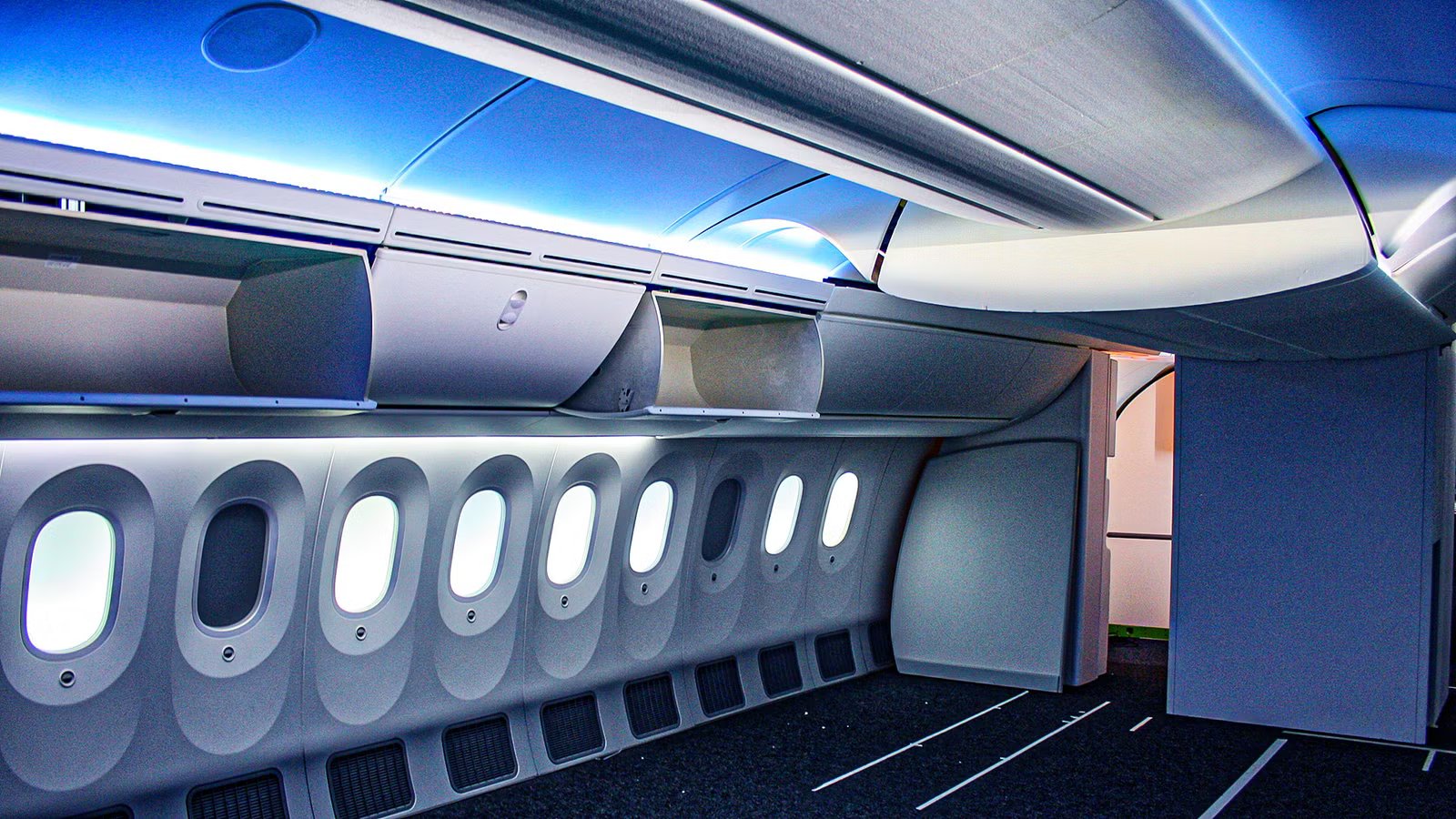
When the Boeing 787 Dreamliner first took to the skies, its oversized, electronic dimmable windows were hailed as a futuristic marvel that eliminated the need for clunky plastic shades. However, early adopters often noted that the first-generation system struggled with speed and failed to provide a total blackout, often leaving a persistent blue tint that could disturb sleep during bright daytime flights. As the Boeing 777X enters wider service in 2027, it introduces a massive leap in this technology, promising to solve every pain point identified over the last decade of Dreamliner operations.
This guide explores the technical refinements and performance benchmarks that separate the 777X’s Gen 3 windows from the legacy 787 systems. Included is a dive into the chemistry of the electrochromic gel, the dramatic increase in transition speed, and the structural changes that make these the largest windows ever installed on a commercial twin-aisle jet. By the end of this article, you will understand exactly why the 777X window experience is being described as the first true digital equivalent to a physical window shade.
A Huge Change In Technology

The jump from the 787 to the 777X represents a total overhaul of the electrochromic chemistry managed by the Gentex Corporation. While the original Dreamliner was the pioneer for PPG and Gentex systems, the 777X is the first to utilize Gen 3 technology, which replaces older gel formulas with a more responsive medium. These microscopic chemical layers have been re-engineered to react faster and more effectively to electrical currents.
On a technical level, the windows function by passing a low-voltage electric current through conductive coatings on glass panels, which triggers an electrochemical reaction in a proprietary gel. In the legacy 787 models, this process was notoriously slow, often taking several minutes to reach its maximum dark state. The 777X formula allows the molecules to align with far greater efficiency, effectively cutting the transition time in half and providing passengers with nearly immediate visual feedback after a button press.
Beyond speed, the Gen 3 architecture addresses the light leak issues that plagued early composite aircraft. The new system is capable of eliminating 99.999% of visible light, which is a significant jump from the roughly 95% to 98% blockage seen on older Dreamliners. This means that even in direct, high-altitude sunlight, the 777X cabin can achieve a true blackout, protecting the cabin from the harsh glare and heat that previously made window seats uncomfortable during the day.
Cutting Down The Transition Time

The most immediate change for a passenger moving from a Boeing 787 to the 777X is the move from physical buttons to a modern, capacitive touch interface. While the original Dreamliner used rubberized toggle switches that often felt imprecise, the 777X features glass-faced controls integrated directly into the window shroud. This hardware shift provides instant haptic or visual feedback, acknowledging the user’s command before the chemical transition even becomes visible to the eye.
Under the hood, the 777X utilizes Gentex’s Gen 3 electrochromic technology, which has been re-engineered to address the sluggishness often criticized by long-haul travelers. By refining the viscosity of the proprietary gel and the conductivity of the glass coatings,  Boeinghas achieved a transition speed that is 2 times faster than previous versions. In practical terms, this means a window can go from fully clear to its most active state in roughly 60 seconds, compared to the 2 to 3 minutes required on older 787 airframes.
This leap in responsiveness fundamentally changes the passenger psychology of using electronic shades. On earlier flights, the delay was often significant. The cabin crew often locked the window setting, or passengers would repeatedly press the button, assuming the system was unresponsive or broken. The 777X’s nearly instant reaction ensures a seamless experience where the technology feels like a natural extension of the cabin rather than a slow-moving experimental feature.

The Boeing 777X’s Folding Wings: How It Works
The Boeing 777X’s innovative design feature has captured global attention. But how do these folding wings actually work?
Far More Than A Gimmick

Beyond its visual appeal, the 777X’s dimmable glass serves as a critical component of the aircraft’s thermodynamic management system. By integrating advanced infrared and ultraviolet-blocking coatings, these windows function as a high-tech thermal barrier, reflecting solar energy before it enters the cabin. For airlines, this translates to a significant reduction in the load placed on the environmental control system, which is typically tasked with cooling the aircraft during long periods of direct sun exposure.
From a maintenance perspective, the transition to Gentex EDW technology represents a departure from the high-wear mechanical systems of the past. Traditional plastic shades are notorious for jamming, breaking, or requiring frequent deep cleaning, often leading to seats being taken out of service. The 777X windows, being solid-state with no moving parts, allow for a far more reliable solution to these common issues, effectively eliminating one of the most common cabin maintenance headaches for airline engineering teams.
The new standard windows on the 777X are likely a precursor to fully smart cabin surfaces. Industry experts anticipate that the current electrochromic layers will eventually be paired with transparent OLED technology, allowing windows to double as information displays for flight data or entertainment. With aviation continually undergoing technological upgrades, it is only a matter of time before these smart cabin surfaces become fully standardized.
Biggest Windows In Service?

While the technology inside the glass is revolutionary, the physical architecture of the 777X windows provides an equally significant shift in passenger perspective. Boeing has utilized the structural strength of the 777X’s composite-reinforced fuselage to install one of the largest windows of any commercial twin-engine jet currently in production. By increasing the surface area to 162 square inches, Boeing has managed to create a viewing port that is nearly 30% larger than the windows on the rival Airbus A350but still smaller than the 787.
The true innovation, however, lies in the vertical placement of these windows on the airframe. On the 777X, the windows are mounted significantly higher on the fuselage than on the legacy 777 or even the 787, ensuring that the horizon remains at eye-level for a broader range of passenger heights. This high-view design allows natural light to penetrate further into the cabin, which, when combined with the new standard sky interior, makes the 10-abreast economy cabin feel remarkably more open and airy.
|
Aircraft Model |
Surface Area (square inches) |
Horizon View Level |
|
Boeing 787 Dreamliner |
196 |
Mid-Level |
|
Boeing 777X |
162 |
High-Eye Level |
|
Airbus A350 |
125 |
Standard |
|
Boeing 777-300ER |
140 |
Standard |
By moving the windows higher, Boeing has effectively solved the slouching problem in which taller passengers previously had to bend down to see the ground during flight. This creates a panoramic effect that is particularly noticeable in the premium cabins, where the large windows and high ceilings work in tandem to create a lounge-like atmosphere. From an airline perspective, this structural shift is a key differentiator in the competitive long-haul market, providing a visual selling point that traditional mechanical shades simply cannot match.

The Aircraft Set To Replace The World’s Largest Commercial Jet
A new era dawns as the iconic superjumbo bows out, but which aircraft will claim the throne?
Customization At New Levels

One of the most powerful aspects of the Gentex system on the 777X is the level of control it gives the flight crew over the cabin environment. In the latest iteration of the software, crews can utilize gradient grouping to adjust window tinting based on the sun’s position relative to the aircraft’s flight path. This allows the crew to darken only the sunny side of the plane to prevent glare and heat build-up, while leaving the shaded side clear for passengers who still wish to look out.
This centralized automation is a vital tool for managing passenger circadian rhythms on ultra-long-haul routes that can exceed 16 hours. Rather than the jarring shade-up wake-up call of the past, the 777X system can be programmed to simulate a natural sunrise, slowly transitioning the windows from total blackout to clear over a 30-minute window. This gradual change in ambient light helps the body adjust to new time zones more naturally, significantly reducing the physical toll of jet lag for international travelers.
Furthermore, the 777X software includes passenger-first logic that prevents the crew from completely locking out individual controls unless necessary for flight safety or cabin cooling. This balance ensures the airline can maintain a cool, dark cabin for the majority of the flight without completely disconnecting passengers from the outside world. The result is a more harmonious cabin environment, with lighting that is a curated experience rather than a source of frustration between passengers and crew.
The New Industry Standard?

As the 777X begins to dominate the long-haul fleets of major carriers like  Emiratesand
  Qatar Airways, the psychological impact of this window technology cannot be overstated. For passengers on the world’s longest routes, the ability to maintain a connection to the horizon without blinding their neighbors is a major comfort upgrade. The blue tint issues of the past have been replaced by a neutral, dark gray palette that preserves the natural colors of the sky while still providing a true blackout for rest.
The reliability of these solid-state windows also ensures that broken shades are a thing of the past. In a traditional cabin, a single jammed plastic shade can ruin the experience for an entire row and lead to a diminished product claim from a high-paying passenger. On the 777X, the electronic system’s high mean time between failures means that the cabin remains in a like-new state for much longer, protecting the airline’s brand and reducing the workload for overnight maintenance crews.
Ultimately, the 777X window system represents the current highest standard for how glass technology can enhance the aviation experience. It is a necessary component of high-efficiency, passenger-centric aircraft of the late 2020s, proving that digital solutions can finally outperform their mechanical ancestors. As we look toward future deliveries of the Airbus A350-1000 and the Boeing 787-10, the 777X has set a benchmark for visibility and comfort that will be difficult for any other airframe to surpass.