dailynewsnblog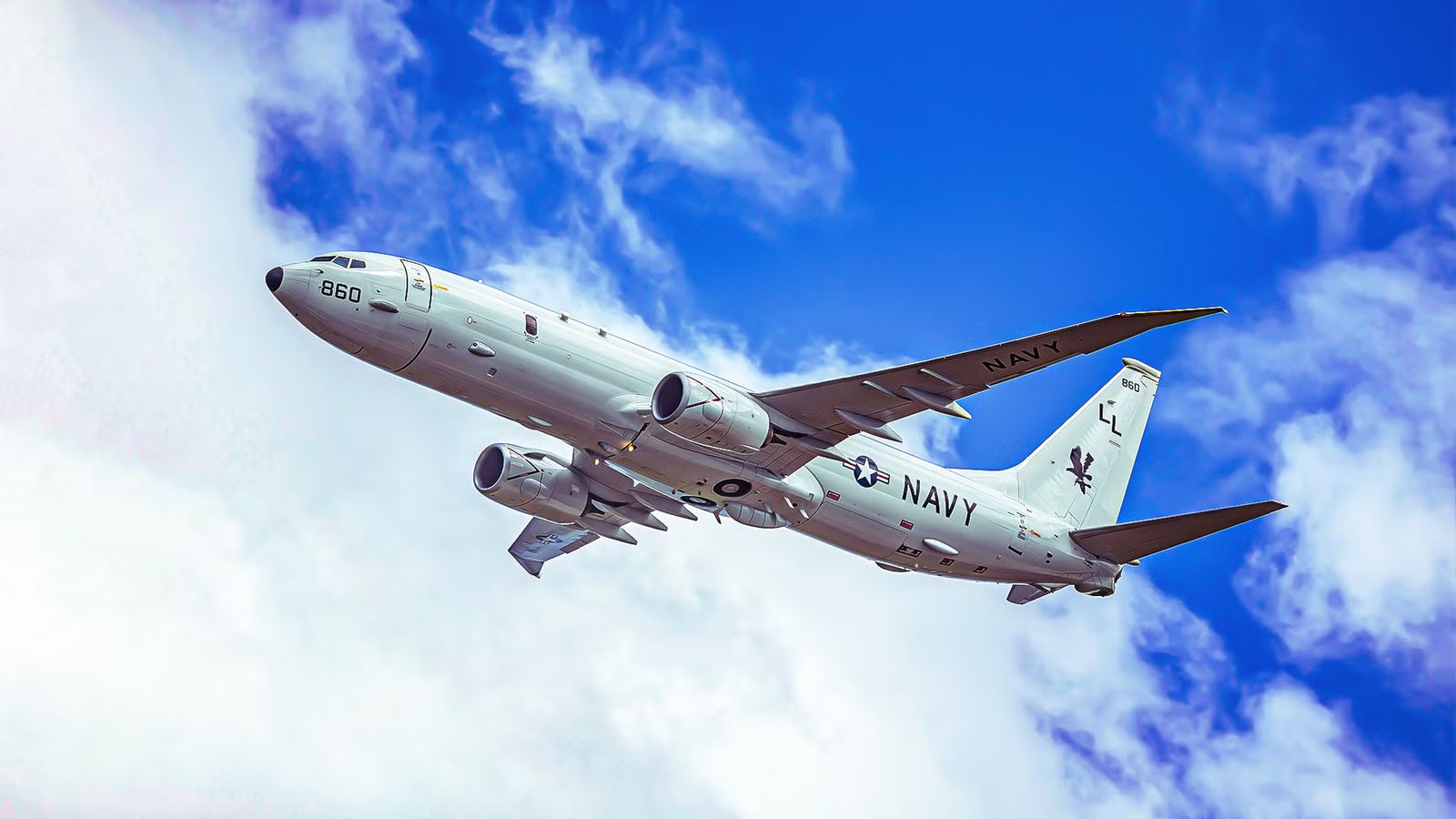
The respective aircraft fleets of the United States Air Force and Navy represent the greatest elements of air power in the arsenal of the US Armed Forces. There is a significant size disparity in terms of total airframes, with the USAF possessing double the quantity, but when we break them down by classification, the numbers reveal some greater similarities in tactical capability.
The US Air Force has twice as many aircraft in total, and it possesses around 25% more fighter jets than the Navy does. However, that number becomes less of a gap when you combine the US Marines’ aviation power with the Navy, as the Navy is its parent organization. Diving down into the classification of aircraft shows that the Air Force has a huge lead in strategic mobility as well as bombers, but the Navy and Marines have far more rotary wing, a day helicopters.
The Pointy End Of The Spear

When we combine the total number of fighter jets that the US Navy and the US Marines possess together, we find that the comparison with the US Air Force puts them at near parity. This would not be an unfair assessment either, as the Navy and Marines operate jointly in many strategic and tactical scenarios. In fact, US Marine squadrons that operate the Lockheed Martin F-35C Lightning II stealth fighter deploy embarked US Navy aircraft carriers.
There is a significant capability difference between the land-based fighters of the Air Force and the shipborne aircraft used by naval aviators. The forward deployment of aircraft by the Navy and Marines from supercarriers of the Nimitz and Ford class as well as Marine aviators on assault carriers flying the F-35B ‘Jump Jets,’ offsets their lower range because they are simply closer to their target.
|
Airframe Class |
USAF |
USN & USMC |
|---|---|---|
|
Fighters |
1,610 |
748 |
|
Bombers |
140 |
|
|
Airlift & Tankers |
1,150 |
246 |
|
Helicopters |
218 |
1,220 |
|
Special Mission/Other |
1,757 |
1,587 |
|
Total |
4,875 |
3,801 |
On the other hand, the US Air Force repositions its squadrons to forward locations and maximizes the benefit of their F-35A. This jet has a greater payload and fuel capacity thanks to its lighter airframe, which is not ruggedized to the same extent. Now, if we compare legacy airframes, there’s a much greater performance and capability disparity. The leading fighter jet of the Navy and Marines before the introduction of the F-35 was the Boeing F/A-18 Hornet and Super Hornets.
That being said, the US Air Force has had the F-22 Raptor, the world’s first fifth-generation stealth fighter, for decades. The F-15 Eagle is also more capable in terms of performance and payload than the medium Marine fighter jets, and the latest iteration of that jet is providing advanced capabilities that will keep it in play alongside fifth and even sixth-generation fighters.
The Big Wing Difference

Where the Air Force gains its enormous quantitative advantage is in airlift capacity and tanker squadrons. The Navy does not have a large number of transport aircraft, and, while the Marines do have several C-130s, their total is not a significant number by comparison to the Air Force. Similarly, the Navy and Marines rely on Air Force tankers, and the US Air Force is one of only three military aviation branches to have strategic bombers in the entire world.
The US Air Force has over 800 airlift and transport planes, and that includes one of the largest cargo freight hauling aircraft ever made, the Lockheed C5 Galaxy. It also has hundreds of Boeing C-17 Globemaster III and Lockheed C-130 Hercules. The USAF is essentially the exclusive provider of logistical air support to the entire US military, giving it a virtual monopoly on cargo aviation for the Department of Defense.
The Navy and Marines primarily use KC-130 variants for tactical refueling, which are significantly smaller and fewer in number than the Air Force’s KC-135 and KC-46 fleet. Meanwhile, the US Air Force has the largest fleet of air-to-air tanking aircraft in the world, and beyond supporting the rest of the US military, they also operate jointly with allied nations around the world to support partner operations.
The Heavy Hitters

One area where there is absolutely no contest is in the Strategic-to-Strike arena. The US Air Force manages two of the three legs of the American ‘Nuclear Triad’ through its fleet of strategic bombers capable of carrying nuclear weapons and its network of Intercontinental Ballistic Missile Silos around the US. It is the sole operator of these strategic bombers, as they are simply too large and heavy for aircraft carriers, which was determined in the 1950s.
There was once a time when there were very large carrier-based aircraft like the A-5 Vigilante, which could theoretically deliver a nuclear weapon via air strike, but this did not last long, and the role was superseded by the USAF. Instead of the Navy relying on its nuclear-powered submarines to provide the third leg of the Nuclear Triad, the USAF has continued to retain the mission. The Boeing B-52 Stratofortress, which was originally built in the 1950s, is still among its main platforms.
Today, the US Air Force is not only the sole operator of the world’s only fifth-generation bomber aircraft, the Northrop Grumman B-2 Spirit, but is nearing service entry of the world’s first sixth-generation Strategic Strike Platform, the B-21 Raider. Remarkably, the ancient B-52 is not expected to be retired, although its younger peers, the B-2 and the B-1B Lancer, will be. This means that the B-52 will likely reach 100 years of age before finally being phased out.

The World’s Largest Air Forces By F-35 Numbers
How the top F-35 flyers compare.
A Helicopter Powerhouse

Switching gears, we look to the side of the house where the Navy Marines have an overwhelming numerical advantage. While the Air Force is the king of fixed-wing flying, the Navy and Marines have four times the number of helicopters and rotary aircraft as the USAF does. This goes back to the core missions of each service, as the Navy relies on helicopters for anti-submarine warfare, as well as providing logistical support between ships at sea and the shore.
Similarly, the Marines use rotary wing platforms to execute amphibious assault as well as support operations on land between sea and shore. The US Marines are the largest operator of the V-22 Osprey, a tilt-rotor transport that has the unique capability of being able to transition between vertical flight like a helicopter and horizontal flight like a propeller plane. The Navy has recently begun a transition away from its legacy fixed-wing transport plane, the Grumman C-2 Greyhound.
Instead, specially modified Bell-Boeing V-22 Ospreys are being introduced to fulfill this mission for the Navy and simplify the Joint Navy and Marine fleet. The Marines are also the largest operator of the biggest single rotor helicopter in the Western world, the Sikorsky CH-53K King Stallion. This can lift artillery or multiple light vehicles, such as Humvees, and transport them from ships or across the battlefield.
The Navy relies on the Sikorsky MH-60R and MH-60S Seahawk to fulfill its missions, which are specially modified naval variants of the Blackhawk like the one the US Army operates in massive numbers. Meanwhile, the Air Force maintains only a small number of helicopters and Ospreys for specialized roles.

Why Can’t An F-22 Raptor Land On An Aircraft Carrier?
Discover why the world’s first fifth-generation fighter will never be deployed from a carrier.
Special Platforms

The Navy-Marine team’s specialized fleet is built for the littoral and open-ocean environment. The P-8A Poseidon and MQ-4C Triton work in tandem to provide 24/7 coverage of vast maritime regions. In 2026, the Navy is aggressively expanding its drone fleet with the MQ-25 Stingray and increasing the number of active MQ-4C Triton squadrons to boost coverage in the Pacific and Arctic.
While the Air Force operates the EC-130H for standoff jamming, it relies heavily on the Navy’s EA-18G Growlers for ‘escort jamming’ during high-threat combat missions, as the USAF lacks a comparable carrier-capable or supersonic electronic warfare jet. A major shift occurred when the USAF officially canceled the E-7 Wedgetail Airborne command and control program due to cost and survivability concerns.
The Air Force is now pivotally investing in space-based sensing as the question of whether or not the E-7 will ever be procured remains open-ended. There is even discussion that the Pentagon will procure additional Grumman E-2D Hawkeyes to fill the gap left by retiring E-3 Sentries.
The E-2D has proven itself to be a highly reliable and capable AWACS in service with the Navy. Japan has even acquired a number for its own Airborne early warning capability, and France operates an older E-2C variant on its aircraft carriers. The Air Force could fill the gap that the E-3 Sentry leaves behind with these aircraft until a future platform is acquired.

The US Marines’ Top 10 Military Aircraft By Fleet Size
Marine Corps aviation stands at the forefront of expeditionary air power, check out the top 10 aircraft that the Marines rely on in 2025.
NGAD & The F/A-XX

In 2025, Boeing was awarded the contract to develop the sixth-generation fighter for the US Air Force, with the Next Generation Air Dominance program being dubbed as the F-47. There’s speculation that this aircraft may become the Navy’s next-generation fighter jet as well, known as the F/A-XX. Initial budgetary projections basically canceled the Navy’s program, but they were resuscitated later, and both Boeing and Lockheed Martin shared images of their prototypes in a Navy configuration.
It remains unclear if the Boeing aircraft will be chosen as the platform for the Canadian Marines in the future, although it does seem likely given budgetary concerns and the common adoption of the F-35for the different branches, as well as US allies. The program is only in its early stages, so we will simply have to wait and see how it develops, but speculation abounds.