dailynewsnblog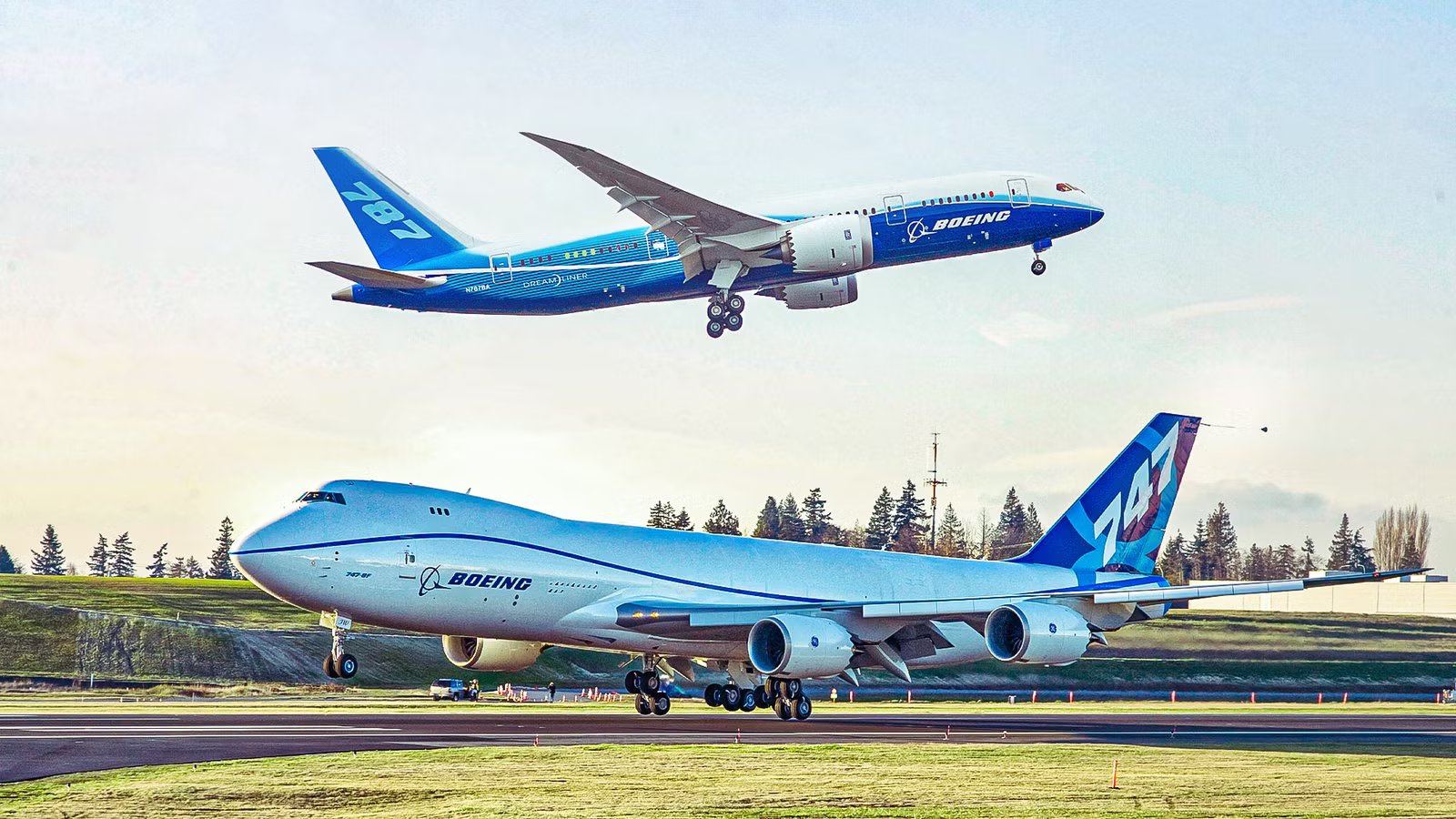
In the early 2010s,  Boeing released two new widebodies. One was the clean-sheet 787, a smaller twin-engine jet designed to be cost-effective for long-haul routes. This was Boeing’s most ambitious project to date, and it was a notable contrast to the Airbus A380, as both companies set out to define what the future of international travel would look like with these planes. Airbus bet that going big was the way forward, while Boeing believed that smaller planes were what the industry needed.
While Boeing publicly bet on the 787 as its plane of the future, it also released the 747-8 to compete directly against the A380 in the same space. This was an improved version of the 747 that came with a reprofiled wing, new General Electric GEnx-2B engines, and a fuselage stretch, representing a different philosophy when it comes to airliner design. Here’s how much larger the Boeing 747-8 is compared to the 787, and why the larger 747-8 sold so poorly compared to the 787.
Looking At The Boeing 787 Dreamliner Family

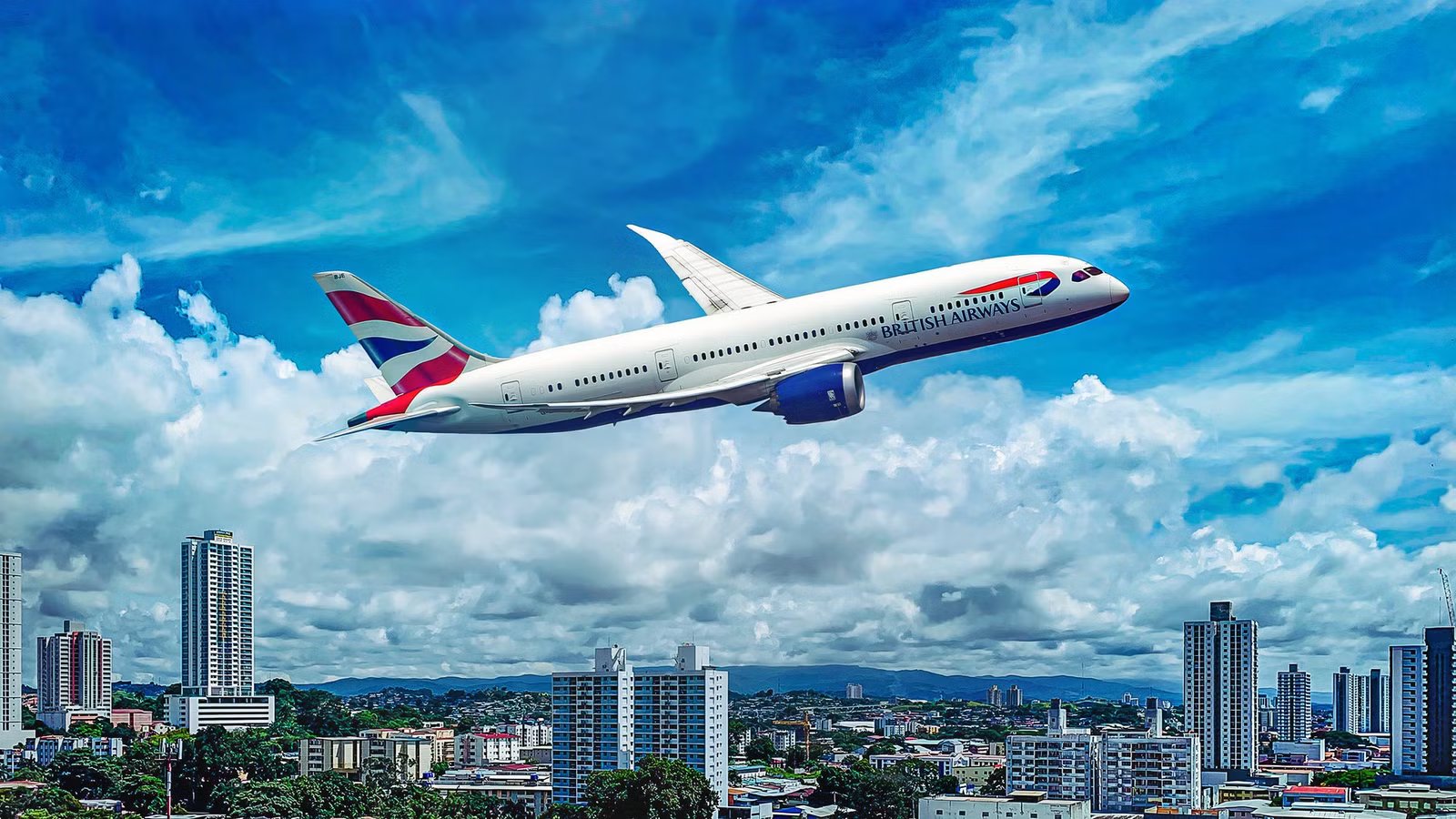
The Boeing 787 is built in three variants. All three share the same wingspan of 197 ft 3 in (60.12 m) and have largely the same fuselage design, but vary in length. The initial 787-8 variant has a length of 186 ft 1 in (56.72 m), which makes it roughly the same size as an Airbus A330-200. The 787-9 is longer and has a stronger structure to support a higher Maximum Takeoff Weight, with a length of 206 ft 1 in (62.81 m), essentially the same as an A330-300 but with a wider fuselage.
While the 787 is promoted as being a ‘small widebody,’ this is really only in comparison to the 747, which was the only real ultra-long-haul airliner on the market for many years. Compared to other widebodies of the past like the McDonnell Douglas DC-10, the 787 is, in fact, bigger. Of course, part of the appeal is that the 787 burns close to or less fuel than the 767, yet seats more passengers, carries more cargo, and flies significantly further.
The 787-10 is the largest variant, being a simple stretch of the 787-9, and there’s no pretending with this variant. The 787-10 is enormous, with a length of 224 ft (68.28 m). It’s sized between the A350-900 and the A350-1000, but the increased size over the 787-9 also translates to reduced range as the two models share the same MTOW. In practice, the 787-10 has a similar range to a late model A330-300, which is sufficient for virtually all transatlantic missions and shorter transpacific routes.
Examining The Boeing 747-8

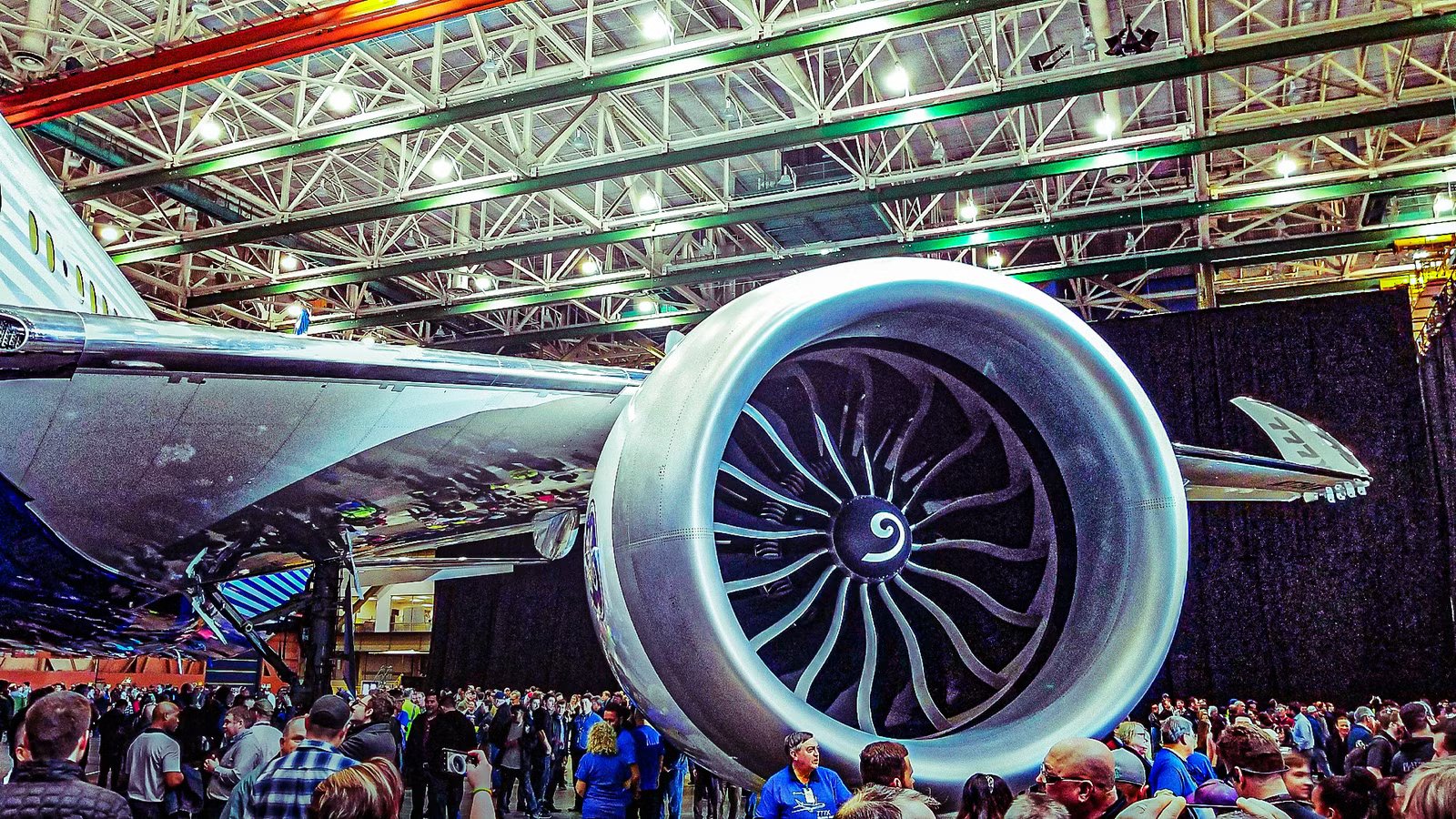
The 747-8 is the final variant of the iconic Boeing 747. For the first time, Boeing stretched the 747’s fuselage while also extending the upper deck. The wings were reprofiled, and the span was increased, and the aircraft would now feature the General Electric GEnx-2B, a smaller bleed air derivative of the GEnx-1B offered on the Boeing 787 (which is also offered with the Rolls-Royce Trent 1000). In addition, Boeing introduced fly-by-wire systems for some of the aircraft’s control surfaces.
The 747-8 is 250 ft 2 in (76.25 m) long, and it has a wingspan of 224 ft 7 in (68.45 m). This means that its wingspan is roughly the same as the length of the Boeing 787-10, and the aircraft is more than 25 ft (7.6 m) longer than the 787-10. Compared to the 787-9, the 747-8 is nearly 45 ft (13.7 m) longer, and it’s over 64 ft (19.5 m) longer than the 787-8. The 747-8 also has a partial upper deck, and its main deck seats ten passengers across in economy, whereas the 787 seats nine per row.
The two jets represent different philosophies of aircraft design. The 787 is about low fuel burn and low capacity to support launching new routes, as well as increasing flight frequencies on high-demand city pairs. The 747-8, on the other hand, is about lowering per-seat costs while upgauging existing routes. The latter philosophy is the one that created the Airbus A380, and the one that Boeing largely shunned by developing the 787.

Why The Boeing 787-9 Dreamliner Has Much Longer Range Than The 787-10
The higher-capacity jet has some impressive capabilities.
Why Did Boeing Develop The 747-8?

While Boeing was primarily focusing on a smaller widebody to further the idea of ‘point-to-point’ flying, the Airbus A380 was a promising aircraft when it was in development. There was also a large number of Boeing 747-400s in service that were candidates for replacement in the late 2000s/early 2010s. While the 777-300ER ended up replacing most 747-400s, this was far from a guaranteed prospect in the 2000s when the 747-8 was being developed, as the 777-300ER only debuted in 2004.
Boeing was looking at a scenario in which Airbus would be virtually unchallenged in the lucrative 747 replacement market. It studied an improved 747 project for years before finally committing to the 747-8, with an order by Lufthansa. Ultimately, the aircraft was designed with strong input from Lufthansa, which became the world’s largest operator of the passenger 747-8. While the 747-8 was positioned as an Airbus A380 competitor, the A380 was still significantly larger.
The A380 was a commercial failure, but the Boeing 747-8’s sales were even more modest. Airbus sold 251 examples of the A380, which was only ever produced as a passenger aircraft, while Boeing sold 155 747-8s. When you subtract sales of the 747-8F cargo variant (107), you get only 48 orders for passenger 747-8 aircraft. The 48 examples were delivered to only three airlines, two of which also ordered the Airbus A380. In addition, a handful of 747-8s were sold to private operators as VIP transports.
Why Was The Boeing 747-8 A Failure?

The 747-8 was meant to be an inexpensive answer from Boeing to counter the A380 and ensure that the firm remained competitive in the space for very large airliners. However, although the 747-8 burned less overall fuel than the A380, the aircraft had higher per-seat operating costs, killing its economics.
 Lufthansa partially influenced the design of the 747-8 and purchased 19 examples to complement the A380, while Korean Air also ordered Airbus A380s. Air China, meanwhile, was the only one of the three not to have also ordered the A380. The 747-8F was more popular, in part because it offered appealing capabilities that were unmatched by twinjets in terms of lifting capacity and interior volume.
|
Aircraft |
Sales |
Aircraft |
Sales |
|---|---|---|---|
|
Boeing 747-400 |
442 |
Boeing 747-8 |
48 |
|
Boeing 747-400D |
19 |
Boeing 747-8F |
107 |
|
Boeing 747-400ER |
6 |
747-8 Total |
155 |
|
Boeing 747-400F |
126 |
||
|
Boeing 747-400ERF |
40 |
||
|
Boeing 747-400M |
61 |
||
|
747-400 Total |
694 |
(Per Boeing) |
The 747-8F was available with a nose cargo door, which proved useful for some operators. However, the 747-8 had to compete against cheap converted 747-400 aircraft that formerly flew for passenger airlines, which offered most of the 747-8F’s capabilities. While converted 747-400s do not feature a nose cargo door, few airlines actually require this specific capability. Another factor in the 747-8’s failure was that the Boeing 777-300ER debuted with better fuel burn than initially promised.
Furthermore, when configured with ten-abreast economy seating, the aircraft could hold nearly as many passengers as a 747-400 with more cargo. With its lower fuel burn on account of its twin-engine configuration, the 777-300ER became the de facto replacement for the Boeing 747-400, and it essentially stole this market away from the double deckers. Over 800 777-300ERs were sold, which is more than the number of passenger 747-400s, 747-8s, and A380s sold combined.

Is A Boeing 777X Bigger Than A Boeing 747?
The answer is more complex than you might think.
The True Modern Replacement For The Boeing 747

The final Boeing 747 rolled off the line in 2023, and with that, there were no more double-decker airliners in production (as the Airbus A380 was also out of production by this point). Boeing’s replacement for the 747 is the upcoming 777X family, or more specifically, the 777-9. The 777X comes with new General Electric GE9X engines, a revised interior, updated technology, a brand-new carbon-composite wing, and a fuselage stretch over the prior 777 models.
The 777-9 is 251 ft 9 in (76.73 m) long, and it has a wingspan of 235 ft 5 in (71.75 m), which is more than the 747-8 in both metrics. The 777-9 can’t quite match the 747-8 in floor space due to the lack of the upper deck, but it’s essentially the same size as the 747-8 otherwise. In addition, the 777-9 can largely match the 747-400’s capacity, and carries significantly more cargo, while burning far less fuel.
The 777-9’s incredible size has caused some controversy, as some believe that this could limit its market appeal. However, the reason why the aircraft is so large is that this was necessary to make the aircraft competitive against the Airbus A350. The 777-9 retains the 777’s metal fuselage, while equipped with larger wings and engines, increasing overall weight. Stretching the aircraft was the only feasible way to lower the aircraft’s per-seat costs to a figure competitive with the A350-1000.