dailynewsnblog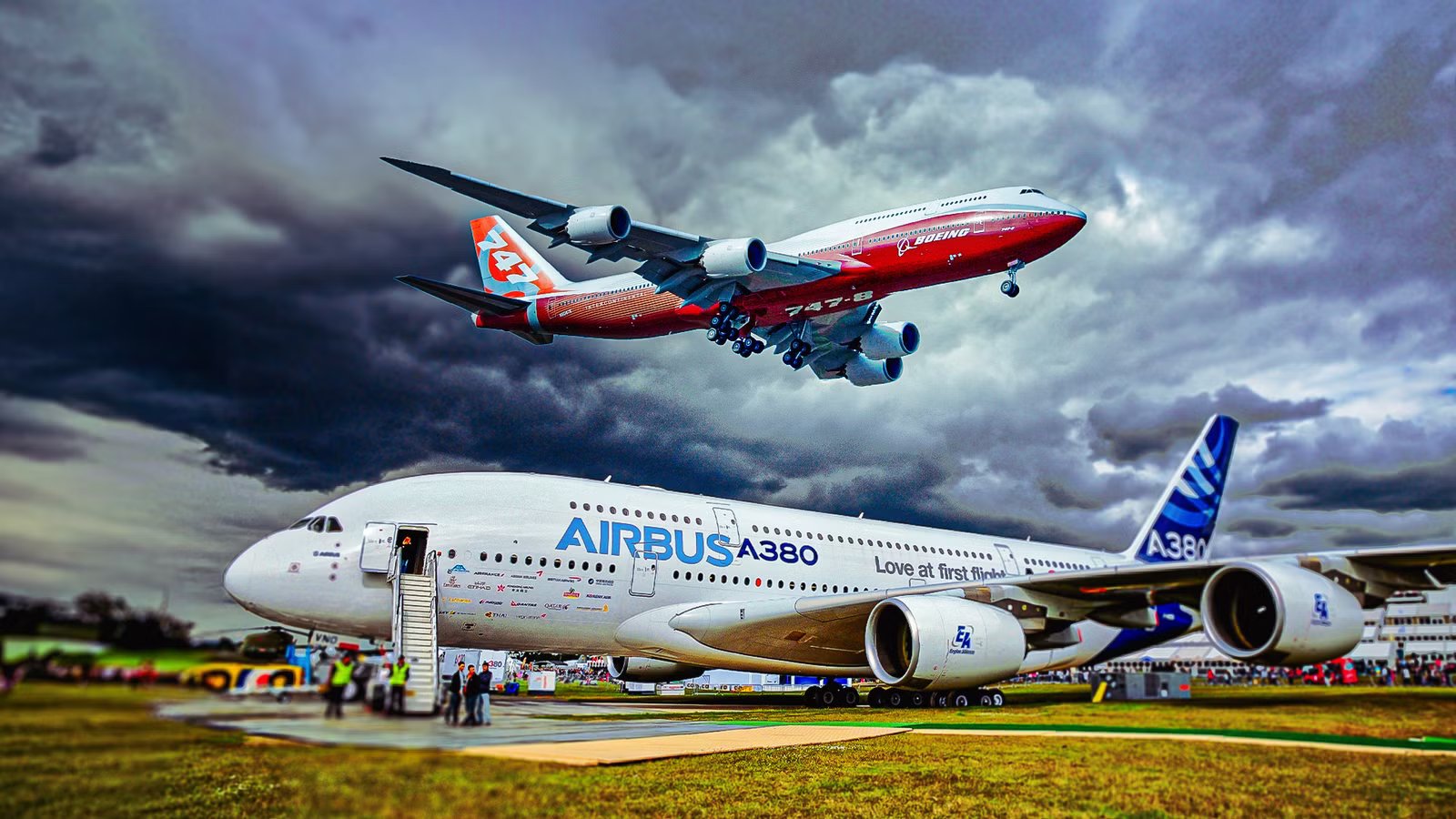
The Airbus A380-800 is significantly larger than the 747-8 and was the only full-length double-decked passenger jet ever built (excluding much smaller early examples like the Boeing 314 Clipper). The only accolade the Boeing 747-8 can claim is that it is longer than the A380, something Airbus engineers had planned to exceed.
The Airbus A380 was built to outclass the 747 in the ultra-large-widebody sector. To keep the 747 competitive, Boeing upgraded the 747-400 as the 747-8. While both companies succeeded in remarkable engineering achievements, both aircraft failed to sell in the numbers anticipated. The A380 found little popularity outside of Emirates, while the 747-8 is mostly used by cargo airlines (and later the US Air Force). Here is what to know about the comparative sizes of the world’s only two double-decked passenger jets.
Airbus A380 vs 747-8 Physical Size

In terms of physical dimensions, the A380-800 beats the Boeing 747-8 in every measurement except one: length. The Boeing 747-8 is 250 feet and two inches (73.3 meters) long, making it over 11 feet longer than the A380, which is 238 feet and seven inches (72.7 meters) long. The A380 has a longer wingspan at 261 feet and eight inches (79.75 meters) to the 224 feet and seven inches (68.45 meters) wingspan of the 747-8.
The Superjumbo towers significantly above the Jumbo at 79 feet and one inch (24.1 meters) vs 63 feet and eight inches (19.4 meters). The A380 is also noticeably wider, with its main deck being 21 feet and four inches wide (6.5 meters) compared with 20 feet (6.1 meters) for the Jumbo’s main deck. This difference is amplified in the upper deck. The A380 boasts a width of 19 feet (5.8 meters) to the Jumbo’s sharply reduced 13 feet and nine inches (4.2 meters).
This means that not only is the Jumbo’s upper deck a partial deck, but it is also one around 5 feet and three inches narrower than that of the A380’s upper deck. Both aircraft have complex landing gear systems, with the 747-8 coming with 18 wheels while the Airbus A380 has another four for a total of 22 wheels.
Airbus A380 vs 747-8 Weights

Regarding weights, the Airbus A380-800 is significantly heavier. The 747-8 is certified with a maximum take-off weight (MTOW) of 987,000 lbs (448 t) while the A380 pushes well past a million lbs at 1,268,000 lbs (575 t). The 747-8’s maximum landing weight (MLW) is 688,000 lbs (312 t), and the A380’s is 868,000 lbs (394 t). The 747-8’s operating empty weight (OEW) is 485,300 lbs (220 t) while the A380’s is 610,200 lbs (277 t). The 747-8 is able to carry a maximum payload of 167,700 lbs (76 t), and the A380 can heft 209,700 lbs (95 t).
The Airbus A380 has the capacity to carry significantly more fuel. It has a capacity of 572,700 lbs (323,546 liters) versus the 747-8’s capacity to carry 422,300 lbs (238,610 liters). However, the A380, being a larger aircraft, burns through its fuel more quickly. The result is that the A380 has an advertised range of 8,000 nautical miles, and the 747-8 has an advertised range of 8,200 nautical miles. Note that numerous real-life factors influence the range.
Neither of these aircraft made extensive use of modern lightweight materials. While this could be expected for the 747-8, as it was an update on an older aircraft, it was a bigger problem for the A380. The A380 was the last widebody cleansheet aircraft to be made mostly of aluminum, and this proved problematic as the Boeing 787 and Airbus A350 entered service. The A380 was criticized for being a ‘big’ aircraft more than it was a ‘new’ aircraft.

Airbus A380 Vs. Boeing 747: How Do They Compare On Ultra-Long-Haul Flights?
Does it make a significant difference to to choose one aircraft or another for a long flight? If so, that’s the thing, which is the best airliner?
Airbus A380 vs 747-8 Engines

Both the A380 and the 747-8 are quadjets, meaning they have two engines on each wing. The 747-8 piggybacked on Boeing’s 787 Dreamliner project and made use of its next-generation GEnx engine, a measure that sharply reduced the costs of engine development. The 747-8 is exclusively powered by the General Electric GEnx-2B67, with each providing 66,500 lbf for a total thrust of 266,000 lbf. While sales were disappointing, General Electric was able to recoup the incremental costs of developing the engine and turn a small profit.
Airbus expected there to be demand for over 1,500 A380 and 747-sized aircraft over 20 years. It was thought that the A380 would dominate these sales and that the market was large enough to support developing two bespoke engines for it. It seems the engine manufacturers agreed, and Rolls-Royce developed the Trent 900, while Pratt & Whitney and GE teamed up to form Engine Alliance and develop the Engine Alliance GP7200.
|
A380 vs Boeing 747-8 (per Boeing, Airbus) |
Boeing 747-8 |
Airbus A380-800 |
|---|---|---|
|
Length |
250 feet and two inches (73.3 meters) |
238 feet and seven inches (72.7 meters) |
|
MTOW |
987,000 lbs (448 t) |
1,268,000 lbs (575 t) |
|
Fuel capacity |
422,300 lbs (238,610 liters) |
572,700 lbs (323,546 liters) |
|
Max passengers (exit limit) |
605 |
853 |
|
Typical passengers (3-class, advertised) |
467 |
525 |
|
Actual typical passengers |
Approx. 365 |
Approx. 480 |
These provided around 80,000 lbf, giving the A380 a total thrust of around 320,000 lbfs. For reference, this is more thrust than the largest aircraft built, the Antonov An-225. That aircraft was powered by six Progress D-18T turbofans, each providing 51,600 lbf for a total of around 310,000 lbfs. With only 255 A380s built with over 1,000 engines, plus spares, this was a disappointment for Airbus and the OEMs alike. Rolls-Royce proved the most popular engine and broke even, while Engine Alliance is believed to have failed to break even.
Airbus A380 vs 747-8 Passenger Capacity

With its fuel-length second deck, the A380 has significantly more room to accommodate passengers. The A380 is certified to carry a maximum of 853 passengers, while the 747-8 trails by almost 150 at 605. In practice, no airline ever purchases these high-end aircraft built for long-haul trunk routes and packs passengers in like sardines. Instead, the 747-8 is advertised with a typical three-class seating capacity of 467 passengers, and the A380 with 525 passengers.
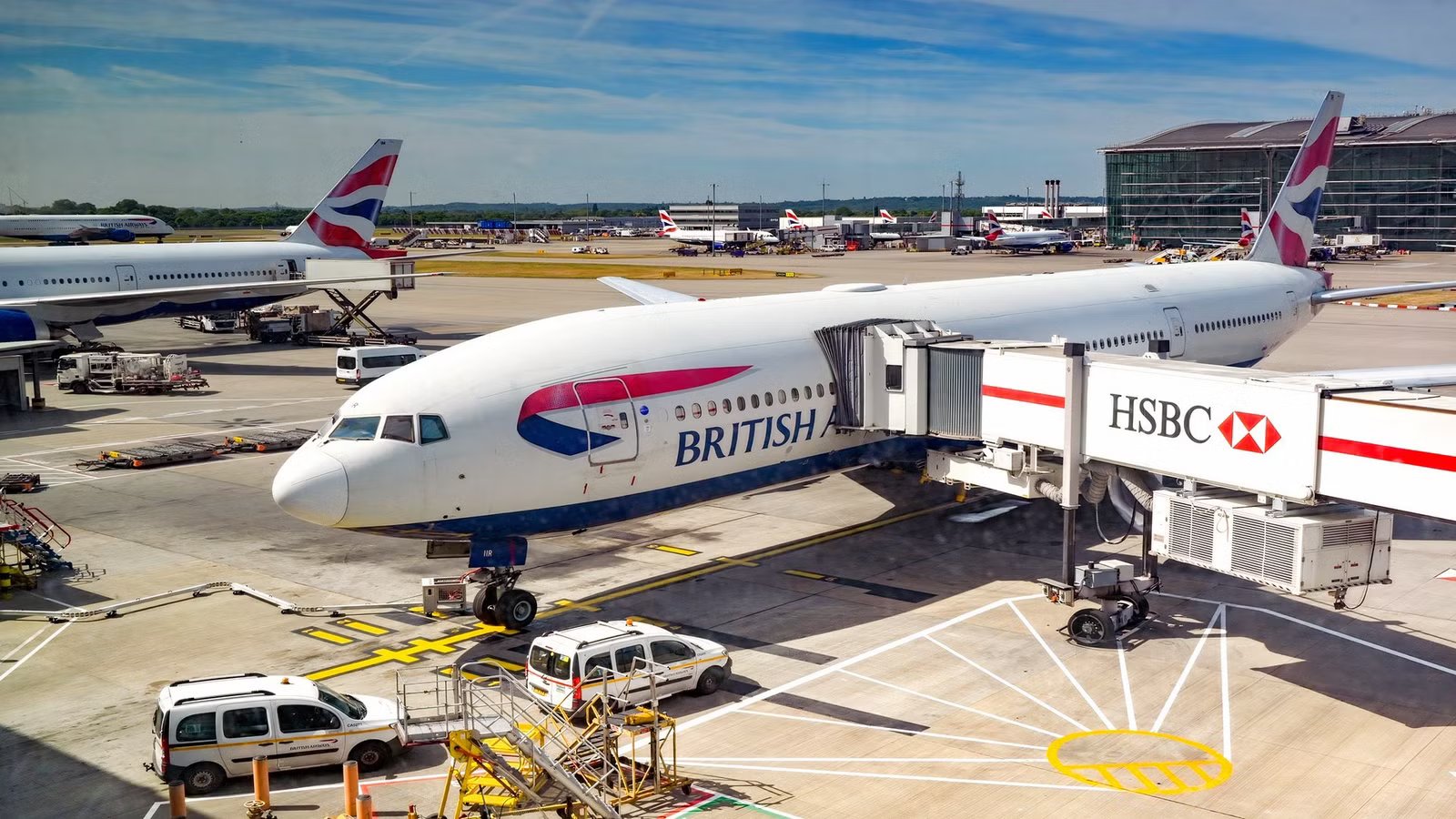
But even these advertised seating capacities are exaggerations. Emirates does have some high-density A380s configured with 615 seats and others with 517 seats, but most are being reconfigured with 468–487 seats. Lufthansa has its A380s configured with 509 seats, while British Airways’ Superjumbos are configured with just 469 seats. Lufthansa is the largest operator of the Boeing 747-8 and has these aircraft configured with 364 seats. Korean Air still has some Boeing 747-8s in regular service, and these are configured with 368 seats, while Air China’s 747-8s are configured with 365 seats.
In other words, Boeing may say that the 747-8 is typically configured with 468 to 487 seats, but it is actually an exaggeration of over 100 seats based on how the three operators actually use them. Interestingly, this means that French Bee’s ultra-high-density A350-1000s (with 480 seats) actually carry more passengers than today’s 747-8s and many of the A380s.

10 Things You (Probably) Didn’t Know About The Boeing 747
The Boeing 747 is one of the world’s most iconic passenger jets, with endless trivia to know of it.
A380 Was Meant To Be Larger

As stated, the Boeing 747-8 is 250 feet and two inches (73.3 meters) long, which is longer than the A380’s 238 feet and seven inches. But this wasn’t the original plan. The original Boeing 747-100 started out at around 231 feet (70.5 meters) long, before being stretched with subsequent variants. The A380-800 was intended to be the shorter variant of a family of A380s (much like the 787-8 is today).
Airbus engineers built the A380-800, believing the more popular variant would be the planned stretched A350-900 variant. This would have stretched the A380 by 21 feet to around 260 feet and 9 inches (79.5 meters). The aircraft was planned to have a maximum capacity of many more passengers. There were even rumors that Airbus planned to develop the even more stretched A380-1000, although it’s unclear how much longer that variant would have been.
Today, the 787-8 is longer than the A380 because it can only be compared with the “mini” Superjumbo, as that was the only one developed. Had the A380 been able to grow into a family of aircraft as the 747 had, then it would have grown longer than the Jumbo.
A Superjumbo-Sized One-Trick Pony

One of the major issues with the Airbus A380 was that it was a one-trick pony. It was designed to carry commercial passengers on scheduled flights, and that’s about it. When the program was being developed, Airbus spoke of developing a freighter variant (the A380F), but this never happened, and pandemic-era rumored Lufthansa freighter conversions never happened.
The Boeing 747-8’s passenger variant sales were woeful; they were even worse when VIP business jets were accounted for. However, Boeing was able to at least cover the costs of developing the variant despite only three airlines purchasing the passenger variant. Thanks to robust freighter sales, freighters accounted for most of the 155 Boeing 747-8s sold.
The Boeing 747-8 continues to be a popular aircraft able to find specialized roles. As such, there remains a niche demand for these aircraft. Between the VC-25 Air Force One replacement program and the E-4 Nightwatch replacement program, the US Air Force (through contractors) is purchasing at least 10 Boeing 747-8s. The 747’s commercial passenger days are coming to an end, but it will live on for decades as a freighter and as a special missions aircraft. It seems unlikely there will be any future for the A380 after its design life of 25 years of scheduled passenger jet service runs out.