dailynewsnblog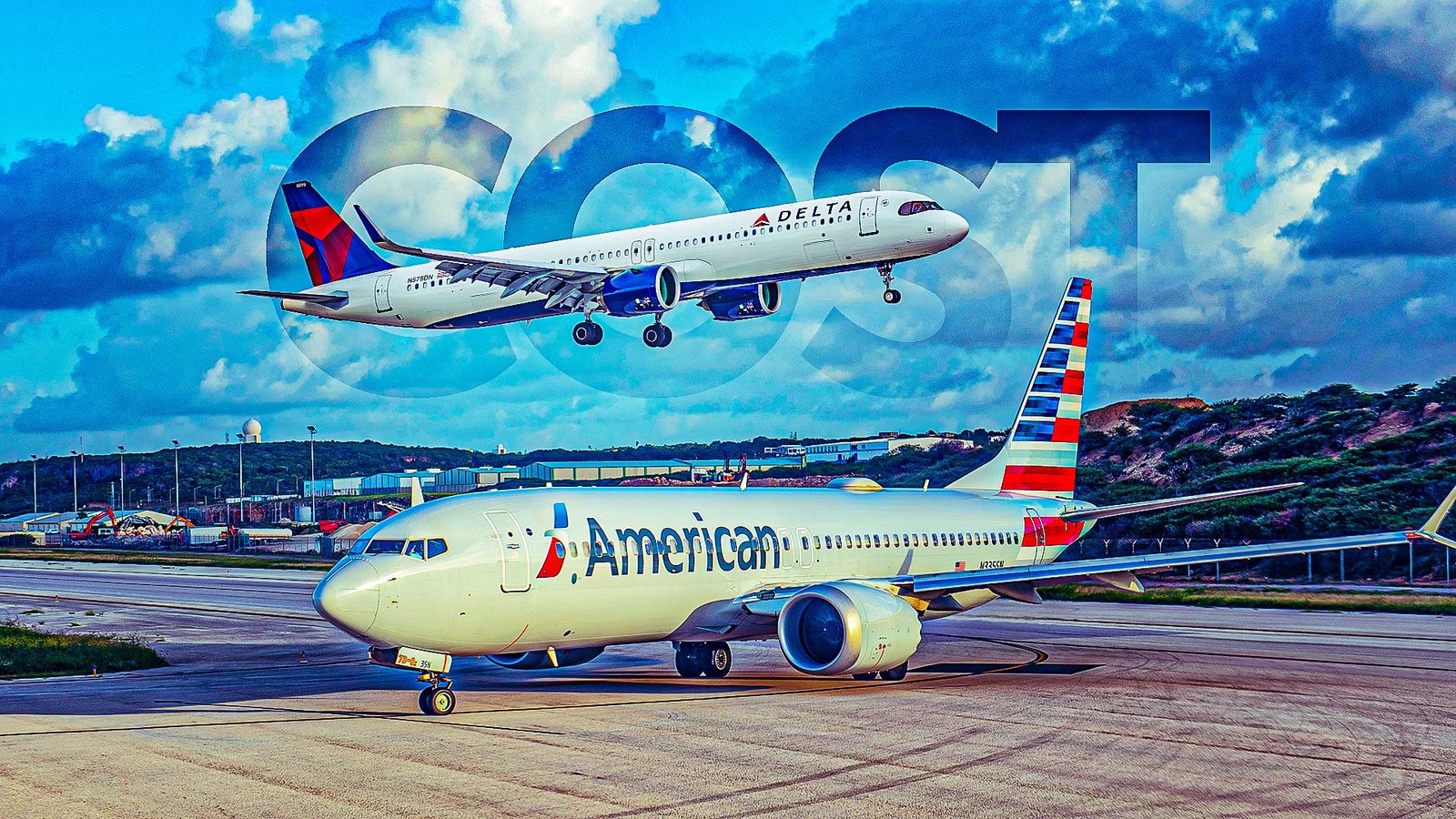
The battle between  Boeing and Airbus has been fought for decades. Each manufacturer is fighting the others for sales and valuable customers, battling for technological innovations and the next advancement in their product lines. One of the more prominent battlegrounds is in the short-haul, narrowbody market, where the Boeing 737 MAX family takes on the Airbus A320 family.
Both offerings are often compared technically and logistically, with many airlines often having to make the choice between the two for their operations. Join us as we compare the two offerings when it comes to purchase price, and how this may contribute to airlines’ choices.
Official/List Price Estimates

The actual cost of an aircraft can vary considerably. Some operators purchase new aircraft outright, directly from the manufacturer, while others utilize leasing companies or purchase used aircraft. Ordering from the manufacturer does not always present a clear price, with several factors affecting the final cost.
The Boeing 737 MAX 10 is the largest offering in the MAX lineup. The aircraft measures in at around 143 feet 8 inches long (43.8m), seats up to roughly 230 passengers, and has a range of about 3,100 nautical miles (5,740 km). According to Statistico, the 737 MAX 10’s list price sits at $135.9 million (€117 million).
Similar to the MAX 10, the A321neo is the largest offering in the A320neo fleet. The Airbus A321neo is about 146 feet long (44.51m), seats 180–220 passengers in a typical two-class layout (up to 244 in a high-density configuration), and has a maximum range of around 4,000 nautical miles (7,400 km). The slightly older but most recently available published list price data shows the aircraft list price at $129.5 million (€111.59 million).
Variation Across 737 MAX Family

As expected, the differences between aircraft types within each family also translate into differences in price, with larger variants generally carrying higher price tags. This pattern reflects not only the increased passenger capacity of larger models but also the additional engineering, performance capability, and operational flexibility they offer. Both Boeing and Airbus follow this familiar hierarchy in their single-aisle product lines.
For Boeing’s 737 MAX family, the MAX 10 sits at the top end of the pricing spectrum as the largest and most capable variant. The MAX 10’s slightly smaller siblings are more affordable, with the MAX 9 listed at $128.9 million (€111.2 million) and the MAX 8 at $121.6 million (€105 million). These differences highlight how airlines can tailor fleet choices based on route structure, demand levels, and cost considerations while staying within the same aircraft family.
A similar structure appears in the Airbus A320neo family, where the A321neo leads as the most expensive member due to its increased capacity, range options, and versatility. Beneath it, the A320neo lists at $110.6 million (€95.3 million), offering a balance of efficiency and size, while the smallest variant, the Airbus A319neo, comes in at $101.5 million (€87.3 million), making it an attractive option for lower-density routes or airlines seeking maximum commonality.

Delta Air Lines’ 10 Shortest Airbus A321neo Routes
The carrier serves dozens of destinations with its A321neo fleet.
Manufacturer Transparency & Discounting Reality

So, do all airlines pay the official list price for every aircraft? In short, no, and in fact, it’s widely understood within the industry that very few airlines ever pay the full sticker price. You may have noticed that many carriers place large, multi-aircraft orders, sometimes involving different models or even different families of aircraft, all at once. This is not just about fleet growth or modernization, but, rather, there’s a strategic financial reason behind it.
List prices are more of a reference point than an indicator of what airlines actually spend. Substantial discounts are common, particularly when an airline places a bulk order, commits to a long-term partnership, or already operates many aircraft from the same manufacturer. Large orders give airlines significant bargaining power, and manufacturers are often willing to lower prices to secure long-term business, keep production lines steady, or close deals in competitive situations.
Industry observers frequently note that the real ‘street price’ can be dramatically lower than the public figures. For example, according to Wired, analysts have estimated that a delivered A321neo may cost far less than its formal list price, sometimes landing near the $110 million (€95 million) range once discounts are applied.
When you consider the fact that Boeing likely also offers similar concession levels to major customers, a discounted A321neo can end up costing roughly the same as a discounted 737 MAX variant. This narrows the apparent price gap between the two aircraft families and explains why airlines often choose based on performance, availability, and delivery timelines rather than list price alone.
Implications Of Configuration, Customization & Specifications

The final cost of a commercial aircraft goes far beyond its advertised list price, and one of the biggest contributors to price variation is how the aircraft is configured. Airlines can choose from a wide range of cabin layouts, dense single-class seating, premium-heavy business cabins, or mixed-service configurations. Each choice affects not only the interior components required but also the engineering work and certification needed to implement them.
Premiumseating, additional galleys, and lavatory modules all raise the final price, and even seemingly small decisions, such as the number of overhead bins or the style of seatback screens, can add millions to the total. Customization options also play a major role. Beyond the cabin, airlines can request tailored avionics packages, upgraded flight-deck systems, enhanced communications hardware, satellite connectivity, or airline-specific safety equipment.
Many of these are optional add-ons that manufacturers or third-party suppliers integrate during production. Each extra layer of customization increases manufacturing complexity, introduces unique supply-chain requirements, and therefore elevates the final cost delivered to the airline. Carriers that want brand-specific lighting schemes, bespoke cabin finishes, or unique service equipment may see even higher premiums.
Finally, aircraft specifications and performance enhancements, such as higher MTOW options, extended-range packages, additional fuel tanks, or reinforced landing gear, can significantly change pricing. These upgrades often appeal to airlines operating long, high-demand, or challenging routes, where extra payload or range capability is crucial. However, they require additional engineering, more robust structures, or specialized components, all of which increase production cost.

The Complete Guide To The Boeing 737 MAX Family
Boeing has already built more than 1,700 aircraft from its next-generation narrowbody series.
How Price Difference Shapes Airline Decisions

Price differences between aircraft models play a key role in shaping an airline’s fleet strategy, influencing not only what they buy, but also when and how. For carriers with tight budgets or operating in competitive markets, even small variations in acquisition cost can determine whether a purchase is feasible. Lower-priced aircraft allow faster fleet expansion or earlier retirement of older jets, while pricier models require careful long-term planning and demand forecasting.
These cost differences also affect decisions around aircraft size and mission fit. A more expensive model with higher capacity or longer range may open new routes or boost revenue potential, but only if passenger demand supports it. Conversely, a slightly cheaper aircraft might better align with an airline’s network, turnaround times, or seasonal demand. Many carriers, therefore, adopt a mix of aircraft types, balancing upfront cost with operational needs and efficiency.
Finally, real-world pricing, especially after discounts, can influence negotiations and competitive choices. Aggressive discounts from a manufacturer may sway airlines toward a model they hadn’t initially prioritized. Airlines placing large orders can also leverage better pricing, shaping fleet decisions around value, route expansion, and long-term cost control rather than list price alone.
Limitations: Why Price Differences Are Not Precise Or Universal

Neither aircraft manufacturers nor airlines reliably disclose the exact transaction price for delivered aircraft, meaning that published list prices are largely symbolic. These list prices often serve as negotiation starting points rather than actual costs, and airlines frequently secure substantial discounts, particularly on large orders or when they maintain ongoing relationships with a manufacturer. As a result, the final price of an aircraft can vary widely from the published figures.
Moreover, much of the available data is outdated or not adjusted for current economic conditions. For example, figures such as the 2018 list price for the Airbus A321neo do not account for inflation, currency fluctuations, changing demand, or evolving contractual terms. Extra factors, such as optional cabin features, performance upgrades, avionics packages, or airline-specific customizations, can further influence the actual price paid, sometimes adding tens of millions of dollars.
Because of these variables, any cost comparison between aircraft should be treated as approximate and indicative rather than definitive. While such comparisons are useful for understanding general trends, evaluating the relative expense of different models, or illustrating broad pricing hierarchies, the ‘true’ price for a specific aircraft ultimately depends on a combination of factors unique to each airline, each order, and each negotiated contract.