dailynewsnblog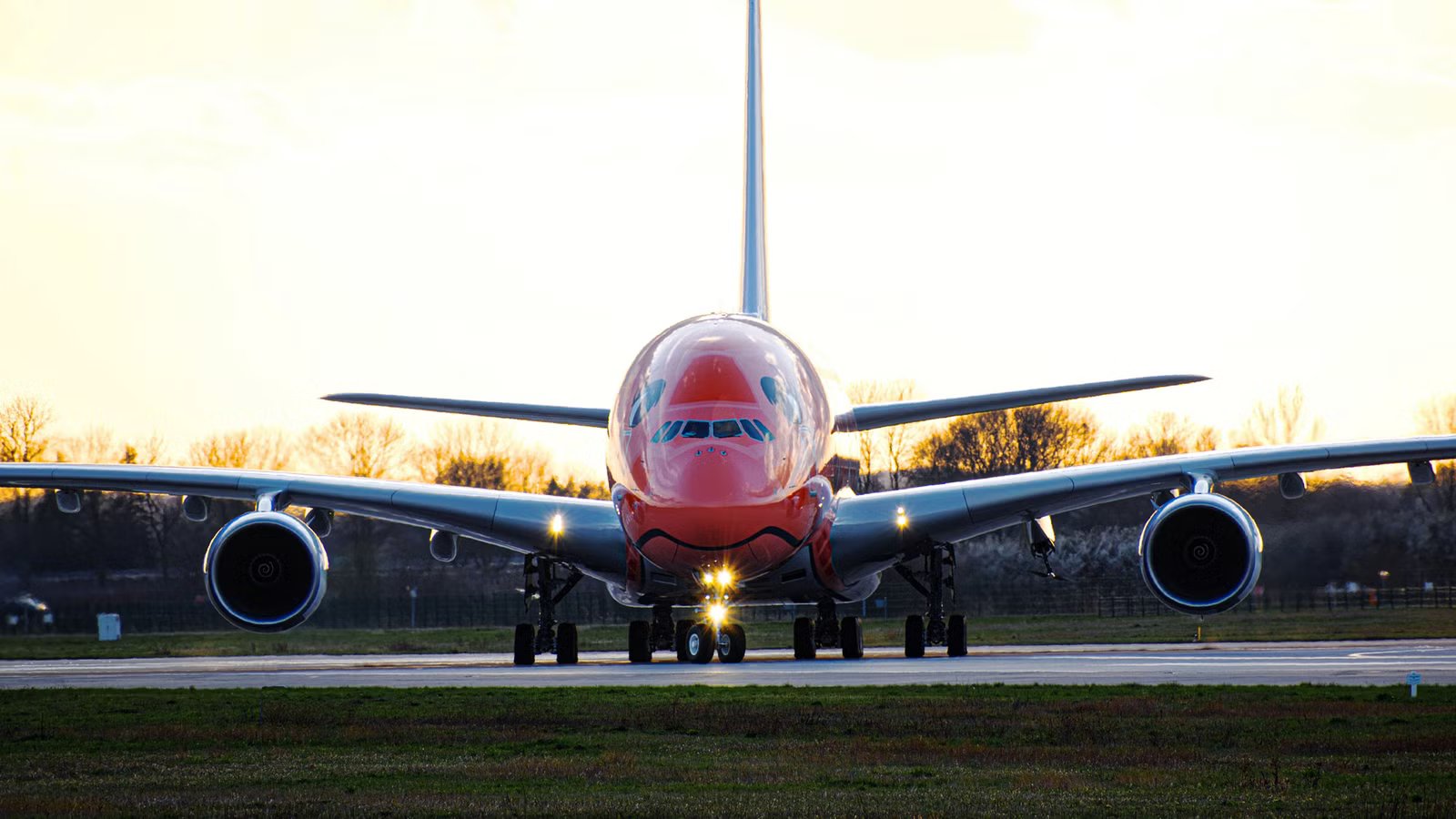
Even though Airbus ended production of the A380 several years ago, the world’s largest passenger aircraft remains an important part of global long-haul flying. A relatively small group of airlines continues to rely on the superjumbo for routes where high passenger demand, premium cabin space, and slot constraints still make the aircraft economically valuable. As a result, the A380 may be less common than it once was, but it is far from gone.
March’s schedule shows exactly how concentrated the remaining A380 market has become. Just a handful of airlines are responsible for all scheduled flights, with Emirates alone accounting for the vast majority of operations. Looking at how many flights the aircraft will operate, which airlines still use it the most, and where the world’s longest A380 routes remain in service offers a clear snapshot of how the superjumbo continues to fit into airline networks today.
About The Airbus A380

The Airbus A380 remains the largest passenger aircraft ever built and one of the most recognizable jets in commercial aviation. Developed by Airbus as a high-capacity answer to growing congestion at major international airports, the aircraft was designed around the idea that airlines could move more passengers through slot-constrained hubs using fewer flights. Its full-length double-deck design, immense cabin volume, and four-engine layout made it unlike any other modern airliner.
When it entered service in 2007, the A380 was positioned as the future of long-haul travel, particularly for airlines built around hub-and-spoke networks. The aircraft offered airlines the ability to carry hundreds of passengers while also creating unusually spacious premium cabins. Features such as onboard lounges, shower suites, and large business and first class cabins helped the jet become a flagship aircraft for several international carriers. At the same time, its sheer size allowed airlines to add enormous economy capacity on dense global routes.
However, the aircraft’s long-term future changed as the industry shifted toward smaller, more fuel-efficient twin-engine widebodies such as the Boeing 787 and Airbus A350. Airbus ended A380 production in 2021, but the aircraft has not disappeared from the skies. Instead, it has become a more specialized tool used by a smaller group of airlines on routes where its high capacity still makes economic sense. That is why tracking how many A380 flights are scheduled in a given month remains a useful way to measure where the superjumbo still matters most.
How Many A380 Flights Are Scheduled In March 2026

According to the March schedule data, the Airbus A380 is set to operate 7,701 flights worldwide during the month. Across those flights, the aircraft will offer 3,880,248 seats and generate roughly 15.70 billion ASMs, showing that the superjumbo still carries enormous capacity despite being flown by a relatively small group of airlines. Even though the A380 is no longer in production, these figures make clear that it remains a major part of long-haul operations on the routes where airlines can consistently fill it.
Unsurprisingly,  Emirates dominates global A380 activity by a huge margin, accounting for 5,087 flights in March alone. That is far more than any other operator and underlines how central the aircraft remains to Emirates’ network strategy. After Emirates, the next biggest A380 operators by flights are Singapore Airlines with 497, British Airways with 435, and Qatar Airways with 406. The data also shows how concentrated the A380 market has become, with just a small group of airlines responsible for all scheduled flying.
|
Airline |
Flights |
Seats |
ASMs |
|---|---|---|---|
|
Emirates |
5,087 |
2,609,766 |
9,957,839,249 |
|
Singapore Airlines |
497 |
234,087 |
1,000,499,142 |
|
British Airways |
435 |
204,015 |
999,531,862 |
|
Qatar Airways |
406 |
209,902 |
843,028,472 |
|
Asiana Airlines |
296 |
146,520 |
454,202,100 |
|
Etihad Airways |
290 |
140,940 |
590,654,268 |
|
Qantas |
281 |
136,285 |
904,191,805 |
|
Lufthansa |
179 |
91,111 |
455,893,485 |
|
ANA |
124 |
64,480 |
246,184,640 |
|
Korean Air |
106 |
43,142 |
247,715,666 |
|
Total |
7,701 |
3,880,248 |
15,699,740,689 |
|
Source: Cirium |
|||
The scale of these totals is especially notable when viewed against how few airlines still fly the type. While the number of operators has shrunk significantly since the aircraft’s peak years, the March schedule shows that the A380 continues to provide substantial seat capacity and long-haul lift where demand remains strong enough to justify such a large aircraft.

Where Qatar Airways Will Fly Its High-Capacity Airbus A380s This Winter
The aircraft offers some exceptional long-range capabilities.
Why Airlines Still Keep The A380 In Service

For most airlines still operating the Airbus A380, the aircraft remains valuable for one simple reason: there are still markets where an enormous amount of capacity can be filled profitably. Even though four-engine aircraft are no longer the industry standard for long-haul growth, the A380 continues to make sense on slot-constrained routes, major global hubs, and premium-heavy trunk services where demand is consistently high. On these routes, replacing one A380 with a smaller aircraft may require adding frequencies, which is not always possible due to airport slot limits or operational complexity.
No airline reflects this logic more clearly than Emirates. The carrier’s business model is built around hub-and-spoke connectivity through Dubai, where the goal is to move as many passengers as possible between continents with a single stop. In that system, large aircraft are not just helpful, they are central to the airline’s strategy. The A380 allows Emirates to consolidate huge numbers of passengers onto key flights between Dubai and major cities in Europe, Asia, Australia, and North America, maximizing the efficiency of each departure slot and reinforcing Dubai’s role as a global connecting hub.
The aircraft also gives airlines something smaller widebodies cannot fully replicate: an unmatched combination of capacity and premium cabin space. Airlines such as Emirates, Singapore Airlines, and Qantas have used the A380 to offer large first class, business class, and premium economy cabins while still carrying a substantial number of economy passengers. That mix can be especially valuable on routes where premium demand is strong but the airline also needs a large number of seats in the back of the aircraft.
For Emirates in particular, the A380 is not simply a legacy flagship kept in service for branding reasons. It remains a highly practical tool for moving traffic through Dubai at scale. As long as the airline continues to depend on high-volume connecting flows and major international trunk routes, the A380 will remain an important part of its network strategy.
A380 Fleet Size By Airline

The March schedule also reflects how heavily the remaining Airbus A380 market is concentrated among a small group of carriers. By far the largest operator is Emirates, which has 116 aircraft in its A380 fleet. No other airline comes remotely close, reinforcing how central the type remains to Emirates’ overall network and hub strategy. After Emirates, the next largest operators are Singapore Airlines and British Airways, each with 12 aircraft, followed by Qantas with 10 and Etihad Airways with 9.
The rest of the global A380 fleet is spread across a handful of airlines. Lufthansa and Qatar Airways each operate eight aircraft, while Korean Air and Asiana Airlines each have six. ANA remains the smallest current operator with just three aircraft. These figures show how the A380 has shifted from a broad industry program into a specialized aircraft flown by a limited number of carriers, with Emirates overwhelmingly dominating the type both in fleet size and monthly flight volume.
More interestingly, fleet size does not line up perfectly with March flight totals. Singapore Airlines and British Airways are tied for the second-largest A380 fleet at 12 aircraft each, but Singapore ranks second in March flights with 497, while British Airways is third with 435. Qantas has a larger fleet than Qatar Airways, with 10 aircraft versus eight, yet Qatar ranks fourth in March flying with 406 flights, while Qantas is seventh with 281. Lufthansa also has 8 A380s, the same as Qatar Airways, but operates only 179 flights in March, well behind both Qatar and several smaller operators. Asiana and Korean Air each have 6 aircraft, yet Asiana operates 296 A380 flights in March, compared to Korean Air’s 106.

Where To Fly The Airbus A380 Next Year: Airlines & Routes
Find out where the double-decker will be flying to next year.
The World’s Longest A380 Flights

While the Airbus A380 is best known for its size and passenger capacity, it also continues to operate some of the world’s longest scheduled flights. In terms of block time, the longest A380 service currently scheduled is the route between Dallas/Fort Worth International Airport (DFW) and Sydney Kingsford Smith Airport (SYD), which is blocked at 17 hours and 25 minutes. That makes it the longest scheduled A380 flight in the world by elapsed time, highlighting how the superjumbo is still used on some of the most demanding long-haul routes in commercial aviation.
The next longest A380 flight is Emirates’ service from Auckland to Dubai, which is blocked at 17 hours and 10 minutes, just 15 minutes shorter than the Dallas to Sydney operation. These flights show that despite the A380’s age and the end of its production run, the aircraft remains relevant on ultra-long-haul services where airlines need a combination of range, premium cabin space, and very high seat capacity. Routes of this length also reinforce why the aircraft remains valuable to carriers like Emirates and Qantas, which continue using the A380 on flagship intercontinental markets.