dailynewsnblog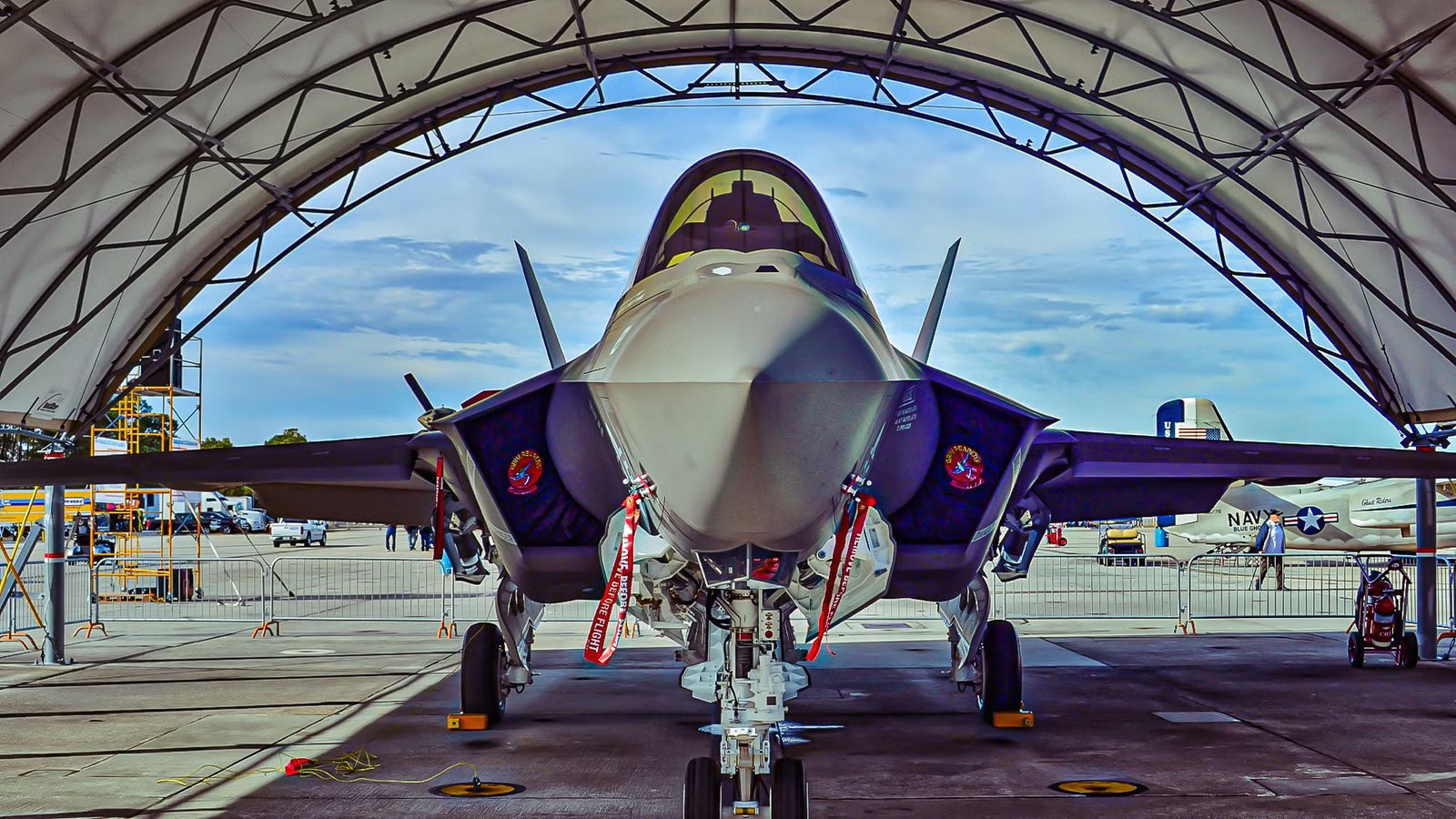
In 2025, Lockheed Martin set a new milestone in the production of its F‑35 Lightning II fighter jets, marking a year of unprecedented deliveries. The achievement highlights the ongoing global demand for the fifth-generation stealth fighter and underscores the company’s ability to meet the growing needs of the United States military and allied partners. This milestone reflects both the strategic importance of the F‑35 and its central role in modern airpower.
The record-setting year also illustrates years of investment in production efficiency and supply chain improvements. As more nations rely on the F‑35 to strengthen their air forces, Lockheed Martin’s success demonstrates the aircraft’s enduring impact on international defense strategy and its expanding presence in militaries around the world.
Lockheed Martin: A Brief History

Lockheed Martin’s origins trace back over a century to two pioneering aviation companies. The Lockheed company was founded in 1912 by brothers Allan and Malcolm Lockheed and quickly became known for designing innovative aircraft, including the iconic P‑38 Lightning. The company also established the famed Skunk Works, responsible for many advanced and secretive aerospace projects. Around the same time, Glenn L. Martin founded his own aviation company, which became a leader in bombers, missiles, and space vehicles. Both companies played major roles in shaping US military aviation and space efforts during the 20th century.
In 1995, Lockheed Corporation merged with Martin Marietta, the successor to the Glenn L. Martin Company, creating Lockheed Martin as it exists today. This merger combined decades of aerospace, defense, and technological expertise, positioning the company as a leading global provider of advanced systems and solutions. Headquartered in Bethesda, Maryland, Lockheed Martin has expanded its work to include aircraft, missiles, space technologies, and integrated defense systems for governments and organizations around the world.
Over the years, Lockheed Martin has continued to influence both defense and space exploration. From producing cutting-edge aircraft and missile systems to developing satellites and supporting NASA missions, the company’s century-long history reflects its role as a key innovator in aerospace and defense, maintaining a presence in programs that shape global security and technological advancement.
Lockheed Martin F-35 Lightning II

The F-35 Lightning II originated from the US Joint Strike Fighter program in the 1990s, aimed at creating a versatile, next-generation fighter for multiple services. Lockheed Martin’s X‑35 prototype first flew in 2000, showcasing the stealth and multirole capabilities that would define the production F‑35 family. After this, the program entered full-scale production with the F‑35A, beginning an extensive flight-test program to validate the aircraft’s performance.
Through the late 2000s and 2010s, the program achieved key milestones, including the introduction of STOVL (Short Take Off and Vertical Landing) and carrier-capable variants. Manufacturing ramped up steadily, reflecting growing global interest and investment in fifth-generation capabilities.
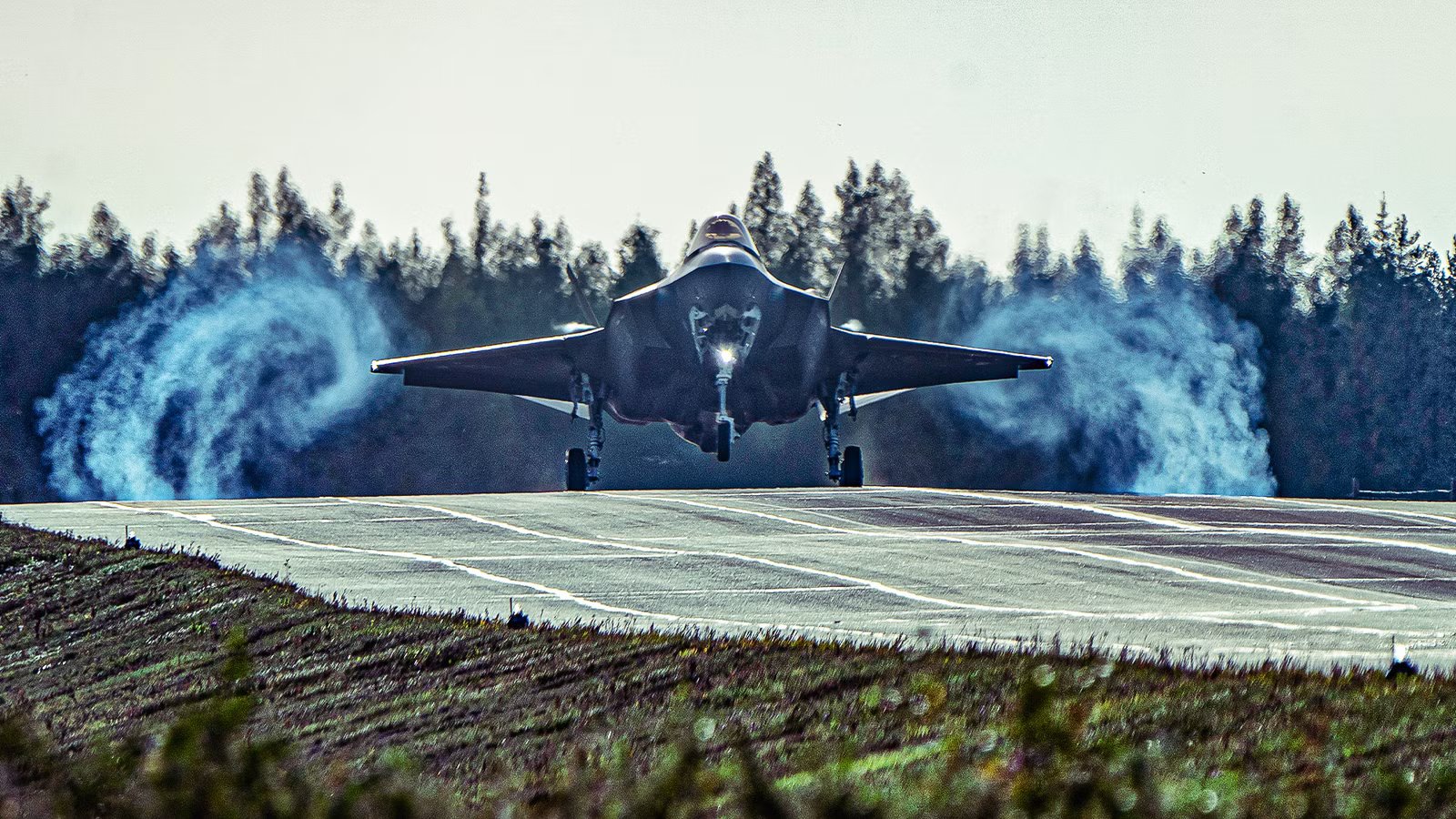
Today, the F‑35 serves as a central component of allied airpower. Its fleet has expanded worldwide, supported by continual software and weapons upgrades. From prototype to operational force, the F‑35 has become a symbol of modern multirole combat aviation and advanced stealth technology.

How Many F-35s Are In Service With The US Air Force?
The US Air Force has over 400 and perhaps closer to 500 F-35s in inventory, while Lockheed has delivered over 1,000 F-35s in total.
The Figures Behind The F-35

The F‑35 Lightning II can reach supersonic speeds of around Mach 1.6, or roughly 1,200 mph at high altitude, allowing it to quickly enter and exit contested airspace. Its design supports high‑G maneuvers, with structural limits certified up to +9 g, enabling agile combat performance. With a service ceiling near 50,000 ft, the aircraft can operate across a wide range of altitudes to meet different mission requirements.
Thanks to its internal fuel capacity and relatively efficient airframe, the F‑35 can carry out long-range missions without the need for external tanks, helping maintain its stealth profile. Its combat radius, the distance it can fly, complete a mission, and return safely, allows for extended strike and air-to-air operations, making it a versatile platform for a variety of combat scenarios.
|
Attribute (per Lockheed Martin) |
F‑35 Performance Figure |
|---|---|
|
Top Speed |
Mach 1.6 (1,200 mph/1,930 km/h) |
|
Maneuverability |
+9 g certified |
|
Service Ceiling |
50,000 ft (15,000 m) |
|
Combat Radius |
670 nautical miles (770 miles/1,240 km) |
|
Maximum Range |
1,500 nautical miles (1,725 miles/2,800 km) |
|
Engine |
Pratt & Whitney F135 afterburning turbofan |
|
Maximum Thrust |
43,000 lbf (191 kN) |
|
Stealth Capability |
Low observable, internal weapons carriage |
|
Sensor & Avionics |
AESA radar, distributed aperture sensors, sensor fusion, and advanced communications. |
In addition to flight performance, the F‑35 stands out for its advanced sensor and avionics systems. Features like AESA radar, distributed aperture sensors, and integrated data systems give pilots unmatched situational awareness. By fusing information from multiple sensors and sharing it across networks, the F‑35 enables real-time decision-making and coordination with allied forces, highlighting its role as a truly fifth-generation multirole fighter.
Who Operates The F-35?

The F‑35 Lightning II serves as a cornerstone of modern airpower for the United States, which operates all three variants, the F‑35A, F‑35B, and F‑35C, across the Air Force, Marine Corps, and Navy. These aircraft provide unmatched versatility, capable of conducting air superiority, strike, intelligence, surveillance, and reconnaissance missions. The US fleet also plays a key role in pilot training and international exercises, ensuring that allied forces can operate seamlessly alongside American units.
A number of allied nations have also adopted the F‑35 to modernize their air forces. The United Kingdom and Japan operate the short takeoff/vertical landing F‑35B, which allows them to project airpower from aircraft carriers or smaller airfields. Israel flies a customized F‑35I variant, tailored to its specific operational and technological requirements. Countries such as Italy and Australia primarily use the conventional takeoff and landing F‑35A, enhancing both defensive and offensive capabilities while ensuring interoperability with the US and other allied forces.
In addition, a growing group of nations has placed orders or begun receiving F‑35s, including Norway, the Netherlands, South Korea, Denmark, Belgium, Poland, Finland, Switzerland, Germany, and Singapore. This expanding network of operators not only strengthens each nation’s individual air capabilities but also fosters a global alliance of F‑35 users who share training, intelligence, and operational experience. Today, around 20 countries are involved in the F‑35 program, highlighting its central role in shaping international defense strategy and the future of fifth-generation fighter aviation.

The F-35’s Role In Multinational Air Defense Alliances
The F-35 is set to play a central role in air defense of both the United States and its allies for decades to come.
How Many F-35s Did Lockheed Martin Deliver In 2025?

In 2025, the F‑35 Lightning II program achieved a record-breaking year for aircraft deliveries, with Lockheed Martin handing over 191 jets to the US military and its international partners. This number represents the highest annual total in the program’s history, surpassing the previous peak of 142 deliveries. The increase reflects a combination of enhanced production capabilities, streamlined manufacturing processes, and the resolution of backlogs from earlier years when aircraft were completed but not yet formally accepted. The achievement highlights both the maturity of the F‑35 program and the sustained global demand for its advanced capabilities.
Deliveries in 2025 spanned all three main variants of the aircraft. The F‑35A, used by the US Air Force and most international partners, continued to form the bulk of deliveries. Meanwhile, the F‑35B, designed for short takeoff and vertical landing, supported US Marine Corps and allied forces with more flexible deployment options, and the F‑35C, optimized for carrier operations, strengthened the Navy’s carrier air wings. By the end of 2025, the global F‑35 fleet reached roughly 1,300 aircraft in active service, operating across more than a dozen nations. This milestone underscores the F‑35’s growing role as a cornerstone of allied airpower and a critical element in modern military strategy worldwide.
The record delivery year also reflects the program’s ability to overcome past challenges. Earlier in the decade, the F‑35 program experienced delays related to technical issues, software integration, and production slowdowns, which had created a backlog of aircraft awaiting delivery. The 2025 surge in deliveries not only cleared much of that backlog but also demonstrated significant improvements in production efficiency and program management. Looking forward, continued strong demand from partner nations ensures that the F‑35 fleet will keep expanding, reinforcing both the program’s long-term strategic importance and Lockheed Martin’s position as a leading defense manufacturer.
The Future Of The F-35

The F‑35 Lightning II is poised to remain a central element of allied airpower for decades to come. As more nations continue to integrate the aircraft into their fleets, the program is expected to expand both in size and capability. Ongoing production improvements aim to reduce costs and increase delivery rates, allowing operators to field more aircraft while maintaining readiness and operational flexibility. This expansion ensures that the F‑35 will remain a dominant presence in both conventional and contested airspaces.
Technological upgrades will play a critical role in the F‑35’s future. The aircraft’s software and sensor suites are designed to evolve, with incremental “block” upgrades providing enhanced radar, electronic warfare, communications, and weapons integration. These advancements will allow the F‑35 to adapt to emerging threats and maintain superiority against increasingly sophisticated air defense systems, ensuring that the aircraft stays relevant in high-end combat scenarios.
Beyond individual upgrades, the F‑35 program is increasingly focused on networked operations. Its advanced sensor fusion and data-sharing capabilities allow it to act as a command-and-control hub in multi-platform environments, connecting allied aircraft, ground forces, and naval units. As air combat becomes more connected and information-driven, the F‑35’s ability to gather, process, and share real-time intelligence will be critical, solidifying its role as a cornerstone of 21st-century aerial warfare.