dailynewsnblog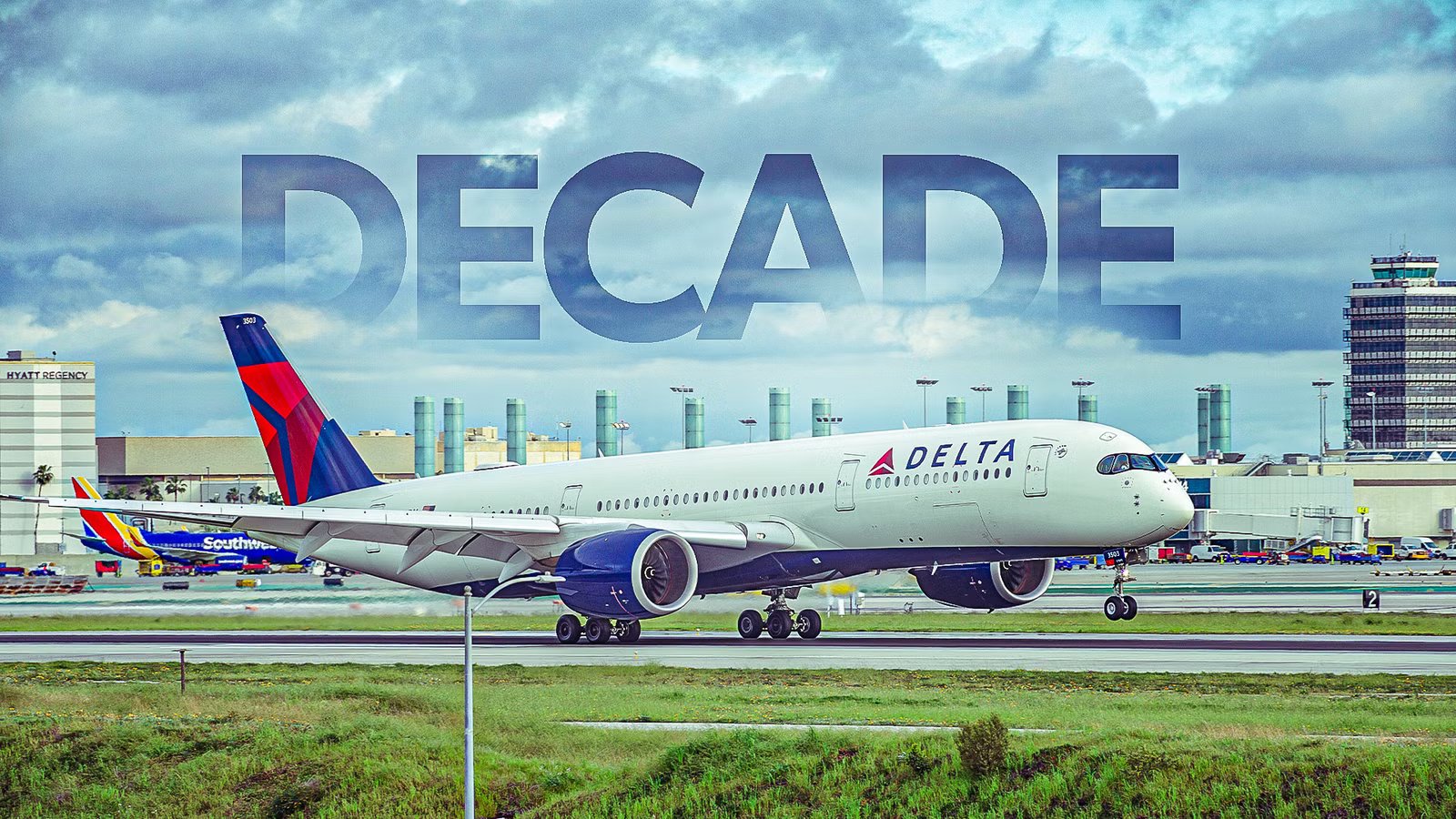
Together with the Airbus A330-900neo, the A350 plays a key role in Delta Air Lines’ long-haul fleet strategy, particularly on long-haul routes where efficiency, comfort, and range are critical. The Airbus A350 has proved popular with airlines and passengers alike since it entered commercial service in 2015, representing a new generation of aircraft, designed to reduce fuel burn while improving the passenger experience.
Delta Air Lines currently operates the Airbus A350-900 and has plans to integrate the larger A350-1000 variant into its fleet over the coming years. In this article, we will take a closer look at the number of A350s that  Delta Air Lines operates, how many it has on order, and the role that the aircraft plays in the SkyTeam carrier’s fleet.
Why Delta Air Lines Chose The Airbus A350

Delta Air Lines operates a diverse fleet of both narrowbody and widebody aircraft, and unlike some carriers that rely heavily on one manufacturer, the airline flies aircraft from both Airbus and Boeing. The decision to introduce the Airbus A350 was driven by a need to replace older widebody aircraft, such as the Boeing 747. Delta Air Lines’ current fleet, including the number of aircraft on order, is outlined in the table below, according to the latest data from ch-aviation as of December 2025:
|
Aircraft |
Number In Fleet |
Number On Order |
|---|---|---|
|
Airbus A220-100 |
45 |
– |
|
Airbus A220-300 |
35 |
65 |
|
Airbus A319 |
57 |
– |
|
Airbus A320 |
47 |
– |
|
Airbus A321 |
127 |
– |
|
Airbus A321neo |
85 |
70 |
|
Airbus A330-200 |
11 |
– |
|
Airbus A330-300 |
31 |
– |
|
Airbus A330-900 |
39 |
– |
|
Airbus A350-900 |
38 |
6 |
|
Airbus A350-1000 |
– |
20 |
|
Boeing 717 |
80 |
– |
|
Boeing 737-800 |
77 |
– |
|
Boeing 737-900ER |
163 |
– |
|
Boeing 737 MAX 10 |
– |
100 |
|
Boeing 757-200 |
76 |
– |
|
Boeing 757-300 |
16 |
– |
|
Boeing 767-300ER |
38 |
– |
|
Boeing 767-400ER |
21 |
– |
|
Total |
986 |
261 |
For Delta Air Lines, the Airbus A350 offered several advantages, including providing significant fuel savings compared to the carrier’s older aircraft. This is largely due to the aircraft’s advanced aerodynamics, lightweight materials, and modern engines, and lower fuel burn helps Delta Air Lines reduce operating costs and limit its environmental impact.
Secondly, the Airbus A350 offers long range and high reliability, which allows Delta Air Lines to serve long routes non-stop, such as  Hartsfield-Jackson Atlanta International Airport (ATL) to Seoul Incheon International Airport (ICN), Seattle-Tacoma International Airport (SEA) to Taipei Taoyuan International Airport (TPE), or
  Los Angeles International Airport (LAX) to Sydney Airport (SYD). The aircraft also aligns well with Delta Air Lines’ increased focus on premium travel, as it supports high-quality cabin products across all classes, which we will examine in more detail shortly.

Why The Airbus A350 Has Such A Remarkable Range
It is the result of years of engineering.
Delta Air Lines & The Airbus A350-900

Delta Air Lines received its first A350-900 in 2017, becoming the first US airline to operate the aircraft, and it has since become a backbone of the carrier’s long-haul fleet, together with the Airbus A330-900. Today, the carrier operates a total of 38 A350-900s, with a further six on order.
The Airbus A350-900 can typically seat between 275 and 339, depending on the configuration used by the carrier, featuring a mix of business class, premium economy, and economy class. This varied layout allows Delta Air Lines to serve a wide range of passengers, from business travelers to leisure customers, and the different configurations found onboard its A350-900s are shown in the table below:
|
Aircraft |
Business Class |
Premium Economy |
Economy Class (Extra Legroom) |
Economy Class |
Total |
|---|---|---|---|---|---|
|
Airbus A350-900 (v1) |
40 |
40 |
36 |
159 |
275 |
|
Airbus A350-900 (v2) |
32 |
48 |
36 |
190 |
306 |
|
Airbus A350-900 (v3) |
40 |
– |
63 |
246 |
339 |
Meanwhile, from a passenger perspective, the Airbus A350-900 offers noticeable improvements, with larger windows, higher cabin humidity, and better lighting that help reduce fatigue on long journeys. For Delta Air Lines, the aircraft has proven to be reliable and efficient, making it a strong choice for long-haul operations.
Delta Air Lines & The Airbus A350-1000

The Airbus A350-1000 is the larger variant of the A350 family, and compared to the A350-900, it offers increased seating capacity and a slightly longer range. While Delta Air Lines does not yet operate the A350-1000, the carrier placed an order for 20 of the aircraft back in 2024, with a view to begin receiving them in 2026. At the time, Delta Air Lines’ CEO, Ed Bastian, celebrated the order, saying,
“The A350-1000 will be the largest, most capable aircraft in Delta’s fleet and is an important step forward for our international expansion. The aircraft complements our fleet and offers an elevated customer experience, with more premium seats and best-in-class amenities, as well as expanded cargo capabilities.”
The Airbus A350-1000 is designed for high-demand long-haul routes, and although Delta Air Lines’ exact configuration is yet to be revealed, the aircraft will be able to carry more passengers than the smaller A350-900, while maintaining excellent fuel efficiency. For an airline like Delta Air Lines, this makes it an attractive option for busy, premium-heavy international markets, such as major transatlantic or transpacific routes.

Airbus A350-900 Vs A350-1000: Features Compared
Comparing and contrasting the modern widebody variants.
Onboard Delta Air Lines’ Airbus A350s

In Delta Air Lines’ standard and most common Airbus A350-900 configuration, the aircraft can accommodate up to a maximum of 306 passengers across its three main cabins. At the front of the aircraft is the Delta One cabin, home of the carrier’s business class product, which features 32 Delta One Suites, arranged in a 1-2-1 layout. Each suite offers direct aisle access, a fully flat bed, and a sliding door for added privacy, while large personal screens, ample storage, and premium dining further enhance the experience for business travelers.
Behind the Delta One cabin is Premium Select, which is Delta Air Lines’ premium economy product, featuring 48 seats in a 2-4-2 configuration. Premium Select offers wider seats, increased recline, adjustable leg and foot rests, and an upgraded meal service compared to standard economy, and is popular with passengers seeking extra comfort without the hefty price tag of business class.
Delta Air Lines’ Comfort+ cabin includes 36 seats, providing extra legroom compared to standard economy, along with dedicated overhead locker space and priority boarding. Meanwhile, the remainder of the aircraft is Delta Air Lines’ Main Cabin, with around 190 seats in a 3-3-3 layout, and passengers can enjoy seatback entertainment screens, USB power, and improved air quality, thanks to the Airbus A350’s higher humidity levels.

Why Don’t Any US Carriers Fly The Airbus A350 Apart From Delta Air Lines?
One of its major rivals could start flying the Airbus widebody next decade.
All About The Airbus A350

The Airbus A350 is one of the most advanced widebody aircraft flying today, designed to meet the demands of long-haul travel while improving efficiency and passenger comfort. Launched by the European manufacturer in the mid-2000s, the A350 was developed as a response to airline demand for a modern, fuel-efficient replacement for older widebody jets such as the Airbus A330 and Boeing 777.
A key feature of the Airbus A350 is its advanced design, and over 50% of the aircraft’s structure is made from carbon-fiber-reinforced plastic, reducing weight and improving durability compared to traditional aluminum designs. The aircraft also features a sleek, aerodynamic wing and is powered by Rolls-Royce Trent XWB engines, which are among the most efficient large commercial aircraft engines in service today. Together, these elements allow the A350 to deliver around 25% lower fuel burn compared to previous-generation aircraft.
The Airbus A350 entered commercial service in January 2015, with  Qatar Airways operating the first A350-900 flight from its hub at Doha Hamad International Airport (DOH) to Frankfurt Airport (FRA). The oneworld carrier was also the first airline to introduce the larger A350-1000, deploying the aircraft on services to London Heathrow Airport (LHR) in February 2018. Both variants of the A350 share a common cockpit and systems, allowing airlines to operate them with minimal additional training.
The World’s Largest Operators Of The Airbus A350

By the time it has received its final Airbus A350-900s and A350-1000s, Delta Air Lines will have a total of 64 A350s in its fleet, making it one of the world’s largest operators of the type. Other major carriers to operate sizable A350 fleets include  Singapore Airlines, Qatar Airways, Cathay Pacific, and fellow SkyTeam carrier Air France, as outlined in the table below:
|
Ranking |
Airline |
Airbus A350-900 |
Airbus A350-900ULR |
Airbus A350-1000 |
Total |
|---|---|---|---|---|---|
|
1 |
Singapore Airlines |
58 |
7 |
– |
65 |
|
2 |
Qatar Airways |
34 |
– |
24 |
58 |
|
3 |
Cathay Pacific |
30 |
– |
18 |
48 |
|
4 |
Air France |
38 |
– |
– |
38 |
|
5 |
Delta Air Lines |
38 |
– |
– |
38 |
|
6 |
Air China |
30 |
– |
– |
30 |
|
7 |
Lufthansa |
30 |
– |
– |
30 |
|
8 |
Japan Airlines |
15 |
– |
10 |
25 |
|
9 |
Turkish Airlines |
25 |
– |
– |
25 |
|
10 |
Thai Airways |
23 |
– |
– |
23 |
Singapore Airlines is the sole operator of the Airbus A350-900ULR, which it deploys on two of the longest commercial air routes in the world from its hub at Singapore Changi Airport (SIN) – to both New York John F. Kennedy International Airport (JFK) and  Newark Liberty International Airport (EWR). The Star Alliance carrier also operates its specially configured A350-900ULRs on selected services to Los Angeles International Airport (LAX), in conjunction with the Boeing 777-300ER.