dailynewsnblog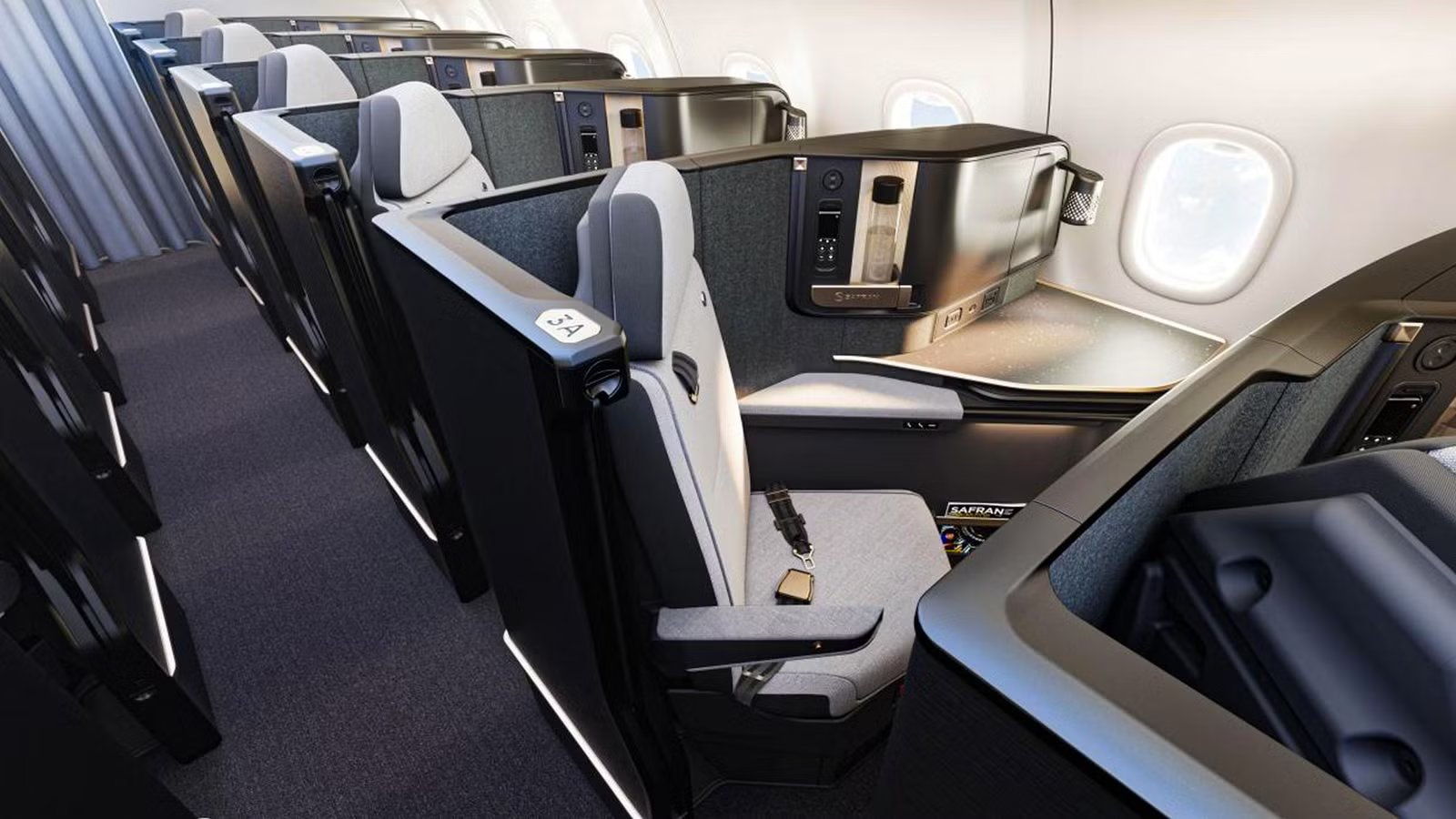
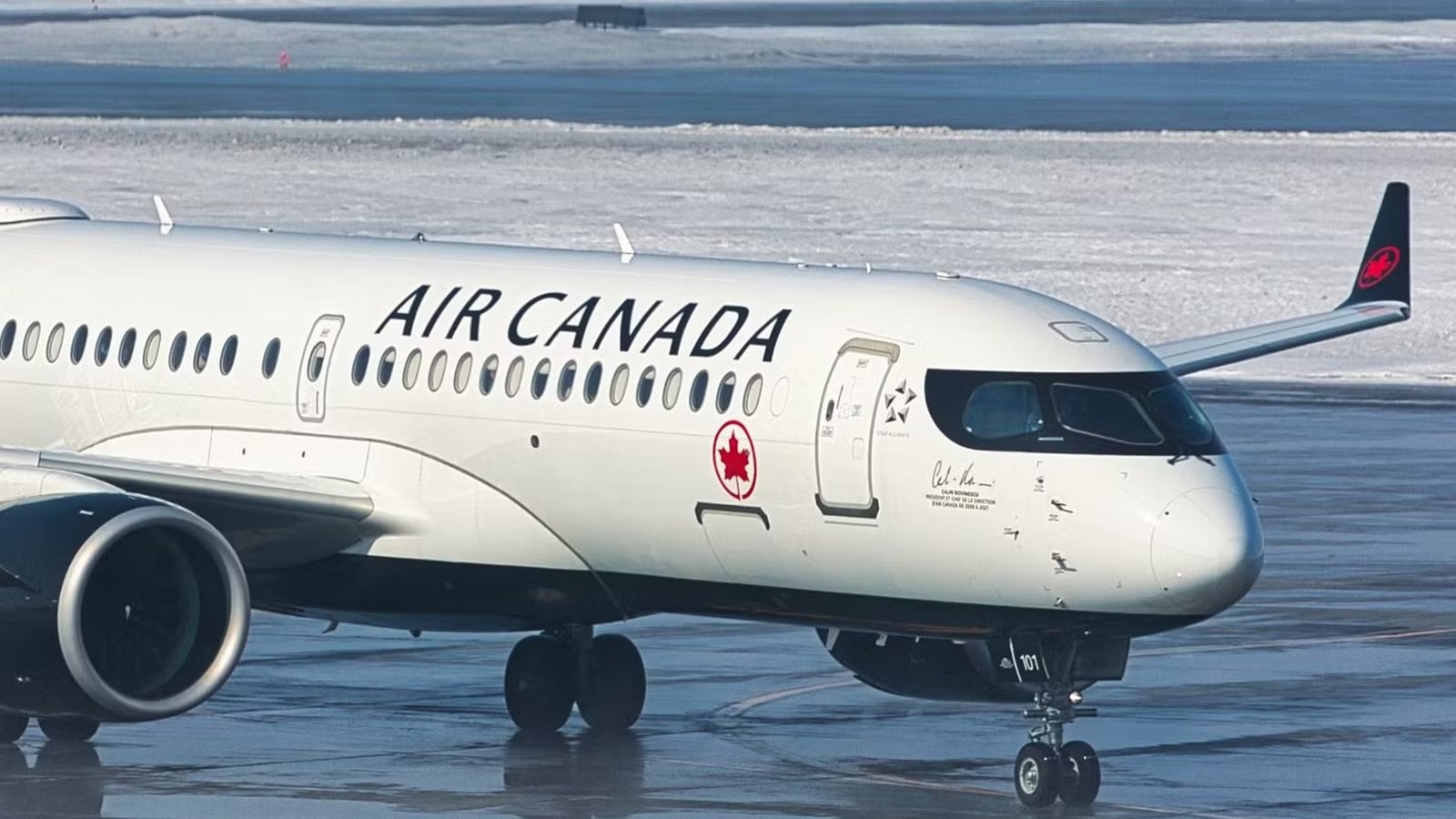
The Airbus A321XLR arrived in 2026 with a simple but disruptive promise: the range of a widebody, the economics of a narrowbody, and a business class cabin that belongs in neither category. For  Air Canada, it marks the first time a single-aisle jet has carried lie-flat Signature Class suites, opening up transatlantic routes to cities that could never justify a 300-seat Boeing 787 Dreamliner.
This is not a straightforward comparison, as a narrowbody is fundamentally different from a widebody, and 14 suites in a 12.2-foot (3.7-meter) wide cabin will always operate under different constraints than 40 suites in an 18-foot (5.5-meter) wide one. Constraints are not the same as compromises, and what Air Canada has built on the A321XLR deserves to be understood on its own terms and measured honestly against the widebody standard it is competing with.
Simple But Effective

The entire Signature Class cabin on Air Canada’s A321XLR comprises 14 suites with seven rows and one seat on each side of the aisle, a micro-cabin by any widebody standard, but one built around a principle that larger cabins often sacrifice, according to the Executive Traveller. Every passenger has direct aisle access, and nobody climbs over anyone. In all, the geometry is simple, and the result is immediate.
The suites are arranged in an inward-facing herringbone layout, angled toward the aisle with passengers facing away from the windows. This orientation is a deliberate engineering decision to get the most out of the limited space. For a cabin just 12.2 feet (3.7 meters) wide, an inward-facing angle maximizes the length of the lie-flat bed, approximately 6 feet 5 inches (195.6 cm), by using diagonal space rather than fighting the narrow tube head-on. It is the same logic that made the herringbone layout popular on widebodies, and adapted here, it is the only sensible solution.
The comparison to a standard widebody one-two-one configuration is slightly unfair to make. On a Boeing 787-9, 40 or more business class seats are spread across a cabin nearly six feet wider. The aisle is broader, the sidewalls feel further away, and the sense of space is architectural at its core. On the A321XLR, the 14-suite cabin is deliberately intimate, feeling closer to a private railway carriage than a traditional business class cabin. Whether that reads as cozy or confined will depend entirely on the passenger sitting in it.
Proven Track Record

The hardware behind Air Canada’s Signature Class suites is the Collins Aerospace Aurora, a seat built from the ground up for the single-aisle long-haul category, according to One Mile At A Time. Designed in partnership with London-based studio Acumen, whose previous work spans JetBlue’sMint business class and  Etihad Airways’ A380 Residence, the Aurora is a herringbone mini-suite with 36 inches (91.4 cm) of pitch, Prince of Travel notes. High privacy walls cocoon the passenger from the aisle, providing a genuinely private space, not just an approximation.
The technology specification matches widebody standards in the areas that matter most. An 18-inch 4K IFE screen, larger than the 17-inch unit deployed on  American Airlines’ Aurora configuration, sits alongside Bluetooth audio pairing, wireless charging, AC power, and USB-C connectivity. Viasat high-speed WiFi is fitted throughout, and privacy doors are included in the design, though it is worth noting that the doors on American’s identical Aurora platform are still awaiting FAA operational certification, a process Air Canada will need to complete separately before passengers can close them in flight.
The Airbus Airspace cabin enhancements add a further layer of considered engineering. The overhead bins offer 60% more volume than standard narrowbody lockers, a detail that matters when 14 business class passengers board without the benefit of a widebody’s lateral storage options. Cabin altitude is maintained at 6,000 feet (1,828 meters), matching the Boeing 787, reducing fatigue on longer sectors. Crucial for long-haul operations, LED lighting is human-centric and tunable throughout the flight to support the body’s circadian rhythm. For this product, while the cabin may be narrow, the features included are far from that.

A New Era: Air Canada’s First Airbus A321XLR Takes To The Skies
One step closer to the first delivery!
A New Frontier

The A321XLR’s 4,700-nautical-mile (8,704 km) range is its commercial philosophy, and for Air Canada, it brings long, thin transatlantic corridors where demand is genuine but not sufficient to fill a 300-seat widebody into the land of commercial success. Montreal to Quito, Calgary to Cancun, and Toronto to Copenhagen; these are not replacement routes but instead entirely new connections, made possible by an aircraft that costs significantly less to operate per seat than a 787 Dreamliner or A330.
The 2026 deployment schedule tells the full story. Domestic services to Calgary and Vancouver begin in May to familiarize crews, and transatlantic operations launch in June with Toulouse and the inaugural Montreal to Palma de Mallorca service, the first time any Canadian airline has served the Spanish island nonstop. Edinburgh follows on June 16, Nantes in July, London Heathrow from Toronto in August, Lyon in September, and Manchester and Copenhagen in late October. Nine European destinations in a single year, most of them secondary cities that Air Canada’s widebody fleet was never going to serve.
The logic behind the secondary city focus is precise. According to Aviation Week, Berlin remains relatively underserved in the North American market, with only year-round flights from  United Airlines plus seasonal service from a handful of others. Toulouse, Nantes, and Lyon serve France’s second, third, and fourth cities; culturally significant, commercially active, and chronically underconnected to Canada. The A321XLR does not compete with Air Canada’s widebody trunk routes to Paris, London, and Frankfurt; instead, it fills the space around them.
Only So Much Space To Work With

What truly defines this comparison is the difference in cabin width between the A321XLR at 12.2 feet (3.7 meters) and the 787-9 at 18 feet (5.5 meters). On paper, it is purely a dimension and doesn’t hold a lot of weight, but in the cabin, it is the difference between a single aisle with one drink cart and two aisles with two, between a galley capable of full multi-course service and one constrained by the geometry of a tube designed for short-haul operations.
The physical limitations ripple outward in ways that matter over the course of eight hours. The A321XLR has one lavatory for business-class passengers, compared to two or three on most widebody configurations. Boarding and deplaning through a single door and a single aisle is slower, and the galley, smaller by design, creates constraints on meal service, as American Airlines has already discovered. Somewhat frustratingly, the IFE screen on the Aurora seat extends into the aisle when deployed, requiring passengers to stow it during food service. These are not fatal flaws, but they are real, and passengers considering a transatlantic flight on the A321XLR deserve to know them.
The cabin pressure parity is genuine and deserves direct credit. The A321XLR maintains a 6,000-foot (1,828-meter) cabin altitude using bleed air, matching the 787’s figure and delivering meaningful benefits to blood oxygen saturation and fatigue on longer sectors. Where the gap remains is humidity: the 787 uses electric compressors to bring in fresh outside air, enabling humidity levels near 15%, whereas the A321XLR uses traditional bleed air and is believed to maintain humidity closer to the standard narrowbody range of 10-12%, according to TravelGrom. Over eight hours, that is a tangible physiological difference for skin, eyes, and mucous membranes, one that no amount of Airspace XL bins can offset.

The Striking Differences Between The Airbus A321neo & A321XLR
A321neo set the standard for efficiency; the A321XLR extends single-aisle range to 8,700 km — reshaping long-haul travel with narrowbody economics.
No Premium Economy?

When examining the seat totals, the notably absent one is zero in premium economy, a Reddit post shows. On a transatlantic flight of eight hours or more, that gap is a structural decision that shapes the entire commercial proposition of the aircraft. Air Canada’s VP of Network Planning has been direct about the reasoning, according to Travel Pulse. The long-thin routes the A321XLR is designed to serve are predominantly leisure-driven, and premium economy demand on those corridors is still developing. Business and economy are the split that makes the economics work.
The profitability logic is sound, even if it frustrates the mid-market traveler. Fewer seats mean a lower break-even threshold, so Air Canada requires fewer passengers to cover the cost of each flight than it would on a 787 or an A330. On a route with genuine but seasonal demand, the A321XLR can operate profitably at load factors that would bankrupt a widebody deployment. Adding premium economy rows would eat into the 168 economy seats needed for that calculation to work. The aircraft has been optimized for the route type, not the other way around.
The passenger most affected is the budget-conscious premium traveler, who regularly books premium economy on widebody transatlantic routes and expects that option to follow them to new destinations. On the A321XLR, it does not, as the choice is Signature Class at full business class pricing, or economy with 36 preferred seats, according to a Reddit thread, which offers 34 inches (86.4 cm) of pitch as the closest proxy. The upgrade pathway exists in both directions, but the middle rung of the ladder has been deliberately removed. Whether that remains the case as the fleet matures and routes develop will be one of the more interesting questions of the XLR story at Air Canada.
Fit For Purpose

The A321XLR is not necessarily the most comfortable transatlantic aircraft, but it solves the problem of connecting via hubs to destinations that previously had no such direct options. For these routes, therefore, the A321XLR is not a compromise but the only option. The widebody that does not fly that route cannot be compared to the narrowbody that does.
In Signature Class, the calculus is straightforward. Fourteen suites, direct aisle access, a lie-flat bed, and a product designed for eight-hour operations, on a route with no widebody alternative. The narrower cabin, the single lavatory, the bleed-air humidity, these are all trade-offs that exist in the context of a flight that otherwise would not exist at all. Book it on that basis, and the experience will meet or exceed expectations. Book it expecting a Boeing 787, and it likely will not.
In economy, the practical advice is simpler still. The 36 preferred seats with 34 inches (86.4 cm) of pitch are the closest the A321XLR gets to a premium economy proxy, worth selecting at booking if available. Beyond that, the nonstop convenience to a secondary European city on a modern, fuel-efficient aircraft with updated entertainment and power at every seat represents a meaningful step forward from the regional narrowbodies that previously served these corridors. As Air Canada takes delivery of up to 11 A321XLRs in 2026 and routes multiply from Toronto, Ottawa, and Halifax, this aircraft will quietly reshape how Canadians reach Europe, not by replacing the widebody experience, but by significantly expanding the transatlantic map.