dailynewsnblog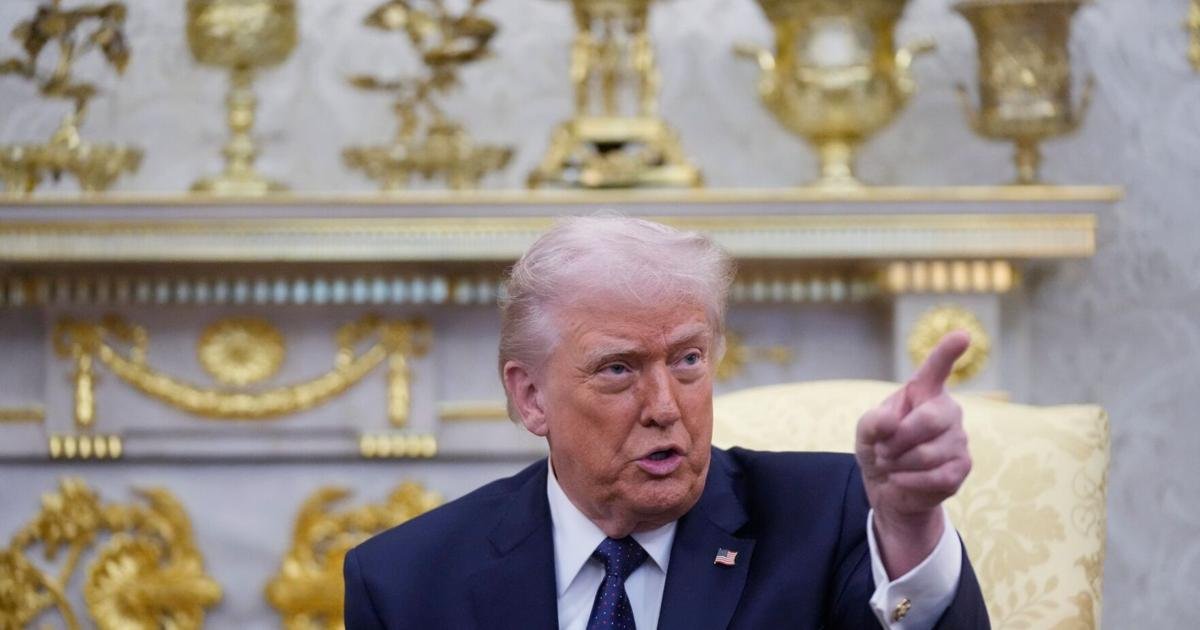
“We will measure our success not only by the battles we win but also by the wars that we end — and, perhaps most importantly, the wars we never get into,” he said, receiving a standing ovation. “My proudest legacy will be that of a peacemaker and unifier. That’s what I want to be: a peacemaker and a unifier.”
Trump was once seen, even among otherwise critical opponents, as averse to military adventurism. He chastised past presidents for stumbling into quagmires. As a then-citizen, he predicted former U.S. president Barack Obama would attack Iran for political purposes. Obama didn’t, but after withdrawing from an Obama-era deal to constrain Tehran’s nuclear program, Trump now has on multiple occasions.

Hundreds of civilians were killed and wounded in the strikes, an Iranian diplomat told the UN Security Council. Iran retaliated by firing missiles
Hundreds of civilians were killed and wounded in the strikes, an Iranian diplomat told the UN Security Council. Iran retaliated by firing missiles
On Saturday, a storm of American missiles and drones descended upon Iran just before 10 a.m. Tehran time, striking more than 1,000 targets in a single day. The next morning, Iranian state media confirmed the country’s supreme leader, 86-year-old Ayatollah Ali Khamenei, had been killed after more than three decades in power.
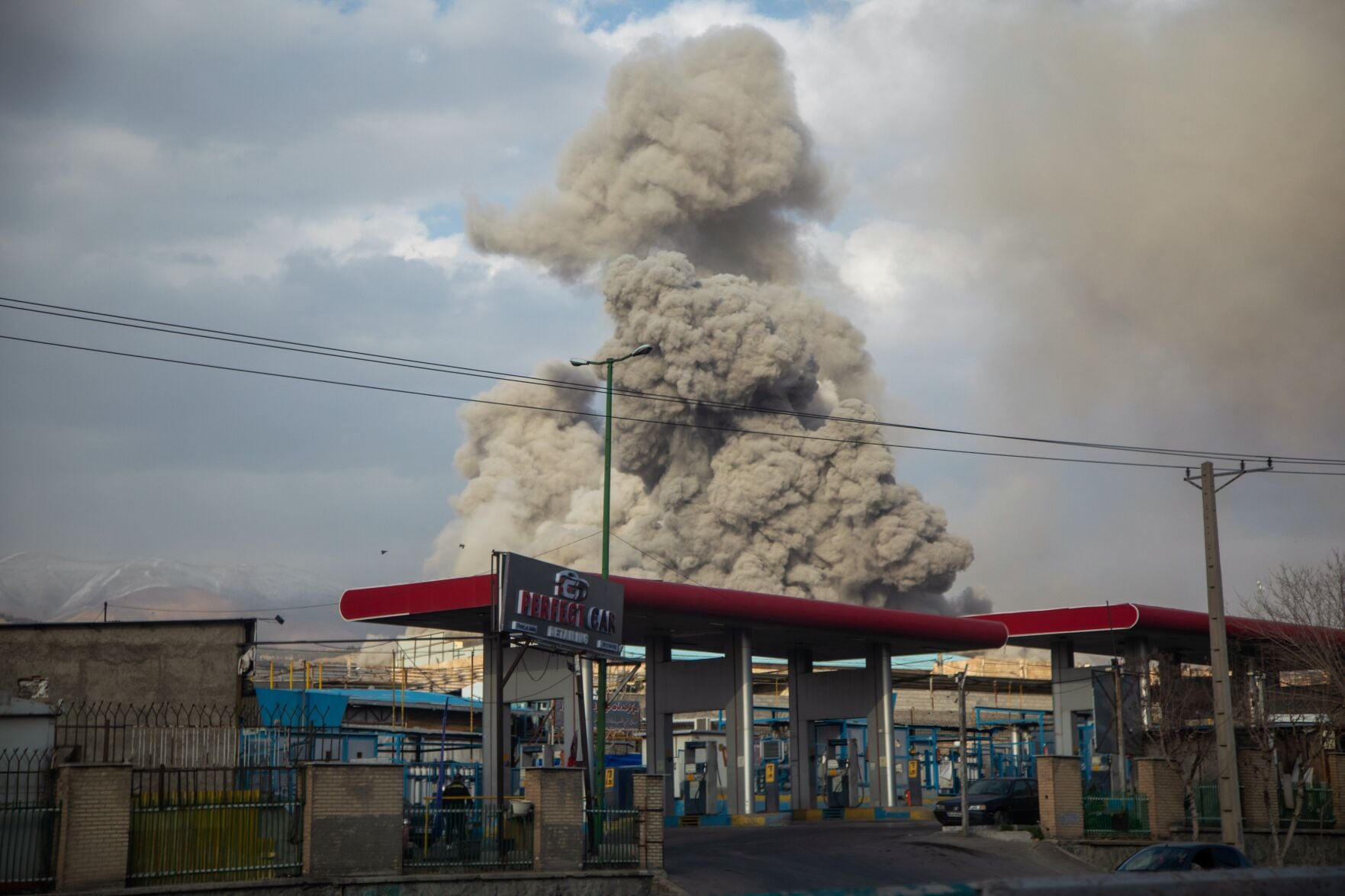
A plume of smoke rises after an explosion on March 2, 2026 in Tehran, Iran. Iran’s Supreme Leader, Ayatollah Ali Khamenei, was confirmed killed after the United States and Israel launched a joint attack on Iran on February 28.
Majid Saeedi Getty Images
And during the first year of Trump’s second term, he oversaw at least 626 airstrikes across multiple countries, according to the Military Times. That figure eclipses the number of airstrikes former U.S. president Joe Biden launched during his entire four years (555).
We decided to dig into when Trump has taken military action after returning to office early in 2025. Here’s a rundown — and a look at how it compares to previous administrations.
Striking ISIS in Somalia
Trump entered the first major military engagement of his second term less than two weeks after his inauguration, beginning with a precision airstrike in northeastern Somalia that took out Ahmed Maeleninine, a financier and recruiter for the Islamic State’s Somalia affiliate, on Feb. 1, 2025.
The goal, the White House said, was to crush al-Qaeda-affiliate group al-Shabaab and ISIS-Somalia before they had a chance to threaten America. The strike was done in co-ordination with the Somalian government.
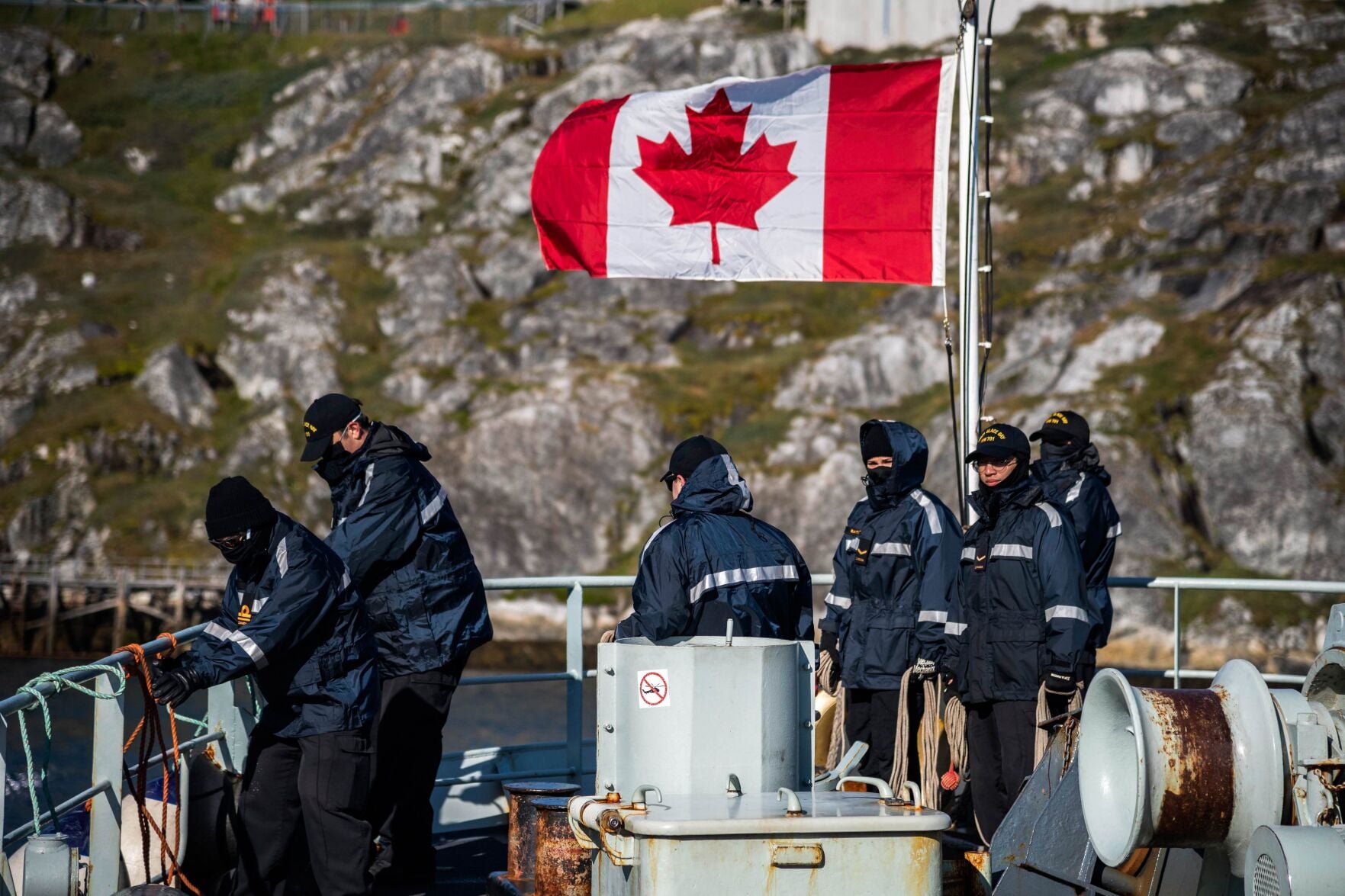
There’s “effectively zero” chance the U.S. would invade Canada — but we must prepare for that contingency anyway, experts say.
There’s “effectively zero” chance the U.S. would invade Canada — but we must prepare for that contingency anyway, experts say.
U.S. military operations targeting Islamist groups in Somalia started decades ago, as part of former U.S. president George W. Bush’s efforts to stamp out al-Qaeda in the country. But Trump has launched more attacks there across his two terms than all of his predecessors combined. That’s resulted in the deaths of as many as 375 militants, including up to 12 civilians in his second term.
ISIS-Somalia and al-Shabaab remain active in Somalia. This campaign is ongoing.
Assassination of ISIS leader in Iraq
A month later, on March 13, 2025, U.S. Central Command (CENTCOM) forces conducted a precision airstrike in Iraq’s Al Anbar Province that killed Abdallah Makki Muslih al-Rifai, alias “Abu Khadijah” — ISIS’s second-highest-ranked leader and chief of operations. The strike was carried out in collaboration with Iraqi intelligence and security forces.
Trump praised the operation on Truth Social the next day, writing: “His miserable life was terminated, along with another member of ISIS, in co-ordination with the Iraqi Government and the Kurdish Regional Government. PEACE THROUGH STRENGTH!”
Operation Rough Rider in Yemen
Two days after ordering the airstrike in Iraq, Trump launched the first large-scale conventional campaign of his second term. “Operation Rough Rider” was America’s answer to the Red Sea Crisis, which saw Houthi rebels seize and bombard hundreds of commercial vessels in the area in response to Israel’s war effort in Gaza.

WASHINGTON (AP) — President Donald Trump, whose fierce denunciation of military adventurism …
The operation ended on May 6, 2025, after Oman helped broker a ceasefire. But this fragile deal collapsed later in the year, after Houthi militants continued to attack Israeli targets and commercial ships.
Operation Midnight Hammer in Iran
On June 22, the U.S. launched “Operation Midnight Hammer” — a stealth mission during the Twelve-Day War Israel launched against Iran that was intended to cripple Tehran’s nuclear infrastructure.

In March, Tulsi Gabbard said the intelligence community didn’t believe Iran was building a
On June 13, Israel ordered large-scale strikes against Iran. The U.S. eventually joined in with Midnight Hammer, deploying B-2 stealth bombers to drop “bunker buster” bombs at two underground nuclear facilities while more than a dozen submarine-launched Tomahawk missiles targeted another compound.
The Twelve-Day War killed hundreds of civilians in Iran, as well as several prominent Iranian military officials, scientists and politicians. More than 25 Israeli civilians were also killed.
Trump claimed the mission led to the “total obliteration” of Iran’s nuclear enrichment capabilities, with the Pentagon estimating the operation set Tehran’s nuclear program back by up to two years. A later assessment revealed that only one of the three nuclear sites was destroyed, and that the other two could resume operation within months.
Operation Southern Spear in Venezuela
What started as a counter-narcotics operation ended in what Trump called the “largest armada ever assembled in the history of South America.”
On Sept. 1, the U.S. military launched its first strike at a ship in the Caribbean Sea that Trump said was ferrying drugs for the Venezuelan crime syndicate Tren de Aragua. Eleven people were killed.
In December, Trump labelled president Maduro’s regime a terrorist organization and ordered a blockade of all sanctioned oil tankers entering and leaving the country. “The illegitimate Maduro Regime is using Oil from these stolen Oil Fields to finance themselves, Drug Terrorism, Human Trafficking, Murder, and Kidnapping,” the American president wrote on Truth Social.
“Venezuela is completely surrounded by the largest Armada ever assembled in the History of South America,” he said.
Operation Hawkeye Strike in Syria
We’ll come back to Venezuela very soon. Because, on Dec. 13, 2025, an ambush in the Syrian city of Palmyra killed two U.S. soldiers and a civilian — and Trump wanted “serious retaliation.”
The military expanded its operations in January, attacking another 35 targets on Jan. 10, before killing al-Qaeda leader Bilal Hasan al-Jasim on Jan. 16 — a man CENTCOM said was “directly connected” to the gunman in the initial Dec. 13 attack.
Christmas strikes in Nigeria
On Christmas Day, the U.S. launched airstrikes in Nigeria’s Sokoto state.
Trump said the strikes targeted Islamic State militants “who have been targeting and viciously killing, primarily, innocent Christians.”
Operation Absolute Resolve in Venezuela
OK, back to Venezuela. After months of simmering tension, Trump capped off his campaign against the country by launching “Operation Absolute Resolve” on Jan. 3.

Washington has a long, complicated past when it comes to regime change. There was Vietnam in the 1960s and 70s, and Panama in 1989. There was
Washington has a long, complicated past when it comes to regime change. There was Vietnam in the 1960s and 70s, and Panama in 1989. There was
Maduro’s former vice-president, Delcy Rodríguez, is now serving as interim president of Venzuela with the backing of the U.S. Since Maduro’s capture, the White House has worked to control Venezuela’s oil industry and has begun lifting sanctions to facilitate a return of foreign investment.
Operation Epic Fury in Iran
Finally, we come to Trump’s latest military action in Iran, a decapitation strike that eliminated the supreme leader, as well as several other senior Iranian officials, and could dramatically reshape the balance of power in the Middle East.
The goal? That hasn’t always been clear. The American-Israeli strikes interrupted diplomatic talks between Washington and Tehran over the latter’s nuclear future. And although Trump urged Iranians to overthrow their government in the hours after the initial strikes, his administration has since said regime change is not the objective. “This is not Iraq. This is not endless,” said Defense Secretary Pete Hegseth Monday, adding that it wouldn’t be a “politically correct war.”

The biggest cautionary note for leaders in any political calculation, according to retired
Meanwhile, Secretary of State Marco Rubio insisted that Iran posed an “imminent threat” because, he said, if Iran were attacked by Israel or another state it would likely retaliate by striking the U.S. If that happened, “there would have been hearings on Capitol Hill about how we knew that this was going to happen and we didn’t act preemptively to prevent more casualties and more loss of life,” Rubio said.

U.S. Secretary of State Marco Rubio speaks to reporters as he arrives to brief senators on the recent military action in Iran, at the U.S. Capitol in Washington, DC on March 3, 2026.
Jim Watson/AFP via Getty Images
On Monday, Trump said his primary aims are to destroy Iran’s missile capabilities, prevent it from acquiring a nuclear weapon and stop Tehran from supporting armed proxies in the region. So far, six American troops have died in the conflict.
As of Wednesday, the Human Rights Activists News Agency said the death toll in Iran has risen to 1,097, including more than 160 people local authorities say were killed when a girls’ school was struck in the south. On Wednesday, Hegseth said a U.S. submarine sank an Iranian warship, killing at least 80.
American and Israeli strikes continue to hammer the country, with Trump estimating operations could last four to five weeks — but that he was prepared “to go far longer than that.”
Meanwhile, Iran is retaliating with attacks across the Gulf region, disrupting energy supplies and travel. It has launched dozens of ballistic missiles at Israel, killing at least 11 people.

Carney said his government regretfully backs the initial attacks, seeing them as justified in
How do other presidents compare?
While Trump’s second term has seen a surge of American military action across the globe, his predecessors weren’t exactly pacifists either. Here’s an overview of the major military actions of recent U.S. presidents, starting with:
George W. Bush (2001-2009)
Bush’s first year in office was marked by the 9/11 attacks, an atrocity that would define the rest of his tenure. He responded by launching the global War on Terror, ordering an invasion of Afghanistan to wipe out al-Qaeda and dismantle the Taliban.
Bush’s “Operation Enduring Freedom” would spark two decades of deadly conflict in the region before U.S. troops pulled out in August 2021. The Taliban has since rapidly regained control of the country.
Iraq, however, dominates much of Bush’s legacy. In 2003, Bush decided to invade Iraq citing various claims that later proved to be erroneous, including the Saddam Hussein’s regime maintained weapons of mass destruction. Hussein was toppled, but his fall ushered in years of insurgency, instability and between 180,000 to well over 200,000 civilian deaths, according to the organization Iraq Body Count. Other estimates are considerably higher.
Barack Obama (2009–2017)
Notably during Obama’s tenure was Operation Neptune Spear, which killed Osama bin Laden in May of 2011.
That same year, Obama backed a NATO-led campaign in Libya that eventually led to the ouster of Muammar Gaddafi. However, the country fell into deadly chaos soon after and has experienced levels of unrest since then. Failing to address the aftermath of Muammar’s ouster was the “worst mistake” of his career, Obama later told Fox News.
Donald Trump (2017–2021)
Trump’s first term was characterized by his winding down the War on Terror, gradually pulling troops out of Syria, Iraq, Somalia and Afghanistan. This culminated in February 2020, with Trump signing a deal with the Taliban providing for the full withdrawal of NATO forces from the region.
A month earlier, in January of 2020, Trump ordered a drone strike in Iraq that assassinated Iranian General Qassem Soleimani, considered one of the most powerful people in Iran, further inflaming tensions between the two countries.
Joe Biden (2021-2025)
Trump arranged for the U.S. withdrawal from Afghanistan in his first term, but American forces didn’t leave until after Biden took power. Around that time, the Taliban ramped up attacks, capturing major cities before storming the capital — more than two weeks before the deadline for U.S. withdrawal. It has since assumed de facto control over the country.
With files from The Associated Press