dailynewsnblog
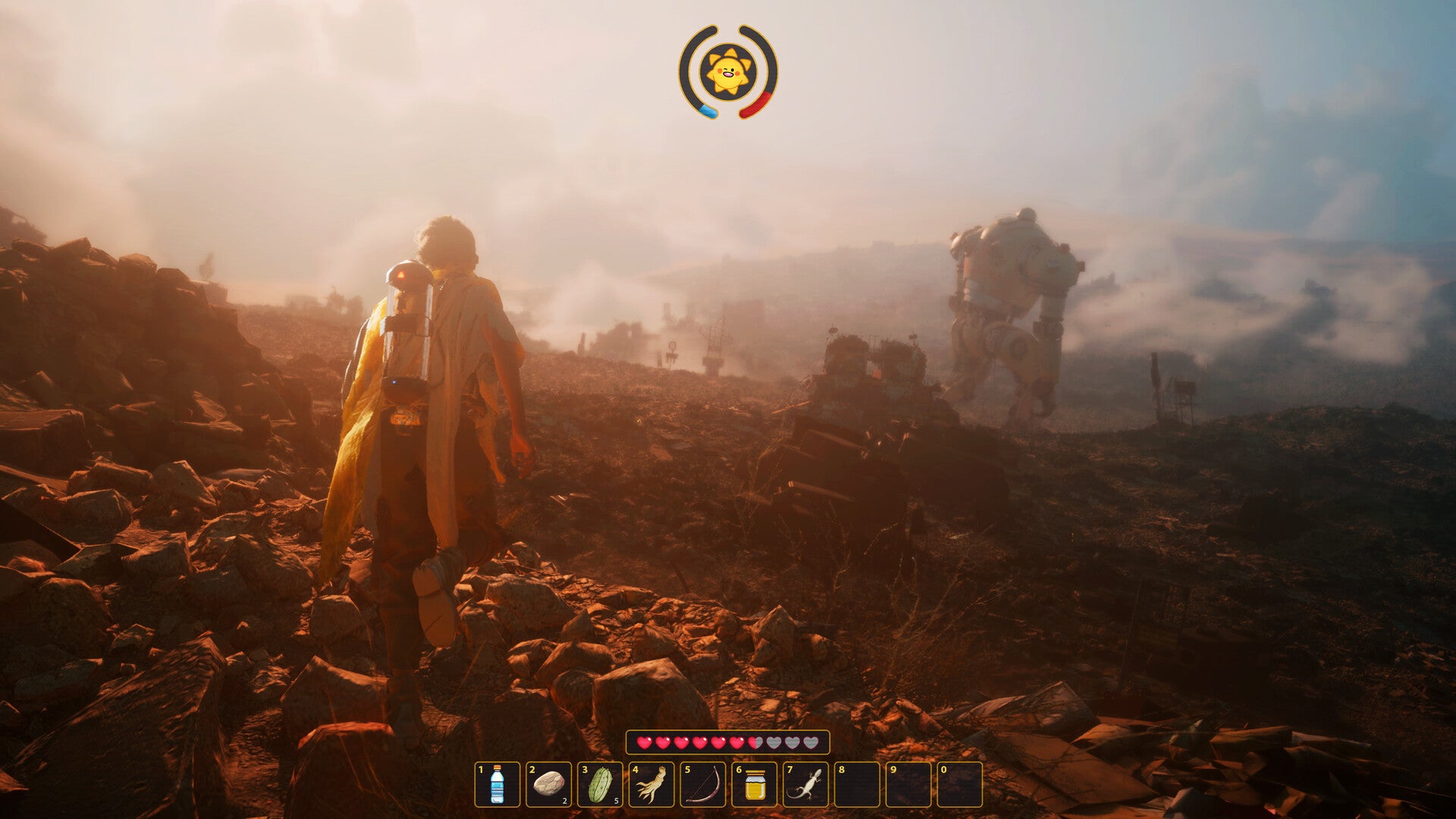
There are two gods in Dreamfall’s third-person survival story Hello Sunshine. One is the enormous robot who saves your life in the game’s first and only cutscene – a flaking, orange-hooped juggernaut who promptly turns away from you and trudges eastward, its back emblazoned with a command to “follow”. The other god is the sun.
The entangled movement of these gods defines your own. The sun will dry you to leather in moments, and cover is scarce in the game’s post-apocalyptic desert. So you must hug the big bot’s shadow, which spills backward and forward in the course of each day-night cycle, angling towards or mingling with shade thrown by structures to produce a changing, perilous geography of possibility.
There are lore documents and resources in the ruins by the big bot’s path, if you can figure out how to reach them – remnants of the mysterious Sunshine corporation, perhaps a hint about the strange tower your saviour is shambling towards. There are also threats such as jackal droids and kamikaze exploding crabs, which you can duel or slide away from – a touch of Arc Raiders in a game that otherwise takes cues from Iron Giant and Journey.
Watch on YouTube
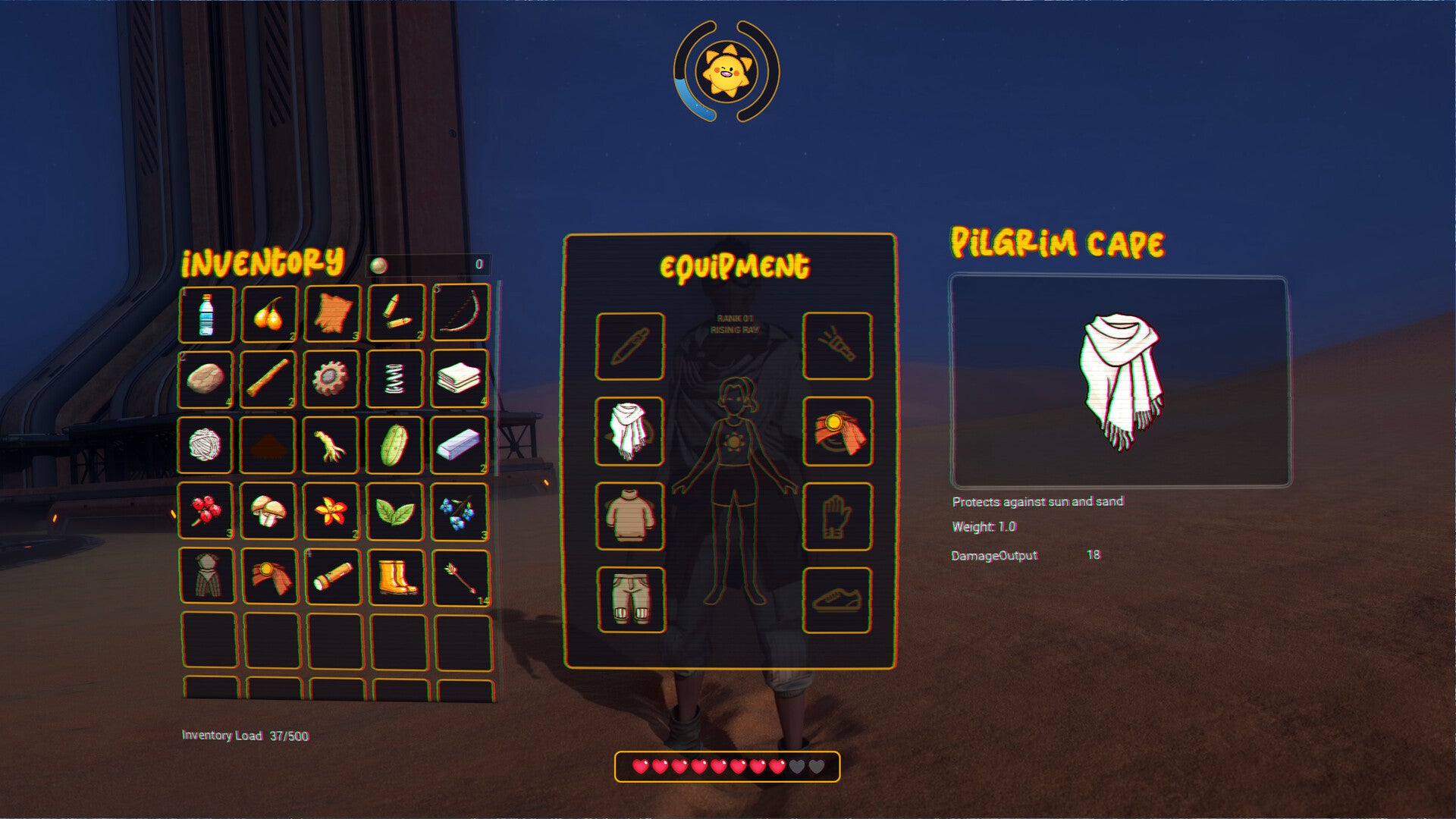
You need those resources because, as in regular survival games, you need to craft tools and equipment such as exploding arrows and hardier garments. But you can also devise upgrades for your towering protector, and even manufacture little robo helpers of your own in a Matryoshka doll of dependencies. Every sunset, the big bot rests at an automated service station with 3D printing facilities and a cheery employee canteen. While this might seem like a chance to roam unimpeded, the nights are freezing and full of undivulged menace. It’s safer, again, to stick close to the big bot, soaking up residual heat while you carry out some modifications or repairs.
The big bot isn’t oblivious to your carework. You can sit on its huge hand and enjoy a cosy moment, gazing into its luminous round eyes. If this is the basis for a parental bond, Hello Sunshine is also about outgrowing that bond, reclaiming your autonomy with every longer foray into the surrounding wilds. “The shadow is safety – it’s like, coming back to mum and dad and hugging them and being safe,” comments Ragnar Tørnquist, Red Thread Games founder. “That’s where you’re safe, and the world outside, that’s where you evolve as a person and where you progress and where you find things and where you learn things. And that’s up to the player.”
I think Hello Sunshine could be very good, though as a playable metaphor it already feels a bit open-and-shut (please don’t kill off the big bot, Red Thread – I’m still in mourning for the Terminator). It’s also another intriguing departure for a studio who make them a habit, often to their cost. “This is obviously our first survival game, and we like to explore new genres,” Tørnquist notes. “We sort of do the incredibly stupid thing of jumping between genres all the time and like, we have to relearn a lot of things.
“But that’s the joy of this, if we’re going to do this,” he continues. “Game development is hard, and it can be frustrating, and honestly, you know, none of us are rich from doing this. So it’s more about the passion of it. So, learning about the new genre, exploring that genre.” While Tørnquist is keen to emphasise that Hello Sunshine is Its Own Thing, he and game director Jonathan Nielssen do mention a couple of specific inspirations – Journey, obviously, but also a ‘proper’ survival game in the shape of The Long Dark.
There’s an argument that Hello Sunshine is at war with the survival game, in that it deprives you of the wasteland pioneer’s absolute freedom to live and die at a time and place of their choosing. Putting things more baldly than I should, it’s a game-length escort mission stomping through the plateaus of Dune: Awakening, daring the sandworm of wrong-footed expectation to swallow it.
In my interview with Tørnquist and Nielssen, I characterise Hello Sunshine as “survival detox”: you’ll never exhaust your brain gathering resources, as in far too many survival sims, because you must dog the titan’s footfalls. Tørnquist enjoys the detox concept – I’m 70% sure he wasn’t humouring me, anyway – but suggests that Hello Sunshine is less internally divided than I think, grounding the point in discussion of Red Thread’s past works.
“I’m proud of the games we made, and I see how every game is sort of exploring story in a different way,” he says. “Dreamfall Chapters was a very traditional adventure in a lot of ways, although I think with a pretty cool dialogue system and some choice-consequence stuff. Draugen, a game that was a lot shorter, more like a short story than anything else, and that was about exploring a relationship between two characters.
“Dustborn was sort of this road trip, with this enormous crew of characters – a hugely ambitious game for us. We had some negative experiences around the launch of that game, tied with the fact that, you know, our characters look the way they look, and the story is set in a particular region of the world. But all of that is sort of exploring story and narrative in in different ways, and Hello Sunshine is, I feel, pushing it forward to exploring story much more through mechanics, but also through different storytelling methods – having a philosophy of not doing any cutscenes aside from the very first cutscene that opens the game.”
(You can read more about those negative experiences here. We didn’t discuss them at the preview event, because frankly, I think Red Thread have had to think about this stuff enough.)
Of all the ways Hello Sunshine might explore story through mechanics, the part that interests me most is the big bot’s shadow. It gives you a routine. In the morning, you’ll seek safety to the rear; in the evening, you’ll scamper out in front. At noon, you may find yourself lurking directly between those thunderous metal clogs, which naturally has its risks. Hilly regions may seem like a reprieve, fracturing the sun’s gaze for leagues, but they also make it easier to lose sight of your ponderous guardian.
Nielssen says the exact position of the bot versus the sun is the result of much trial and revision. “We always wanted to always be able to iterate and test, not just be five leads sitting in a room thinking ‘how would this feel?’,” he comments. “We’ve always been able to go out and quickly test our ideas, and I think that’s how we started developing a feel for what is the best direction, what is the best sun placement.”
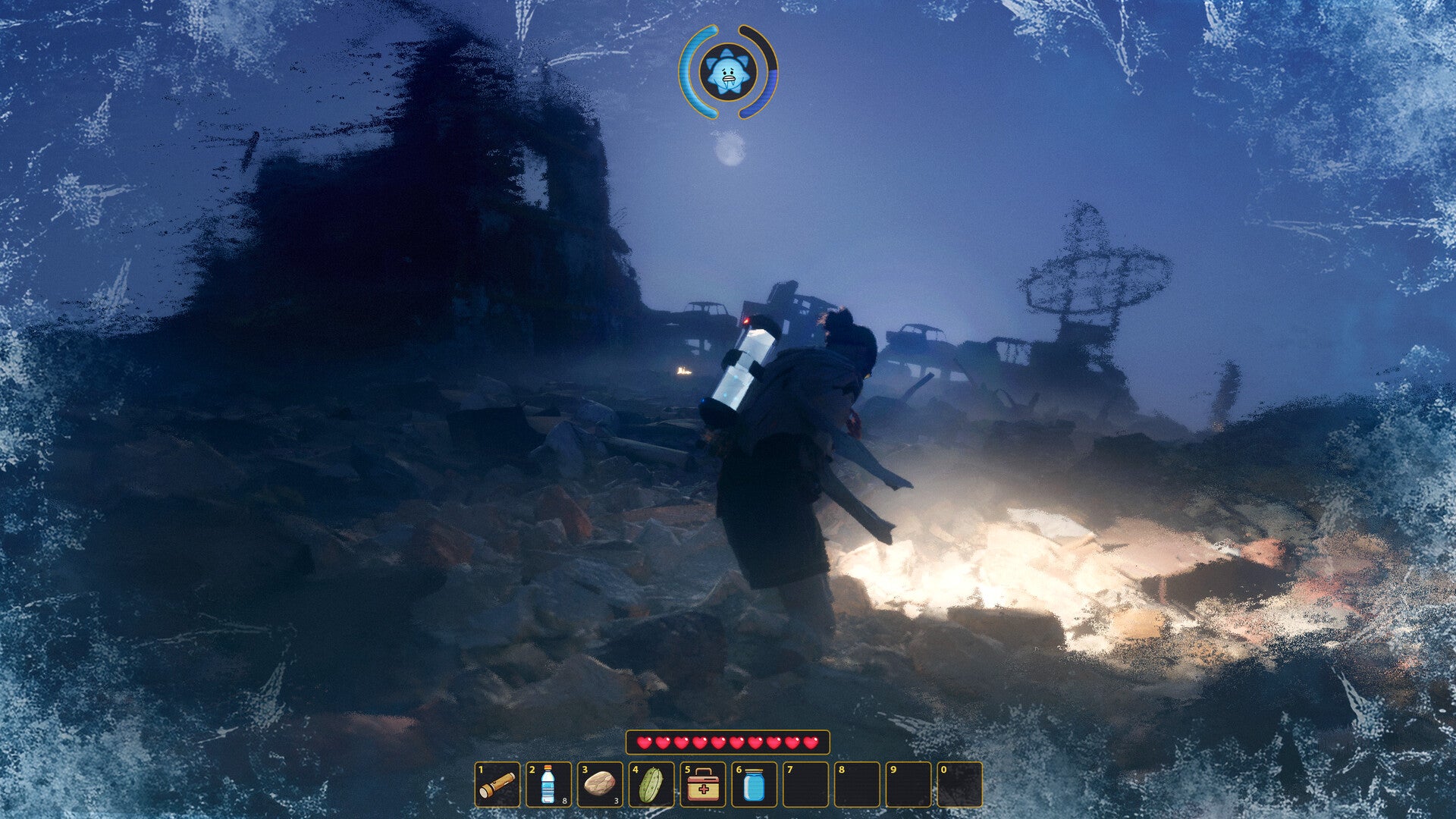
Tørnquist adds, however, that the shadow doesn’t simply decide where you go. “We’re not actually building the levels to sort of correspond with where the shadow is going to be because we don’t want to restrict or force the player into a pattern,” he says, reiterating later that “we don’t want people to feel like they are in any way locked to the shadow or directly guided by the shadow.”
This disappoints me a little: I’d love to play a version of this game in which the robot walks north-south and the shadow sweeps severely across the terrain, challenging you to follow its clockwork arc. But I can see how that might sabotage the theme of gradually learning to live without your Titan Mom, procuring the wherewithal and the courage to explore the desert alone. And there’s another invisible colossus in the room – the two player co-op mode, which I’ve yet to lay eyes on, and which Red Thread hint is practically its own tale. Learn more about Hello Sunshine on Steam.