dailynewsnblog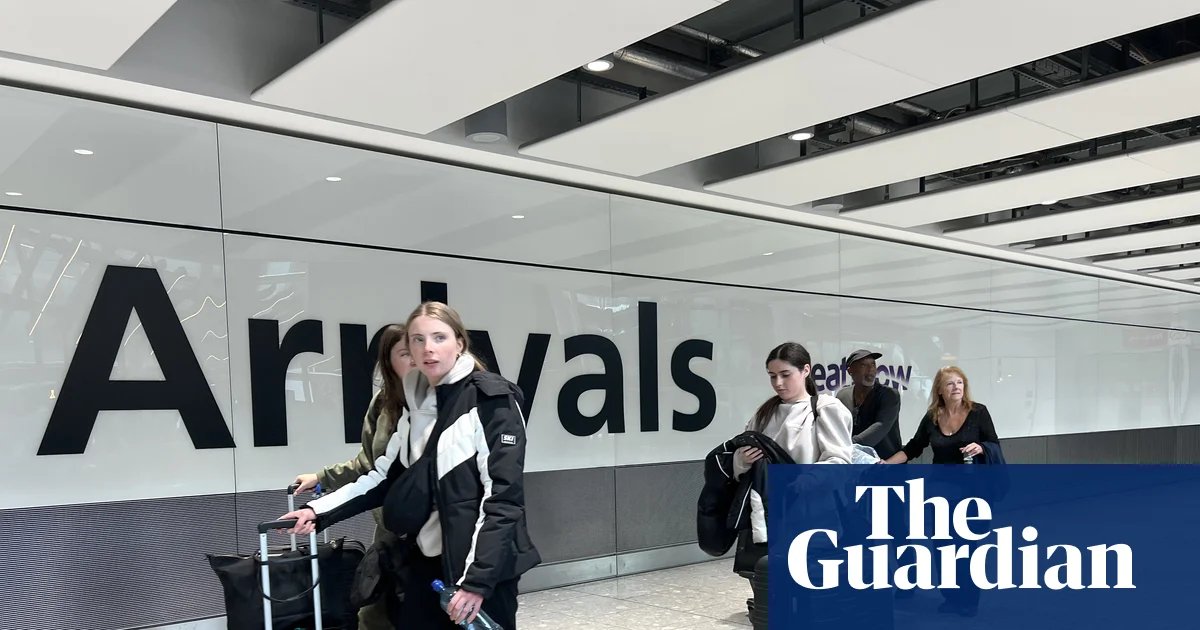
Heathrow airport has revealed a crowding problem that a third runway cannot solve: British and foreign travellers walk on different sides, and keep colliding, according to its chief executive.
Thomas Woldbye said that while Heathrow serviced more passengers in a smaller overall area than comparable European hubs, part of the London airport’s trouble was the differing continental sense of direction.
Speaking at an industry event, the Danish boss said one reason people thought Terminal 5, the main terminal used by British Airways, was crowded was that people were “in the wrong place”.
In comments to the Aviation Club UK, he said: “The problem is that all the British people keep to the left and normally Europeans keep to the right. And they do that in both directions.
“So we can be crashing into each other, and I see that from personal experience.”
Woldbye said that while “I have jokes with our people”, it was an issue that could be changed. “We just need to make sure that everybody going this way keeps to the left and this way to the right. I know that’s simplified but that is the sort of thinking that we need,” he said.
Heathrow will build more satellite terminals should it succeed with plans for a third runway, which could add about 40 million extra passengers of varying directional preferences to the mix. The 240,000 extra flights a year will be guided by air traffic control.
Woldbye said even with expansion, backed by the government, rival international hubs would grow faster than Heathrow. “London will lose market share every single year for the next 10 years. I think that should be a serious concern,” he said.
Meanwhile, the airport is attempting to address concerns that a third runway is incompatible with the UK’s 2050 net zero goals by accelerating the use of sustainable aviation fuels (SAF).
It has established an £80m pot – paid from landing charges – to subsidise airlines that choose to use more SAF on top of the minimum required under national mandates.
The mix of aviation fuel in the UK must average at least 3.6% SAF over the course of 2026, but Heathrow expects to hit a self-imposed target of 5.6%, helping airlines to cover some of the additional cost of the more expensive cleaner fuel.
Planes running on SAF – so far largely produced from recycled cooking oil – emit equal amounts of CO2 in flight as those using fossil fuels, but the net carbon footprint is calculated as lower because of the “life cycle”, ie how it is produced compared with normal jet fuel. SAF is regarded as a potential solution to significantly decarbonise long-haul aviation, although many remain sceptical.
Matt Gorman, Heathrow’s director of sustainability, said: “We have looked to use our scale and influence to attract SAF and we’ve shown you can get SAF flowing. The next challenge is stimulating domestic production – from a carbon, but also a energy security and growth perspective.”
Duncan McCourt, the chief executive of industry group Sustainable Aviation, said government pledges to start building five UK fuel plants by 2025 had been “optimistic”, with none yet under construction, but added they were making progress. “There is a real economic growth opportunity, for tens of thousands of jobs in the UK by 2050,” McCourt said.
Provisional figures published this week showed that the 2025 supply met the UK’s first annual fuel mandate of 2% SAF, with high uptake in the final months of the year after fears that the industry would miss the target.