dailynewsnblog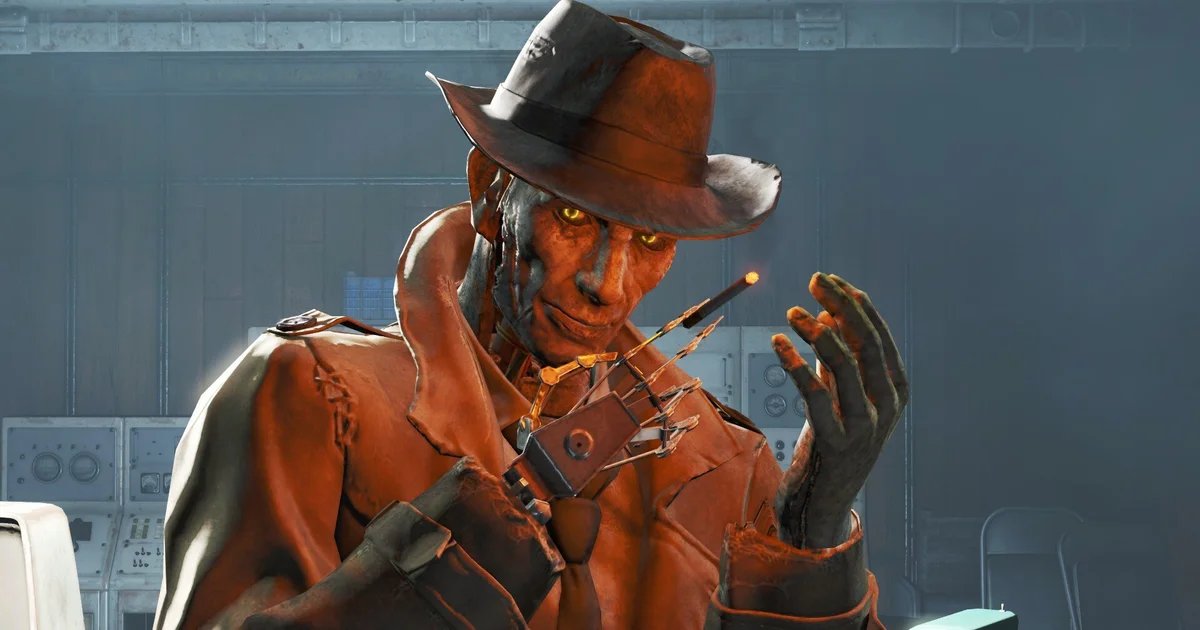
When Emil Pagliarulo was growing up in South Boston, he lived in fear of Whitey Bulger: a local crime boss who had been shaped not only by street gangs but Alcatraz, and a stint in the CIA’s mind control program, MKUltra.
“He was basically the boogeyman,” Pagliarulo says. “He was the evil bad guy. You didn’t know where he was or even what he looked like, but you knew he was out there. I’m 10 years old, and I know this name.”
Decades later, as Bethesda Game Studios shifted into full production on Fallout 4, Pagliarulo drew on those memories to bring a post-apocalyptic Boston to life. “The game was missing something, as far as one of the overall themes,” he says. “I remember having a conversation with Todd Howard that there should be this overriding sense of paranoia that people have, and they don’t know who to trust.”
That decision informed much of the vibe of Fallout 4, and some of its key scenes. When players enter Diamond City for the first time – a ramshackle settlement on the site of Fenway Park – they stumble into a standoff, in which a man holds his brother at gunpoint, convinced his sibling has been replaced by a synthetic copy.
“Throughout all the bad stuff and paranoia, people are still trying to rebuild society.”
In fact, civilians have been grabbed and replaced all over the Commonwealth, victims of a shadowy group of scientists called The Institute – a sinister riff on MIT. Every time the locals have attempted to organise and band together, these synth-builders have stepped in to prevent that from happening, ensuring that fear rules instead.
Yet one of Fallout 4’s other preoccupations is hope. “Throughout all the bad stuff and paranoia, people are still trying to rebuild society,” Pagliarulo says. “When you look at Fallout 3, everywhere from Rivet City to Megaton, everybody’s just getting by. But in Fallout 4, people are trying to grow beyond that a little bit.”

At the intersection of these themes – and in the middle of Diamond City – is Nick Valentine. An early model synth and escapee from The Institute, Nick is a winningly benign presence at the heart of the wasteland. Infused with the memories of a pre-war cop and now running his own detective agency, he exemplifies the best of humanity. Namely, he is optimistic, helpful and kind to his secretary.
Yet he doesn’t have the luxury of hiding his synthetic parts. Every time Nick speaks, your eyes are drawn to the gaping holes around his throat, where melted plastic gives way to a yawning, artificial interior; the bolt that holds his metal jaw in place, and the irises that gleam a steady yellow. In the robot-hating community of Diamond City, he is a figure of hard-won integration, having proven himself over a string of solved disappearances and foiled kidnappings.
“It’s a really gutsy play for him to have an office in Diamond City, where the first synth went nuts and killed a bunch of people back in the history,” Pagliarulo says. “And the only way he can get away with that is by going, ‘I am what I am.’ And by helping so many people. He specialises in finding lost people, and there are people that are lost because The Institute has taken them. So he’s shown his loyalty to the humans of the Commonwealth, by siding with them in this grand struggle.”
Amid the super mutant meat bags and raider encampments, it’s this unlikely spot that Nick has carved out for himself that saves the wasteland from feeling like a lost cause. “If this half-robot, half-human guy can be happy and live among us and still put a foot forward every day, then come on, everybody, don’t give up,” Pagliarulo says. “You can go for it.”

Nick Valentine actually has his origins in an earlier vision for Fallout 4, back when the game was pitched against a New York backdrop. “The initial design document was three or four pages, and the last page is Nick Valentine,” Pagliarulo says. “There’s just a description of him with a photo of Humphrey Bogart, if I recall correctly. This is before we even had synths, before we even went in that direction. So I knew that I wanted to have some sort of hard-boiled detective in that film noir style.”
“The initial design document was three or four pages, and the last page is Nick Valentine”
Later, Stephen Russell was cast to play Nick – the same actor Pagliarulo had written dialogue for back in his Looking Glass days. Russell had played Garrett in Thief II: The Metal Age, and brought a wry noir mood to its medieval-industrial setting. Although his performance of Nick Valentine is utterly different – broader and brassier than Garrett’s gruff whisper – it achieves a similar effect, twisting the established tone of Fallout in the direction of old Hollywood.
The obvious route would be to make Nick cynical, in the mould of so many wounded Bogart characters. But Bethesda resisted the urge, instead “balancing the razor’s edge of tropes”.
“There’s a fine line between an archetype and a trope,” Pagliarulo says. “An archetype is something recognisable that the player can attach themselves to. And the trope is an overused thing. And so sometimes we like to do something with the trope that’s a little different. Nick’s a perfect example, where he’s the hard-boiled, smoking detective, but he’s not a hard-swearing, hard-drinking asshole of a guy.”

The fact that Nick smokes at all opens up an avenue of Philip K. Dickian intrigue. “What does that do for him? Some psychological trigger,” Pagliarulo says. “Where does the human whose personality he was modelled after stop and the actual Nick Valentine begin? It goes to the question of the soul. If you believe the soul exists, is it really just a collection of data in the way that the human brain views consciousness? Or is it something else? For Nick, you have to wonder about both of those things.”
As Pagliarulo fleshed out the companion alongside fellow designers Liam Collins and Will Shen, Nick acquired new dimensions. “He’s probably the most self-aware character in the entire game,” Pagliarulo says. “Other people can fool themselves, but Nick knows exactly who he is, and it’s the core to his entire character: physically, mentally and even emotionally.”
On some level, Nick even seems aware of the film noir clichés he’s born from. Rescue him from the hands of mobsters as a female protagonist, and he’ll note the divergence from 1940s narrative standards. “Gotta love the irony of the reverse damsel-in-distress scenario,” he drawls. “Question is, why did our heroine risk life and limb for an old private eye?”
Ultimately, Nick’s urge to unravel a thread leads him to investigate his own implanted origin story. “He knows that he’s following someone else’s memories,” Pagliarulo says. “But it still matters, because he’s doing justice to this person whose essence he’s taken on.” Deeper into our conversation, Pagliarulo lands on the crux of the matter: “He doesn’t have a heart, but he has heartstrings.”
It’s Nick’s nobility, along with his existentially poignant contradictions, that seem to have made him a firm fan favourite over the past decade. During that time, Bethesda gave him a starring role in the Far Harbor DLC. “I hoped people would like him because I thought he was cool, and 50% of Nick, if not more, is Stephen Russell’s voice performance and he brings so much to the role,” Pagliarulo says.
But the popularity of the character only truly became apparent at in-person events. “Some characters are easy to cosplay, and some characters aren’t,” Pagliarulo says. “And seeing some amazing Nick Valentine cosplays where people have done the metal arms and the moulded face and the glowing eyes, that level of passion and love and dedication, is when it really hit me.”

Many fans are particularly fond of Nick’s companion quest. A breadcrumb trail of holotapes across the wasteland fills in the fate of the original pre-war detective. As it transpires, his nose for a case put his fiancée in the firing line of a mob boss, named Eddie Winter.
Eventually, you find the culprit holed up in his personal bunker, ghoulified and unrepentant. “Valentine, the cop? Is that who you’re supposed to be? Sorry pal, but you ain’t Nick Valentine,” Winter spits. “You’re just some kind of machine. Why do you even care? Some girl gets whacked 200 years ago and you come into my home, acting like a hard guy? Christ, look at you. You’re not even alive.”
Though he’s soon pushing up daisies, Winter touches a nerve. It takes time and reflection before Nick finds catharsis. “All the good we’ve done, that’s ours and ours alone,” he concludes. “And even if that’s the only thing in this world that I can ever claim as mine, not Nick’s, not The Institute’s, but mine, then I can die happy.”
The observant will notice that two centuries have done nothing to damage Eddie Winter’s crop of snowy hair. Whitey Bulger was named for his own locks, and ran the Winter Hill Gang. “It’s all tied together there,” Pagliarulo says. “It’s very film noir crime-ish, in a very Boston sense too.”
Through Fallout, perhaps, a generation of Bostonians can finally put their paranoia to bed and sleep a little easier.