dailynewsnblog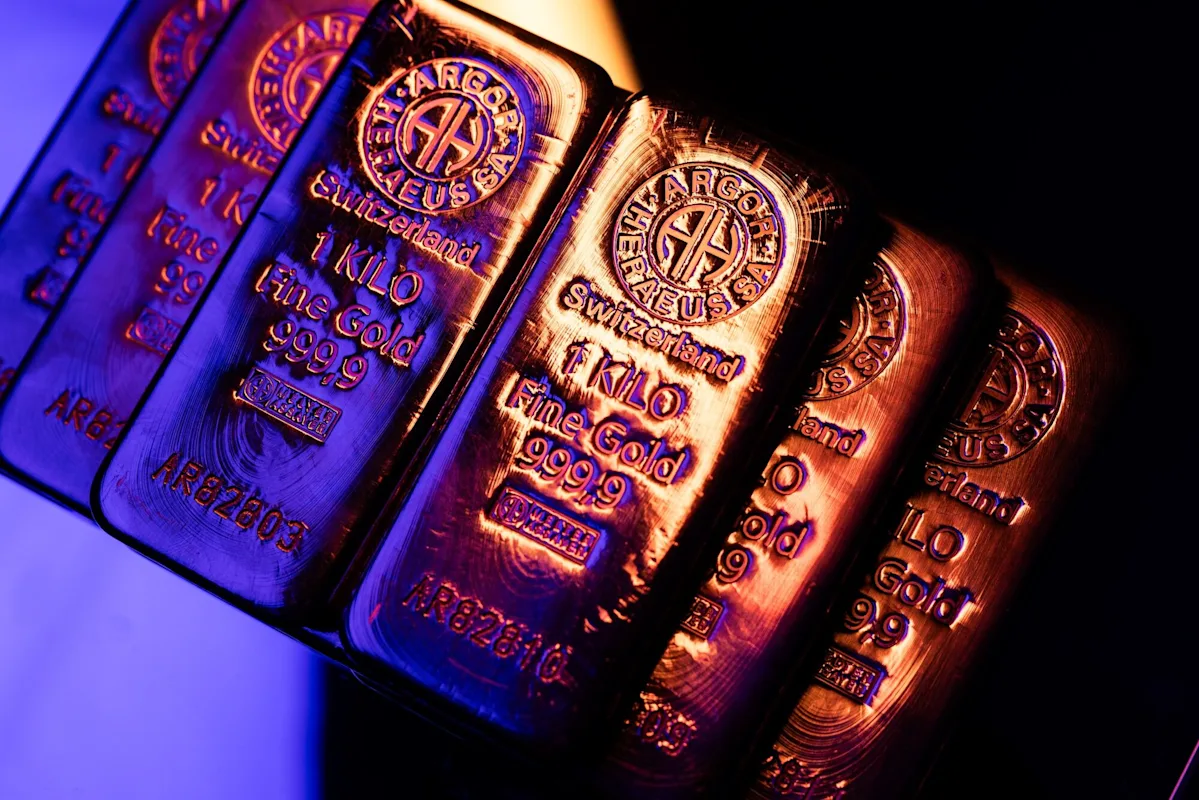

(Bloomberg) — Gold retreated, as traders took profits after four days of gains spurred by uncertainty over US trade policy and heightened tensions in the Middle East.
Bullion fell as much as 1.6% as Chinese traders returned on Tuesday after the Lunar New Year break. The metal had climbed more than 7% over the previous four sessions, with investors drawn to safer assets as President Donald Trump promised new import tariffs and the US faced off with Iran.
Most Read from Bloomberg
“Moves within 2% are in the normal range of market volatility right now,” said Song Jiangzhen, a researcher at Guangdong Southern Gold Market Academy. “Longer-term sentiment is still positive, with ongoing uncertainty in Iran, and the US risking isolation with its tariff policies,” he said.

Markets are in a state of confusion after Trump said he would increase a global import levy to 15% following the US Supreme Court’s ruling against his so-called reciprocal tariffs. An earlier directive authorizing a 10% import tax went into effect on Tuesday, with the timeline for the higher levy not yet finalized.
Some of America’s trading partners are struggling to reconcile the latest tariffs with earlier deals, adding tension to already strained relations. An assessment by the European Union found Trump’s new policy would raise duties on some of its exports above levels permitted under a trade agreement.
“Tariff headlines keep uncertainty elevated, which is supportive for gold at the margin, but so far they haven’t been enough to force a decisive breakout,” said Christopher Hamilton, head of client solutions for Asia-Pacific excluding Japan, at Invesco Ltd. “With real rates still relatively firm and the dollar holding up, gold looks more likely to consolidate than trend aggressively in the near term,” he said.
As investors seek refuge from risk, gold has found a footing back above $5,000 an ounce after a historic rout at the turn of the month. A wave of speculative buying had pushed a multiyear rally to breaking point, leading bullion to snap back sharply from a record above $5,595 in late January. It has since recovered more than half of these losses, though trading has been unusually choppy.
Many banks, including BNP Paribas SA, Deutsche Bank AG and Goldman Sachs Group Inc., have forecast that prices will recover, as the underlying factors behind gold’s earlier advance remain intact. These include concerns about the Federal Reserve’s independence and a wider shift away from sovereign bonds and currencies, as well as geopolitical risks — particularly in the Middle East.