dailynewsnblog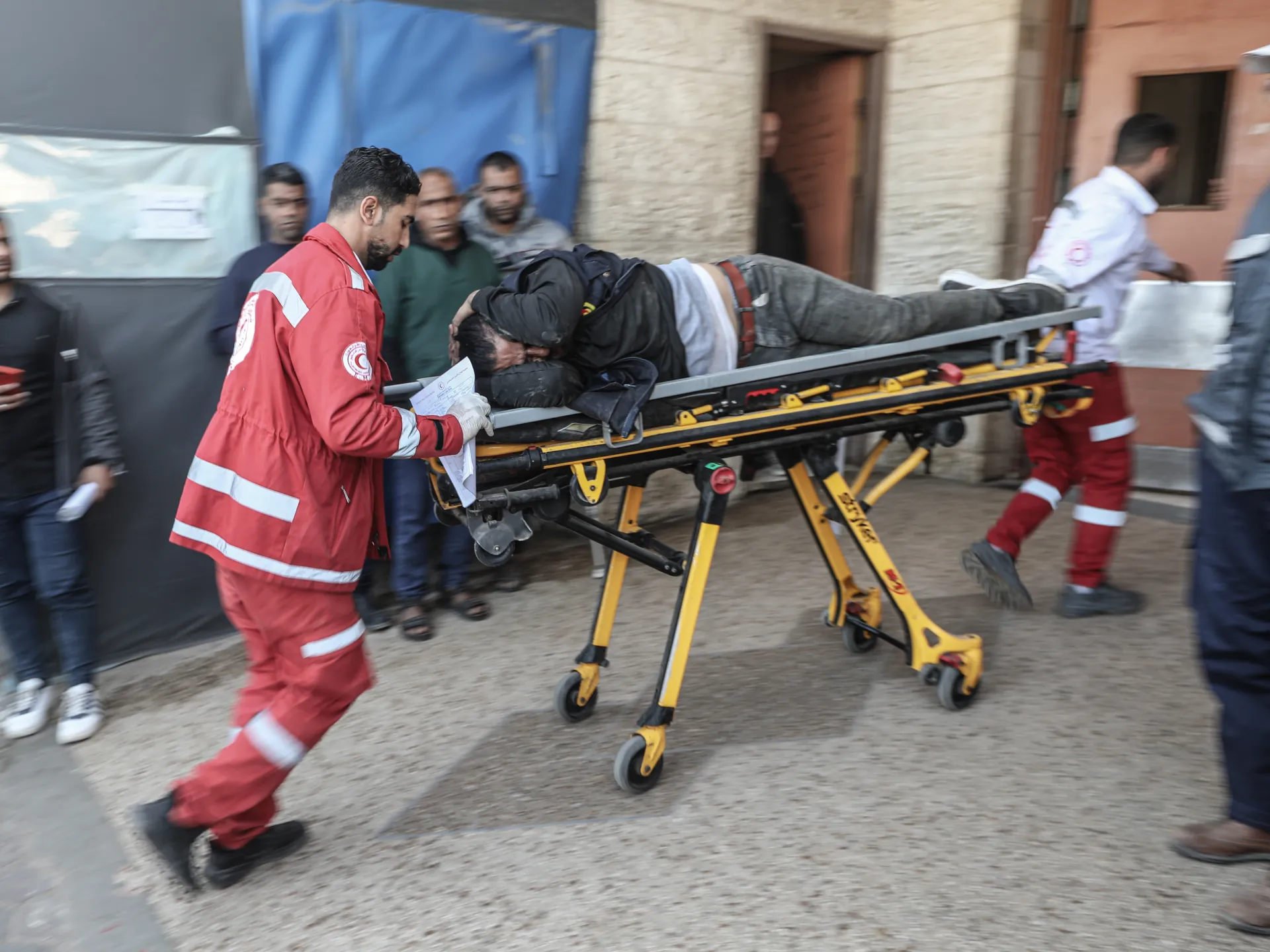
A Palestinian child died on Sunday while waiting for Israel to approve his exit from Gaza for medical treatment amid an ongoing healthcare crisis in the enclave, whose medical infrastructure has been destroyed by Israel’s genocidal war.
Nidal Abu Rabeea’s family told Al Jazeera that they had medical referral documents approved to receive treatment abroad, but he was left waiting for 14 months to be allowed out of the enclave of 2.3 million Palestinians, most of whom are displaced.
Recommended Stories
list of 4 itemsend of list
“Israel closed the crossings and killed my son,” said Iman Hamdouna, his mother, adding that her son struggled with an enlarged liver and high fever for months before his death. Local media reported that he was two years old.
Hospitals in Gaza, operating with critical shortages due to curbs imposed by Israel, could not help him and cannot help thousands of other sick and wounded Palestinians who need higher levels of medical care.
According to Gaza Ministry of Health spokesperson Zaher al-Wahidi, 1,360 patients have died while waiting to travel for medical treatment since May 7, 2024, the day the Rafah crossing, Gaza’s only gateway to the outside world, was closed by Israel.
Thousands of Palestinians in the Strip seek urgent medical attention through the partially reopened Rafah crossing on February 2, with limited movement through it due to Israel’s very slow and restricted approvals.
In an earlier interview with Al Jazeera, al-Wahidi said Israel “has deliberately and methodically destroyed the health system”, adding that it faced five challenges: near absence of patient evacuations, lack of medical equipment, shortage of medication, destruction of facilities, and need for medical workers.
Despite a “ceasefire” last October, Israel has continued to attack Gaza, killing more than 600 Palestinians.
Sister also waits to be evacuated
There are 350,000 patients with chronic illnesses in Gaza, according to the Health Ministry.
The devastation and lack of access to medical care have killed thousands of Palestinians, officials say.
For example, there were 1,244 kidney patients in Gaza before the start of the war in October 2023. Now that number stands at 622, al-Wahidi had told Al Jazeera.
Meanwhile, the struggle of Nidal’s family continues, as his sister remains at Al-Aqsa Hospital in central Gaza.
She was born one month before her brother died.
The one-month-old also holds medical referral documents to get treatment abroad that remain unfulfilled, and her life hangs in the balance.
“She is lying sick in Al-Aqsa Hospital. My son died, and I’m afraid I will lose my daughter,” Hamdouna, the mother, said.
Under the terms of the October “ceasefire” deal between Israel and Hamas, the Israeli authorities pledged to reopen the southern Rafah crossing for medical evacuations.
While the agreement was for 50 patients’ evacuations each day, the actual numbers are far below.
According to data shared by the Gaza Government Media Office, between February 2 and 18, 1,148 Palestinians passed through the Rafah border crossing in both directions compared with the agreed number of 3,400 for the period.
A total of 640 people departed and 508 returned to Gaza during the period, while 26 Palestinians were turned back while attempting to leave.