dailynewsnblog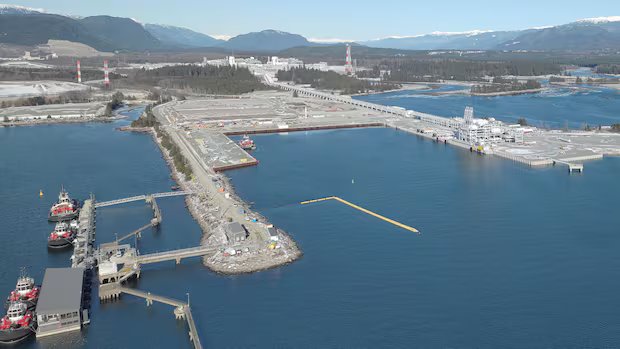

Listen to this article
Estimated 3 minutes
The audio version of this article is generated by AI-based technology. Mispronunciations can occur. We are working with our partners to continually review and improve the results.
Documents show the volume of gas flared at the LNG Canada plant on B.C.’s North Coast between October and January far surpassed what its permit allows.
University of Victoria air quality researcher Laura Minet obtained monthly air emissions reports filed by LNG Canada to the B.C. Energy Regulator under freedom of information proceedings.
The reports break down the flaring source into three categories: warm/wet, cold/dry and storage and loading.
During the four-month period covered in the filings, warm/wet flares exceeded permitted volumes by 45 times on average, cold/dry by 40 times and storage and loading by five times.
Natural gas is piped to the plant in Kitimat, B.C., and chilled into a liquid, enabling it to be shipped in specialized tankers across the Pacific to energy-hungry Asian markets.
An LNG Canada spokesperson said in an emailed statement that the facility is in the early operations phase and increased flaring is a normal occurrence, but in regular operations, flaring activities reduce significantly.

Appearing at the Standing Committee for Natural Resources Thursday, Energy Minister Tim Hodgson said if Canada delivers on its liquified natural gas targets ‘as we hope, proponents will ultimately increase our production to as much as 100 million tonnes per annum.’
“Flaring is a provincially regulated safety measure that ensures the controlled, efficient combustion of natural gas during specific operational phases,” the company said in a public notice.
“Publicly available data from monitoring stations in Kitimat show that levels of key pollutants, including nitrogen dioxide and sulphur dioxide, have remained consistently low over the past year,” the spokesperson added over email.
“In fact, nitrogen dioxide levels at monitoring stations near Riverlodge Recreation Centre and in Kitamaat Village have been at or near zero, as documented in public reports.”
The spokesperson added that LNG Canada is meeting regularly with the community, First Nations and government agencies to respond to concerns.

Prime Minister Mark Carney is in South Korea for the Asia-Pacific Economic Cooperation Summit, hoping to strengthen ties with countries in the region. Minister-counsellor Heijin Kim says there’s plenty of room for South Korea to import liquid natural gas (LNG) from Canada.
LNG Canada, the first facility of its kind in Canada, and its owners — Shell and four Asian companies — are contemplating doubling its capacity in a second phase, which has been chosen for a speedy review under the new federal major projects office.
First cargoes departed the project’s initial phase last summer.
Ten community notifications advising of “flaring events” have been posted by LNG Canada since the beginning of March.
One on Tuesday lasted three hours, advising nearby residents of a flare height of 10 to 15 metres with “associated noise and visible emissions.”

Chief political correspondent Rosemary Barton speaks with Haisla Nation Chief Councillor Maureen Nyce about the community’s support of the economic development from the growing industry and what still needs to be done to consult with the First Nation.
Environmental and health-care groups have been raising concern about the potential health impacts of pollutants released through flaring.
Minet, who leads the Clean Air Lab at the University of Victoria, has researched flaring at various LNG export facilities around the world, so she decided to seek out data from Canada’s first project after it started up.

British Columbia is home to two of the five so-called ‘nation-building’ projects the prime minister has now officially unveiled, phase two of LNG Canada in Kitimat and the expansion of the Red Chris copper and gold mine in northwestern B.C. Meera Bains reports on the process, and concerns about future projects.
“All the numbers are higher than the permits and they’ve been consistently higher since last September at least,” she said. “They should comply with the flaring permits. It’s surprising that they haven’t consistently for many, many months.”
Minet’s research has found that LNG facilities worldwide have startup phases characterized by large amounts of flaring and lasting two years on average.
“What it’s telling me is that we need to account for this high flaring volume in environmental impact assessments,” she said.