dailynewsnblog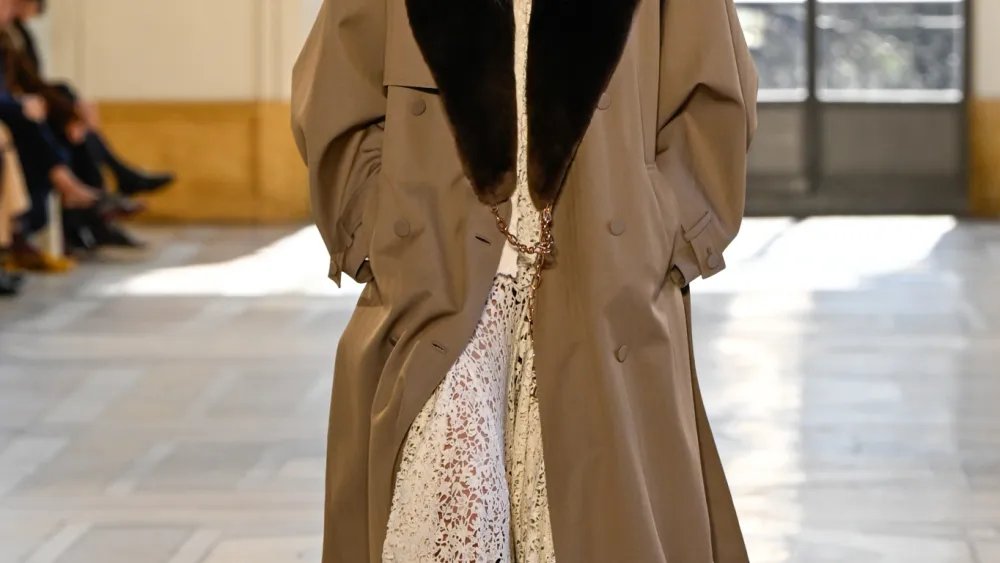
Ever since the conflict broke out in the Middle East, and missiles landed on a primary school in Iran, a James Baldwin quote has been circulating on social media: “The children are always ours, every single one of them, all over the globe; and I am beginning to suspect that whoever is incapable of recognizing this may be incapable of morality.”
In an eerily prescient parallel, Gabriela Hearst had long ago settled on British humanitarian Eglantyne Jebb, founder of Save the Children, as the muse for her sumptuous and dreamy fall collection, lauding her courage, grit and spirit. Jebb advocated for the enemy’s children during World War I and won over her detractors, ultimately drafting what would become the Declaration of the Rights of the Child.
Jebb also did mountain climbing, rode horses and bicycles — fast — and lived openly as a lesbian, according to Hearst, whose mood board featured numerous portraits of Jebb, with her striking white hair, and her prim, graceful dresses that were the norm in the early 20th century. “A complete Edwardian punk” is how the designer summed up this trailblazer.
Hearst’s immersion in Jebb’s story was so complete that the designer would wake up in the middle of the night with visions and sketch a white-haired woman wearing a long, filet lace gown — or some badass coat.
She executed many of the former in cashmere and a few of the latter in untreated cowhide, calling it — and several other items in her ultra-luxurious collection — “a coat for life.” The combination of long fluttering gowns under a meaty shearling or a languid trenchcoat cast quite a spell as models filed through the Beaux-Arts splendor of the Petit Palais, their hair purposely mussed, as if they were sleepwalking.
A preview appointment with Hearst makes you realize that she and Albert Kriemler of Akris are probably fashion’s biggest fabric connoisseurs, forever in search of the ultimate quality and a heavenly hand. So you could marvel at the unreal softness of Hearst’s shearlings, sourced in South Africa; the density and sturdiness of her 850-gram cashmere coats and blousons; the delicacy of her cashmere lace dresses with tissue-thin suede cuffs etched with the same filet motifs, and the dazzling, almost obsessional way she matched up Donegal tweed coats to the knit separates worn underneath.
The cowboy boots are a story unto themselves, hand-painted by Spanish artist Almudena Cañedo to recount various stages of Jebb’s colorful life.
The designer mixed in her fall menswear collection seamlessly, and employed a good amount of repurposed mink, for dresses, collars that can be worn like a necklace and even handbags.
Fashion is swinging back to an elongated, slender line, and mannish tailoring, which makes Hearst’s clothes timely — as is her plea to save the children.