dailynewsnblog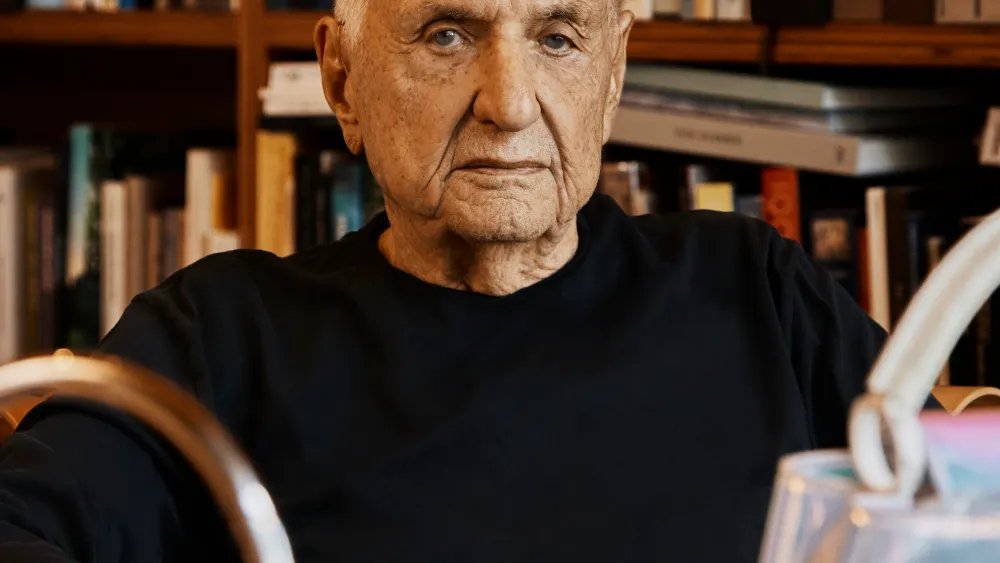
Frank Gehry, the famed architect who died Friday at age 96, had close ties to the worlds of luxury and retail, in later years working closely with Bernard Arnault and the LVMH Moët Hennessy Louis Vuitton group on everything from one of Paris’ most iconic museums to stores.
Arnault, chairman and chief executive officer of LVMH, conscripted Gehry to conceive the Louis Vuitton Foundation in Paris, and said Friday, “I am profoundly saddened by the passing of Frank Gehry, in whom I lose a very dear friend and for whom I shall forever retain boundless admiration. I owe to him one of the longest, most intense, and most ambitious creative partnerships I have ever had the privilege to experience.”

The Fondation Louis Vuitton in Paris.
Courtesy Photo
A personal project of art sponsorship, and a gift to France that he named after his biggest and most profitable brand, it opened with much fanfare in 2014 and has since hosted blockbuster exhibitions featuring Mark Rothko, David Hockney, Jean-Michel Basquiat and, currently on show, Gerhard Richter.
“He will remain a genius of lightness, transparency, and grace,” Arnault said, lauding his “unparalleled gift for shaping forms, pleating glass like canvas, making it dance like a silhouette.”
The luxury titan said Gehry’s work “will long endure as a living source of inspiration for Louis Vuitton as well as for all the maisons of the LVMH group,” which include Dior, Givenchy, Fendi, Loewe and Marc Jacobs.
“With the Fondation Louis Vuitton pour la Création, he bestowed upon Paris and upon France his greatest masterpiece, the highest expression of his creative power, commensurate with the friendship he bore our city and the affection he showed for our culture,” Arnault added.
Pietro Beccari, chairman and CEO of Louis Vuitton, added his condolences to Gehry’s family and loved ones.
“The world has lost a true genius whose creativity and innovative spirit profoundly transformed the world of architecture,” Beccari said. “We are extremely proud to have had the privilege of collaborating with him over the years, and honored to have considered him a friend of the house. Frank Gehry’s legacy will undoubtedly last forever.”
Gehry’s ties to LVMH went far beyond the museum, however. In fact, at his death he was working on several projects for the luxury group, including an 82,000-square-foot flagship for Vuitton in Beverly Hills and turning a former ’60s building near the Fondation Louis Vuitton into an exhibition space and events center.
He even created fragrance bottles with striking Murano glass stoppers, store windows, and a watch and handbags for Vuitton, first in 2014 and again two years ago.
“The sketches I do for buildings represent the beginnings of a thought, but then it takes months to translate it into a building. Whereas here, the sketches-to-handbag is a couple of days,” the Canadian American architect told WWD at the time of the 11 designs of the Capucines bag he had done.

Frank Gehry’s limited-edition handbag designs for Louis Vuitton.
Mario Kroes/Courtesy of Louis Vuitton
“Some years ago I did a collection for Tiffany & Co. and it was similar. We were taking the architectural language that we were playing with and transferring it to the smaller scale. It’s much faster. I don’t have to go to so many meetings to get it approved,” he continued.
The Tiffany & Co. project was a collaboration with Maria Sharapova, who teamed with Gehry on the jewelry that the professional tennis player wore at the 2009 U.S. Open.
But Gehry’s involvement with the worlds of fashion and retail stretched much farther back.
Born Frank Owen Goldberg in Toronto, at 18, Gehry moved with his family in 1947 to Los Angeles where he befriended artists and boundary-pushing designers like Rudi Gernreich. He had considered becoming a truck driver or a chemical engineer but was reeled in by architecture’s connection to art. Gehry graduated from the University of Southern California with a bachelor’s degree in architecture in 1954. Around that time he changed his name to Gehry at the suggestion of his first wife, Anita Snyder. A post at Victor Gruen Associates was followed by a stint serving in the U.S. Army.
Once back in civilian life, Gehry studied urban planning at Harvard University’s Graduate School of Design via the G.I. Bill. A job at Pereira and Lucian was followed by a return to Victor Gruen Associates that involved a year abroad in France. But by 1962, Gehry had ventured out on his own and like some of his artist friends favored everyday materials like chain-link fencing and unpainted plywood.
After he and Snyder divorced in 1966, Gehry wed Berta Aguilera in 1975, who survives him along with his four children. Among his most important earlier works was the 1977 renovation of his own Santa Monica home. He had heard that the house contained spirits, so he transformed the bungalow into a jagged arrangement of glass and corrugated steel.
One of Gehry’s first projects was designing the enclosed 1980 mall known as Santa Monica Place, which is located at the south end of Santa Monica’s Third Street Promenade shopping district. It eventually became obsolete, shuttered and transformed into an open-air shopping center with a restaurant deck overlooking the Pacific Ocean. His first hometown project was the Walt Disney Concert Hall, which opened in downtown L.A. in 2003. Gehry was commissioned to design that building a little before being named the recipient of the Pritzker in 1989.

The Walt Disney Concert Hall, designed by architect Frank Gehry in Los Angeles.
AFP via Getty Images
However high-reaching his designs were, Gehry’s inspiration sometimes sprang from the ordinary. Having reportedly been mesmerized as a boy by the carp that swam in his grandmother’s bathtub, he later used fish as a recurring motif including in the Guggenheim Museum in Bilbao. The 1997 debut transformed the city with nearly four million people visiting the museum in its first three years, which generated an estimated 500 million euros in economic activity and 100 million euros in taxes.

The Guggenheim Bilbao begins to take shape from “Building Art: The Life and Work of Frank Gehry” by Paul Goldberger.
Gehry Partners LLP
Arnell recalled Friday that they met by him just showing up at Gehry’s Venice Beach studio to say that he really loved his work and would like to do a monograph of his work. “He said, ‘If you can’t get it organized, I’m good with that.’”
The two men went on to collaborate on other projects and Arnell previously served as a temporary president in Gehry’s office and Gehry curated Arnell’s first photography exhibition. “I’ve shared years and years of an extraordinarily loving education from this man, and I am indebted to him for most everything that I’ve done in my life. I also had the privilege of having had him encourage me to focus on photography.”
Describing Gehry as “arguably one of the most significant figures in architecture ever,” Arnell said. “His ability to create extraordinary and important structures has left an amazing footprint of imagination, creativity and vision all over the world from homes to museums to skyscrapers. He is going to be recognized as one of three in the last hundred years that really had an extraordinary impact on architecture and more importantly, on mentoring the industry.”
Upon Gehry winning the Pritzker Prize for architecture, the jury wrote, “His sometimes controversial, but always arresting body of work has been variously described as iconoclastic, rambunctious and impermanent, but the jury, in making this award, commends this restless spirit that has made his buildings a unique expression of contemporary society and its ambivalent values.”
In 2000, the media world was abuzz after learning that Gehry had completed a sleek cafeteria for all Condé Nast staffers in the company’s Times Square headquarters. Conceived by Condé Nast’s late chairman S.I. Newhouse, the cafeteria was reportedly a $30 million to $35 million investment, and it marked the architect’s first completed space in New York City.
Seven years later, the American holding company IAC tapped Gehry to design its strikingly futuristic headquarters at 555 West 18th Street in Manhattan. The sail-like glass facade was designed with flowing, ethereal forms and reflections that resemble ripples on water or waves. (Gehry was a lifelong sailor.)

The IAC corporate office building, and the One High Line residential building in New York City.
UCG/Universal Images Group via G
Barry Diller, chairman and senior executive at IAC and Expedia, said, “It was a phenomenal experience working with Frank Gehry on one of his few New York projects and that I believe the IAC Building will be a standout to the test of time.”
Gehry’s circle of friends included another star-chitect Zaha Hadid, who died in 2016. The pair periodically taught concurrent studios at Yale University so they “could sort of hang out,” Gehry once said. Both talents were influenced by the Deconstructivist movement and each had work featured in the Museum of Modern Art’s “Deconstructionism in Architecture” exhibition in 1988.
Exacting and said to be difficult to work with at times, Gehry faced criticism by some for the interiors of his structures and the challenge of constructing his designs. After the 2015 release of “Building Art: The Life and Work of Frank Gehry” by the esteemed architecture critic Paul Goldberger (a decades-long friend of Gehry’s), he told National Public Radio, “I guess I have an ego somewhere that comes out. I hadn’t realized that I turn stuff down quite the way I do.”
His 100-plus awards included the National Medal of Arts, the Presidential Medal of Freedom and Commandeur of the National Order of the Legion of Honor. By his own account, Gehry told Wallpaper magazine in 2011, “The best thing [that could happen] for me is to train these young guns [partners in his firm] and mother-hen them out into the world and watch like a proud papa while they grow. That’s my dream.”

The architect was a lifelong sailor.
Photo by Peter Arnell/Courtesy Peter Arnell
Prior to his death, Gehry was working on one of his most ambitious projects, the Guggenheim Abu Dhabi, with a facade that looks like a range of steel tubes set against one another. Long delayed, that museum is expected to debut next year.