dailynewsnblog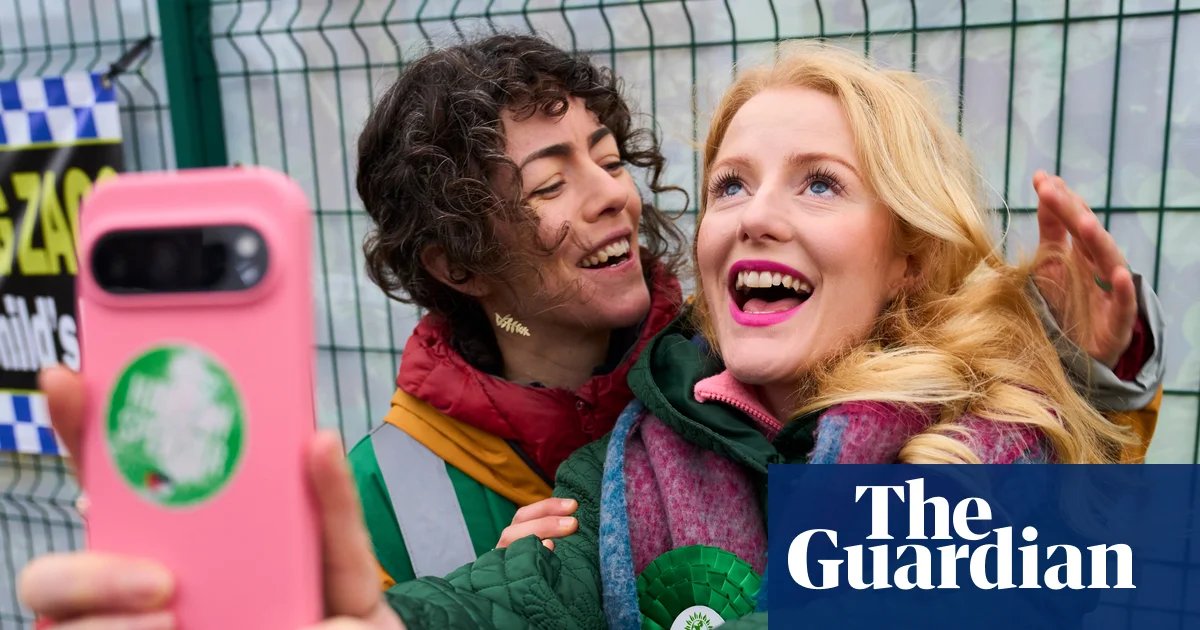
Good morning. Hannah Spencer is the new MP for Gorton and Denton after the Green party’s first ever parliamentary byelection victory. In a bitter blow to Keir Starmer, Labour were pushed into third place in a constituency the party has represented for nearly a century. Reform’s Matt Goodwin came second, as Nigel Farage claimed the result was “a victory for sectarian voting and cheating”.
This contest had been billed as a three-way fight and for much of the campaign, it felt like a pollster’s nightmare. One side of the seat looked ripe for Reform’s message of grievance and cultural threat; the other was saturated with Green posters and the sense that Labour’s coalition was splintering. Add the row over Andy Burnham being blocked from standing, accusations of dirty tricks and disinformation, and you had a byelection that felt like a microcosm of 2026 British politics.
For today’s newsletter, I spoke to the Guardian’s north of England correspondent Hannah Al-Othman, who lives in the constituency and was at the count overnight. She has been reporting from Gorton and Denton throughout the campaign, and I asked her about that experience, what the result tells us about the three parties, and what comes next. But first, the headlines.
Five big stories
-
Iran | High-stakes talks between the US and Iran over the future of Tehran’s nuclear programme ended on Thursday without a deal, as the threat of war grows.
-
Migration | Hospitals and care homes in the UK face “an impending car crash”, experts have warned, as research shows the number of overseas nurses and carers has collapsed.
-
UK politics | Jeremy Corbyn is to become the parliamentary leader of Your Party, after an election in which his rival Zarah Sultana was also voted on to the party’s leadership committee.
-
Environment | US “bullying” over a proposed carbon levy on shipping appears to be paying off, experts have said, after Panama reversed its support for the measure.
-
Epstein | Peter Mandelson is facing an inquiry by the EU’s anti-fraud agency after the European Commission requested the body look into his activities during his time as trade commissioner in Brussels.
In depth: ‘We don’t have to accept being turned against each other’
Inside Manchester Central convention complex at 4am, it did not immediately feel like a political earthquake, Hannah Al-Othman tells me. Green activists in the hall were “gradually upping their briefings from cautiously optimistic to quietly confident”. There was little noise, little drama. The celebrations, she says, were happening elsewhere – at an all-night party in Hulme.
Before counting had officially begun, it was clear the Greens had taken the lead. What had been billed as a knife-edge three-way race quickly narrowed to a contest for second place between Reform and Labour. In the end the Greens won with a majority of 4,402. Spencer took 14,980 votes (40.6%), Goodwin 10,578 (28.7%) and Labour’s Angeliki Stogia 9,364 (25.4%). Turnout was 47.6%.
What was it like on the ground leading up to the vote?
Hannah was changing her mind every day in the lead-up to the election, unable to predict what the outcome might be in what she describes as “quite a dirty fight”.
“All three main contenders have been reported to the police at some point,” she says. Green activists were reported for allegedly stealing a Labour poster; Reform over a missing imprint; Labour after being accused of treating voters by offering free food.
“It’s felt very intense,” she adds. “I’ve had up to half a dozen leaflets a day through my door. It hasn’t really been fought on policy or anything positive. It’s been fought on negatives and attacks.”
In the final days she sensed momentum with the Greens – but had cautioned me that “their voters are very willing to be more vocal and shout about it.”
One unexpected pattern, she says, was hearing from voters choosing between Reform and the Greens. “I wouldn’t have expected that. We’ve come across that quite a bit – anti-Labour, anti-government, anti-Keir Starmer voters – deciding who is most likely to beat Labour.”
What makes Gorton and Denton such a unique constituency?
Hannah lives in the constituency and is training for a marathon, so says she has “spent a lot of time running around” it. The seat spans two different local authorities.
“I live in the Manchester part, on the south edge of the constituency. That’s more middle class – you’ve got your natural wine places and yoga studios.”
At the Manchester end – Gorton and Longsight – she says the battle has largely been between Labour and the Greens. Labour insisted to her their vote was holding up; the Greens were arguing they were peeling away traditional Labour support among Muslim voters angered over Gaza.
Denton, by contrast, is very different. It sits in Tameside and, she says, feels similar to other north-west areas where Reform has done well.
“It’s close to Manchester but feels very isolated. There’s one train a week. The buses are slow. Denton has some good things going for it, but people complain about fly-tipping, antisocial behaviour, potholes. It’s that lower-level stuff that makes people feel their home town is being neglected. You see it all over local Facebook groups.”
The constituency itself only came into being in 2024. The outgoing MP, Andrew Gwynne, previously represented Denton and Reddish for nearly two decades before being sacked as a minister over offensive WhatsApp comments – a scandal that engulfed local Labour councillors in Denton and fuelled anger in parts of the town.
The result, Hannah says, was a seat that was hard to read in advance. “It’s more a collection of places with very different identities and politics than a single coherent constituency.”
Gorton goes Green
Labour had insisted this was a binary choice between supporting the government or letting Reform win. Voters chose a different binary.
Ahead of her victory, writing for the Guardian, Spencer said her winning would “send shock waves through the political establishment and show that the old way of doing politics is over. And once I get my foot in the door, I’ll hold it open for others to follow. The establishment’s days are numbered.”
In her victory speech she returned repeatedly to a single theme: work.
“I didn’t grow up wanting to be a politician. I am a plumber,” she said. “Working hard used to get you something. It got you a house, a nice life, holidays. But now, working hard – what does that get you?
“Instead of working for a nice life, we’re working to line the pockets of billionaires. We are being bled dry”. She said her victory showed that “we don’t have to accept being turned against each other. We can demand better without hating each other.”
Hannah al-Othman tells me that in the end “the Farage Factor drove turnout to almost general election levels; voters were motivated to vote either for or against his party.”
Goodwin did not take the defeat gracefully. Without evidence, he claimed: “I think that what you’ve seen is the emergence of a dangerous sectarianism in British politics. I don’t think the progressives beat us, I think the progressives were told how to vote,” adding that it was, in his view, “a coalition of Islamists and woke progressives that came together to dominate the constituency”.
Spencer had a very different view, saying in her victory speech “To people here in Gorton and Denton, who feel left behind and isolated, I see you, and I will fight for you. Because while our communities may sometimes be labelled in different ways, the thing everyone seems to have underestimated here, especially over the last few weeks, is how similar we all actually are. How we have common ground, how we get along, how we stand up for each other.”
What does this mean for Gorton and Denton, and for Keir Starmer?
Ahead of the result, our deputy political editor Jessica Elgot warned that a Green win would be “the most catastrophic result for Starmer’s leadership”.
The outcome shows Labour is not the automatic beneficiary of anti-Reform tactical voting, and suggests the Greens are not simply a protest vehicle but an insurgent force capable of toppling safe seats. It also undercuts Labour’s central argument – that only it can stop Reform.
Starmer’s decision to block Andy Burnham from standing will now face renewed scrutiny. So too will his broader electoral strategy – pursuing Reform-curious voters while alienating those on the left. The immediate reaction from Farage and Goodwin suggests Reform will use the result to try to deepen divisions.
And for Hannah Spencer? She had said “I can’t and won’t accept this victory tonight without calling out politicians and divisive figures who constantly scapegoat and blame our communities for all the problems in society.”
Perhaps the most touching moment was when she apologised to her plumbing customers, saying she would have to cancel work, because she was heading to Westminster. Her victory has left Starmer and Labour with a lot of work to do.
What else we’ve been reading
-
I mark this date as the moment I officially became old and passé. But if, like me, you’re wondering what on earth Chinamaxxing is, the ever-brilliant Coco Khan has you covered. Aamna
-
Here’s an honourable piece from Steve Rose on how to replace the big tech beasts, from Amazon to Apple and Google, in your life. It turns out there are far more options than you might think for your next smartphone or search engine. Charlie Lindlar, newsletters team
-
It was only three decades ago that disabled students were segregated in “special schools” with rudimentary curriculums. Amid the anxiety surrounding Send reform, Frances Ryan aptly reminds us it is important to appreciate the value of disabled and non-disabled pupils learning together. Aamna
-
Sundus Abdi reports beautifully on the designer working Ramadan into her London fashion week show. Kazna Asker’s presentation, she writes, was “built around the rhythm” of the holy month. Charlie
-
A Dutch woman who spent 50 years in the UK is facing deportation. This harrowing interview by Diane Taylor shows the cruelty the Labour government is inflicting on immigrant communities. Aamna
Sport
Europa League | Nottingham Forest held off a Fenerbahce fightback to qualify for the last 16 with a 4-2 win on aggregate despite losing Thursday’s second leg, while Celtic exited after coming up short against Stuttgart.
Cricket | South Africa have inched closer to the Twenty20 World Cup semi-finals after thrashing West Indies, while India thrashed Zimbabwe to keep their hopes alive.
Football | A number of European football federations fear they will lose money sending their national teams to the World Cup this summer. Problems include an unusual hike in costs and inconsistencies around tax exemptions.
Something for the weekend
Our critics’ roundup of the best things to watch, read, play and listen to right now
Film
If I Had Legs I’d Kick You | ★★★★☆
Here is a psychological horror-comedy of postnatal depression and lonely parental stress, like a flip-side to Eraserhead or Rosemary’s Baby; it’s a scary movie with a heroine shot almost solely in looming closeup – but instead of supernatural apparitions, there are simply the banal problems of childcare and no time to deal with them. Rose Byrne delivers a barnstormer as Linda, a psychotherapist whose husband is away, leaving her to deal with a sick infant daughter. It’s a terrific performance as someone who as mother and therapist must present at all times as keeping it together, but who in fact is losing it every day. Peter Bradshaw
TV
Scrubs | ★★★★☆
The Scrubs revival is as Scrubsy as it gets. Obviously your enjoyment of this new run will depend on how much you liked Scrubs to begin with. But if you were a fan, the new series will feel like the safest pair of hands imaginable. We meet Zach Braff’s JD deep into his new career as a concierge doctor, when a chance visit to Sacred Heart hospital leaves him remembering what he’d left behind. Just as watchable as Scrubs ever was – may it run and run. Stuart Heritage
Music
Gorillaz: The Mountain | ★★★★☆
Gorillaz’s oeuvre has sprawled to nine albums, involving something like 100 guest artists; they are the thread that links Carly Simon to Shaun Ryder, Skepta to Lou Reed and Bad Bunny to Mark E Smith. The Mountain feels more consistent – more like an album, less like a playlist constructed by someone with impressively wide-ranging taste – than its immediate predecessors: something you’re more likely to listen to from start to finish than play with your finger ready to click fast-forward. The result is an unexpected career highlight, a quarter of a century in. Alexis Petridis
Game
Pieced Together | ★★★★☆
Made by a team of just four, headed by Bafta-winning artist and designer Kate Killick, Pieced Together is a short game – you can finish it in a couple of hours. But in that time, it packs in an enormous amount of detail about childhood and teen life in the 1990s: filling out magazine quizzes, writing anonymous love notes, the freedom of first holidays with friends. After finishing it, I was inspired to contact an old pal I haven’t spoken to in ages and wasn’t sure I ever would again. Good games can be like good friendships: they encourage us to see things anew. Keith Stuart
The front pages
“Drop in migrant workers ‘will be a car crash’ for NHS and care homes” is the Guardian splash. The Mail leads on “Soham killer close to death after being battered with metal pole”, the Sun says “Soham monster fights for life” and the Mirror runs “Huntley fights for life”. “Mystery as Mandelson messages go missing” is top story at the Times, and the Telegraph headlines on “Spanish police to patrol Gibraltar”. The i paper has “Assisted dying legislation faces collapse – with peers accused of ‘sabotage’” and the FT leads with “Gilt sales forecast to fall for first time since 2023 in fiscal boost for Reeves”.
Today in Focus
The men trying to do friendship, better
Can talking about their problems help men forge closer relationships – or is there another way? Josh Halliday reports.
Cartoon of the day | Rebecca Hendin
The Upside
A bit of good news to remind you that the world’s not all bad
Geothermal Engineering Ltd (GEL) is launching a pioneering plant near Redruth, Cornwall, that will generate electricity for the National Grid by extracting lithium from the mineral-rich water.
The switch-on, the first of its kind in Britain, has been welcomed by the people of Cornwall, who take pride in their mining heritage and hope for an economic boost in a deprived part of the West Country.
GEL says the plant will generate enough renewable electricity to power 10,000 homes, with plans to open more, bigger sites in Cornwall.
Within a decade it says it will be producing enough lithium carbonate, a key material used in the production of rechargeable batteries, to supply about 250,000 electric vehicles a year.
Sign up here for a weekly roundup of The Upside, sent to you every Sunday
Bored at work?
And finally, the Guardian’s puzzles are here to keep you entertained throughout the day. Until tomorrow.