

 dailynewsnblog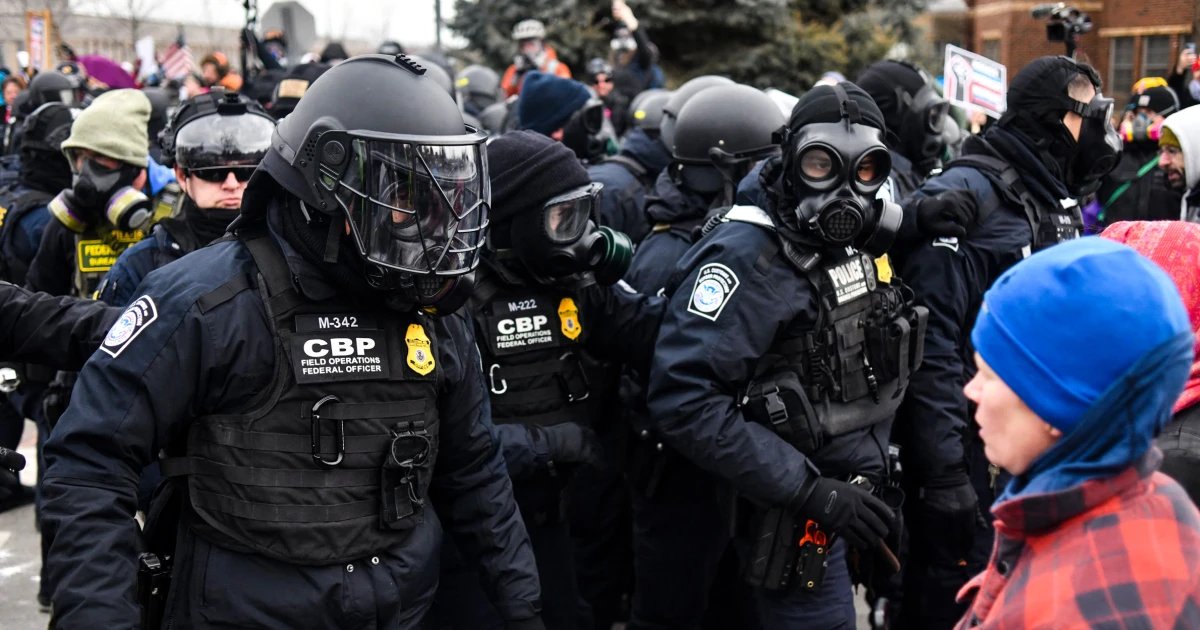
Just days into 2026, Minnesota’s Democratic Gov. Tim Walz announced he would not run for a third term, citing his need to focus on a growing welfare fraud scandal — a surprise announcement that sent shock waves through the state.
Forty-eight hours later, a 37-year-old woman was fatally shot by an Immigration and Customs Enforcement officer in Minneapolis, touching off protests, furious reactions from Democrats and a surge of even more federal immigration personnel to the area as part of President Donald Trump’s ongoing national crackdown.
This confluence of events has placed the national spotlight squarely on Minnesota — and scrambled the political climate at the outset of a critical election year with two statewide contests up for grabs. In addition to Walz, Democratic Sen. Tina Smith is also not running for re-election in 2026.
Republicans haven’t won statewide in Minnesota in two decades, and the broader political environment tends to favor the party that’s in the minority in Washington, D.C. But Minnesota Republicans think they may now have an opening, encouraged predominantly by the fraud controversy that’s hanging over Walz.
“Definitely it gives Republicans a boost and puts several races in play,” Minnesota Republican Party Chair Alex Plechash said, referring to the fraud allegations. “It helps paint a broader story about fraud and abuse so people can’t just sit back and say, ‘Oh, it’s nothing.’ It highlights, broadly, the flawed ecosystem of the Democrat Party here in Minnesota, which has had a lock on things for so long.”
A major focus of the Trump administration and Republicans has been the Justice Department’s yearslong fraud investigation that has involved some members of Minnesota’s Somali community. Dozens of suspects were indicted in 2022, during the Biden administration, as part of an alleged $250 million fraud scheme surrounding the nonprofit Feeding Our Future.
More recently, conservative influencers have pushed additional unsubstantiated claims they say are part of the scandal, and Trump has pointed to all of it to make disparaging remarks about people of Somali descent — and to justify its immigration crackdown in Minnesota.
Significant political challenges still await Republicans. While the Trump administration’s heavy-handed immigration tactics in Democratic-led cities like Minneapolis have received support from the party’s base, there is a risk of backlash from the broader electorate. And in Minnesota, the GOP has struggled to put up strong candidates in statewide races in recent cycles.
But Democrats say the series of developments at the outset of the election year have led to some uncertainty hanging over the party in the state.
“There is an acknowledgement that we’re going to have a great midterm cycle, and the only state that we’re possibly worried about is Minnesota because of what’s going on here and the kinds of wrinkles that adds to what we have to do this year when it comes to our elections,” said Corey Day, the former executive director of the Minnesota Democratic-Farmer-Labor Party.
“But the other thing is that, when it comes to the Republican Party here, one of the things that has always hurt them as a party is just their candidates,” Day added.
At least a dozen Republicans had entered the governor’s race even before Walz decided against seeking a third term. Former state Sen. Scott Jensen, who lost to Walz in 2022, and state House Speaker Lisa Demuth are seen as among the most viable and well-known candidates, though Mike Lindell, the MyPillow CEO and a longtime Trump supporter who spread debunked conspiracy theories about the 2020 presidential election, is also running.

The open Senate race has also drawn a bevy of Republican candidates, including Royce White, a former basketball player who lost to Democratic Sen. Amy Klobuchar in 2024 by 16 percentage points. White’s campaign had been rocked by the emergence of several controversial statements and essays full of incendiary language and epithets.
In addition to White, former state GOP Chair David Hann and former Navy SEAL Adam Schwarze are competing for the Republican Senate nomination.
“You can’t have a Royce White running in your Senate race and you can’t have ‘Mr. Pillow’ becoming the nominee for governor,” Day said.
On the Democratic side, Sen. Amy Klobuchar, D-Minn., is seriously considering a run for governor. Several Democratic strategists argued she could help insulate the party from attacks on the fraud scandal, pointing to her background as a prosecutor and to the fact that she’s been serving in Washington, D.C.
“You’re walking into a totally different race if she runs,” said a national Democratic operative with experience working on Minnesota campaigns, who was granted anonymity to speak candidly about the state of the race.
And in the Senate race, Lt. Gov. Peggy Flanagan and Rep. Angie Craig are the leading Democratic contenders in a primary where ICE is sure to be a hot-button issue.
Day said that the party’s candidates in races across the state are going to “have to acknowledge what happened,” in reference to the fraud scandal.
“We are going to have to just be aggressive when it comes to our messaging,” he said.
Trump has only ramped up his pressure on Minnesota in the wake of the shooting of Renee Nicole Good last week, threatening to invoke the Insurrection Act in response to protests. His administration has defended the shooting, arguing the ICE officer involved was acting in self-defense, a position that state and local officials have forcefully pushed back against.
Most Republican candidates in statewide races have robustly defended ICE’s presence and tactics in Minneapolis, while GOP operatives maintain their focus on fraud is a winning move.
“The fact that it is now on such a national scale, with everybody looking at it — that’s a good thing again for us,” Plechash said. “These are not unbiased or ungrounded accusations. These are facts, and the more facts come out … the better it goes for Republicans, because we had nothing to do with it.”
Many Republicans running for governor and Senate have broadened their message to wrap in criticism of Democratic control of state government. Walz, Democrats’ 2024 vice presidential nominee, rose to prominence during his second term for enacting a number of progressive policies.

Demuth, the GOP state House speaker and gubernatorial candidate, has aggressively connected the fraud to a wider message of fiscal responsibility, noting that Walz spent much of the state’s $18 billion surplus back in 2023 to fund those policies.
“We watched an $18 billion surplus be spent and not returned to the taxpayers. What you’re seeing is a landscape where Minnesotans are becoming more educated on what has happened under Democratic control,” Demuth said in an interview. “It’s part of why the landscape is so favorable to Republicans in 2026.”
In another interview last week on Fox News, Demuth pointed to the growing unrest in Minneapolis over the ICE shooting as a potential campaign message.
“People can peacefully protest anytime, but getting in the way of federal agents, not supporting law enforcement, damaging buildings and not peacefully protesting is unacceptable here in the state of Minnesota,” she said. “This is a perfect opportunity for different, solid, responsible leadership here in the state of Minnesota.”
Jensen, another Republican candidate, also painted the alleged “waste and fraud” as the product of years of a “heavily dominated Democrat governance model.”
Meanwhile, the right’s messaging approach in Minnesota has started to spread to other states.
Trump’s endorsed candidate for governor in Ohio, Vivek Ramaswamy, jeered Minnesota at a rally last week in Cleveland to introduce his running mate for lieutenant governor, state Senate President Rob McColley.
“Do we want Ohio to become Tim Walz’s Minnesota?” Ramaswamy said, drawing a loud chorus of “No!” from a crowd of several hundred. “Riddled with waste, fraud, abuse, welfare, waste, socialism, victimhood psychology and ultimate failure?”
McColley put a finer point on it, linking Walz to Ohio’s likely Democratic nominee for governor, Amy Acton, the state’s former health director.
“I will not stand by and watch Amy Acton turn Ohio into what we’re seeing in states like Minnesota,” he said.
Other Republican strategists said that any gains the party is able to make in 2026 could help propel it even further in the 2028 presidential race — especially if the party can build out a stronger organization. The party hasn’t carried Minnesota at that level since 1972.
“We’re starting to really uncover the serious problems that have taken place under [Democratic] leadership,” said Preya Samsundar, a Minnesota-based Republican strategist, adding that the party is likely in its best position since former Republican Tim Pawlenty’s two terms as governor ended 15 years ago to win statewide races in this year’s midterm elections.
“And then,” Samsundar said, “that definitely opens the door for a national win in 2028.”


