dailynewsnblog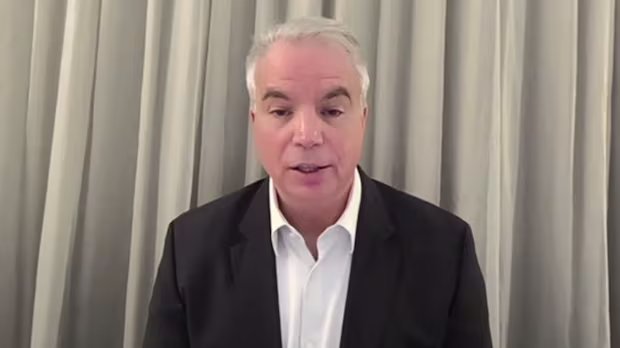
The man behind the Moose Jaw health centre that has claimed “a 100 per cent success rate in stopping the progression and in restoring function of people with ALS” says a recent CBC story about his company is evidence that he is seen as “a direct threat to the ALS drug industry.”
Dayan Goodenowe made the comments in a Dec. 5 email he sent out to supporters after a recent CBC investigation into his Dr. Goodenowe Restorative Health Centre.
That investigation told the story of Susie Silvestri, a 70-year-old American who sold her home so she could afford Goodenowe’s $84,000 US “biochemical engineering” program.
Silvestri was convinced Goodenowe could cure her ALS. In one text to her brother, she wrote, “He is such a sweet man. How could I not be healed?”

Fewer than four months after arriving at his Moose Jaw facility, Silvestri died from late-stage ALS — a disease that causes gradual muscle loss. As her health deteriorated, she was unable to get a feeding tube installed at the Moose Jaw hospital because her American insurance company wouldn’t pay the bill.
She had to rent her own ambulance, borrow some medical equipment and find an American hospital to do the surgery. She ended up dying alone in a Montana hospital, concluding she was the victim of “false hope.”

Her story led to Saskatchewan politicians calling for a series of investigations.
- Saskatchewan’s health minister asked the consumer affairs authority to investigate whether the health centre is accurately presenting the services it offers.
- The provincial government called on the College of Physicians and Surgeons to investigate “what appears to be the unauthorized practice of medicine.”
- The Opposition NDP asked Moose Jaw police to investigate a series of criminal allegations against the centre.
Goodenowe’s letter to supporters takes particular aim at the NDP, saying it has engaged in “grandstanding.” It also includes a link to a 30-minute video responding to CBC’s story. In the video, he touted the financial and employment benefits of his health centre, and called on the public to take political action.
“I urge all of you to contact your elected officials,” he said in his video. “It’s not acceptable behaviour from the CBC. It’s not acceptable behaviour from the NDP party.”
‘Shock and awe’ attack
Goodenowe didn’t stop there. He also alleged there’s a wider “coordinated ‘shock and awe’ attack” underway.
“It has now come to our attention that these attacks may be coordinated by the ALS drug industry and the ALS association,” he wrote in an email entitled Love Diffuses Hate, sent to “friends, practitioners, clients and residents of Moose Jaw.”

Those bodies, Goodenowe says, are trying to get the provincial government to pay for a new ALS drug in Saskatchewan “and to set up an ALS clinical trial centre” in the province. He notes that CBC Saskatchewan recently did an interview about an ongoing Canadian clinical trial.
“We have been singled out as a direct threat to the ALS drug industry,” he concludes.
Denis Simard, executive director of the ALS Society of Saskatchewan, said that while he has no direct interaction with drug companies, his organization routinely asks the Saskatchewan government to pay for all drugs approved by Health Canada that may help ALS patients here.
He said there is already a centre in Saskatoon that assesses ALS patients for their suitability for clinical trials and his organization has been lobbying the government for years to provide that centre additional resources.
As for the NDP, it said it is “incredibly concerned about this so-called health clinic,” adding that “the only people we take direction from are the people of Saskatchewan.”
Silvestri’s story is reminiscent of stories from other Goodenowe clients highlighted in a June CBC investigation. Goodenowe questioned those reports and filed a lawsuit against CBC, claiming its stories were defamatory.
In his letter to supporters, he said CBC got it wrong again with the story about Susie Silvestri.
“Please be assured that we will not allow these false accusations to go unpunished,” he wrote.
“The facts are the facts and they are ALL in our favor.”
CBC examined those factual claims in light of Silvestri’s medical records, the testimony of a former Goodenowe care worker and Silvestri’s own words.
‘She could wiggle her toes’
In its Nov. 30 story about Silvestri, CBC reported that her health deteriorated during her stay at Goodenowe’s centre, based on medical records, the testimony of former Goodenowe staff members, Silvestri’s own words and the fact that she died of her disease.
In preparing that story, CBC outlined the facts it had gathered through research and asked Goodenowe for his comment. His lawyer replied “no comment. We don’t talk to people we are in active litigation against.”
However, now Goodenowe has addressed some of the issues raised in the story in his online video.
Goodenowe, who has a PhD in medical sciences with a focus in psychiatry from the University of Alberta, disputes CBC’s story saying, Silvestri’s “condition did not deteriorate in Moose Jaw.” In fact, he says, “she was unambiguously in better health on Dec. 6 than on Sept. 6.”

Then he offered specifics.
“By November 2024, she could wiggle her toes and ankle. She could hold her leg up in a bent position for 45 seconds and her voice was noticeably stronger,” Goodenowe said. “These facts show improvement and they are documented by staff and a licensed medical doctor.”
By email, CBC asked Goodenowe for the name of that licensed medical doctor. He did not respond. Goodenowe is not a medical doctor himself, and he has publicly said his facility does not provide medical treatment and does not employ medical staff.
A former Goodenowe employee who cared for Silvestri during her stay in Moose Jaw questioned Goodenowe’s claim that her health improved.
“While there were some good days, the bad days clearly outweighed the good ones,” wrote one former employee in a text to CBC “Claiming that her health improved is a cognitive bias and does not reflect her actual condition.”
The former Goodenowe care worker declined to be named because she’s afraid of retaliation and she’s recovering from the effects this situation has had on her.
She said Goodenowe’s claims about Susie’s voice improving are inaccurate.
“I deny the claim that her voice was noticeably stronger. This is false. Not only was Susie unable to speak, but her swallowing also worsened over time,” she said. As for the leg and toe movements, she said Goodenowe is drawing too large a conclusion from a modest change, noting that the observations were generally being made by staff like her — not Goodenowe.
The worker said she had “never seen [Goodenowe] involved in Susie’s day-to-day routine or care.”
CBC asked David Taylor, the chief scientific officer at the ALS Society of Canada, what conclusions can be drawn when an ALS patient appears to regain some function.
He said that while ALS patients do gradually lose muscle control over time, the disease does not progress in a linear fashion. He said it’s not uncommon for people to temporarily regain, or appear to regain, some function.
“People have little bumps where it will go back up, and ultimately that will be a blip if you look across a year or two where they decline to death,” he said. “So you cannot make an assessment based on a single exam that there’s any relationship between what is perceived as an improvement and a response to treatment.”
Hospital diagnoses ‘ALS progression’

Goodenowe said in his video that Silvestri’s “health unambiguously improved during her stay” in his Moose Jaw facility.
However, hospital records seem to indicate otherwise.
After moving into the Dr. Goodenowe Restorative Health Centre in mid-September 2024, Silvestri was admitted to hospital multiple times — in one case for Covid pneumonia, in another, gall stones, and in yet another, shortness of breath.
In mid-November, she was admitted once again, this time with “difficulty expectorating phlegm due to the ALS and weakness,” according to her medical records, which her family provided to CBC.
The physician noted Silvestri was “having some trouble eating and swallowing as well.”
In the medical record, he said the “most responsible diagnosis” was “ALS progression” with the possibility of aspiration – a term for accidentally inhaling something into your lungs.
This was the first time her medical file indicated that she was asking for a feeding tube to be installed.
She also mentioned that to her brother in a mid-November text.

“Seriously considering getting a feeding tube,” she told Charles Silvestri. A few days later, she added “Things are not looking good here. Can’t get feeding tube. Have to go back to States.”
The problem was, her American insurance company wouldn’t pay for a feeding tube in Canada and the Moose Jaw hospital would only do the surgery on a non-Canadian in an emergency. It determined Susie’s case was not emergent.
‘[Patient] has been declining’ said Moose Jaw hospital
About two weeks later, on Dec. 3, the anonymous Goodenowe worker arrived at the health centre to find that Silvestri had not eaten for days. She immediately brought Silvestri to hospital and alerted Goodenowe centre CEO Jana Horsnall by text. Horsnall is Dayan Goodenowe’s sister.
“On Dec. 3, Tuesday, I came in for my shift learning that Susie has not been eating for few days due to her not being able to swallow anything anymore,” the worker told Horsnall.
“As you know, Susie is grappling with the progression of her ALS and is feeling increasingly helpless,” the anonymous worker said. “The severity of the progression of her ALS has taken a toll on her to the point where she has been unable to eat and take in her supplements.”

Goodenowe acknowledges that Susie did ask for a feeding tube while still under contract with his centre.
“Prior to her December 6 discharge date, Susie expressed a desire to have a feeding tube which is, you know, her right to look into things,” he said in his video statement.
The medical records say Susie, who was in “endstage ALS,” arrived at the hospital with “a three day history of not eating or drinking due to dysphagia,” or swallowing difficulty, which the records say was caused by her ALS.
“[Patient] has been declining,” the medical records say.
At that time, the hospital installed a nasal feeding tube on an emergency basis to help stabilize her heart rate. But less than a day later, she asked to have it removed.
“Unfortunately on December 7 she determined that she could not tolerate the [nasal feeding tube]. It caused her significant anxiety,” the records say.
The care worker said that, in reflecting on Silvestri’s entire time at the centre, especially after September, “her decline appeared to accelerate rapidly, suggesting her health worsened during her time in Moose Jaw.”
Because Silvestri couldn’t tolerate the nasal feeding tube and couldn’t get a permanent one installed in Canada, she decided to go to a hospital in the U.S. for the treatment.
The former Goodenowe worker helped Silvestri arrange the trip and travelled with her to Sidney Health Center in Sidney, Mont.

Feeding tube ‘not medically necessary’ Goodenowe claims
Dayan Goodenowe says in his online video that Silvestri’s decision to leave his centre and Moose Jaw, and go to the United States, is what caused her health to rapidly deteriorate.
“Susie’s health decline and subsequent death occurred after leaving Moose Jaw, not in Moose Jaw,” he said. “These are the observable, documentable facts.”
According to Goodenowe, the hospital in Moose Jaw had concluded that a feeding tube was “not medically necessary” for Susie. In addition, he said, the hospital “determined that she was able to eat.”
He went on to suggest that the Moose Jaw hospital “advised against” Silvestri getting a feeding tube.
“Her condition did deteriorate after getting a procedure that Moose Jaw advised against,” he said.
CBC asked Goodenowe to provide evidence that Moose Jaw health officials gave that advice, but he did not reply.
The former Goodenowe employee who provided care to Silvestri while she was in the Moose Jaw hospital told CBC, “regarding the feeding tube, no one was opposed to Susie obtaining one.”
The Moose Jaw hospital records seem to back up that claim. They show that rather than advising against getting a feeding tube, or concluding it wasn’t “medically necessary,” Moose Jaw health professionals actually recommended she get one in the U.S.
“I have recommended that when she is there she gets a [feeding] tube and gets a consult to cardiology and I have offered to speak with an accepting doctor,” Dr. Eric Bortolotti wrote.

Dietician Haley Oshowy, in recommending a nasal feeding tube, told Silvestri that it might help restore her ability to swallow. And if that happened, Oshowy wrote, this “writer’s recommendation is to return home to US for [feeding tube] insertion as need for same in future will continue.”
CBC was unable to find comments from any medical professional recommending against a feeding tube for Silvestri or suggesting it was unnecessary.
‘Bad food … minimal personal support’
In his online video, Goodenowe also blamed Silvestri’s declining health on the care provided by the hospital in Sidney.
“Bad food. No support supplements, minimal personal support,” he said. “This is the exact opposite of the services she received in Moose Jaw.”
CBC asked Goodenowe what was wrong with the food and support services offered by the Sidney hospital and how he knows that the food was “bad” and the support services “minimal.”
He did not reply.
The former Goodenowe care worker, who accompanied Silvestri to Montana and stayed by her side for days, told CBC the care in Montana was “was 100% better than what she had in the Goodenowe’s facility and [the Moose Jaw hospital].”

“They took care of Susie with great care and dignity,” she said. “Not only were the doctors and nurses professional, but they also took the time to pray for Susie and for me.”
The worker said the hospital provided her with free food while she stayed there, and allowed her to shower and do laundry in the hospital while she cared for Silvestri.
In text messages to Goodenowe CEO Jana Horsnall, the care worker said, “Susie is getting the help and care that she deserves down here. Care staffs are amazing and kind. Their care are beyond incomparable.”

Goodenowe also said Silvestri’s health declined because the Sidney hospital failed to give her the supplement protocol that he had created.
“Her care plan was changed when she left Moose Jaw. After her care plan was changed, she began to decline rapidly,” Goodenowe said.
The former Goodenowe employee said she asked the Sidney hospital to allow Silvestri to take Goodenowe’s supplements, but they declined.
The former Goodenowe worker said the doctors explained that introducing those supplements could end up causing additional medical troubles, given her state of malnutrition. By text she explained this to Jana Horsnall, adding that the doctors are “taking a gradual approach to avoid overwhelming her system.”
Horsnall urged the worker to push further, stating that Goodenowe’s supplements were crucial for Silvestri’s health.

“The doctors may not understand them but they are very good and will help,” Horsnall wrote. “She needs to be taking advice from our specialist in ALS.”
The former Goodenowe care worker said she was surprised by this last statement. She remembers wondering, “Do they even have an ALS specialist at their Moose Jaw facility? Who could Jana be referring to?”
The care worker said that on a white board in her Montana hospital room, Silvestri added up the cost of her trip to Goodenowe’s Moose Jaw health center.
She concluded that it was “for false hope.”