dailynewsnblog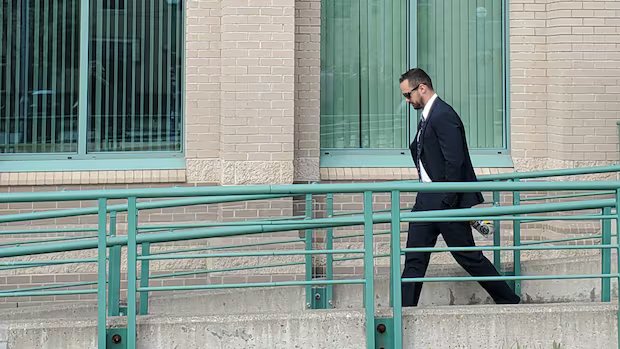
A former Prince George RCMP officer has received eighteen months probation after being found guilty of obstruction of justice in a case involving the death of an Indigenous man in 2017.
The case has been viewed by civil rights and First Nations leadership groups as a key test of the justice system’s ability to hold police accountable.
Arthur Dalman was found guilty of ordering a bystander to delete cellphone video that should have been secured as evidence following the arrest and subsequent death of Dale Culver, a 35-year-old Gitxsan and Wet’suwet’en, on July 18, 2017
In delivering his sentence, B.C. Provincial Court judge Michael Fortino said the nature of Dalman’s offence is “objectively serious,” that “threatens the integrity of the justice system,” by undermining the trust the public has in police.
But, he said, that was mitigated by Dalman’s status as a junior RCMP officer at the time, his community service and the fact that he has since left the police force.
Had he not been new to his job at the time of the offence, Fortino said, Dalman would “most certainly” have seen jail time, Fortino said.
He also noted that Fortino was apparently not the only RCMP officer to order witnesses to delete video, pointing to wider systemic issues with how the case was handled.
Of the five officers charged in relation to the events surrounding Culver’s arrest and death, Dalman is the only one to be convicted.
Aftermath of arrest
The courts heard Arthur Dalman was a just a few months onto his job with the RCMP when he responded to a call for support near a Prince George auto-mall on July 18, 2017.
By the time he arrived, Culver, whose family says was riding home on his bicycle when he was accused of “casing” vehicles, had already been taken into custody following a struggle with multiple police officers.
The Gitxsan and Wet’suwet’en man died in police custody 29 minutes after his arrest.

Dalman was one of several officers tasked with securing the scene in the aftermath, the courts heard, but instead he got into a confrontation with one of the bystanders who was filming police.
Dalman told the man to play the video for him and, while the video was being showed, “attempted to snatch the phone from his hand,” Fortino said.
The interaction “deteriorated” and “Mr. Dalman became aggressive,” threatening to arrest the bystander for obstruction and seize his phone if the video was not deleted.
Fortino said the nature of Dalman’s offence was serious and that it directly impacted the trust that Culver’s family, Indigenous communities and the public at large have in RCMP.
Obstruction of justice by an RCMP officer, no matter how senior, he said, “undermines accountability and erodes public trust in the justice system.”
Proportionate sentencing
The Crown was seeking a six-month prison sentence for Dalman, while defence asked for a conditional discharge of 12 months, which would have meant he would avoid having criminal conviction on his record after a period of probation.
Fortino said neither of those sentences would match the nature of the crime, which he repeatedly emphasized as serious, with the need to send a clear message of dissuasion.
But he also said that needed to be weighed against the impact on the individual being sentenced, and he believed jail time was not necessary to achieve the goal of justice.
He said that while Dalman’s actions did impact the subsequent investigation into Culver’s death, he noted that Dalman had no direct interaction with Culver himself.
He also noted the length of time — nearly nine years — since the offence and the sentencing, and the ability of a person to change and grow over that time period, something he said Dalman had demonstrated.

Fortino noted that in the time since being charged, Dalman had to leave Prince George due to threats he received in connection to the court case, impacting both his career and that of his wife, removing them from their support network.
Fortino said Dalman left the RCMP after first going off-duty in 2024 to seek support for his mental health issues including symptoms of PTSD and depression. He officially resigned after the police force began disciplinary action against him for having lied while under oath on trial.
Dalman continued to work in public service, though, the judge said, where he received a life-saving award after putting himself in danger to help someone in a life-threatening situation along a highway.
Fortino called him “a person of good character,” while still stating he was responsible for a serious crime while in a role of responsibility.
“I am satisfied that this sentence appropriately communicates society’s condemnation for your actions and hopes that it assists in restoring public confidence in the justice system,” he said. “At the same time I am satisfied that this sentence does not exceed your moral culpability.”
Calls for reform
Following the sentencing, the B.C. Civil Liberties Association released statements from Culver’s family noting the impact the case has had on them.
Lily Speed-Namox, who was 14 at the time of her father’s death, noted she has spent nearly a decade advocating for justice.
“I know that Dalman did not physically cause my father’s death,” she said in the statement. “However, he attempted to cover up what happened that night. Dalman could have stood up, but instead, he was part of the RCMP’s rotten culture of protecting their own.”
Debbie Pierre, Culver’s cousin, noted that the obstruction attempt “prolonged our suffering, delayed justice, and deepened the trauma of losing Dale in a violent and preventable way,” adding “we will continue to fight for systemic change.”‘
Meanwhile, the National Police Federation argued the sentencing didn’t fully account for Dalman’s short service time and overall strong record.
It was also critical of the length of time between the offence and sentencing, saying it had a major impact on everyone involved.
“Timely and fair processes matter for everyone involved,” said the federation’s president, Brian Sauvé.