dailynewsnblog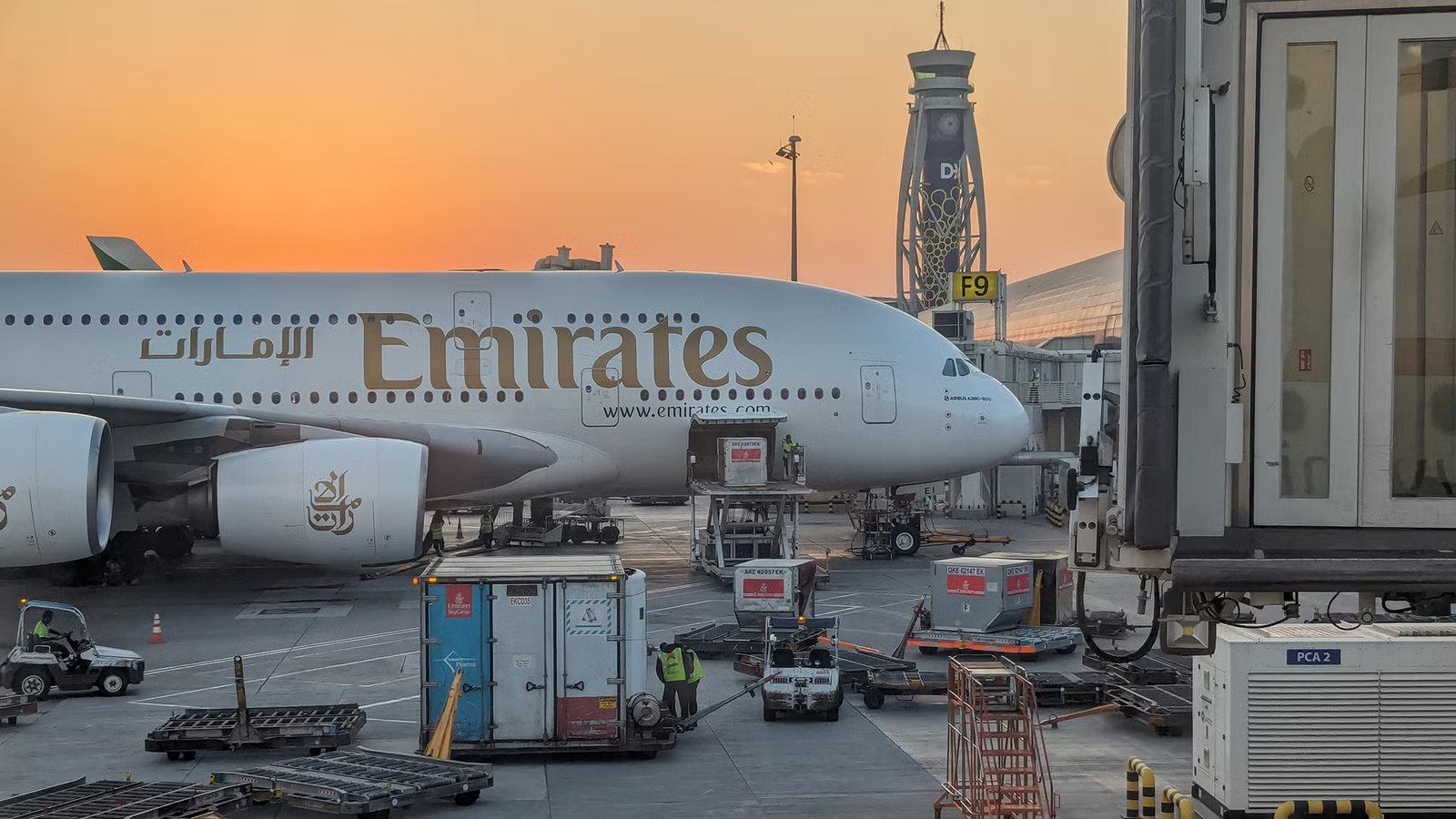
Another Iranian drone has hit  Dubai International Airport (DXB), this time causing a huge explosion and fire at the airport’s fuel farm. The airport initially suspended all operations and has barred foreign carriers from landing before later implementing a limited reopening.
The fallout of the strike forced several flights en route to Dubai to divert to nearby airports or turn back to their departure airports, with flight tracking data showing over 60 impacted flights. This inevitably left thousands of passengers on ‘flights to nowhere’ and has created a serious operational headache for airlines, particularly home carrier  Emirates.
Iranian Drone Strikes Dubai Airport Fuel Tank

In the early hours of Monday morning, an Iranian Shahed drone made it through air defenses and directly hit a fuel tank at DXB. The explosion left a thick plume of smoke in the sky, with the resulting fire raging for several hours before it was successfully extinguished by emergency services. Authorities reacted by immediately suspending all operations at the airport and temporarily shutting down UAE airspace, causing havoc for scores of flights and thousands of passengers.
In the last couple of hours, airspace has reopened, but operations at DXB remain limited, while foreign airlines are barred from operating at the airport until further notice. This is the fourth drone or missile-related incident to impact DXB since the outbreak of hostilities with Iran last month, and the most significant in terms of its infrastructure damage. The Government of Dubai’s media office confirmed that “a drone incident” had affected one of the airport’s fuel tanks, adding that no injuries have been reported. The media office said in a statement,
“Civil Defense teams have confirmed that the fire in a fuel tank in the vicinity of Dubai International Airport has been extinguished. Cooling operations are now underway.”
Over 60 Flights Diverted

The drone hit the airport just before 04:30 AM local time on Monday as several flights were waiting to take off and land. Data from Flightradar24 lists over a dozen Emirates flights that were diverted to nearby airports as the chaos unfolded below. The majority of flights diverted to nearby Al Maktoum International Airport (DWC), which is located around 40 km from DXB, while several landed at other airports in the region, including Abu Dhabi (AUH), Muscat (MCT) and Jeddah (JED).
There were also many international flights on their way to Dubai that had to divert or turn back. According to Flightradar24, a total of 65 flights were diverted to 34 airports in Africa, Asia, Europe and the Middle East. Of these 65 flights, a total of 22 returned to their departure airport, a scenario known in the industry as a ‘flight to nowhere’.
Some of these flights spent over 10 hours in the air before returning to their origin airport, including an Emirates Airbus A380 flight out of Paris Charles de Gaulle Airport (CDG), which made an abrupt U-turn while it was flying over Saudi Arabia. Several other Emirates flights were affected, including a service from Edinburgh that turned back over Egyptian airspace.

14 Hours To Nowhere: Dozens Of Flights Turn Back After Middle East Airspace Closure
The Middle Eastern conflict has wreaked havoc on commercial aviation.
Aviation Fuel Supplies Feel The Strain

The ongoing 2026 Iran Crisis is becoming increasingly alarming for airlines, primarily due to the impact it is having on fuel prices. According to the Argus US Jet Fuel Index, the average price of jet fuel in the US shot up from $2.50 per gallon the day before the war broke out to $3.99 per gallon on Friday.
This has inevitably hiked airfares, a reality that United CEO Scott Kirby predicted would happen “very soon” just over a week ago. For airlines, jet fuel is their second-highest overhead (behind labor costs), typically making up around 25-35% of total operating expenses. This means that even modest increases in fuel prices can seriously impact an airline’s thin margins, leaving passengers to front the added costs.