dailynewsnblog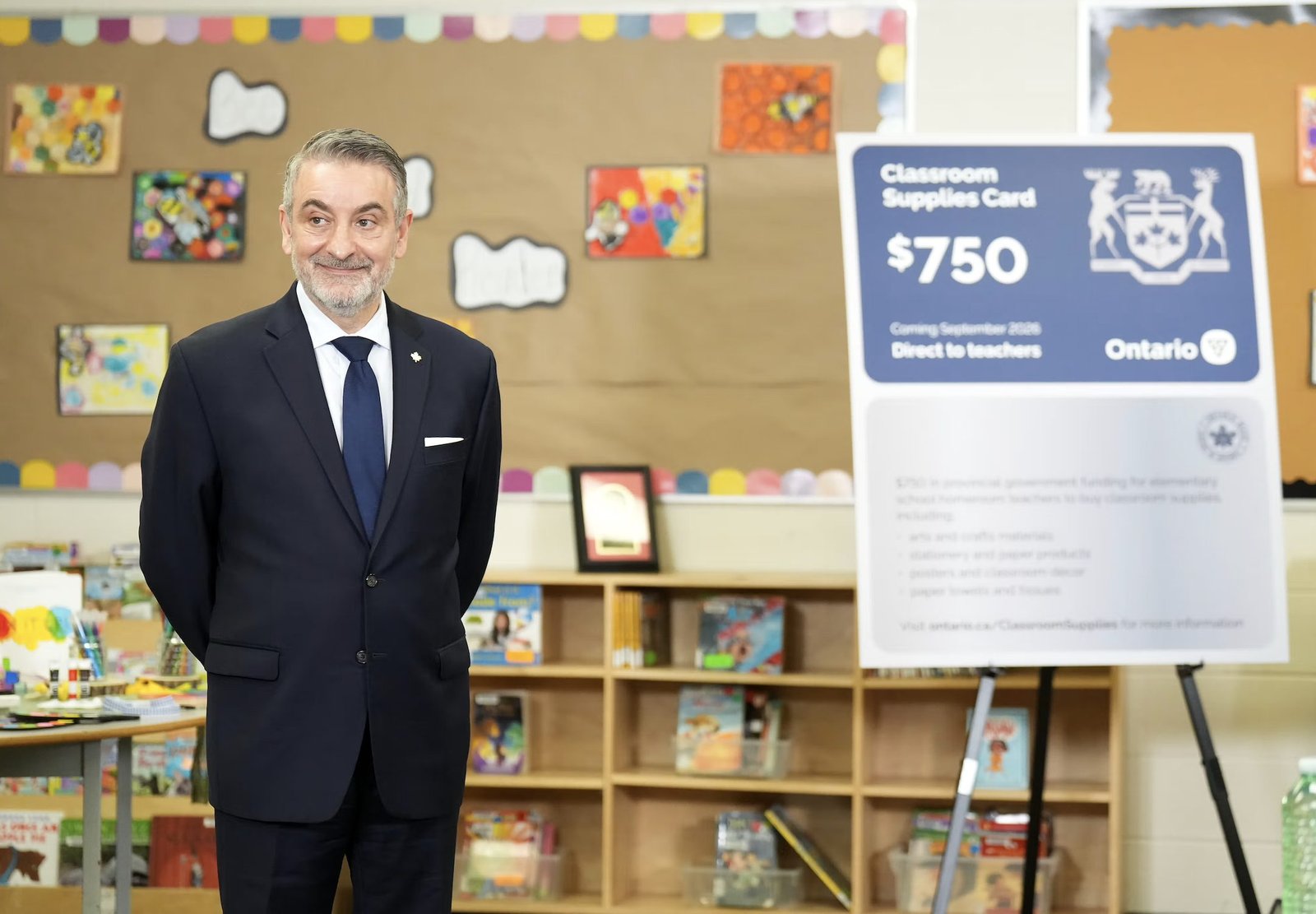
Education Minister Paul Calandra tabled the Putting Student Achievement First Act this Monday, legislation that will reshape how school boards operate, how students are evaluated and how classrooms are run across the province.
The Ford government is introducing its long-awaited changes to Ontario’s education system, saying that stronger oversight and standardized learning are needed to improve student outcomes and rein in what it calls widespread governance failures at the school board level.
Education Minister Paul Calandra tabled the Putting Student Achievement First Act this Monday, legislation that will reshape how school boards operate, how students are evaluated and how classrooms are run across the province.
The bill would cap the number of trustees at 12 and limit trustee expenses and honorariums. Trustees would also be required to cover certain membership and conference costs out of pocket.
The government is also proposing a restructuring of senior leadership. Directors of education would be reclassified as chief executive officers responsible for financial and operational oversight, and a new chief education officer role would focus on student achievement and require teaching credentials.
Budget authority would also shift. CEOs would lead budget development, and if trustees cannot agree, disputes could be escalated to the minister for a final decision.
The legislation would also give the province more power over capital projects, including the ability to intervene directly or appoint third parties to manage troubled builds.
“Ontario’s education system must remain focused on its core responsibility: student success,” Calandra said.
The reforms come as the province highlights what it describes as a pattern of dysfunction among some boards. Since 2025, eight school boards have been placed under provincial supervision due to financial mismanagement and governance concerns, according to government figures.
Standardizing classrooms and assessments
Beyond governance, the bill introduces new provincewide rules aimed at creating more consistency in how students are taught and evaluated.
Teachers would be required to use ministry-approved learning resources, a move the government says will reduce disparities between classrooms and ensure curriculum alignment.
For high school students, the changes would be more visible.
The province plans to mandate written exams for Grades 9 through 12 on designated exam days and standardize how final grades are calculated. Attendance and participation would also become part of final marks, accounting for up to 15 per cent in lower grades and 10 per cent in senior years.
The government argues these changes will better prepare students for post-secondary education and improve engagement, particularly as attendance rates remain below pre-pandemic levels.
The legislation also reaches beyond the K-12 system.
It proposes shortening teacher education programs from two years to one, which the government says could save students up to $3,000 in tuition while accelerating entry into the workforce.
At the post-secondary level, the province would absorb the accountability functions of the Higher Education Quality Council of Ontario into the ministry, consolidating oversight under existing funding agreements tied to performance metrics.
Colleges and Universities Minister Nolan Quinn said the changes are aimed at aligning education more closely with labour market needs.
“This legislation would build a stronger, more efficient postsecondary system that is focused on meeting the needs of Ontario’s students, communities and economy,” Quinn said.
The government is positioning the bill as a response to both governance issues and uneven student performance.
While recent provincial testing has shown improvements in reading and writing, progress in math, particularly at the Grade 9 level, remains a concern.
According to the latest results from Ontario’s standardized testing agency, reading and writing scores have rebounded to their highest levels since the COVID-19 pandemic. But math performance, particularly in Grade 9, continues to lag behind, with officials warning that progress is not keeping pace with expectations.
The government said that those results are a warning sign, and that they point to deeper inconsistencies in how curriculum is delivered and how students are assessed across the province. Officials also point to examples of questionable spending by trustees, including travel and personal purchases, as evidence that stronger financial controls are needed.
Briefing materials cite multiple cases where trustees used public funds for expenses the province says fall outside core education priorities. At one Catholic board, nearly $190,000 was spent on a trip to Italy that included art purchases, fine dining and high-end accommodations. In another case, a trustee expensed roughly $7,000 on personal electronics, including an iPad, AirPods and a projector, the government says.
Legal disputes between trustees and boards have also driven up costs, with some boards spending hundreds of thousands of dollars on internal conflicts. The York Catholic District School Board, for example, incurred more than $340,000 in legal fees, while other boards reported similarly high costs tied to governance disputes.
The province says it is already investing a record $30.3 billion in education for the 2025–26 school year, and argues the new legislation will ensure those funds are directed into classrooms.
The government says the goal is to create a more “accountable, consistent and modern” system.