dailynewsnblog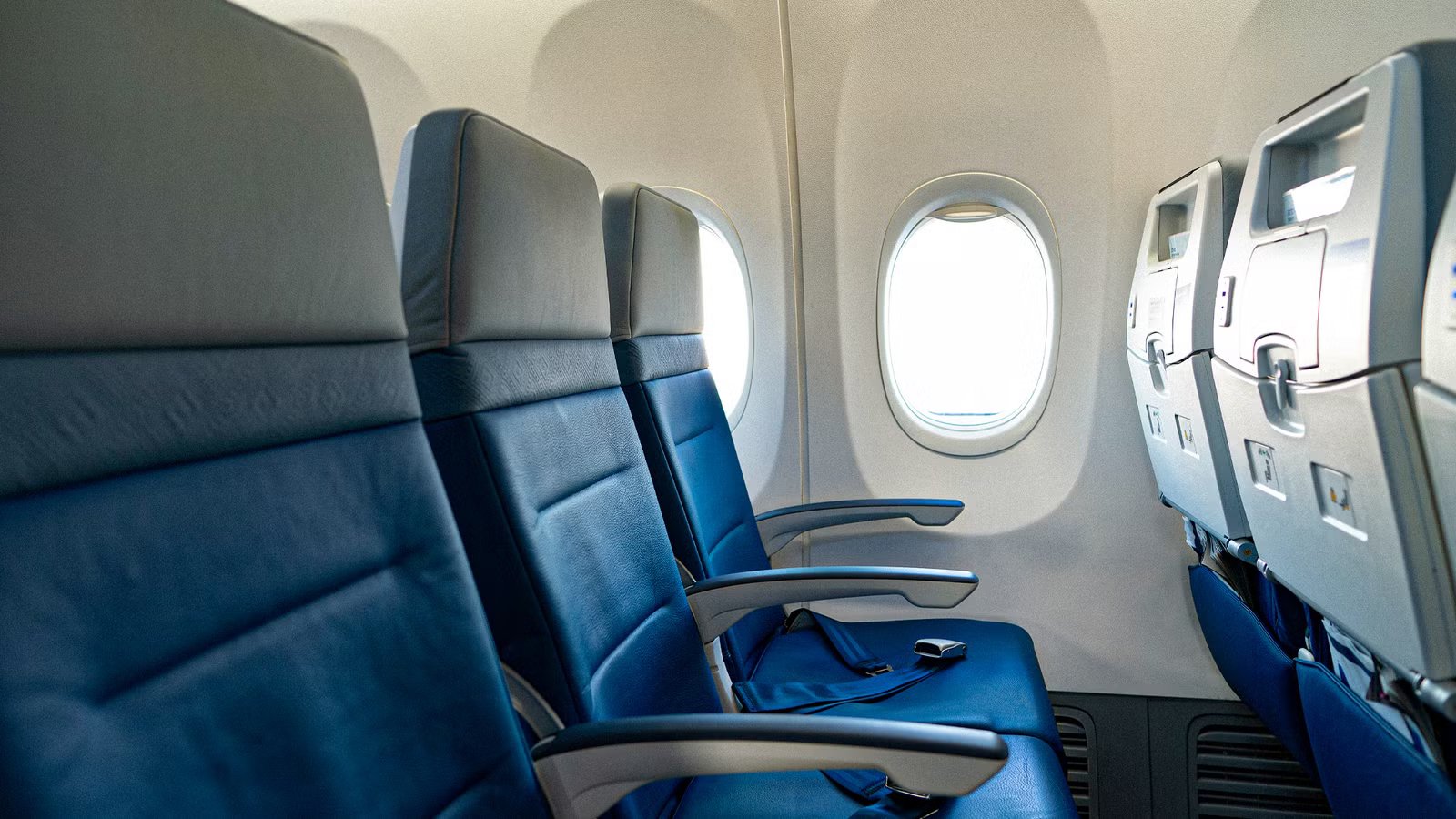
The sensation of a shrinking cabin is something that many travelers have noticed over recent years. The familiar fuselage of a Boeing 737 is no longer seen as the start of a comfortable journey, but rather the onset of a claustrophobic struggle for knee room. This guide investigates the technical and economic factors driving this perceived tightness, offering a clear view of how the 737’s mid-century design history clashes with the aggressive densification strategies of the modern era.
WestJet’s controversial decision to overhaul its 737 fleet with a high-density, 28-inch pitch configuration has sparked such intense public blowback that it forced a historic corporate retreat. As to why the 737 feels uniquely cramped compared to its Airbus rivals requires looking past the thin seat cushions and into the literal diameter of the airframe, which has remained largely unchanged since the 1960s. By dissecting these structural limitations and the revenue-per-inch math airlines prioritize, it becomes far clearer why your personal space has become the latest casualty in the battle for airline profitability.
Design Origins

A fundamental reason the 737 cabin feels tighter than its Airbus A320 counterpart comes down to the literal width of the metal tube. The Boeing 737 fuselage measures approximately 3.8 meters (148 inches) across, whereas the Airbus A320 family offers a wider 3.95 meters (156 inches). While an 8-inch difference might seem minor, it is the deciding factor in whether a cabin feels like a shared space or a crowded corridor, typically resulting in seats that are nearly an inch narrower on the  Boeing airframe.
This structural discrepancy is a direct result of the 737’s heritage, as it still utilizes the same fuselage cross-section designed for the Boeing 707 in the 1950s. Boeing chose to maintain this legacy diameter to ensure fleet commonality for pilots and mechanics. The cabin walls curve inward more aggressively than on modern, clean-sheet designs. For passengers, this means the sidewall often encroaches on shoulder space in the window seat, a physical reality that even the most advanced lighting packages cannot fully mask.
In the European market, this width gap is a constant point of comparison between low-cost giants like Ryanair, which operates an all-737 fleet, and easyJet, which utilizes the Airbus A320 family. Travelers on short-haul routes across the continent often find the 17-inch seat width of a 737 noticeably more restrictive than the 18-inch standard found on an A320. As airlines push for higher density to offset rising fuel costs, the missing inch of lateral room on the 737 makes the transition to slimline seating feel significantly more punishing for the average flyer.
Pivotal Moment

The recent controversy surrounding WestJet’s cabin reconfiguration served as an insight into the feelings shared by many across the world. By attempting to squeeze an extra row onto its 737-800 and MAX 8 aircraft, the airline dropped the seat pitch in the rear of the cabin to a mere 28 inches. This is the same spacing typically found on ultra-low-cost carriers, but its application to a major carrier resulted in an immediate disconnect with a traveler base accustomed to higher standards of personal space.
This shift in seating geometry created a physical environment in which the seatback of the preceding row often sat just inches from the passenger’s face. Viral social media footage from late 2025 and early 2026 documented passengers with their knees pinned against the hard plastic of the seat pockets, highlighting the reality of a 28-inch pitch on a 737. Unlike the A320, which has slightly more vertical sidewall space, the 737’s inward-curving walls make this level of densification feel even more restrictive for those in window seats.
The public response was so severe that WestJet was forced into a historic retreat, announcing in January 2026 that it would remove the extra rows to restore a 30-inch standard. This reversal emphasizes that while aviation authorities certify these high-density configurations for safety, they do not account for the ergonomic limits of the human body. For the European traveler, where 28-inch pitches are common on budget flights, the WestJet saga serves as a reminder that mainline pricing and budget space are an increasingly difficult combination for airlines to sell.

Intense Backlash: WestJet Forced To Revert Economy Cabin Back To Previous Layout
WestJet will be removing a row of economy from its newly reconfigured Boeing 737s due to the controversy.
What Was Done To Improve Perception

Boeing’s Sky Interior was designed to mitigate the feeling of cabin tightness through visual and psychological cues rather than physical expansion. By utilizing sculpted sidewalls, LED mood lighting, and pivot-style overhead bins that tuck upward, the 737 MAX attempts to create an illusion of increased volume. For the first 30 to 60 minutes of a flight, these aesthetic improvements often lead passengers to perceive the aircraft as more spacious, even if the actual floor space and seat width remain unchanged from previous 737 generations.
The pivot bins are the most significant contributor to this sense of openness because they sit higher on the ceiling than the older shelf-style bins. This clears the sightlines above the passenger’s head, which is a major factor in reducing the feeling of claustrophobia. Airlines like Norwegian and Ryanair have leaned heavily into this lighting tech to distract from high-density seating. However, lighting cannot compensate for a lack of knee clearance.
|
Feature |
Legacy 737-800 |
737 Sky Interior / MAX |
Impact on Perceived Space |
|
Overhead Bins |
Shelf-style (fixed) |
Pivot-style (retracting) |
Increased headroom feel |
|
Lighting |
Fluorescent tubes |
Dynamic LED |
Mimics sky/horizon depth |
|
Sidewalls |
Flat plastic panels |
Sculpted / Recessed |
Extra 1 inch of shoulder room |
|
Window Bezels |
Standard square |
Large, flared |
Improved external visibility |
The transition from visual space to physical space is where many airlines encounter passenger friction. While the Sky Interior is effective at making a plane look premium during boarding, it does nothing to alter the 17-inch seat width necessitated by the 737’s fuselage. Flyers are becoming more aware that a modern-looking cabin is not a guarantee of a comfortable seat. This has led to much more skepticism amongst travelers, who are now prioritizing seat pitch data over cabin lighting when booking transcontinental or long-haul regional routes.
Why No More Space Is Possible

The reason Boeing cannot simply widen the 737 to match its competitors is tied to its mid-century certification roots. The fuselage utilizes a circular cross-section that has remained essentially unchanged since the 1950s. To widen the cabin by even a few inches, Boeing would need to redesign the entire airframe, including the wings and landing gear, which would end the commonality that airlines value. This commonality trap ensures that pilots can move between generations with minimal training, but it leaves the cabin frozen in a narrower era of aviation design.
Engineers have attempted to find extra space by thinning out the sidewall insulation and redesigning armrests, but these efforts yield only marginal gains. When flight durations often exceed 3 hours, these small adjustments are becoming less effective at masking the airframe’s limitations. In contrast, newer clean-sheet designs like the Airbus A220 were built from the ground up with a wider fuselage, allowing for a 2-3 seating configuration that provides every passenger with more lateral room and significantly wider seats.
|
Aircraft Family |
Design Era |
Standard Configuration |
Typical Seat Width |
|
Boeing 737 |
1960s (Legacy) |
3-3 |
17 inches |
|
Airbus A320 |
1980s (Standard) |
3-3 |
18 inches |
|
Airbus A220 |
2010s (Modern) |
2-3 |
18.5 inches |
|
Embraer E2 |
2010s (Modern) |
2-2 |
18.2 inches |
The 737 is optimized for a specific passenger count to remain fuel-efficient, and many legacy airlines often feel forced to use high-density seating to remain competitive with budget carriers. As the industry continues to develop, the 737 is increasingly competing against aircraft that do not have these structural constraints, making the narrow in narrowbody more apparent to the frequent traveler than ever before.

The Striking Differences Between The Boeing 737 MAX 8 & MAX 8-200
The MAX 8-200 is a special edition of the MAX 8 developed for ultra-low-cost carriers that seek to maximize the workhorse’s seating capacity.
Weight Or Comfort?

The introduction of slimline seats has been the primary industry response to the structural limitations of the 737 airframe. These seats utilize thinner materials and reduced padding to preserve legroom while allowing airlines to decrease the distance between rows, known as pitch. While these designs are technically efficient and significantly lighter, often reducing an aircraft’s weight by hundreds of kilograms, they often result in a nearly plastic-chair-like feel that lacks the lumbar support and cushioning found in older, thicker seat models.
For markets like Japan and Europe, where high-frequency, short-haul flights are the norm, the trade-off between weight and comfort is particularly visible. Carriers like  Lufthansa and
  British Airways have transitioned much of their narrowbody fleets to these ultraslim models to stay competitive with budget operators. The technical challenge is that while a slimline seat might offer an extra inch of knee clearance, the reduced padding can make a 2-hour flight feel significantly more fatiguing for the passenger’s lower back.
The shift toward these seats is often non-negotiable for airlines looking to maximize the revenue potential of a 737-800 or MAX 8. The aircraft is limited by its 148-inch width, so adding capacity vertically or laterally is impossible, leaving seat thinning as the only remaining variable for densification. For the traveler, this means that even if an airline restores a 30-inch pitch to appease public pressure, the physical experience of the seat itself may still feel significantly tighter and less forgiving than it did a decade ago.
Taking A Stand

It’s true that airlines will always prioritize fuel efficiency and revenue per seat, but the collective stand against the 28-inch pitch has demonstrated that there is a limit to how much personal space can be commoditized before it damages the brand. This has led to a slow shift toward tiered economy layouts, where the front of the 737 cabin retains a traditional 32-to-34-inch pitch, while the rear remains a high-density zone for budget-conscious travelers.
As the industry moves toward continuous sustainability goals, the pressure to pack aircraft more efficiently will only intensify. However, the rise of passenger experience as a key marketing differentiator suggests that the era of limitless densification may soon be over. Airlines are beginning to realize that if a 737 is perceived as too uncomfortable for a 4-hour transcontinental flight, passengers will actively seek out competitors operating the Airbus A220 or A321neo, which offer a wider, more modern cabin.
The 737 remains a common sight for many operators worldwide, but its mid-century design legacy means it will always feel tighter than its younger rivals. Ultimately, it is important to understand that new doesn’t always mean roomier, and as long as the 737’s fuselage remains fixed at 148 inches, the battle for every centimeter of knee room will remain the primary friction point between airline economics and human comfort.