dailynewsnblog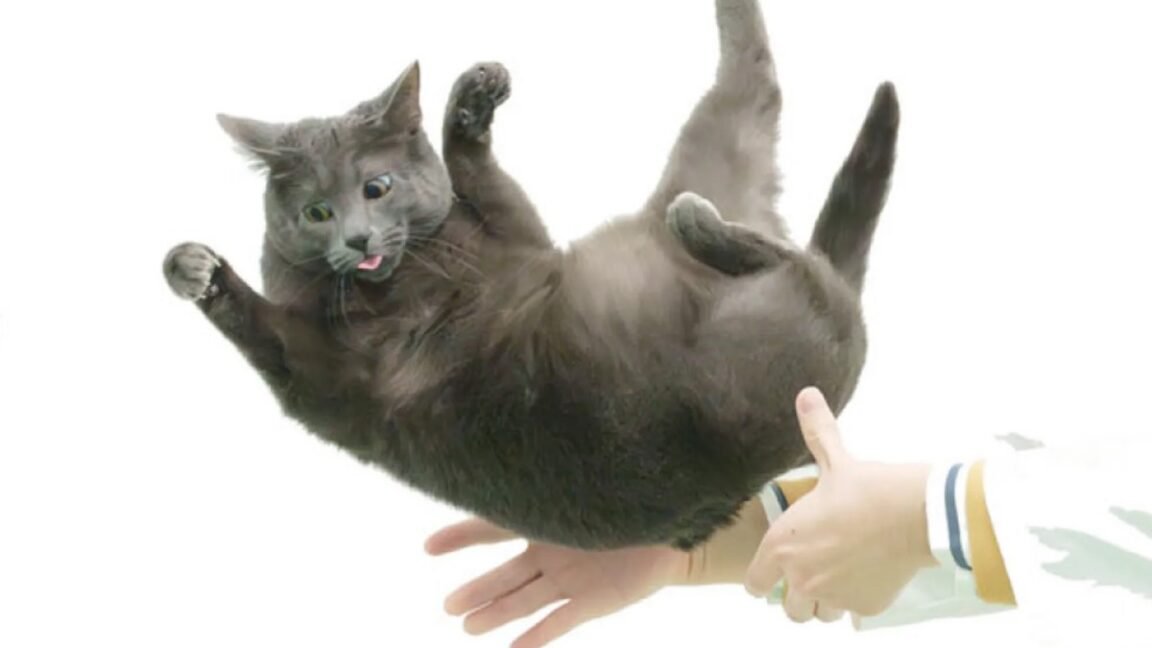
Why do falling cats always seem to land on their feet? Scientists have been arguing about the precise mechanism for a very long time—since at least 1700, in fact—conducting all manner of experiments to pin down what’s going on. The research continues, with a paper published in the journal The Anatomical Record reporting on new experiments to analyze the flexibility of feline spines.
We covered this topic in-depth in 2019, when University of North Carolina, Charlotte, physicist Greg Gbur published his book, Falling Felines and Fundamental Physics. For a long time, scientists believed that it would be impossible for a cat in free fall to turn over. That’s why French physiologist Etienne-Jules Marey’s 1894 high-speed photographs of a falling cat landing on its feet proved so shocking to Marey’s peers. But Gbur has emphasized that cats are living creatures, not idealized rigid bodies, so the motion is more complicated than one might think.
Over the centuries, scientists have offered four distinct hypotheses to explain the phenomenon. There is the original “tuck and turn” model, in which the cat pulls in one set of paws so it can rotate different sections of its body. Nineteenth-century physicist James Clerk Maxwell offered a “falling figure skater” explanation, whereby the cat tweaks its angular momentum by pulling in or extending its paws as needed. Then there is the “bend and twist,” in which the cat bends at the waist to counter-rotate the two segments of its body. Finally, there is the “propeller tail,” in which the cat can reverse its body’s rotation by rotating its tail in one direction like a propeller.
At the time, Gbur told Ars that, while all those different motions play a role, he thought that the bend-and-twist motion was the most important. “When one goes through the math, that seems to be the most fundamental aspect of how a cat turns over,” he said. “But there are all these little corrections on top of that: using the tail, or using the paws for additional leverage, also play a role.” This latest paper has Gbur rethinking that conclusion, according to his recent blog post, giving a bit more credence to the tuck-and-turn mechanism.