dailynewsnblog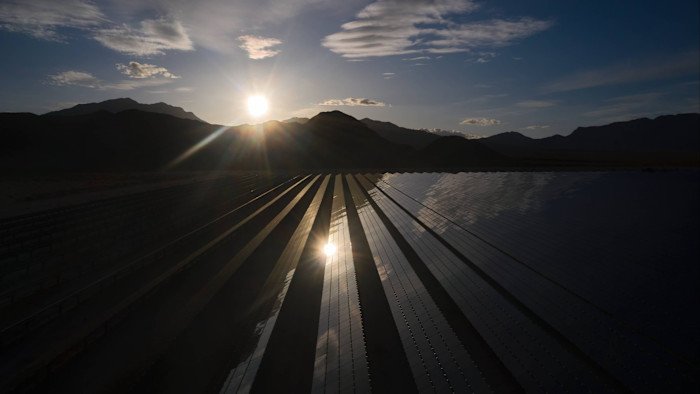
Unlock the Editor’s Digest for free
Roula Khalaf, Editor of the FT, selects her favourite stories in this weekly newsletter.
First Solar’s shares slid on Wednesday as pressure from Donald Trump’s tariffs and a slowdown in demand for clean energy weigh on the sector.
The solar panel manufacturer’s shares closed 13.6 per cent lower after the company said it expected revenues of $4.9bn-$5.2bn this year, below analysts’ expectations of $6.2bn.
Investors were shaken by the cancellation of an order for 6.6 gigawatts with Lightsource BP, the largest solar developer in Europe.
BP has been trying to sell at least 50 per cent of its solar subsidiary for almost a year amid a wider pivot in the oil and gas industry from its renewables ambitions.

First Solar’s chief financial officer Alexander R Bradley said he was seeing “a strategic shift by certain players, especially oil and gas and the European utility players, to reallocate capital away from renewable development in the US into some of the more core businesses”.
The company’s guidance was also hit by the shifting US tariff regime, with its Asian manufacturing operations in India, Malaysia and Vietnam subject to levies on exports to the US of 20-50 per cent since late 2025.
The company has been forced to sell production from those countries into their domestic markets at a lower price and has shut down some capacity while it rushes to reshore its operations.
“That made it uneconomic for them to ship into the US and sell,” said Chris Dendrinos, a clean energy analyst at RBC Capital Markets. “They’re moving half of their south-east Asia manufacturing capacity to the US but that won’t be online until the end of the year, so they’re missing out on potential volumes.”
While India and the US reached an agreement to cut a 50 per cent tariff on exports from the country to 18 per cent, further talks have stalled after the US Supreme Court on Friday invalidated Trump’s previous tariff regime.
The company estimates costs of $125mn-$135mn from the 15 per cent levies the US president imposed after the ruling.
It said manufacturing had also been hit by longstanding import taxes on crucial components such as aluminium.
Analysts say appetite for solar energy faces long-term challenges due to rising demand for “baseload power” — continuous electricity required for energy-intensive sectors such as data centres and manufacturing that intermittent sources including solar and wind struggle to meet. Data centre power demand will more than double by 2035, according to BloombergNEF.
“I think it’s a physics issue,” said Jed Dorsheimer, head of energy and power technologies at William Blair. “What does the grid actually need? Not more variable assets, it needs more baseload.”