dailynewsnblog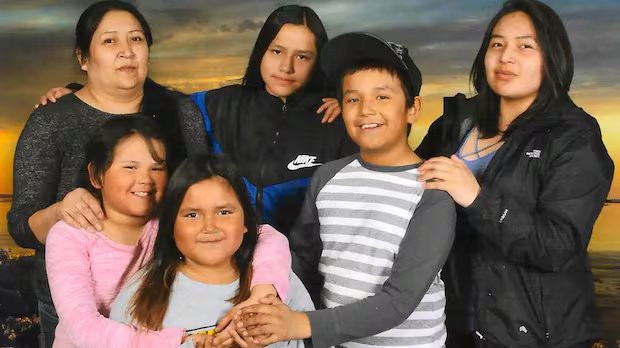
WARNING: This story contains disturbing details.
Nearly seven years after a woman and four children died in a house fire in northwestern Ontario, and as sentencing looms for a man found guilty of second-degree murder, the chief of Kitchenuhmaykoosib Inninuwug (KI) says the First Nation’s firefighting services remain inadequate.
Donny Morris said the remote Oji-Cree community, some 580 kilometres north of Thunder Bay, now has a fire truck and a fire hall but needs a bigger space. The chief added they also need permanent funding and permanent staff for health-care and emergency services — including paramedics, nurses and mental health counsellors, and accommodations for them.
“It all boils down [to], is the willingness to work from the governments, both levels of government, is it there? Are they willing to commit? Are they willing to meet?” Morris said.
“They have busy schedules they set for their southern counterparts — businesses, banks, industry — but no time for us. No time for us little Indians up north.”
The fire on May 2, 2019, resulted in the deaths of:
- Geraldine Chapman, 47.
- Shyra Chapman, 6.
- Hailey Chapman, 7.
- Karl Cutfeet, 9.
- Angel McKay, 12.
The Ontario Forensic Pathology Service and Office of the Chief Coroner determined the cause of their deaths was smoke inhalation.
Archie McKay, Geraldine’s on-again, off-again partner, was charged in December 2020 with five counts of first-degree murder.
This past April, Justice John S. Fregeau found McKay guilty of second-degree murder “in relation to the culpable homicides of Geraldine Chapman, Angel McKay, [Karl] Cutfeet, Hailey Chapman and Shyra Chapman,” according to court documents obtained by CBC News.
We need funding to make sure things like this do not happen again in our community.– Chief Donny Morris, Kitchenuhmaykoosib Inninuwug
Sentencing submissions were heard at the Superior Court of Justice in Kenora last Wednesday. Sentencing is scheduled for March 23 at 10 a.m. in Kenora before Fregeau, Crown prosecutor James Cavanagh told CBC News.
Geraldine and McKay were Shyra’s biological parents. The other children who died in the fire lived with Chapman and were in her care.
The 2019 fire prompted KI to declare a state of emergency over the mental health effects of the losses. The First Nation did not have a fire department at that time.
‘Make sure you cherish your children’
Indigenous people are over five times more likely to die in a fire than their non-Indigenous counterparts, according to the National Indigenous Fire Safety Council.
“That number increases to over 10 times for First Nations people living on reserves,” the council says on its website.
KI is one of five communities represented by the Independent First Nations Alliance (IFNA). Morris said IFNA staff have been working tirelessly to push for more resources for KI, but it’s been challenging.

“We need funding to make sure things like this do not happen again in our community,” Morris said. “It’s frustrating when you go home at the end of the day and nothing’s moving.”
About 1,200 people live in KI — similar to the population of the Township of Ignace in northwestern Ontario. Efforts have been underway to build more housing and infrastructure in the township as the Nuclear Waste Management Organization eyes a site nearby to bury Canada’s nuclear waste.
“You ask yourself, ‘What services does Ignace have compared to what services I have, which is the same population?’” Morris said.
In his view, the provincial and federal governments see KI as less of a priority because “it’s a reserve.”
Indigenous Services Canada responds
CBC News received an emailed statement from Indigenous Services Canada (ISC) late Wednesday about funding provided to KI.
“In 2016, ISC provided funding to Kitchenuhmaykoosib Inninuwug to build a fire hall, which was completed in 2017. The community also has a fire truck. ISC provides $135,864 annually to Kitchenuhmaykoosib Inninuwug for fire protection and training,” spokesperson Eric Head wrote.
As well, the community received $40,000 in 2025-2026 to support the implementation of the First Nations Fire Protection Strategy, he said.
As for health care, Head said the First Nation’s nursing station has “nine ISC nurses – one nurse in charge, 1.5 nurse practitioners, four community health nurses, and 2.5 registered practical nurses.”
Paramedic services are provided by IFNA and funded by the province, he said.
ISC has spent more than $2 million since 2019 to support KI’s health infrastructure, said Head, and in 2025-2026, “the First Nation received $1.1 million to support mental wellness programming and service delivery at the community level.”
Meanwhile, Morris said the court case involving McKay has taken its toll on the community.
“When we look at that orange symbol of Every Child Matters, it is a real issue,” he said. “Make sure you cherish your children because what we’re going through right now with these families, siblings, aunts and uncles, they’re really impacted by losing [these] kids.”
Support is available for anyone affected by the issue of missing and murdered Indigenous people. Immediate emotional assistance and crisis support is available 24/7 through a national hotline at 1-844-413-6649.
Mental health counselling and crisis support is also available 24 hours a day, seven days a week through the Hope for Wellness hotline at 1-855-242-3310 or by online chat at www.hopeforwellness.ca.