dailynewsnblog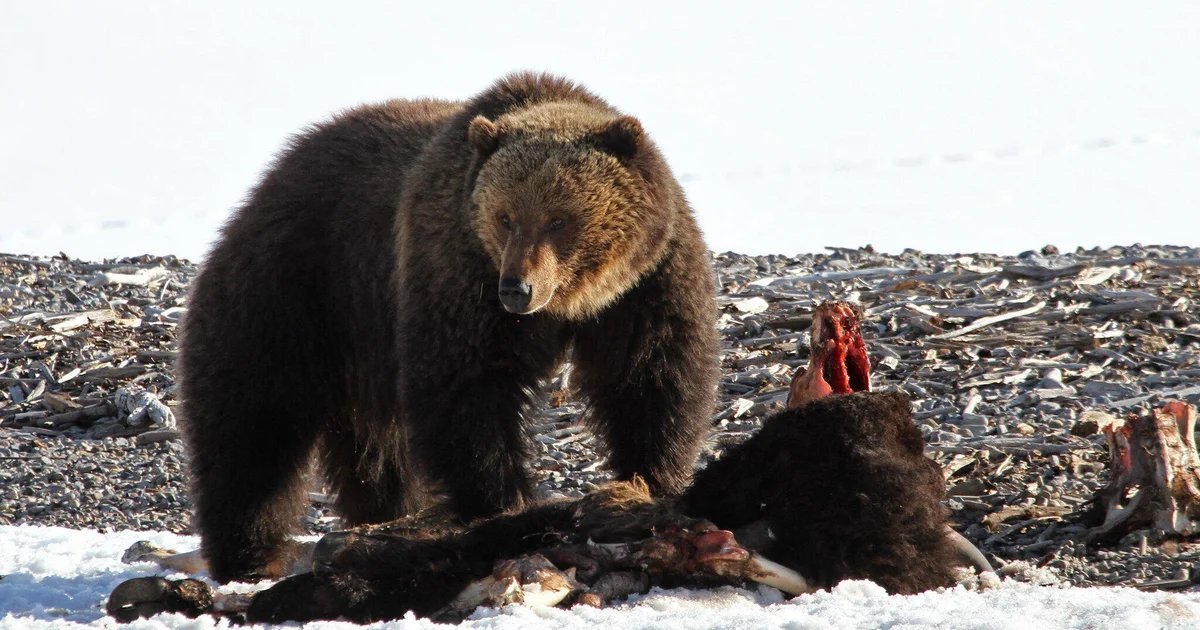
Scientists spotted the first grizzly bear of 2026 earlier this week at Yellowstone National Park, marking the beginning of the end of hibernation season for the massive creatures, the National Park Service said.
Yellowstone biologists saw the bear on Monday while working in the northern section of the park, which is located in northwestern Wyoming and home to between 150 and 200 grizzlies. There are more than 1,000 grizzlies living across what’s called the “greater Yellowstone ecosystem,” an area covering portions of Montana, Idaho and Wyoming outside of the immediate park boundaries.
The grizzly observed this year was seen in the backcountry, scavenging on the carcass of a bull bison, another species found in the park. An image of the sighting showed the bear standing over the carcass near Yellowstone Lake.
National Park Service/Jim Peaco 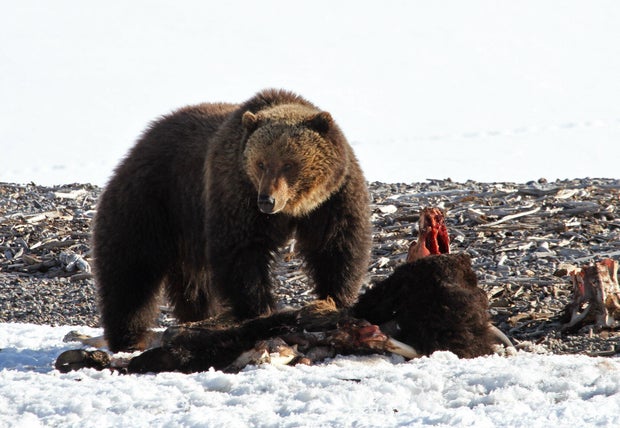
This year’s first grizzly emerged around the same time as previous ones, with the season’s debut grizzly sighting taking place on March 14 in 2025, March 3 in 2024, and March 7 in both 2023 and 2022, according to the park service.
Male grizzlies typically leave hibernation before females, often exiting their dens in early March. Females and bear cubs usually emerge slightly later in the spring, in April and May.
“When bears emerge from hibernation, they look for food and often feed on elk and bison that died over the winter,” the park service said. “Bears may react aggressively to encounters with people when feeding on carcasses.”
Grizzly bears are currently listed as threatened under the Endangered Species Act, after they were brought back from the brink of extinction in the contiguous United States over the last five decades. Yellowstone officials have estimated that the grizzly bear population in the region had dropped to just 136 in 1975. But, thanks to conservation efforts, scientists now consider the population to be doing well, occupying more than 27,000 square miles and expanding their habitats.