dailynewsnblog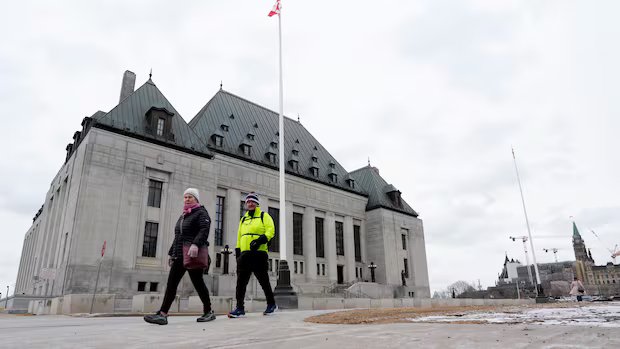

Listen to this article
Estimated 3 minutes
The audio version of this article is generated by AI-based technology. Mispronunciations can occur. We are working with our partners to continually review and improve the results.
The federal government is bringing its case to justify use of the Emergencies Act to clear the convoy protests that gridlocked the capital city and border points to the country’s highest court.
The Federal Court of Appeal dismissed the government’s previous appeal after a lower court ruled that former prime minister Justin Trudeau’s decision to use the legislation was unlawful and infringed on protesters’ Charter rights.
“Our government remains committed to ensuring it has the tools needed to protect the safety and security of Canadians in the face of threats to public order and national security,” a spokesperson for Justice Minister Sean Fraser said in an email.
The Canadian Civil Liberties Association (CCLA), the Canadian Constitution Foundation and other groups filed the legal challenge of the government’s 2022 decision that the protests, known as the Freedom Convoy, rose to the level of a public order emergency requiring special powers to address.
In the 2024 decision, Federal Court Justice Richard Mosley, since retired, said the government’s decision lacked justification, transparency and intelligibility.
The government appealed. During a hearing last February, its lawyers argued the court downplayed violence with “hindsight bias on full display.”
The government has long argued the protests posed a security threat and the measures it took under the Emergencies Act were targeted, proportional and temporary.

But the appeal court’s decision agreed with Mosley’s finding that cabinet did not have reasonable grounds to believe that a threat to national security existed and fell short of the legal threshold needed to invoke the act.
“As disturbing and disruptive the blockades and the convoy protests in Ottawa could be, they fell well short of a threat to national security,” wrote the three judges on the appeal court.
A number of the Freedom Convoy organizers were found guilty of mischief and handed conditional sentences.
A mandatory inquiry, led by Commissioner Paul Rouleau, reviewed the government’s use of the Emergencies Act and came to a different conclusion in early 2023 than the subsequent legal challenges.
Rouleau concluded the federal government met the “very high” threshold needed to invoke the Emergencies Act, citing a failure in policing and federalism.

The final report out of the Emergencies Act inquiry found the federal government met the threshold to use it, as convoy protesters choked downtown Ottawa and blocked border crossings in early 2022. Still, Commissioner Paul Rouleau calls out police and the Ontario government for missteps in their responses.
What began as a protest largely against vaccine requirements attracted thousands of people to the capital for weeks, many in trucks, who had a slew of grievances aimed at Trudeau and his government.
In the face of blaring horns, big-rig blockades and makeshift encampments, some Ottawa businesses temporarily closed, while many residents complained of noise pollution and diesel fumes.
Protesters, some of whom had brought bouncy castles and an inflatable hot tub, pushed back, arguing it was a largely peaceful demonstration.
Trucks and protesters also clogged some border crossings, including the key trade route to the United States via Windsor, Ont.
Trudeau’s government invoked the Emergencies Act on Feb. 14, 2022, giving law enforcement extraordinary powers to remove and arrest protesters and giving the government the power to freeze the finances of those connected to the protests.
It was the first time the law had been invoked since it replaced the War Measures Act in 1988.