dailynewsnblog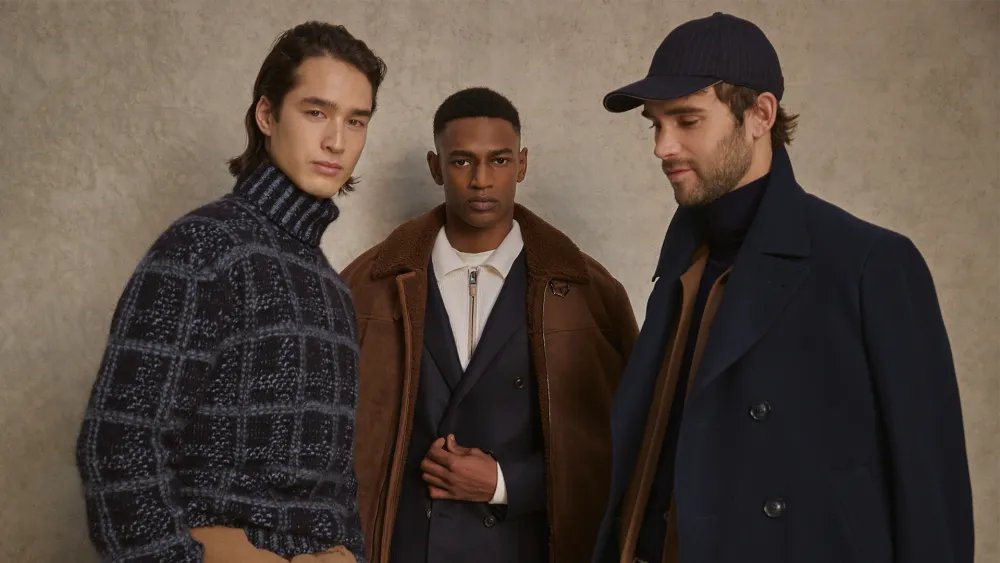
MILAN — The calendar of Milan Men’s Fashion Week may be thinning, as several brands opt for coed shows next month, but the attraction of the city isn’t waning — on the contrary.
Milan has seen the openings of a flurry of luxury stores, from Celine and Saint Laurent to the arrival of key LVMH Moët Hennessy Louis Vuitton brands including Bulgari, Louis Vuitton, Fendi and Tiffany & Co., as well fine dining restaurants Da Vittorio — with Vuitton — and Langosteria Montenapoleone above the Palazzo Fendi flagship. These are in addition to private members clubs The Wilde and Cipriani, among other highlights.
“Milan is a city in constant motion, able to attract ideas and investments and turn every street into a laboratory for creativity and retail. Over the past year we have seen new flagships, concept stores and international brands choose the city as their stage — a clear sign of confidence in the market and in Milan’s distinctive role as a global capital of luxury and experience,” touted Carlo Capasa, head of Italy’s Camera della Moda.
Milan Fashion Week, kicking off Friday and closing on Monday with the Giorgio Armani show, “fits naturally into this context: it is not just a date on the calendar, but a point of convergence between creativity, industry and the city itself, reflecting the real energy Milan is experiencing today,” continued Capasa.
He said the so-called “Quadrilatero” area, from Via Montenapoleone to Via Spiga, and the emerging districts, are experiencing a “momentum [that] tells the story of a city that, despite the difficult moment globally in recent years, has continued to build its own future through creativity. With the Olympics approaching, that dynamism grows even stronger: Milan doesn’t simply welcome global attention, it fuels it.”

Langosteria Montenapoleone
To be sure, the Milano Cortina 2026 Winter Olympics and Paralympics, running Feb. 6 to March 15, are expected to be an added business driver.
“Milan continues to enjoy a moment of strong international visibility. This has a positive impact on both the growing international community choosing to live in the city and the tourists visiting it, with clear benefits for the luxury sector as well,” said Gildo Zegna, executive chairman of the Ermenegildo Zegna Group, who served as a torchbearer of the Olympics.
“The Olympic Games represent an exceptional opportunity to demonstrate Italy’s ability to work collectively, invest in the future, and bring together sustainability, infrastructure and culture, while sharing Italian excellence with the world. It is a challenge that Milan is ready to embrace with both responsibility and ambition,” Zegna said.
In recent weeks, Oasi Zegna has welcomed several national teams, including those from China and Switzerland, to its training Ski Racing Center in Bielmonte, which also regularly hosts Italian national teams, to prepare for the Olympics.
The temporary private club and “tailor’s house” Villa Zegna will be staged in Milan for the first time, alongside the fall 2026 runway show Friday, following Shanghai, New York, Dubai and Miami.
At the Emporio Armani flagship on Saturday, a cocktail event dubbed “Beyond Every Limit,” will celebrate the launch of the EA7 capsule collection inspired by the uniforms for Team Italia, designed by the brand as their official outfitter for the upcoming Olympic and Paralympic Games.
Francesca Cattagni, head of Retail Agency at Savills Italy, said “retail confirms its leading role in the Italian real estate market, with 3.6 billion euros invested in 2025. Within the retail sector, shopping centers lead the market, driven by the largest single deal by volume recorded to date, followed by factory outlets and the grocery segment. High-street retail accounts for 21 percent of total investment volumes, supported by strong investor interest in Milan, Florence and Rome.”
Cattagni underscored the major changes taking place in Milan, pointing to expanding shopping districts, such as the Corso Garibaldi streetwear area, following the opening of Supreme in 2021, and the redirection of investments to Milan from London after Brexit and the cancellation of tax-free shopping in the English capital. Identifying Milan as “one of the main international destinations” for the past two years, Savills has been working on the new format of high-end design store RH, formerly known as Restoration Hardware, opening soon in Milan’s central Corso Venezia.
K-Way in November also opened a store in Corso Garibaldi because “it’s a street that is not only a shopping landmark but also a central meeting and transit point,” said Lorenzo Boglione, co-chief executive officer of parent BasicNet, based in Turin. “Milan is surely one of the most dynamic points of reference for its retail and contemporary culture. It’s a city that is alive and in constant evolution. In the past few years we have seen a very strong buzz, driven by new openings and a growing energy, this is why we chose to open in Corso Garibaldi, and the city that for all of the BasicNet brands is a strategic market today more than ever,” added Boglione.
In addition to K-Way, which will present its new ski collection during Milan Men’s Fashion Week, and the recently acquired Woolrich, the publicly traded BasicNet owns the Superga, Robe di Kappa, Kappa, Sebago, Jesus Jeans, Sabelt and Briko brands.

A look from K-Way’s fall 2026 ski collection.
Luxury property developer Gabriele Cerrone of Trophaeum Asset Management also underscored Milan’s attraction for high-net-worth individuals in light of Italy’s new flat-tax regimes, and the end of tax-free shopping in London. “Even wealthy shoppers want to be reimbursed with tax-free spending,” said Cerrone. “I know there are even day shoppers to Milan.”
Trophaeum, which developed Oswald’s and Maison Estelle in London, opened the first tax-free center in Via Sant’Andrea years ago, he recalled, and brought Rimowa and Christian Louboutin, among others, to the Quadrilatero. Cerrone also highlighted how the Brera district is “booming, people love it, it’s the place to be,” as well as the area around Fondazione Prada. Cerrone cautioned, however, about the rising prices of private apartments in Milan, which can go as high as 40,000 euros per square meter, and could eventually turn into a financial bubble.
Chiara Dorigotti, CEO of SEA Prime, the SEA Group company and a leader in business aviation, which manages all infrastructure dedicated to general aviation at Milan Prime airports in Malpensa and Linate, said “business aviation in Milan continues to grow, with a 7 percent increase in traffic at Linate Prime in 2025. This figure confirms the positive trend of recent years and reflects the city’s strong and growing international appeal.”
This growth, she observed, “is not limited to peak periods linked to major city events — from fashion and design week to Formula 1 and the Milano Cortina 2026 Winter Olympic Games — but instead points to a structural increase in both business and leisure passenger flows. To support and anticipate this growing demand for infrastructure and services, SEA Prime is completing the expansion of the Linate Prime terminal: an additional 2,400 square meters dedicated to new lounges, with the arrival of leading international operators. “This strategic investment will ensure we are fully prepared for the Winter Olympics and other major events in 2026, further strengthening Milan’s role as a leading European hub for business aviation.”
Brunello Cucinelli, who will unveil his namesake fall collection Friday in Milan, said the city “plays a very important role at the European level in terms of art, fashion, culture, food and hospitality, but also finance, and offers a mix of very high-quality events,” attracting students to prestigious universities. “I’ve noticed a new wave of young people who add buzz to the city.”
Cucinelli said his flagship in Via Montenapoleone is performing well and contended that the stores in the street are also “a point of reference in terms of visual merchandising, and project a strong Italian lifestyle concept.”

Brunello Cucinelli, fall 2026
Stefano Canali, president and CEO of the Canali Group, concurred, saying that “Milan has been steadily evolving over the past decade, from its changing skyline to major infrastructure developments and an expanding city center.” The Winter Olympics “reinforce this trajectory, bringing global prestige and reaffirming the positive values of sport at a time when such values are especially meaningful. This January, Milan confirms its role not only as a capital of fashion and design, but as a city defined by energy, creativity and innovation, attracting continued investment from global brands.”
Brands are also timing the opening of stores and the launch of capsules around the Olympic Games. For example, Bally is relocating on Via Montenapoleone 10 ahead of the Opening Ceremony with a more focused and edited assortment as the brand is being revamped under the new owner, an affiliate of Regent, the owner of Club Monaco and Escada, and designed by an in-house team, following the exit of Simone Bellotti last March.

Sketch of a Bally alpine look.
Brioni, which will hold its presentation on Saturday, is also writing a new chapter in its 80-year history, following the departure of design director Norbert Stumpfl in December and under the lead of Federico Arrigoni, who was named CEO last May. “In 2026, Milan will be the ideal stage to express [the brand’s] evolution: a city that blends heritage and innovation, ready to catalyze global energies with the Olympics,” said Arrigoni.
The luxury menswear brand is now designed by a team and Arrigoni said Brioni will be able to reflect Milan’s buzz “with a language that combines artisanship and modernity, bringing elegance and Italian tailoring to its highest levels,” citing bespoke creations and exclusive experiences “for global leaders seeking authenticity and quality without compromises.”