dailynewsnblog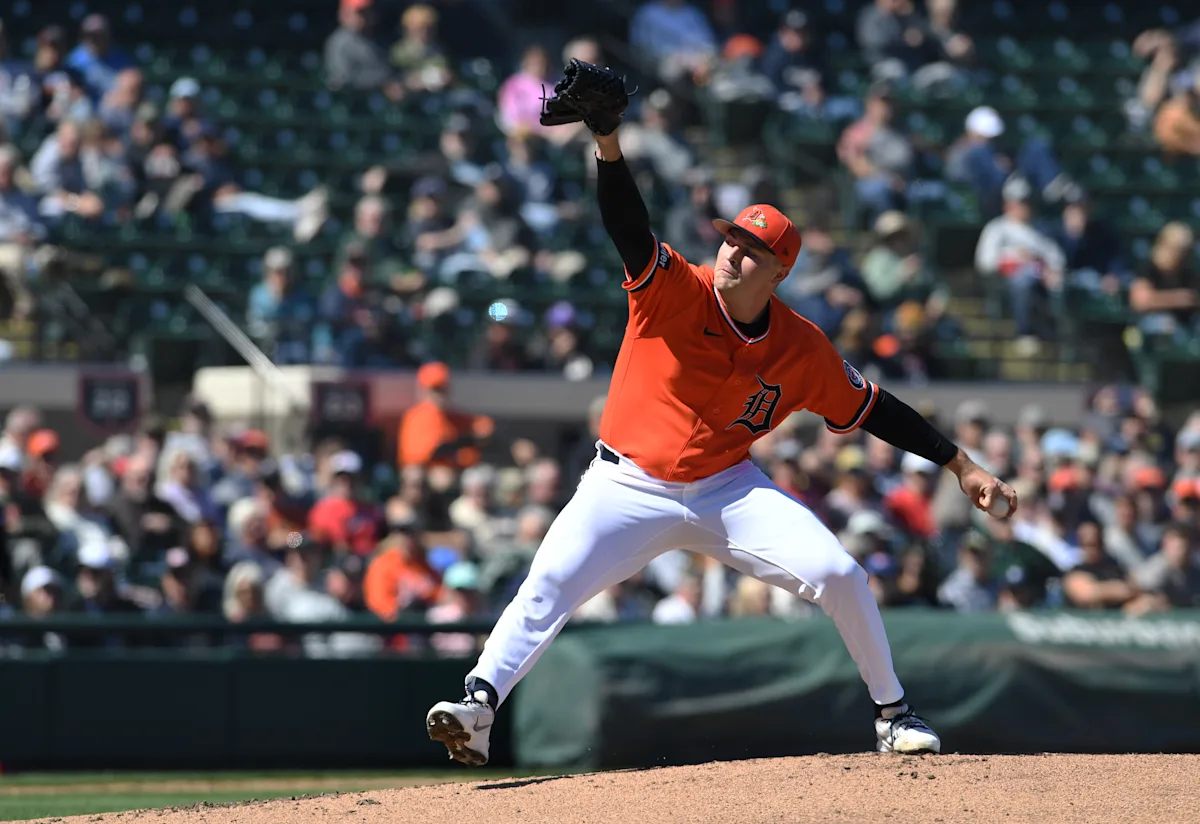
Previously, I wrote an introduction to advanced stats for fantasy baseball. We could’ve expanded on 5-10 more advanced metrics, but that would likely overwhelm readers and fantasy managers. There will be a ton more advanced stats coming from Spring Training, with Statcast data in all parks this year. If we’re drafting during Spring Training, pay attention to the injury news and other notable transactions.
We’ve already seen concerning injury updates to Corbin Carroll, Francisco Lindor, Jackson Holliday, Spencer Schwellenbach and Pablo López within the first two weeks. While injury news doesn’t qualify as advanced stats, the metrics we should monitor are those related to injured players returning, especially before the regular season begins. The tricky part is determining whether the small-sample data is noisy or legitimate.
Advertisement
[Join or create a Yahoo Fantasy Baseball league for the 2026 MLB season]
For pitchers during Spring Training or the season, we want to monitor their velocity, arm angles, pitch-movement profiles and pitch usage. Yes, the outcomes matter, but not as much as the inputs. If we see a pitcher succeeding with lower velocity and fewer whiffs, we might guess they’re lucky. For hitters, we want to monitor bat speed, barrel rates and plate discipline (contact and swing rates). Each stat tends to stabilize at different thresholds, but we won’t get into the weeds there since we should be focusing on how the player’s inputs (advanced stats) have impacted the outcomes.
Hitter Advanced Stats to Focus On
Regardless of how good or bad a hitter might rank in their advanced stats, we want to evaluate individual players against their own career averages. If a hitter has an outlier barrel rate or bat speed in an early small sample, we might question sustainability over more batted balls. Oftentimes, the advanced metrics will regress, but sometimes there’s a new skill level for that player.
Advertisement
Bat Speed
-
The league average for bat speed sits around 72 mph, specifically 71.7 mph in 2025. That’s important context since hitters who boast a 74-75 mph or higher bat speed tend to fall in the near-elite range. If hitters have high bat speeds without the power output in home runs, we could expect favorable outcomes in the future. In Spring Training, we should be able to see a player’s bat speed with Statcast data available during all Spring Training games for the first time. Pay attention to any bat speeds that vary significantly from a player’s norm. An example of Trevor Story’s bat speed increase in 2025 can be seen below.

This is a look at Trevor Story’s bat speed distributions over the past three seasons vs. the league average.
Fast Swing Percentage
-
Fast swing percentage is the percentage of swings at 75 mph or higher. The league average is 23.6%, with several high-end hitters having fast swing rates around double the league norm. Think of this like hard-hit rate (percentage of batted balls at 95 mph or higher). If a hitter consistently swings the bat fast at 75 mph or faster, we would expect them to hit the ball hard.
Barrel Rate Per Plate Appearance
-
Barrels correlate well with home runs (0.824). When hitters barrel up the ball, they improve their chances of hitting home runs. We prefer to examine barrel rate as barrels per plate appearance (Barrel/PA), though a slightly lower correlation with home runs (0.550). The league average in barrels per plate appearance was around 5%, with the better hitters rocking a Barrel/PA at 7-8% or higher. Pay more attention to this over larger samples, especially during the season.
Contact Rate
-
We can use zone contact rates and the overall ones. The league average for zone contact rate typically sits around 85%, with overall contact rates at 76-77%. A reminder that we want to compare hitters to their career averages before examining how they fit against the league norm. If hitters struggle to make contact, they should destroy the ball via massive exit velocities, barrels and bat speed. There’s a rough threshold of contact rate around 70%. If hitters struggle to make contact (below 70%) it’s a risky profile unless they possess near-elite power skills. Think: Twins OF Matt Wallner. There’s probably noise in Spring Training with contact rates, so these are ones to monitor more during the season.
Luck Factors
-
The typical luck factors to monitor are BABIP (hit rate) and home runs per flyball rate (HR/F). When hitters have high BABIPs or boast efficient HR/FB rates, there’s a good chance their batting averages and home run rates will regress. If hitters crush the ball, especially on fly balls and line drives, they can run higher HR/F. The same goes for hit rate or BABIP, where hitters can rock higher ones, based on how often they put the ball into play, their speed and park factors. There’s probably noise in Spring Training with luck factors, so these are ones to monitor more during the season.
Pitcher Advanced Stats to Focus On
As we mentioned in the hitter’s advanced stats section, we want to compare a pitcher’s advanced stats to their own career averages before looking at the league norms. Theoretically, we want larger samples to determine whether there’s legitimacy to the advanced stats. However, we need to make swift moves for lineups, waiver wires and trades as we examine the pitchers’ advanced stats. As usual, there’s variance, and pitchers can outperform or underperform their underlying advanced metrics.
Advertisement
Strikeout Minus Walk Rate (K-BB%)
-
A common and valuable metric, with the league average at 13.8% in 2025, and around 14% throughout the past few seasons. K-BB% correlates well with Skill-Interactive Earned Run Average or SIERA (-0.838), meaning when a player’s strikeout minus walk rate increases, their SIERA drops. That makes logical sense, with data to support it.

Here’s a look at the Tigers ace’s rolling averages from the past three seasons, including ERA, xFIP, K%, BB% and Swinging Strike%.
-
Tarik Skubal’s rolling K%, BB%, swinging-strike rate, ERA and xFIP can be seen above, with the dotted lines signaling the league average. Strikeout minus walk rate also correlates well to Expected Fielding Independent Pitching or xFIP (-0.703), so that’s another ERA estimator to monitor. Since the pitching samples from Spring Training tend to be small, don’t overrate their strikeout minus walk rate. Pay more attention to K-BB% during the season, with a focus on velocity, new pitches or mechanical changes in Spring Training.
Swinging-Strike Rate
-
In the introduction to advanced stats, we highlighted why swinging strike rate might be a more valuable metric to see how often a pitcher generates whiffs. Swinging strike rate is calculated by finding the total whiffs divided by the total pitches. That’s different than whiff rate on Baseball Savant, since they calculate whiff rate as whiffs divided by swings, which tends to be a smaller sample than total pitches.
-
Go back to the introduction to advanced stats because we want to monitor the individual pitches and the league norm for swinging-strike rate. Besides the swinging-strike rate, if there are pitch characteristic changes (movement, spin, usage) and more swinging strikes, that’s likely significant and something actionable during the season, and less so in Spring Training.
Ball Rate
-
The league average for ball rate sits around 35-36%. Pitchers with strong control tend to have a ball rate around 33%, with elite ones closer to 30%. Like high contact rates, a pitcher with strong control can have a floor to potentially limit damage. However, sometimes pitchers limit balls and walks, like George Kirby, but need time to develop more strikeout upside. The cool part about ball rate is that we can often find that data for minor league pitchers to compare whether they typically had strong control or issues with throwing strikes.
Pitch Usage Against Right- and Left-Handed Hitters
-
Sometimes, throwing a pitcher’s best pitches more often and lowering the usage of another can be a favorable approach. That’s especially true if a pitcher struggles against certain sides of the plate. We saw this with Gavin Williams last year, when he threw more sweepers to right-handed hitters and additional curveballs to left-handed hitters while lowering the four-seam usage.

Here’s a look at the Guardians ace’s pitch percentages against right-handed batters by month over the past three seasons.
-
If we have a right-handed pitcher struggling against left-handed hitters, we might want them to develop a changeup, splitter, sinker or something to attack opposite-handed hitters. That’s easier said than done, but something to examine if we see a trend of a pitcher adjusting their pitch usage to either side of the plate. If we notice a pitch usage change or a new offering over a few starts, then we can presume that’s an actionable item, especially if they’re finding success or attempting to attack hitters differently. We can overrate new pitches, but it’s something to monitor during Spring Training to see how it rolls into the regular season.
Stuff Models
-
Pick which Stuff model you prefer to see whether a pitcher’s “stuff” improves or declines. Without knowing all the details that go into Stuff models, we typically understand there’s a mixture of arm angles, release points, pitch movement profiles, velocity and the locations of pitches matter. A pitcher with pristine pitch command that lacks stuff probably won’t generate many whiffs, like prime Kyle Hendricks. Beyond the overall Stuff+ metrics, pay attention to Location+ and Pitching+, including the individual Stuff+ numbers by pitch. We may pull the Stuff+ data from the second half or the entire 2025 season and compare it to Spring Training. The visual below shows the pitchers that had a five-point increase in their four-seam Stuff+ and a one-point increase in their overall Stuff+.

Here’s a look at the biggest Stuff+ risers from the second half of the 2025 MLB season.
-
I tend to lean more on the inputs like velocity, release points, pitch movement profiles and usage before seeing the pitcher’s Stuff+. That’s mainly because I want to understand how the outcomes happened to see if we can latch onto actionable changes by the pitcher without having any team-level or coaching intel. There’s a reason many, if not all, teams have Stuff models since their Research and Development teams analyze pitchers at a deeper level. These Stuff models can stabilize over small samples, but the pitcher inning samples remain small in Spring Training. Pay more attention to the Stuff models during the season, especially if we’ve seen an actionable change (release point, movement, velocity, locations or new pitch).