dailynewsnblog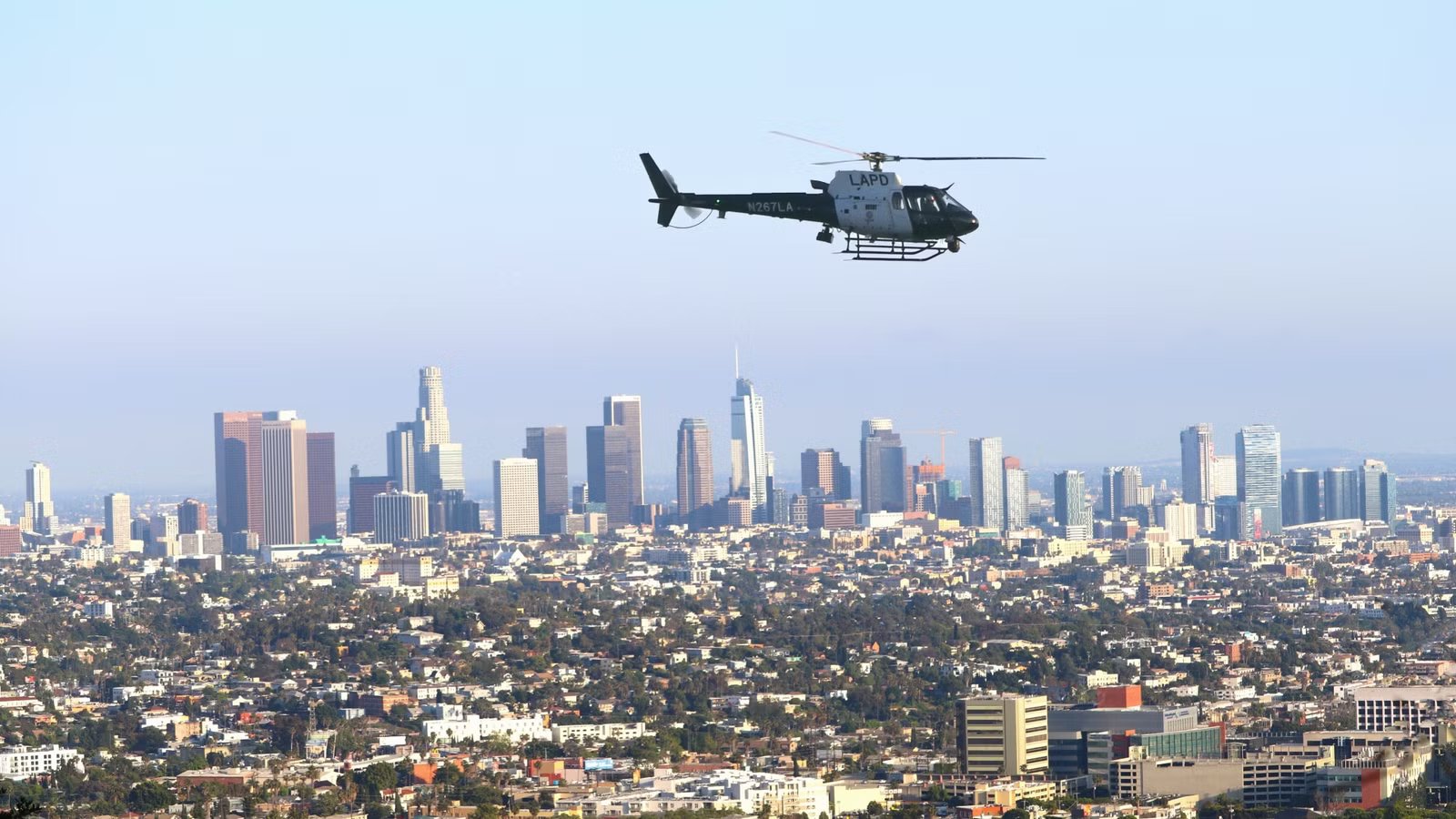
The Federal Aviation Administration (FAA) of the United States of America has rolled out a fresh set of airspace restrictions concerning the area in and around  Los Angeles International Airport (LAX). The main headline from these reforms is that the airspace concerned will be closed to all helicopters, with the move drawing criticism from divisions of the emergency services that would normally use such aircraft to respond to calls.
With LAX being one of the busiest airports in the US, and, indeed, the world as a whole, its airspace is, of course, very tightly regulated. However, recent events, most notably the collision between an American Eagle regional jet and a US Army helicopter in Washington DC last year, have cast further scrutiny over the use of helicopters in and around major US hubs. Let’s take a closer look at the rule change, and what it means for LAX.
No More Helicopter Flights

As reported by the Los Angeles Times, the FAA is looking to address safety concerns in LAX’s airspace by restricting “air support operations and all general aviation” flights in and around the Californian hub. This will most notably impact the Los Angeles Police Department, whose helicopters are used as the ‘eye in the sky’ for colleagues on the ground throughout the city. Now, however, their operations near LAX have been curtailed.
The move has been met with resistance by the LAPD, given that, as the LA Times notes, the restrictions cover three of its divisions and part of a fourth. This, the LAPD argues, could result in a risk to public safety if the force is no longer able to use its full arsenal to provide support when responding to calls. CBS quotes Steve Goldsworthy, the President of the SoCal Rotors Association (which represents helicopter pilots), as saying:
“We have safely navigated LA airspace for a very long time with the cooperation of LAX controllers. (…) They’re putting millions of lives at risk by not allowing any public safety entry at all.”
No End In Sight For The Ban

According to ABC7 Eyewitness News, helicopter pilots began being denied access to LAX’s airspace last week. In addition to frustration at the operating restrictions, emergency services in LA have also expressed confusion, with former Los Angeles Police Department helicopter pilot Jorge Gonzalez saying that “what has caused this to occur is a mystery to me.” Likewise, the LAPD has said that the FAA gave no reason for the ban.
Furthermore, there has reportedly been no estimation given with regard to how long these restrictions will be in place, catalyzing further uncertainty among helicopter and general aviation operators in and around Los Angeles. Away from the police side of things, ABC7 also notes that fire service and medical helicopters will also be impacted by the ban, with organ transplant missions among the time-sensitive flights that rely on airspace access.
In a statement, the FAA said that it is undertaking a “proactive nationwide safety review of airports with mixed helicopter and airplane traffic,” with the agency “evaluating restricting Visual Flight Rules (VFR) operations near Los Angeles International Airport” as a result. This, the FAA explains, means that, for the time being, “air traffic controllers will more often prohibit VFR operators from entering LAX airspace” while the evaluation takes place.

The A380 Capital Of The US: Why LAX Has More Superjumbos Than Any Other Airport
Six different airlines fly the double decker to Los Angeles.
Helicopter Operations In The US Are Under More Intense Scrutiny Than Ever

Away from Los Angeles International, a key driving force behind the ongoing reassessment of helicopter operations in and around major hubs in the US was the crash of American Airlines Flight 5342 in Washington DC last year. In January 2025, a PSA Airlines Bombardier CRJ700 operating an American Airlines flight from Wichita under the ‘American Eagle regional brand collided with a helicopter on approach to Washington National Airport.
The helicopter was being operated by the US Army, and its collision with the PSA Airlines CRJ700 resulted in the deaths of all three of its crew members, as well as all 60 passengers and four crew members on board the American Eagle jet. The collision provoked intense scrutiny into helicopter operations near Washington National Airport, with ABC reporting last month that such flights in the area are now permanently banned.